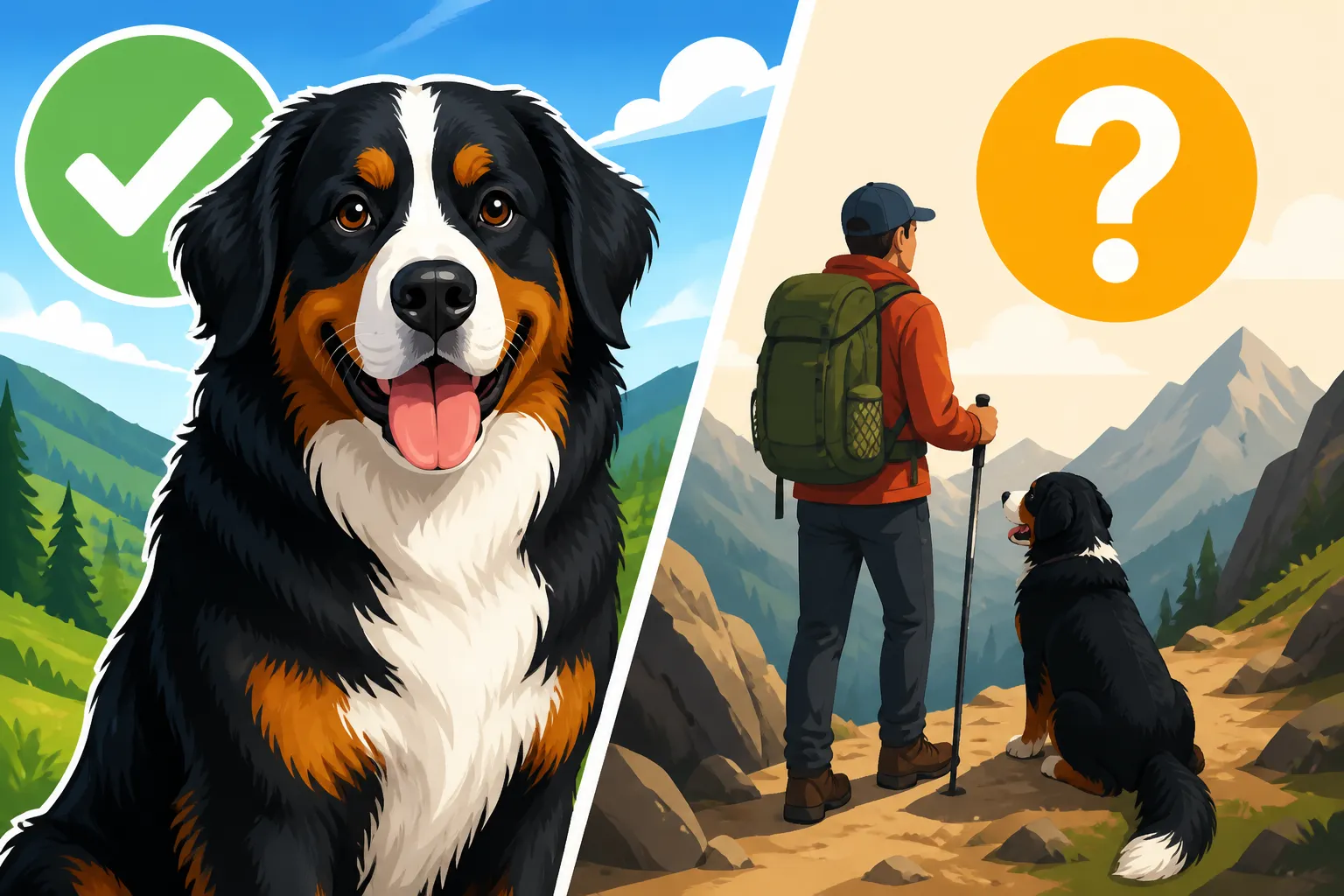
Whether a Bernese Mountain Dog Suits a Hiker
A Bernese Mountain Dog can be a wonderful companion on the right hike: steady, people-oriented, and often happiest when included in family outings. But a Berner’s size, thick coat, developing joints, and limited tolerance for heat can make long, steep, or exposed routes a poor fit. This guide explains how to match the hike to the dog, prepare safely, and know when it is time to turn back.
What kind of hiker suits a Bernese Mountain Dog
A companion for unhurried, moderate outings
Berners often enjoy being outdoors with their people, and many are content to walk at a measured pace while taking in new smells and scenery. That can make them lovely companions for relaxed woodland paths, shaded trails, and moderate day hikes with plenty of pauses. The key is to plan around the dog’s comfort rather than assume that a large working-breed body means unlimited stamina.
A Berner may be less suited to a person whose ideal day means covering many miles quickly, climbing steep elevation, or hiking in warm, exposed conditions. Some individuals are more athletic than others, but breed tendencies are only a starting point. Age, health, body condition, experience, and the weather all affect what a particular dog can handle.
It also helps to think about the whole outing, not just the trail mileage. A long drive, a crowded trailhead, rough footing, and a warm walk back to the car can turn a seemingly modest hike into a tiring day. If your dog enjoys a short nature walk but starts lagging after an hour, that is useful information—not a failure to train hard enough.
Not every hiking style fits the breed
A Bernese Mountain Dog may suit a hiker who enjoys flexible plans and is happy to shorten the route when needed. The best outings often have shade, water access where safe, reliable footing, and an easy way to return to the trailhead. A route with several bailout points is more practical than a remote loop where turning back means repeating a long, strenuous climb.
If you are choosing a dog to accompany you on ambitious mountain days, consider the realities of carrying or assisting a large dog. A Berner who becomes exhausted, injured, or overheated may be difficult to move safely. Even a healthy adult can encounter loose rock, slippery stream crossings, or a sudden change in weather. Ask yourself whether you could manage an emergency without expecting your dog to keep going.
For owners weighing the breed’s broader lifestyle fit, Whether a Bernese Mountain Dog Is Right for You is a helpful place to consider daily needs beyond hiking. A Berner usually needs companionship, grooming, training, and a cool place to rest—not just a weekend trail adventure.
How age, health, and fitness change the plan
Puppies need gradual, low-impact activity
A puppy may seem eager to follow you everywhere, but enthusiasm is not a reliable measure of what growing joints can tolerate. Long, forced hikes, repeated steep climbs, and lots of jumping can put unnecessary strain on a developing body. Instead, build confidence with short, easy outings and plenty of time to explore at the puppy’s own pace.
Keep the surface and route in mind. Uneven ground, slick rocks, and long stair-like climbs can be challenging for a young dog still learning coordination. Avoid turning a hike into a test of endurance. If your puppy lies down, repeatedly falls behind, or becomes unusually restless, stop and reassess rather than coaxing them onward.
For a fuller look at growth and activity, read How Little a Bernese Mountain Dog Puppy Should Do and The Five Minute Rule and a Bernese Mountain Dog Puppy. These topics can help frame the conversation, but your veterinarian is the right person to advise on your puppy’s health, development, and individual exercise plan.
Adults still need conditioning and sensible limits
An adult Berner who spends most days on gentle neighborhood walks should not be expected to jump straight into a demanding hike. Increase distance and difficulty gradually over multiple outings. Watch how your dog moves during the walk and later that day: stiffness, a shortened stride, reluctance to rise, or unusual fatigue can mean the effort was too much.
Body condition matters, too. Extra weight makes every hill and step harder on the joints. Because a long coat can hide the outline of the body, do not rely on appearance alone to decide whether your dog is fit for a strenuous outing. Discuss ideal weight and conditioning with your veterinarian, especially if your dog has a history of limping or joint discomfort. The Body Condition a Bernese Mountain Dog Should Carry covers why a healthy, lean condition matters.
Older dogs and dogs with orthopedic problems may still enjoy outdoor time, but the outing may need to look different: shorter, flatter, slower, and closer to home. A brief trail stroll can offer enrichment without asking an aching dog to manage a steep descent. If your dog’s gait changes or they seem painful, pause hiking and seek veterinary advice. Joint Disease in a Hundred Pound Bernese Mountain Dog explains why mobility deserves particular attention in this large breed.
| Hiking situation | What may suit a Berner | What to reconsider |
|---|---|---|
| Shaded, moderate trail | A steady walk with breaks and a flexible turnaround point | Assuming the dog can match a person’s usual pace |
| Hot or exposed route | A different, cooler time or a shorter alternative | Continuing when the dog is panting heavily or slowing down |
| Puppy outing | Brief, low-impact exploration on manageable ground | Long distances, repeated climbs, and forced exercise |
| Older or stiff dog | Flat routes close to the car, with frequent rests | Rough descents or routes with no easy return |
| Remote hike | Only with careful preparation and realistic emergency planning | Relying on the dog to walk out if injured or exhausted |
Preparing for a safer hike
Choose the route for the dog you have today
Before setting out, look at the route’s elevation, surface, shade, water availability, and distance from help. A trail described as easy for people may still be tough for a large dog if it involves narrow ledges, loose stones, hot open ground, or frequent scrambling. Local rules also vary: check whether dogs are allowed, whether a leash is required, and whether seasonal restrictions apply.
Build the outing around conditions, not just the calendar. A cool, cloudy morning can be much more comfortable than a sunny afternoon, but humidity, direct sun, and a lack of breeze still matter. Berners have a dense double coat and can struggle in heat. When conditions seem uncomfortable at home, a climb with limited shade is unlikely to be an improvement. For more on planning around weather, see Getting a Bernese Mountain Dog Through Summer.
Choose a route with a clear turnaround point before you begin. For example, you might decide to return at the first sign of persistent lagging, heavy panting, or reluctance to continue, even if you have not reached the viewpoint. That boundary is easier to follow when it is made in advance, before you feel invested in finishing the hike.
Pack for comfort, control, and emergencies
Bring water for your dog and offer it regularly, especially on warm or strenuous outings. Do not assume that a stream or puddle is clean or safe to drink from. A well-fitted harness can make it easier to guide your dog over manageable obstacles, but it should not be used to drag a tired dog uphill. A leash, identification, waste bags, a basic first-aid kit, and a phone with a route plan are sensible essentials.
Protect the paws by checking the ground and looking at your dog’s feet during breaks. Hot surfaces, sharp stones, ice, and road salt can all cause problems. A paw check can catch a cut, a thorn, or a sore spot before it becomes worse. If you are comparing items such as a collapsible bowl, reflective gear, or a dog first-aid kit, retailers including Chewy may be one place to review options; check fit, instructions, and suitability for your dog before relying on any product.
Keep your dog on a leash unless the area explicitly allows otherwise and your dog has dependable recall. Even a friendly Berner can startle wildlife, approach another dog, or move toward a steep edge. A leash also gives you more control at narrow trail sections and busy crossings. For practical guidance on winter footing and leash handling, see Walking a Bernese Mountain Dog on Ice.
Recognizing when to stop
Watch for early signs of strain or overheating
Do not wait for a collapse to decide a dog has had enough. A Berner who repeatedly falls behind, seeks shade, lies down, or seems reluctant to move is telling you something. Heavy panting, excessive drooling, weakness, poor coordination, vomiting, or a very distressed appearance are more serious warning signs, especially in warm conditions.
If you suspect overheating, get your dog out of the sun and begin cooling with cool—not icy—water while arranging urgent veterinary help. Avoid forcing the dog to continue to the car on foot if they are weak or unsteady. Heat illness can become an emergency quickly, so treat alarming symptoms as urgent rather than hoping a rest will solve everything. See Heat Stroke in a Bernese Mountain Dog for more on warning signs and response.
Paw injuries and joint strain may be less dramatic but still deserve attention. A sudden limp, repeated paw licking, or reluctance to put weight on a leg is a reason to stop. Check for visible debris or injury without forcing a painful limb to move. If the limp persists or your dog appears distressed, contact a veterinarian.
Make turning back part of the plan
It can feel disappointing to leave a scenic route unfinished, especially if you have driven a long way to reach it. But turning back is often the best hiking decision you can make for your dog. A Berner who is merely tired may recover with rest; a dog pushed into a serious problem may need an emergency evacuation that neither of you is prepared to manage.
Set a simple check-in routine: notice your dog’s breathing, pace, comfort, and interest at every rest stop. Ask whether they are recovering during the break or continuing to deteriorate. If they do not perk up, if their gait changes, or if conditions are getting warmer, shorten the outing. A dog who has to be encouraged at every step is not enjoying the hike in the way you hoped.
After the walk, check paws, legs, coat, and ears for cuts, burrs, ticks, or irritation. Offer water and let your dog rest somewhere cool. Pay attention later that day and the following morning for stiffness or unusual reluctance to get up. If you want to include outdoor exercise in a broader routine, Exercising a Bernese Mountain Dog in Summer can help you think through how weather affects activity choices. For practical supplies, Chewy may be useful when comparing everyday walking and grooming items, while your veterinarian can advise on health concerns and first-aid needs.
Disclaimer
This article is for general informational purposes only and does not constitute professional advice. Laws, prices and regulations vary by location and change over time. Consult a qualified professional for guidance on your specific situation.