Whether a Slicker or a Pin Brush Suits a Bernese Mountain Dog
Oh, that magnificent Bernese Mountain Dog coat! It's one of the first things that draws us in, isn't it? But then you bring your fluffy companion home, and suddenly you're faced with a seemingly endless tide of hair and a dizzying array of grooming tools. You stand in the pet aisle, staring at a slicker brush and a pin brush, wondering which one is actually going to tackle that glorious, yet sometimes challenging, double coat without causing distress or damage. This guide is here to demystify the essential grooming tools for your Bernese Mountain Dog, focusing specifically on when and why you'd reach for a slicker versus a pin brush, and how to use each effectively to keep your Berner looking their best.
Understanding the Bernese Mountain Dog's Glorious Double Coat
Before we dive into the nitty-gritty of brushes, it's crucial to understand the unique characteristics of your Bernese Mountain Dog's coat. This isn't just any fur; it's a meticulously designed natural insulation system, perfect for their original chilly Swiss mountain environment. Neglecting to understand it means you'll always be playing catch-up with mats and shedding.
The Double Coat's Purpose and Structure
Your Bernese Mountain Dog sports a luxurious double coat, a defining feature that requires consistent attention. This isn't just for show; it's a highly functional system. The outer layer, known as the guard coat, consists of long, slightly wavy, and coarse hairs. These hairs are designed to repel water, dirt, and snow, acting as a protective shield against the elements. Beneath this lies a dense, soft, woolly undercoat. This undercoat is the real insulating powerhouse, trapping air close to the dog's body to keep them warm in winter and surprisingly, to help regulate their temperature and keep them cooler in summer by providing an airy buffer.
Maintaining both layers is paramount. If the undercoat becomes matted, it can pull on the skin, cause discomfort, and even lead to skin infections because air can't circulate properly. The guard hairs can also get tangled, especially in areas where friction is common, like behind the ears or under the legs. Understanding this structure helps us choose the right tools for the job, rather than just grabbing any brush.
Seasonal Shedding Cycles and What to Expect
If you live with a Bernese Mountain Dog, you know shedding isn't a "seasonal" event so much as a lifestyle. However, there are definitely peak shedding periods when the amount of hair seems to multiply overnight. Berners typically undergo heavy seasonal sheds twice a year – usually in spring, to get rid of their dense winter undercoat and prepare for warmer weather, and again in the fall, to make way for a fresh, thicker winter coat. During these times, you'll be amazed at the sheer volume of hair that comes off your dog.
Beyond these major "coat blow" events, Berners shed year-round to a moderate degree. It's simply the nature of a double-coated breed. During peak shedding, daily grooming is almost a necessity to manage the loose hair and prevent it from ending up all over your furniture, clothes, and even your dinner. Consistent brushing helps to strip out the dead undercoat before it has a chance to form stubborn mats. Spring, When a Bernese Mountain Dog's Undercoat Lets Go is a prime example of when your grooming routine needs to kick into high gear.
Common Coat Challenges for Bernese Mountain Dogs
The Bernese Mountain Dog's beautiful coat, while a hallmark of the breed, comes with its own set of challenges. Tangles and mats are perhaps the most common foes. The fine, soft undercoat is particularly prone to matting, especially in high-friction areas or if it gets wet and isn't dried properly. Behind the ears, in the "armpits," on the feathered legs, and around the tail are notorious spots for mats to form unnoticed until they become painful. These mats can quickly turn into painful knots that pull on the skin and can be incredibly difficult to remove without causing discomfort.
Another challenge is simply the sheer volume of hair. Without regular grooming, loose undercoat can get trapped beneath the guard hairs, preventing proper air circulation and potentially leading to skin issues like hotspots or excessive itching. It also means more hair around your home, which can be frustrating. Managing these challenges isn't just about aesthetics; it's a vital part of your Bernese Mountain Dog's overall health and comfort. Regular checks for The Felt That Forms Behind a Bernese Mountain Dog's Ear are crucial to catch problems early.
Slicker Brushes: The Mat and Shedding Powerhouse
When it comes to tackling the dense undercoat and addressing minor tangles, the slicker brush is often your first line of defense. It's a powerhouse tool when used correctly, but it also has its limitations.
What a Slicker Brush Does for a Berner's Coat
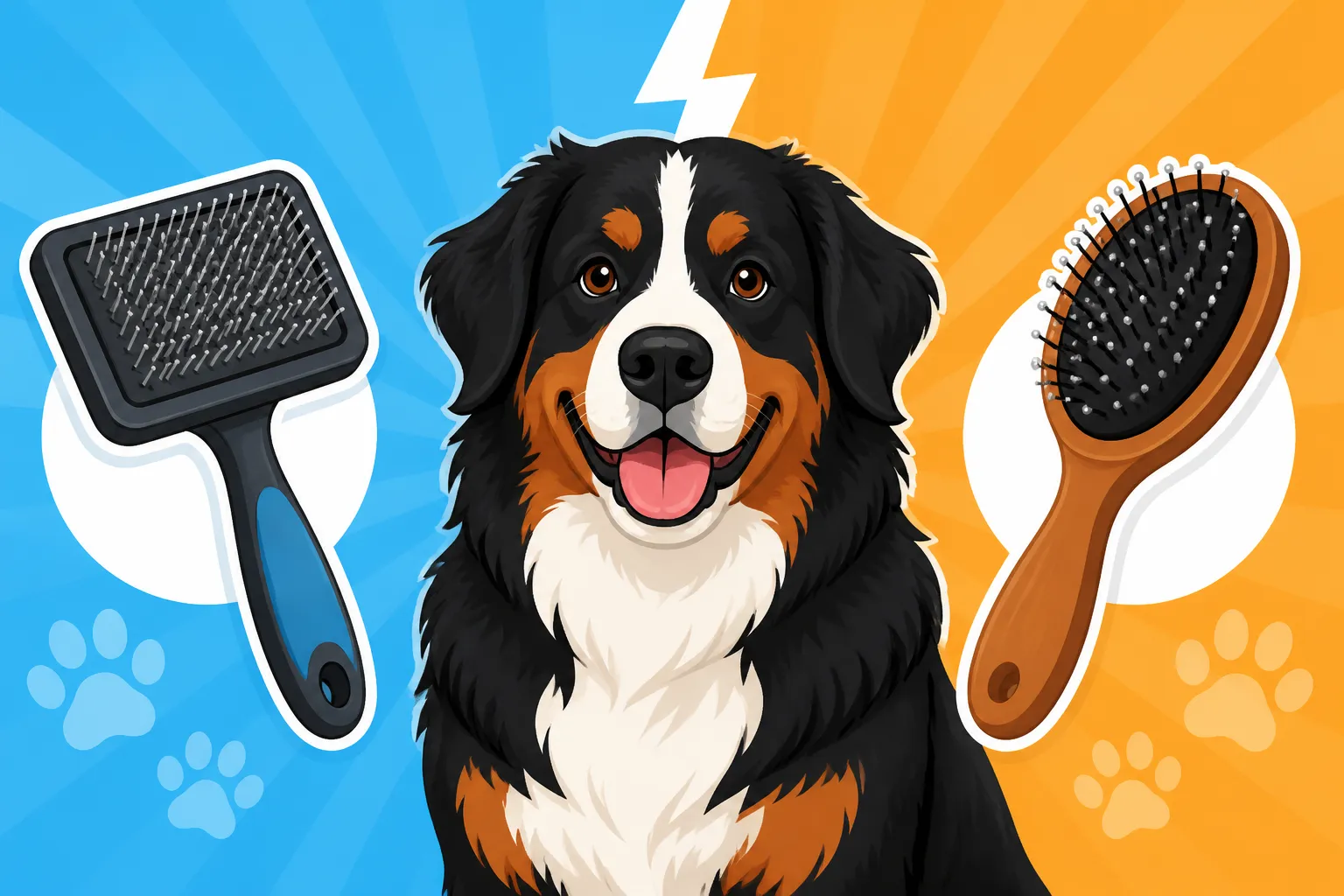
A slicker brush is instantly recognizable by its tightly packed fine wire pins, usually angled slightly, set on a flat or curved base. These pins are designed to grab and pull out loose undercoat and gently work through tangles and smaller mats in the outer coat. For a Bernese Mountain Dog, a good quality slicker brush is indispensable, especially during shedding season. It excels at reaching down into that dense undercoat, pulling out dead hair that would otherwise accumulate and cause matting.
Think of it as a de-shedding tool as much as a detangler. The fine pins effectively separate the individual hairs, allowing you to lift out the loose, fuzzy undercoat. It’s particularly effective on the softer, fluffier parts of the coat, like the feathered legs and the "trousers" on their hindquarters. However, care must be taken not to scratch the skin, as the pins, while fine, can be sharp if applied with too much pressure.
When to Reach for Your Slicker Brush
You'll find yourself reaching for the slicker brush frequently when grooming your Bernese Mountain Dog. It's your go-to for daily or every-other-day maintenance, especially if you want to keep the shedding in your home to a minimum. During the heavy seasonal 'coat blow' periods, the slicker brush becomes absolutely essential. It's fantastic for removing large amounts of dead undercoat, which helps to prevent the formation of massive mats and improves air circulation to the skin.
It's also highly effective for working on those smaller tangles that haven't yet escalated into full-blown mats. If your Berner has been romping in the woods and picked up some burrs or small twigs, a slicker can help tease them out. However, for serious, tight mats, you might need to pre-treat with a detangling spray or a different tool first, as forcing a slicker through a large mat can be painful for your dog. A light, careful hand is always best when addressing any kind of tangle with a slicker brush.
Techniques for Effective Slicker Brushing
Using a slicker brush effectively on a Bernese Mountain Dog requires a specific technique to be both thorough and comfortable for your dog. The key is to use light, gentle strokes, working in layers. Instead of raking the brush across the entire coat, start by parting the hair and brushing small sections at a time. This allows the pins to get deep into the undercoat without pulling on the guard hairs excessively. Always brush in the direction of hair growth.
Use a "line brushing" technique: lift a section of hair, brush the hair beneath it from the skin outwards, then lay the lifted section back down and brush over it. This ensures you're reaching all the way to the skin. For areas prone to matting, like behind the ears or the feathering on the legs, be extra gentle and methodical. If you encounter a knot, don't yank. Instead, hold the hair close to the skin with one hand to minimize pulling, and gently work the brush at the very tips of the tangle with the other hand. A short, flicking motion is often more effective than a long stroke for working through tricky spots. Regular, consistent brushing makes this process much easier for both of you, and will dramatically reduce The Bernese Mountain Dog Shed and What It Fills your home.
Pin Brushes: For a Gentle Finish and Everyday Shine
While the slicker brush is a workhorse for de-shedding and detangling, the pin brush serves a different, equally important role in your Bernese Mountain Dog's grooming routine. It’s about maintenance, comfort, and adding that final touch.
The Design and Function of a Pin Brush
A pin brush is characterized by widely spaced, rounded metal or plastic pins set into a rubber or cushioned base. Unlike the slicker, the pins are generally thicker and less numerous, and their rounded tips are designed to be much gentler on the skin. You wouldn't typically use a pin brush for serious de-shedding or to remove large mats; it simply isn't designed for that level of penetration or aggressive action.
Instead, a pin brush primarily functions to smooth the coat, stimulate the skin, and distribute natural oils, leaving the coat shiny and healthy. It's excellent for the longer, coarser guard hairs and can help gently detangle superficial snags in the outer coat. For a Bernese Mountain Dog, it's particularly useful for the finishing touches after you've already removed the bulk of the loose undercoat and any significant tangles with other tools.
Ideal Scenarios for Pin Brush Use
The pin brush shines in several scenarios for your Berner. It’s perfect for daily, light brushing sessions that aren't about heavy de-shedding but rather about maintaining a smooth, healthy coat and bonding with your dog. If your Bernese Mountain Dog's coat is already relatively tangle-free, a pin brush is a wonderful choice for a quick once-over to remove any loose hairs from the topcoat and give them a pleasant massage.
It’s also the preferred brush for puppies or dogs with more sensitive skin, as the rounded pins are less likely to irritate. After a vigorous play session where your dog might have picked up some leaves or light debris, a pin brush can efficiently sweep these away from the topcoat. Think of it as your everyday, gentle grooming tool, great for general coat maintenance and for giving your Berner that beautiful, flowing look. It can also be a good introductory tool for a puppy to get them used to being brushed without the intensity of a slicker.
Gentle Glides: Pin Brush Application
When using a pin brush on your Bernese Mountain Dog, the technique is less about aggressive de-shedding and more about smooth, even strokes. You can cover larger sections of the coat at once compared to a slicker brush. Start from the head and work your way down the body, following the natural growth pattern of the hair. The goal is to gently glide through the coat, removing surface debris and any easily dislodged hairs, while also stimulating the skin underneath.
The rounded pins provide a massaging effect that most dogs find enjoyable, making grooming a positive experience. This can be especially helpful for socializing a reserved Bernese Mountain Dog puppy to handling. Pay attention to areas where the guard hairs are particularly long and flowing, such as the tail plume or the long feathering on the legs, to ensure they remain smooth and free of superficial snags. While it won't tackle deep undercoat issues, consistent use of a pin brush helps prevent superficial tangles from progressing into more serious mats.
Beyond the Basics: Other Essential Grooming Tools
While slicker and pin brushes are foundational, a truly comprehensive Bernese Mountain Dog grooming kit extends further. Having the right array of tools can make all the difference in keeping that magnificent coat pristine and comfortable for your dog.
Rakes, Combs, and Force Dryers: Completing Your Arsenal
Beyond the slicker and pin brush, there are other crucial tools you'll want in your Bernese Mountain Dog grooming arsenal. A good undercoat rake is non-negotiable, especially during those heavy shedding periods. These rakes feature long, blunt, widely spaced teeth designed specifically to penetrate the dense topcoat and pull out copious amounts of loose undercoat without damaging the guard hairs. For removing the bulk of dead undercoat, especially from the body, a rake can be far more efficient than a slicker brush, saving you time and your dog discomfort. Getting a Rake Down Through a Bernese Mountain Dog's Coat is a technique every Berner owner learns quickly.
A wide-toothed comb (often called a greyhound comb) is excellent for checking your work after brushing and for gently working through any stubborn tangles or mats that remain. The wider teeth are less likely to pull than a brush, and you can feel knots more easily. For finer finishing work, a comb with both wide and narrow teeth is ideal. Finally, if you're serious about managing shedding and preventing mats, particularly after bathing, a high-velocity force dryer is a game-changer. It blasts water and loose hair out of the coat incredibly effectively, significantly reducing drying time and removing vast quantities of shedding undercoat. Whether a Force Dryer Is Worth It for a Bernese Mountain Dog is a question many owners ask, and for Berners, the answer is usually a resounding yes.
Comparing Brush Types for a Bernese Mountain Dog
Let's break down the primary uses and benefits of each brush type for your Bernese Mountain Dog:
| Feature/Purpose | Slicker Brush | Pin Brush | Undercoat Rake | Wide-Toothed Comb |
|---|---|---|---|---|
| Primary Function | Removing loose undercoat, detangling smaller mats | Smoothing coat, distributing oils, gentle massage | Removing large volumes of dead undercoat | Finishing, checking for tangles, precise detangling |
| Coat Penetration | Moderate to Deep | Superficial to Moderate | Deep (designed for undercoat) | Deep (can feel all the way to skin) |
| Best For | Seasonal shedding, minor tangles, fluffy areas | Daily light brushing, sensitive areas, puppy coats | Heavy coat blows, dense body fur, prevention of mats | Final check, stubborn knots, feathering |
| Risk of Skin Irritation | Moderate (if used with too much pressure) | Low | Low (if used correctly) | Low (if used gently) |
| Appearance of Bristles | Fine, bent wire pins | Wider, rounded metal/plastic pins | Curved or straight metal teeth | Metal or plastic teeth, various spacings |
This table should give you a clear visual guide on which tool to grab for specific grooming needs. No single brush can do it all for a Bernese Mountain Dog's complex coat!
Making the Right Purchase Decisions
Investing in quality grooming tools is truly an investment in your Bernese Mountain Dog's comfort and health, and often, it saves you money in the long run by preventing costly matting issues that might require professional grooming or even vet visits. When purchasing, look for sturdy construction and ergonomic handles that are comfortable for you to hold during extended grooming sessions. Cheap brushes often have flimsy pins that bend easily or handles that break, making them less effective and more frustrating to use.
When you're ready to invest in quality grooming tools, whether it's for the initial purchase or replacing worn-out items, you'll find a wide selection on platforms like Amazon or specialized pet retailers such as Chewy. Read reviews from other large breed or double-coated dog owners to gauge effectiveness. Don't be afraid to spend a little more on a good undercoat rake or slicker brush; it will pay dividends in ease of use and your dog's happiness. Remember, Buying the Rake and Dryer a Bernese Mountain Dog Needs can feel like a significant upfront cost, but it's essential for proper coat care.
Establishing a Consistent Grooming Routine for Your Berner
Understanding the tools is one thing, but establishing a regular, positive grooming routine is where the real magic happens. Consistency is key with a Bernese Mountain Dog.
Daily Maintenance vs. Weekly Deep Dives
For a Bernese Mountain Dog, grooming isn't a once-a-month chore; it's an ongoing commitment. Think of it as a two-tiered approach: daily maintenance and weekly deep dives. Daily maintenance, which can be as short as 5-10 minutes, involves a quick run-through with a pin brush to remove surface debris, smooth the topcoat, and check for any developing tangles. This also serves as a wonderful bonding opportunity. It keeps the coat tidy and helps manage everyday shedding.
Your weekly deep dive, however, is where the heavier work happens. This is typically a 30-60 minute session, depending on your dog and the time of year. During this time, you'll use your undercoat rake and slicker brush to thoroughly work through the entire coat, section by section, getting down to the skin to remove all loose undercoat and address any developing mats. This is the session that truly manages Brushing Out a Bernese Mountain Dog's Undercoat and prevents problems from escalating. Consistent weekly deep dives are crucial to prevent the dreaded "felted" undercoat that can become incredibly uncomfortable for your Berner.
Making Grooming a Positive Experience
No one wants to wrestle a hundred-pound dog to brush them. Making grooming a positive experience from a young age is vital. Start with short sessions, even just a few minutes, when your Bernese Mountain Dog puppy is relaxed. Use gentle strokes and pair grooming with positive reinforcement like praise and high-value treats. As they grow, gradually increase the duration of the sessions. Introduce tools one by one, allowing your dog to sniff and explore them before you use them.
If your dog shows signs of discomfort or anxiety, stop and revisit the step later, perhaps with even shorter duration or more treats. Never force the issue or make grooming a punishment. Creating a calm environment, using a non-slip mat, and having all your tools ready will help. If your Berner is particularly sensitive in certain areas, work on those last, or break them into separate, very short sessions. Remember, a calm, happy dog makes for a much easier grooming session for everyone involved. How Long Brushing a Bernese Mountain Dog Takes can vary, but patience is always key.
Tackling Mats and Tangles Safely
Encountering mats and tangles is inevitable with a Bernese Mountain Dog, but how you tackle them makes all the difference for your dog's comfort. First rule: never pull or yank a mat. That's incredibly painful and can create a negative association with grooming. For minor tangles, a detangling spray applied directly to the knot can help loosen the hairs, making them easier to brush out with a slicker or a wide-toothed comb.
For more serious mats, you might need to use a mat splitter or a blunt-nosed pair of scissors (with extreme caution!) to carefully cut into the mat, rather than through it, to break it into smaller, more manageable sections. Always point the scissors away from the skin, using your fingers as a guard between the blade and your dog's skin. Once the mat is split, you can often work through the smaller pieces with a comb. If a mat is too close to the skin, too large, or too painful for you to handle, it's always best to seek help from a professional groomer. They have specialized tools and experience to remove severe matting safely without hurting your dog. Dealing with Mats in a Bernese Mountain Dog's Ruff can be tricky, so take your time.
Disclaimer
This article is for general informational purposes only and does not constitute professional advice. Laws, prices and regulations vary by location and change over time. Consult a qualified professional for guidance on your specific situation.