Whether Long Coats Appear Outside the Bernese Mountain Dog
If you've ever found yourself utterly captivated by the majestic, flowing coat of a Bernese Mountain Dog, you're certainly not alone. That thick, luxurious fur is undeniably one of their most defining and beloved features, evoking images of their snowy Swiss origins. But it often makes people wonder: is this gorgeous long coat unique to our beloved Berners, or do other breeds, particularly their close relatives, share this distinctive characteristic? Let's explore the fascinating world of dog coats and uncover what makes each breed's fur truly their own.
The Iconic Bernese Mountain Dog Coat: A Defining Feature
There's no mistaking a Bernese Mountain Dog when you see one, and a huge part of that instant recognition comes from their truly magnificent coat. It's not just long; it's a carefully engineered marvel of nature that served them well in their original mountain environment. Understanding its nuances helps us appreciate why it stands out.
What Makes the Berner's Coat Unique
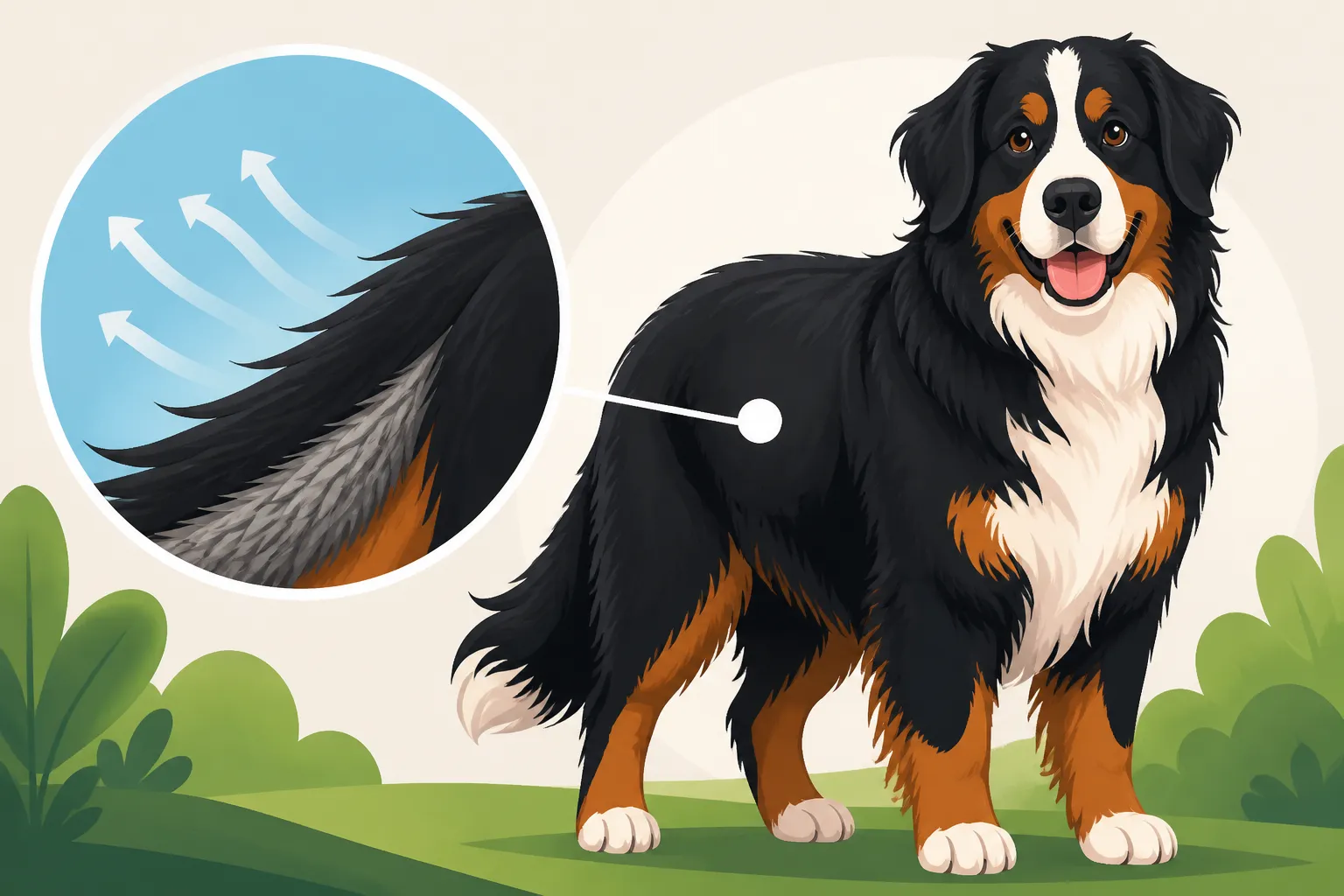
The Bernese Mountain Dog sports a striking tricolor coat that's long and typically slightly wavy, never curly. This isn't just for show; it's a highly functional double coat. The outer layer is fairly long, straight to slightly wavy, and quite dense, acting as a protective barrier against external elements like snow, rain, and brambles. It's the first line of defense, helping to shed moisture and keep dirt from reaching the skin.
Beneath this impressive outer coat lies a thick, woolly undercoat. This hidden layer is the true insulation powerhouse, providing warmth in freezing temperatures and, perhaps surprisingly, helping to regulate body temperature in milder conditions. It's this dense undercoat that makes them shed so profusely during seasonal changes – a familiar reality for any Berner owner! This combination of outer guard hairs and a plush undercoat is precisely what makes their fur so tactile and, let's be honest, such a magnet for hugs. Caring for it properly is crucial, requiring regular brushing to prevent matting and manage shedding. Grooming a Bernese Mountain Dog's Long Tricolor Coat can feel like a full-time job during certain seasons, but it's essential for their comfort and skin health. Many owners find a good quality rake and pin brush, perhaps found on a site like Chewy, to be indispensable tools for tackling that thick double coat.
The Role of Coat in Breed Identity
When you look at the Bernese Mountain Dog breed standard, the coat is explicitly described as "long, soft, and silky, either straight or slightly wavy." This description isn't just an aesthetic preference; it's a fundamental part of what defines the breed and sets it apart from its closest relatives. The Bernese Mountain Dog is one of four Sennenhund breeds from the Swiss Alps, and remarkably, it's the only one with a long coat. This distinct difference is a key identifier.
Historically, the Bernese Mountain Dog's long coat was an adaptation to the harsher, colder conditions of the Dürrbach valley, where they originated. While all the Swiss Mountain Dogs worked on farms, pulling carts, droving cattle, and acting as watchdogs, the Berner's specific coat type offered superior protection in very cold and snowy environments. This single genetic trait became a hallmark, differentiating it visibly from its short-coated cousins. This is why Why Only the Bernese Mountain Dog Has a Long Coat is such an important distinction when studying these wonderful breeds.
Exploring Other Sennenhund Breeds and Their Coats
To truly appreciate the Bernese Mountain Dog's unique coat, it helps to look at its close relatives. The four Swiss Sennenhunds – the Bernese Mountain Dog, Greater Swiss Mountain Dog, Appenzeller Sennenhund, and Entlebucher Sennenhund – share a common heritage but diverged in physical characteristics, especially their coats.
The Greater Swiss Mountain Dog: Short and Sturdy
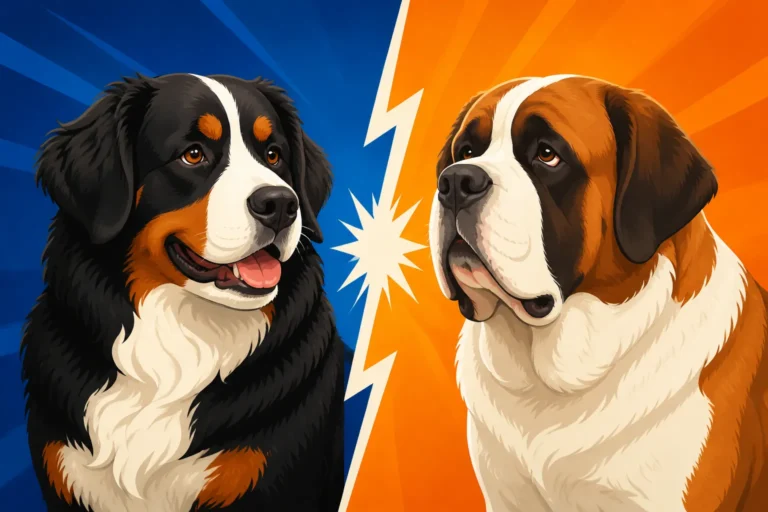
Often mistaken for a short-haired Bernese, the Greater Swiss Mountain Dog is indeed a large, tricolor breed, but its coat is dramatically different. The "Swissie," as it's affectionately known, has a short, dense outer coat and a thick undercoat, particularly in colder climates. This is a robust, hardy coat designed for durability and protection without the length that would trap snow or mud as readily.
Their ancestors were used for heavy farm work, driving livestock, and guarding property, and a shorter coat was likely more practical for these tasks in varied terrain and weather, as it dried faster and required less intensive grooming. While they still possess the distinctive tricolor pattern – black, rust, and white markings – the overall impression is one of sleek power rather than shaggy grandeur. Owners of Greater Swiss Mountain Dogs don't face the same grooming challenges as Berner owners when it comes to knots and mats, but they certainly still deal with shedding, especially of that dense undercoat. They share a similar loving, devoted temperament with Berners, but their coat is a clear visual differentiator. The Greater Swiss Against the Bernese Mountain Dog highlights these distinctions further.
The Appenzeller and Entlebucher: Agile and Smooth
Moving down in size, we find the Appenzeller Sennenhund and the Entlebucher Sennenhund, the two smaller members of the Swiss Mountain Dog family. Both are known for their incredible agility, intelligence, and boundless energy, and their coats reflect this active lifestyle with a distinct brevity.
The Appenzeller Sennenhund has a double coat that is short, dense, and firm. The undercoat is thick, but the outer coat lies flat and tight to the body, giving them a very clean-cut appearance. Similarly, the Entlebucher Sennenhund, the smallest of the group, also has a short, stiff, and close-lying coat. In both breeds, the tricolor markings are crisp and well-defined, standing out against their sleek fur. These coats are low-maintenance in terms of tangles but still require regular brushing to keep them healthy and to manage seasonal shedding. Their short coats are perfectly suited for their role as active, nimble herding dogs, allowing for unrestricted movement through brush and quick drying after a mountain rain shower. You won't find the flowing "trousers" or heavy feathering on an Appenzeller or Entlebucher that you see on a Berner; their coats are built for business and efficiency.
Here's a quick comparison of the four Swiss Sennenhund coats:
| Breed | Coat Length | Coat Texture | Double Coat? | Typical Grooming Needs |
|---|---|---|---|---|
| Bernese Mountain Dog | Long | Soft, silky, straight to wavy | Yes | High (daily brushing, seasonal de-shedding) |
| Greater Swiss Mountain Dog | Short | Dense, stiff, close-lying | Yes | Moderate (weekly brushing, seasonal de-shedding) |
| Appenzeller Sennenhund | Short | Dense, firm, close-lying | Yes | Moderate (weekly brushing, seasonal de-shedding) |
| Entlebucher Sennenhund | Short | Short, stiff, close-lying | Yes | Moderate (weekly brushing, seasonal de-shedding) |
Beyond the Sennenhunds: Other Large, Long-Coated Breeds
While the Bernese Mountain Dog might be the only long-coated member of its immediate Swiss family, the world of dogs is vast and full of other large breeds that proudly display impressive long coats. These breeds often share similar challenges and joys with Bernese owners when it comes to grooming and coat care.
Breeds with Similar "Fluff Factor" but Different Heritage
When we talk about long, flowing coats on large dogs, several breeds instantly come to mind, each with its own unique history and coat characteristics.
- Newfoundland: Often called "Newfies," these gentle giants are renowned for their massive, thick, water-resistant double coats. Their fur is dense and oily, perfectly suited for their original purpose as working dogs in the cold waters off Newfoundland. While their coats are different in texture and function from a Berner's, the sheer volume of hair and the grooming commitment are certainly comparable. The Bernese Mountain Dog Against the Newfoundland is a common comparison for prospective owners seeking a large, fluffy companion.
- Great Pyrenees: These majestic white guardians also boast a thick, weather-resistant double coat that is long and coarse over a dense, woolly undercoat. Their fur is designed to protect them from harsh mountain weather while they watched over livestock. Like Berners, they are heavy seasonal shedders, and their coats require diligent care to prevent matting, especially in their feathering.
- Old English Sheepdog: Instantly recognizable by their profuse, shaggy coats that often cover their eyes, these dogs have a thick, double coat that is long and somewhat harsh. Bred for herding in damp, chilly climates, their coat provides excellent insulation. However, it's prone to matting and felting if not meticulously groomed, often requiring professional help to maintain its condition.
- Leonberger: Another large, magnificent breed, the Leonberger also features a long, flowing double coat that is soft to harsh, with a profuse mane around the neck and chest. Their coats are typically golden, red, or reddish-brown, often with a black mask. They require regular grooming, though perhaps not quite as intensive as a full-coated Old English Sheepdog.
Each of these breeds developed their long coats as an evolutionary adaptation to their specific working roles and environments. Whether it was for water retrieval, guarding flocks in snowy mountains, or herding in challenging terrain, the long coat served a vital protective purpose, much like our Berners. They all underscore the universal truth that a magnificent coat often comes with significant grooming responsibilities. You can often find specialized brushes and powerful dryers, essential for these larger, long-coated breeds, readily available on platforms like Chewy.
Why Coat Length Varies So Much: Genetic and Environmental Factors
The diversity in canine coat lengths, from the nearly hairless Chinese Crested to the flowing Afghan Hound, is a testament to thousands of years of natural selection and selective breeding. This variation is largely controlled by genetics, with specific genes dictating whether a dog will have short, medium, or long hair.
Beyond genetics, environmental factors and the dog's original purpose played a huge role in solidifying certain coat types within breeds. Dogs bred to work in freezing temperatures, like the Bernese Mountain Dog or Newfoundland, often developed thick, insulating double coats. Those in warmer climates might have shorter, sleeker coats that dissipate heat more easily. The type of work also matters: a short-coated dog might be less prone to picking up burrs or mud, while a long-coated dog might have better protection against bites or scratches from predators if its fur is thick enough. The beauty is in the adaptation, and each coat type is a perfect solution for the problems its ancestors faced. Understanding these factors helps us appreciate that a long coat isn't just a random trait; it's a legacy of their breed's history and purpose.
Understanding the Genetics of Coat Length in Dogs
While it might seem complex, the science behind a dog's coat length is actually quite fascinating and relatively well-understood. It largely boils down to a few key genetic players.
The FGF5 Gene: The Key to Long or Short
The primary gene responsible for determining coat length in most dog breeds is called FGF5 (Fibroblast Growth Factor 5). Think of it as a switch:
- Short Coat Allele: Most dogs carry a dominant allele for short hair. If a dog inherits at least one copy of this dominant allele, it will typically have a short coat.
- Long Coat Allele: The long coat is usually a recessive trait. For a dog to have a long coat, it must inherit two copies of the recessive allele, one from each parent.
This means that even if a dog looks short-haired, it could still carry one copy of the long-hair gene and pass it on to its offspring. This is why two short-haired parents might, surprisingly, produce a long-haired puppy if both are carriers of the recessive long-hair gene. Breeders of purebred Bernese Mountain Dogs, for example, would ensure their dogs carry two copies of the recessive long-coat allele to consistently produce Berners with their characteristic flowing fur. This genetic understanding has been a huge leap forward in predicting and managing coat types in breeding programs.
Implications for Crossbreeds (e.g., Bernedoodles)
The genetic principles of coat length become particularly interesting when we look at crossbreeds, such as the popular Bernedoodle. A Bernedoodle is a cross between a Bernese Mountain Dog (which has two copies of the recessive long-coat gene) and a Poodle (which has two copies of the recessive curly/long-coat gene, and also a "furnishings" gene that creates the longer hair around the muzzle and eyebrows).
Because both parent breeds contribute long-coat genes, Bernedoodles almost universally have long coats. However, the texture can vary wildly due to other genes at play, particularly the Poodle's curling gene and the furnishings gene. This means a Bernedoodle might have a wavy coat, a curly coat, or something in between, often with the distinctive facial hair of a Poodle.
So, while the long coat is a given, predicting whether a Bernedoodle will be low-shedding (like a Poodle) or shed more (like a Bernese) is more complex, involving multiple genes. This is why you'll hear about F1, F1b, and F2 generations of Bernedoodles, as breeders try to increase the likelihood of desired coat traits, such as non-shedding. For owners, this means that even if they love the Bernese's long coat, a Bernedoodle's coat requires different Whether a Bernedoodle Sheds Less Than a Bernese Mountain Dog grooming approaches, often involving professional clipping in addition to regular brushing, and finding the right grooming tools on a platform like Chewy is essential.
Disclaimer
This article is for general informational purposes only and does not constitute professional advice. Laws, prices and regulations vary by location and change over time. Consult a qualified professional for guidance on your specific situation.