Whether a Small Bernese Mountain Dog Is a Fault
It's quite common for Bernese Mountain Dog enthusiasts, or even new puppy parents, to worry if their beautiful Berner isn't quite hitting the expected size markers. You might find yourself comparing your dog to others, or even to the breed standard, and wonder if a slightly smaller stature is something to be concerned about. This guide is here to shed some light on what constitutes a "fault" when it comes to a Bernese Mountain Dog's size, why variations occur, and what it means for your beloved companion.
Understanding the Bernese Mountain Dog Breed Standard for Size
When we talk about whether a Bernese Mountain Dog's size is a "fault," we're usually referring to how closely the dog adheres to the breed standard set by organizations like the American Kennel Club (AKC) or the Fédération Cynologique Internationale (FCI). These standards are essentially the blueprint for what an ideal Bernese Mountain Dog should look and act like, and size is definitely a component of that. It's not just about aesthetics; these standards often reflect the historical working capabilities and overall health of the breed.
The Official Size Guidelines
For male Bernese Mountain Dogs, the breed standard typically calls for a height at the shoulder (withers) of 25 to 27.5 inches. Females are usually a bit smaller, with a standard range of 23 to 26 inches. Now, these are not hard and fast rules that mean a dog an inch outside this range is somehow "broken." Rather, they represent the ideal range for the breed's structure and function. A Bernese Mountain Dog is meant to be a sturdy, powerful dog, capable of draft work in its ancestral home in the Swiss Alps, and their size contributes to that robust build.
It’s important to remember that these are ideals. Many wonderful Berners, whether they're show dogs or cherished family pets, might fall slightly outside these precise measurements. For a dog destined for the show ring, being significantly undersized (or oversized) could indeed be considered a fault, impacting their placement. However, for a family companion, being a bit shorter or lighter might not affect their quality of life or your bond with them in the slightest. What truly matters is a well-proportioned, healthy dog. You can learn more about all aspects of the breed by reading The Bernese Mountain Dog Breed Standard.
Why the Standard Matters for Breeders and Owners
Breed standards serve as a guide for ethical breeders to maintain the integrity and health of the breed. Breeders strive to produce dogs that conform as closely as possible to the standard, not just for show purposes, but because the standard often describes a dog that is structurally sound and fit for its original purpose. Deviations in size, particularly significant ones, can sometimes indicate underlying issues with development or genetics, though certainly not always.
For pet owners, understanding the standard helps set realistic expectations. You might encounter breeders advertising "mini Bernese Mountain Dogs" which are often mixed breeds and not true Berners, or sometimes poorly bred purebreds. Knowing the standard helps you recognize what a purebred Bernese Mountain Dog should look like and how they should be built. While a purebred Berner can certainly be on the smaller end of the spectrum, it's a far cry from a dog intentionally bred to be "miniature," which carries its own set of concerns. It's also good to understand that a significant portion of a Bernese Mountain Dog's weight is carried by its hips, so proper growth and development are key, regardless of final height. You can delve into this topic further by reading Every Pound a Bernese Mountain Dog's Hips Carry.
Here's a quick look at the typical size ranges:
| Trait | Male Bernese Mountain Dog (Ideal) | Female Bernese Mountain Dog (Ideal) |
|---|---|---|
| Height (Wither) | 25 – 27.5 inches | 23 – 26 inches |
| Weight | 80 – 115 pounds | 70 – 95 pounds |
Why Some Bernese Mountain Dogs Might Be Smaller
It's natural to wonder why your Bernese Mountain Dog might be on the smaller side. Is it something you did? Is it a health concern? More often than not, it's a combination of factors, many of which are completely out of your control, or simply part of the natural variation within any breed.
Genetic Factors and Lineage
Genetics play a huge role in determining a dog's final size. Just like in humans, some bloodlines within the Bernese Mountain Dog breed simply tend to produce smaller individuals, while others might lean towards the larger end of the spectrum. If both parents of your puppy were on the smaller side of the breed standard, it's highly likely their offspring will follow suit. This doesn't necessarily mean there's anything "wrong" with your dog; it's just how the genetic lottery played out. Responsible breeders will typically have a good understanding of the average size of their lines and can often give you an estimate of what to expect as your puppy grows.
Sometimes, a smaller size can be linked to a less robust genetic background, perhaps from a breeder who wasn't prioritizing health and conformation as much as they should have. However, many perfectly healthy and well-bred Berners can simply be at the lower end of the weight and height spectrum for their breed. It's less about being "small" and more about being proportionate to their own bone structure.
Nutritional Influences During Growth
Nutrition during a puppy's critical growth phases is absolutely vital for healthy development, especially in large breeds like the Bernese Mountain Dog. However, it's a common misconception that feeding a puppy more will make them bigger. In fact, the opposite can be true, and overfeeding can lead to rapid growth that puts undue stress on developing joints and bones. This can predispose them to orthopedic issues down the line, even if they appear larger temporarily.
A balanced diet, specifically formulated for large breed puppies, is crucial. These diets are designed to promote steady, controlled growth, which is far healthier for a Berner's joints and overall structure than rapid weight gain. If a puppy was underfed or received inadequate nutrition during its early months, it might not reach its full genetic potential for size. Similarly, if they had illnesses or parasites during key growth periods, those health challenges could also impact their final stature. If you're wondering about your dog's food, speaking to your vet or checking out reputable brands on sites like Chewy for large breed puppy food options can be helpful. Understanding Why a Bernese Mountain Dog Puppy Needs Controlled Calcium is also paramount.
Other Factors: Health and Environment
Beyond genetics and nutrition, other factors can influence a Bernese Mountain Dog's adult size. Chronic health issues during puppyhood, even if seemingly minor, can sometimes divert resources away from growth. For example, persistent parasitic infections, undiagnosed metabolic issues, or even severe allergies could subtly affect a puppy's ability to thrive and reach its full growth potential.
Environmental stress, while less common as a direct cause of significantly smaller size, can also play a role in overall development. A puppy that experiences severe neglect, chronic stress, or lack of proper care might exhibit stunted growth. However, in a loving home with good care, it’s unlikely that environment alone would lead to a healthy Bernese Mountain Dog being dramatically undersized. It's more likely to be a combination of genetics and early nutritional factors if your Berner is healthy but just a bit smaller. You might be interested in reading The Month a Bernese Mountain Dog Stops Growing Up to understand their growth timeline.
The Impact of Size on a Bernese Mountain Dog's Life
When your Bernese Mountain Dog is a bit smaller than the breed standard, it brings up a whole different set of considerations than for a dog perfectly within the "ideal" range. While it's not a death knell for their well-being or your happiness, it's worth exploring how size can influence various aspects of their life.
Health Considerations for a Smaller Berner
Generally speaking, a Bernese Mountain Dog being on the smaller end of the spectrum doesn't automatically mean they'll have more health problems. In fact, in some cases, being slightly lighter can even be beneficial for their joints. Less weight means less strain on hips, elbows, and other critical weight-bearing structures. This can potentially reduce the risk or severity of conditions like hip and elbow dysplasia, which are unfortunately common in large breeds. If you have concerns about your dog's joint health, you might want to learn more by reading Joint Disease in a Hundred Pound Bernese Mountain Dog.
However, being unusually small, particularly if accompanied by an unusually delicate bone structure, could indicate other genetic predispositions that might warrant discussion with your vet or breeder. It's about proportion and soundness. A smaller Berner who is still robust and well-muscled is typically in better shape than a larger Berner who is overweight or has a flimsy build. The focus should always be on overall health and proper body condition, not just the number on the scale or the measuring tape.
Activities and Lifestyle Adjustments
A smaller Bernese Mountain Dog might have a slightly different physical capacity than a larger one, but often these differences are negligible in a typical family setting. They might be a bit more agile or have less difficulty maneuvering in smaller spaces. For activities like hiking, carting, or even just playing fetch, a smaller Berner will likely still have the stamina and enthusiasm characteristic of the breed. Their ability to pull a cart, for example, is more about their build, conditioning, and training than simply their absolute height or weight. How Much Weight a Bernese Mountain Dog Should Pull is determined more by their fitness and frame than just size alone.
However, if your Berner is significantly below average size, it might influence the size of accessories you buy – a harness might be a medium instead of a large, or a bed might not need to be the absolute biggest size available. When shopping for these essentials, always check the sizing guides. Reputable pet retailers like Chewy provide detailed measurements for their products, making it easier to find the perfect fit for your individual dog, regardless of whether they're at the top or bottom of the size range.
Perception and Breed Standard Adherence in Showing
In the world of dog shows, size adherence to the breed standard is critical. A Bernese Mountain Dog that falls significantly below the specified height range would indeed be considered a fault and would likely be penalized in the judging ring. This is because shows are designed to evaluate how well individual dogs embody the ideal characteristics of their breed, as defined by the standard.
For a breeder aiming to produce show-quality dogs, a smaller size can therefore be a significant drawback. However, for the vast majority of Bernese Mountain Dogs who are family companions, whether they conform perfectly to the show ring standard is largely irrelevant. Their worth comes from their temperament, health, and the joy they bring to their families, not from a judge's score card. If you’re not planning to show your dog, then a small variation in size is unlikely to impact your daily life with your Berner.
Distinguishing a Small Bernese Mountain Dog from a "Mini" or Mixed Breed
This is where things can get a little confusing, especially for prospective puppy buyers. There's a big difference between a purebred Bernese Mountain Dog that simply happens to be on the smaller side of the breed standard, and a dog that is deliberately bred to be "miniature" or is a mix with another breed.
The "Mini Bernese Mountain Dog" Myth
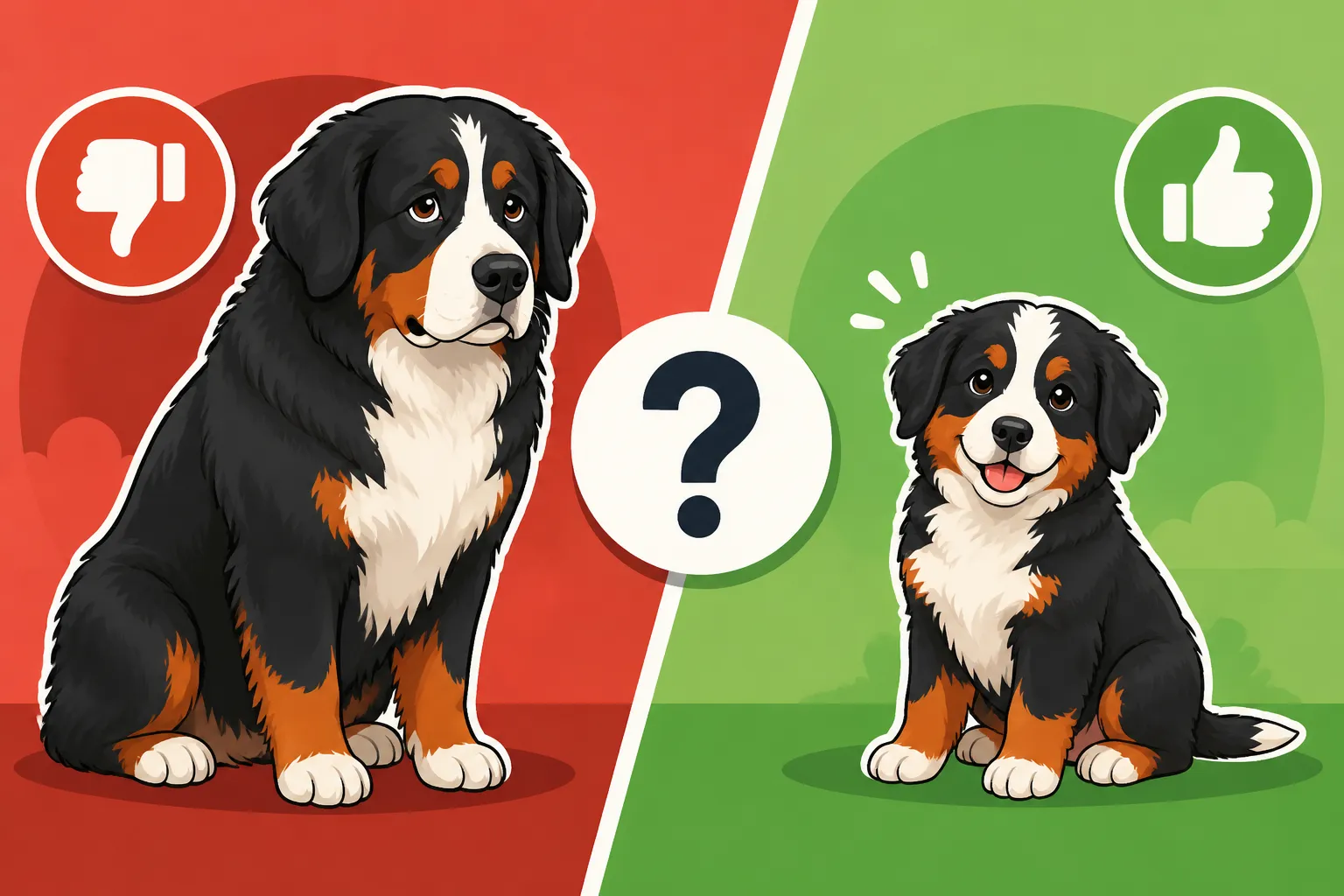
Let's be absolutely clear: there is no such thing as a recognized "Mini Bernese Mountain Dog" breed. Any breeder advertising a "Mini Berner" is either selling a mixed breed (often a Bernese Mountain Dog crossed with a smaller breed like a Cavalier King Charles Spaniel, a Cocker Spaniel, or even a Poodle to create a "Mini Bernedoodle"), or they are selling a purebred Bernese Mountain Dog that is simply undersized, perhaps due to poor breeding practices.
These "mini" versions are usually an attempt to capitalize on the Bernese Mountain Dog's popularity while trying to mitigate their large size and potential health issues. However, crossing breeds doesn't guarantee improved health, and it certainly changes the fundamental characteristics of the Bernese Mountain Dog. If size is a major concern, it's better to research naturally smaller, large-breed friendly dogs, or consider adopting an adult Berner whose size is already established. For more on this, check out Whether a Mini Bernese Mountain Dog Is a Real Breed.
Identifying a True Bernese Mountain Dog
A true Bernese Mountain Dog, regardless of whether they are at the smaller or larger end of the spectrum, will possess all the distinct characteristics of the breed. This includes their specific tricolor markings, their double coat, their characteristic head shape, and most importantly, their gentle, good-natured temperament. You can compare your dog's appearance and temperament to Bernese Mountain Dog Markings and What They Mean and The Bernese Mountain Dog Breed Standard to confirm.
When considering a puppy, a reputable breeder will be transparent about the parents' sizes and provide health clearances for generations. They will not advertise "mini" versions. They will also be able to explain the lineage and why a particular puppy might be smaller, if that's the case. Always ask to see the parents and their health records. If a breeder is evasive or pushes the idea of a "miniature" purebred Bernese, that should be a significant red flag.
Implications of Mixed Breeds
While there's nothing inherently wrong with mixed-breed dogs, it's crucial to understand what you're getting. A Bernese Mountain Dog mix will inherit traits from both parent breeds, meaning their size, coat, temperament, and health predispositions will be a combination. You might get a dog that's smaller than a purebred Berner, but you also might lose some of the signature qualities that drew you to the breed in the first place, or gain health concerns from the other parent breed.
The most important thing is transparency and understanding. If you're specifically looking for a smaller dog, and a mixed breed offers the traits you desire, that's a perfectly valid choice. Just ensure you know which breeds are involved and what to expect. Never pay a premium for a "mini Bernese Mountain Dog" thinking you're getting a rare purebred; you're likely paying for a marketing gimmick. Whether you're looking for a purebred or a mix, resources like Chewy can help you find appropriate supplies for any size dog, but knowing your dog's actual genetic makeup helps you make the best care decisions.
Ultimately, whether a Bernese Mountain Dog is considered "small" or falls slightly outside the exact breed standard dimensions for height, it rarely diminishes their capacity to be a wonderful companion. While it might be a factor in the show ring, in a loving home, a healthy, happy Berner of any size is a treasure.
Disclaimer
This article is for general informational purposes only and does not constitute professional advice. Laws, prices and regulations vary by location and change over time. Consult a qualified professional for guidance on your specific situation.