Whether the Greater Swiss Is Bigger Than a Bernese Mountain Dog
It’s a common moment for many prospective giant breed owners: you're doing your research, pouring over photos, and suddenly you realize that the gorgeous, fluffy Bernese Mountain Dog looks an awful lot like that sleek, impressive Greater Swiss Mountain Dog you just saw. It leaves you wondering, "Is one actually bigger than the other, or is it just the coat playing tricks on my eyes?" This is a perfectly valid question, and one that often causes confusion. This guide is here to unravel that mystery, giving you a clear picture of the size differences and what they mean for living with these magnificent breeds.
Unpacking the Breed Standards: Size and Stature
When we talk about whether the Greater Swiss Mountain Dog is bigger than a Bernese Mountain Dog, we're really diving into the specifics of their respective breed standards. Both are impressive, powerful dogs, but there are distinct differences in their ideal dimensions and overall build that set them apart. It's not just about who's taller, but also about their physical presence and underlying bone structure.
The Bernese Mountain Dog: A Gentle Giant's Dimensions
The Bernese Mountain Dog is renowned for its striking tricolor coat and its generally sturdy, somewhat stocky build. Males typically stand between 25 to 27.5 inches tall at the shoulder, with females slightly smaller, usually ranging from 23 to 26 inches. In terms of weight, males generally tip the scales between 80 to 115 pounds, and females are usually 70 to 95 pounds.
What's important to understand about the Bernese isn't just these numbers, but the overall impression they give. A well-bred Bernese is a powerful dog, muscular and well-boned, but they often appear somewhat softer, rounder, and more heavily coated than their Swiss cousins. Their dense, double coat adds significantly to their perceived bulk, making them look even more substantial. When you look at The Bernese Mountain Dog Breed Standard, you'll find emphasis on a balanced, strong, and active dog, but one that carries itself with dignity and a gentle demeanor. Their weight is distributed across a robust frame, giving them that classic "bear-like" appearance that so many people adore.
The Greater Swiss Mountain Dog: Towering Over Its Cousin
Now, let's turn our attention to the Greater Swiss Mountain Dog. While also a tricolor breed, their appearance is quite different. Swissies generally present a more substantial, often taller, and certainly more athletic profile than Berners. Males typically stand a bit taller, ranging from 25.5 to 28.5 inches at the shoulder, with females usually 23.5 to 27 inches. You might notice these height ranges overlap slightly with the Bernese, but the overall average for Swissies tends to be on the higher end.
Where the difference truly becomes apparent is often in their weight and overall build. Male Greater Swiss Mountain Dogs can weigh anywhere from 85 to 140 pounds, with females typically 80 to 110 pounds. You can see there’s a potential for a Swissy male to be significantly heavier than a Bernese male. They are built for strength and endurance, with a more pronounced musculature and a noticeably shorter, smoother coat that doesn't add to their bulk visually. This gives them a leaner, more powerful, and often more imposing look. They are often described as having "granite" muscle and bone, reflecting their origins as tough, working farm dogs.
Beyond the Numbers: The Visual Differences in Build
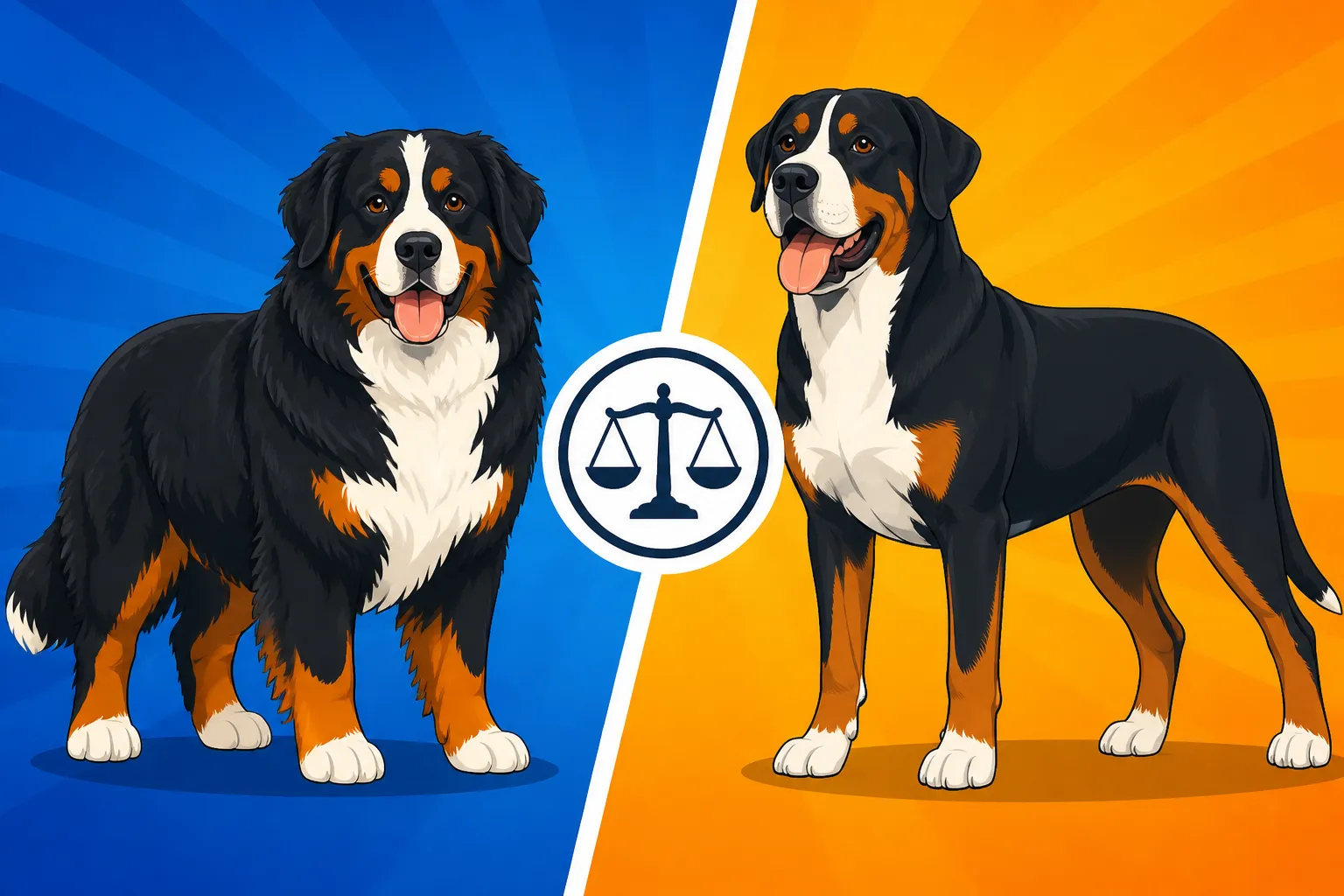
It's one thing to read numbers, but quite another to see these dogs side-by-side. Imagine standing next to both. The Bernese, with its lush, long coat, might initially appear wider and perhaps even heavier due to all that fur. However, if you were to feel beneath their coats, you'd find a solid, but perhaps less overtly muscled, frame. Their broad chest and deep body contribute to their substantial feel.
The Greater Swiss, on the other hand, with its short, dense coat, reveals its powerful physique much more readily. You'd see pronounced musculature, a deep chest, and a strong, athletic build that speaks to its history of hard work. They often have a slightly longer body proportion compared to the Bernese, and their head tends to be more refined, though still substantial. The standard often emphasizes a powerful, agile, and well-balanced dog, capable of demanding physical tasks. This difference in build and coat contributes significantly to the common question, Telling a Greater Swiss From a Bernese Mountain Dog.
Why the Confusion? Shared Ancestry and Similarities
It's completely understandable why people often get the Bernese Mountain Dog and the Greater Swiss Mountain Dog confused, or at least wonder about their size relation. After all, they share a rich history and distinct similarities that make them seem like two peas in a pod, at least at first glance. Delving into their past helps shed some light on why these two magnificent breeds can be so easily mistaken for one another.
The Swiss Sennenhund Family Tree
Both the Bernese and the Greater Swiss Mountain Dog belong to a group known as the "Sennenhund" breeds, which translates roughly to "alpine pasture dogs" or "dairymaids' dogs." These were general-purpose farm dogs from the Swiss Alps, bred to guard livestock, pull carts, and even drive cattle. There are actually four distinct Sennenhund breeds: the Bernese Mountain Dog, the Greater Swiss Mountain Dog, the Appenzeller Sennenhund, and the Entlebucher Sennenhund. Learning about The Four Swiss Breeds Beside the Bernese Mountain Dog can really clarify their familial ties.
Their shared heritage means they possess common traits: a striking tricolor coat (though with variations), a strong, sturdy build, and a reputation for being loyal, intelligent, and generally good-natured with their families. This common foundation, coupled with their shared origin in the rugged Swiss landscape, naturally leads to a certain visual resemblance that can make differentiating their sizes tricky without a keen eye for detail. They were all developed to be robust and capable of hard work in demanding environments, which means all of them are well-muscled and have a commanding presence.
Coat Differences: More Than Just Color
One of the most significant reasons for the perception of similar size, or even the idea that the Bernese might be larger, lies in their coats. The Bernese Mountain Dog boasts a long, thick, luxurious double coat that is one of its most defining features. This dense fur, designed to protect them from the harsh alpine winters, adds considerable volume to their appearance. When you see a Bernese, particularly one with a full, well-maintained coat, they appear incredibly substantial, almost teddy-bear like. This optical illusion can make them seem bigger, broader, and more imposing than their underlying bone structure might otherwise suggest.
The Greater Swiss Mountain Dog, by contrast, has a short, dense double coat. While still providing excellent insulation, it lies close to the body and doesn't add the same visual bulk. Their sleek coat highlights their powerful musculature and more athletic frame. So, while a Greater Swiss might genuinely be taller and heavier in terms of lean body mass, the Bernese's voluminous coat can make them look equally, if not more, massive at first glance. It's a classic case of what you see isn't always what you get, especially when dealing with dog breeds that have such distinctive coat types.
Temperament and Presence: A Shared Sense of Dignity
Beyond their physical traits, both breeds also share a similar aura of nobility and dignified presence. Both the Bernese and the Greater Swiss Mountain Dog carry themselves with a calm confidence that can make them appear larger than life. They are powerful dogs, not prone to excessive skittishness or hyperactivity, which means they tend to stand or move with a deliberate, impressive bearing.
This shared calm demeanor and imposing presence can contribute to the confusion regarding their size. A Bernese, known for its gentle nature and steady disposition, often fills a room with its quiet confidence. Similarly, the Greater Swiss, with its watchful eyes and powerful stance, commands attention. This inherent gravitas can make it harder to discern subtle size differences, especially if you're not used to interacting with giant breeds. It’s also worth remembering What a Bernese Mountain Dog Did on a Swiss Farm, which speaks to their steadfast and reliable nature, a trait shared across the Sennenhund family.
Practical Implications of Size Differences for Owners
Understanding the size differences between the Bernese Mountain Dog and the Greater Swiss Mountain Dog isn't just a matter of curiosity; it has very real, practical implications for potential owners. Whether you choose one over the other, or simply want to be well-prepared, knowing these distinctions can significantly impact your daily life, your budget, and even the layout of your home.
Space Requirements and Living Arrangements
Let's be honest, both of these breeds are big. There's no getting around that. However, even subtle differences in height and weight can make a noticeable impact on your living arrangements. A Greater Swiss, potentially reaching 140 pounds and standing taller, will naturally take up more space on your couch, in your car, and certainly in their crate. A large Bernese might fill a room with its floofy presence, but a truly giant Swissy will often demand even more physical elbow room.
Consider your home:
- Dog Beds & Crates: You'll need extra-large or even jumbo-sized beds for either, but a heavier Swissy might wear them out faster or require an even more robust orthopedic option. Crates must be substantial; what fits a large Bernese might feel snug for a very tall Greater Swiss.
- Your Vehicle: A standard sedan likely won't cut it for either breed, especially with passengers. You'll probably be looking at an SUV, minivan, or truck. The cargo space needed for a Greater Swiss might push you towards a larger vehicle model.
- Doorways & Hallways: While they can navigate, a very broad Bernese or a very tall Swissy can make tight corners feel even tighter. They need space to turn around comfortably without knocking things over with a wagging tail or a hip check.
This isn't about fitting them into a tiny apartment – neither is ideal for cramped spaces – but rather about the subtle differences that can push you from needing a 'large' item to an 'extra-large' one, and the logistical challenges that come with that.
Exercise Needs and Joint Health Considerations
Both breeds are powerful working dogs, but their builds hint at slightly different exercise needs. The Greater Swiss, with its more athletic and often leaner build, might be capable of and enjoy more strenuous or prolonged physical activity. They often have higher stamina and a drive for active engagement, which means they might require longer walks, more vigorous play sessions, or even activities like carting or hiking to truly thrive.
The Bernese, while also active and enjoying outdoor adventures, can sometimes be a bit more prone to "couch potato" tendencies, especially as they mature. Their heavy coats also make them less tolerant of heat, so exercise routines need careful management. For both breeds, their size puts considerable strain on their joints. This is a crucial area for concern, as conditions like hip and elbow dysplasia are unfortunately common. Regardless of whether you choose a Bernese or a Greater Swiss, you’ll be dealing with Joint Disease in a Hundred Pound Bernese Mountain Dog.
Regular, moderate exercise is key to maintaining muscle tone and joint health, but high-impact activities, especially when young, should be avoided. Consult with your vet about appropriate exercise levels and consider joint supplements early on. When a dog carries this much weight, Hips That Fail Under a Bernese Mountain Dog's Weight can be a devastating reality, so prevention and care are paramount.
Feeding a Large Appetite: More Food, More Cost
Let's not beat around the bush: big dogs eat big. And when you're talking about a dog that can easily exceed 100 pounds, their food bill becomes a significant line item in your budget. A Greater Swiss, being potentially heavier and more muscular, might require even more calories than a Bernese, especially if they are kept in a working or highly active condition.
This means:
- Larger Bags of Food: You'll be buying the biggest bags of high-quality large-breed dog food. Brands like Chewy often offer convenient delivery services for these bulk items, which can be a lifesaver when you're stocking up on 30-40 pound bags every few weeks.
- Higher Monthly Costs: Expect to spend a considerable amount on food alone. It's not just about the quantity, but also the quality; feeding a giant breed a premium, nutrient-dense diet is essential for their growth and overall health. Skimping on food quality can lead to health issues down the line. To get a realistic idea of the ongoing expense, consider Feeding a Hundred Pound Bernese Mountain Dog Monthly.
- Storage Space: Those big bags of food need somewhere to go! You'll need a dedicated, airtight storage container to keep it fresh and prevent pests.
- Treats and Chews: Even treats add up. You'll need appropriately sized, durable chews to keep them entertained and to support dental health, and these often come with a higher price tag.
It's not just the food itself. Bowls need to be large and sturdy, and many giant breed owners opt for elevated feeders to aid digestion and reduce strain on their necks. Every aspect of their feeding requires a larger scale investment. If you're wondering A Month of Food for a Bernese Mountain Dog, just imagine that potentially scaling up further for a bigger Swissy.
Making the Right Choice: Which Breed Suits Your Lifestyle?
Deciding between a Bernese Mountain Dog and a Greater Swiss Mountain Dog is a wonderful dilemma to have, as both are truly magnificent breeds. But the subtle size differences, coupled with other defining characteristics, mean one might be a better fit for your specific lifestyle than the other. It’s about more than just aesthetics; it’s about understanding the commitment each dog requires.
Grooming Commitments: Long vs. Short Coat
Here’s where you'll find one of the most significant practical differences between the two breeds. The Bernese Mountain Dog's iconic long, flowing, tricolor coat, while stunning, is a commitment. They are heavy seasonal shedder, particularly in spring and fall, and require consistent grooming to prevent mats and keep their skin healthy. You’ll be spending a fair amount of time brushing, de-shedding, and potentially cleaning burrs and debris from their long fur. Grooming a Bernese Mountain Dog's Long Tricolor Coat is a serious topic for a reason! Expect a daily brush during shedding season and several times a week otherwise. You'll need a good quality slicker brush, a rake, and a strong vacuum cleaner that can handle copious amounts of dog hair. Many Bernese owners find themselves regular customers at places like Chewy for all their grooming supply needs.
The Greater Swiss Mountain Dog, on the other hand, has a short, dense coat. While they do shed year-round, and also have seasonal "blow-outs," their grooming needs are generally much less intensive. A weekly brush with a rubber curry comb or a deshedding tool is often sufficient to keep their coat healthy and minimize loose hair around the house. They don't typically develop the same kind of mats or tangles that a long-coated dog can, making their upkeep less time-consuming. If you're not keen on extensive grooming, this difference alone might sway your decision.
Energy Levels and Training Approaches
Both breeds are intelligent and generally eager to please, but their energy levels can differ. Bernese Mountain Dogs are known for being relatively calm indoors once they're past puppyhood. They enjoy a good walk or a romp in the yard, but they're often quite content to lounge at your feet. They are generally sensitive and respond best to positive reinforcement and gentle training methods. Training a Bernese Mountain Dog Without Breaking It is crucial, as harsh corrections can make them shut down. Their impressive size means early leash training and manners are paramount, so they don't accidentally pull you off your feet.
Greater Swiss Mountain Dogs, while also calm and confident, often possess a higher energy level and a more robust drive to work. They tend to be more athletic and may require more vigorous exercise and mental stimulation to prevent boredom. Their strong will and powerful build mean consistent, firm, and fair training from a young age is essential. They excel in activities like carting, hiking, and even obedience trials. They are not dogs that can just be left to their own devices; they thrive on having a job or purpose, even if that's just a long daily walk and engaging play sessions. Think about your own activity level – do you want a companion for longer adventures, or a more sedate buddy for leisurely strolls?
Long-term Health and Lifespan
This is a sobering but vital consideration for any giant breed owner. Unfortunately, both the Bernese Mountain Dog and the Greater Swiss Mountain Dog, like many large and giant breeds, have shorter lifespans compared to smaller dogs. The Bernese Mountain Dog, in particular, is known for its relatively short lifespan, with many living only Why a Bernese Mountain Dog Lives Only Seven or Eight Years. They are predisposed to certain health conditions, notably various cancers (especially histiocytic sarcoma), and orthopedic issues like hip and elbow dysplasia.
The Greater Swiss Mountain Dog generally has a slightly longer average lifespan, often ranging from 8 to 11 years, though individuals can certainly live longer. They share some of the orthopedic concerns of the Bernese, but while they are not immune to cancer, the prevalence of certain aggressive cancers like histiocytic sarcoma is typically lower than in the Bernese. They can also be prone to bloat (Gastric Dilatation-Volvulus) and certain eye conditions. Responsible breeders for both breeds conduct extensive health testing to try and mitigate these risks. Understanding these health profiles is crucial for preparing for the emotional and financial realities of owning a giant breed.
Costs Associated with Giant Breeds
No matter which of these magnificent breeds you choose, prepare for significant financial investment. Their size dictates higher costs across the board. What Buying a Bernese Mountain Dog Actually Costs is a comprehensive look at the financial commitment, and much of that applies to the Greater Swiss as well, with some potential increases for their greater size.
Consider these ongoing expenses:
- Food: As discussed, their large appetites translate to substantial food bills. Buying in bulk from online retailers like Chewy can sometimes offer savings, but it's still a major expense.
- Veterinary Care: Everything from routine vaccinations and worming (dosed by weight) to emergency care, surgery, and medications will cost more for a bigger dog. Anesthesia for a 100+ pound dog is inherently more expensive.
- Supplies: Large crates, beds, harnesses, leashes, toys – all are larger, more durable, and therefore more expensive.
- Pet Insurance: Given their predispositions to joint issues and cancer, pet insurance is a wise investment, but premiums for giant breeds can be higher.
- Grooming: Even if you do most grooming yourself, specialized tools are an investment. Professional grooming for a large dog, especially a long-haired Bernese, is also more expensive.
- Boarding/Pet Sitting: Finding facilities that can accommodate and are comfortable with giant breeds, and the rates they charge, will be higher.
Ultimately, both breeds offer immense joy and companionship. The decision often comes down to personal preference for grooming, subtle differences in energy and temperament, and a clear-eyed understanding of the health and financial commitments involved. Think carefully about The Kind of Home a Bernese Mountain Dog Belongs In and whether your household can meet the unique needs of either of these wonderful Swiss mountain dogs.
Disclaimer
This article is for general informational purposes only and does not constitute professional advice. Laws, prices and regulations vary by location and change over time. Consult a qualified professional for guidance on your specific situation.