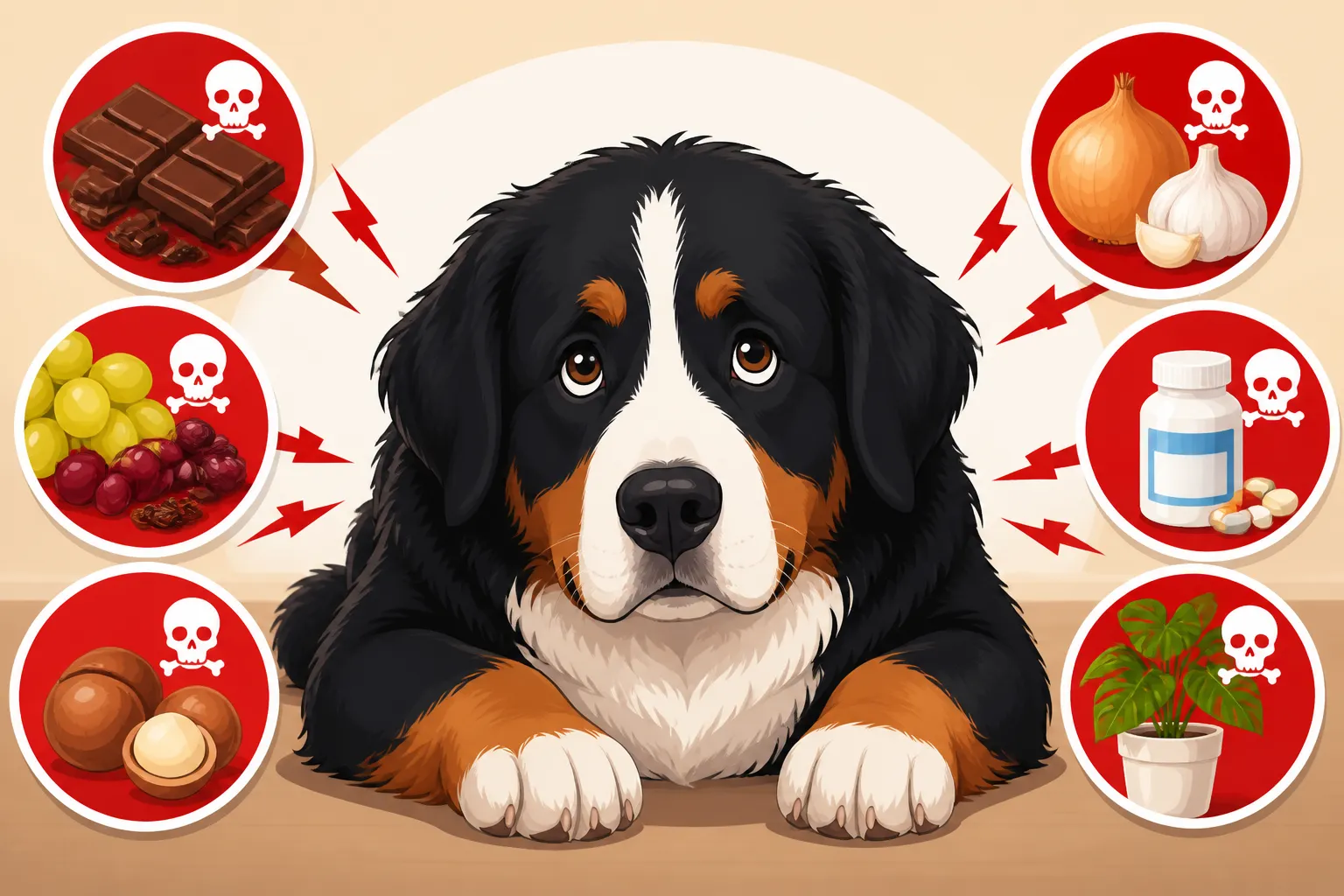
Poisons a Bernese Mountain Dog Is Big Enough to Reach
It’s a heart-stopping moment many of us Berner parents know all too well: you turn your back for a second, and your beloved, giant furball has somehow managed to get their nose into something they shouldn't. With their curious nature, impressive reach, and often surprisingly stealthy ways, Bernese Mountain Dogs can quickly turn an innocent household item into a serious health hazard. This guide is here to help you identify common household and outdoor poisons and, more importantly, equip you with the knowledge to keep your big, beautiful Berner safe and sound.
The Kitchen: A Culinary Minefield for Curious Noses
Our kitchens are often the heart of our homes, full of delicious smells and interesting things. But for a Bernese Mountain Dog, a place of wonder can also be a place of immense danger. Their sheer size means they can reach countertops with ease, and their powerful jaws can quickly chew through packaging that would deter a smaller dog. The amount of a toxic substance a large dog can ingest can also be significantly higher, leading to more severe reactions.
Common Human Foods That Spell Trouble
We love to share with our pets, but some human foods are absolutely off-limits, no matter how much those big brown eyes beg. For a Berner, who can easily polish off a whole plate of unattended food, the risks are amplified. Many of us forget just how much of certain ingredients can be hidden in seemingly harmless dishes.
Chocolate is a classic example, and for good reason. Dark chocolate and baking chocolate contain higher concentrations of theobromine, which Bernese Mountain Dogs process much slower than humans, leading to toxic buildup. Symptoms can range from vomiting and diarrhea to tremors, seizures, and even heart problems. Imagine your hundred-pound Berner getting into a bag of chocolate chips left on the counter after a baking session – the amount ingested could be truly dangerous. Feeding an Adult Bernese Mountain Dog Safely means being vigilant about these everyday treats.
Another major culprit is xylitol, an artificial sweetener found in many sugar-free products like gum, candies, certain peanut butters, and even some medications. Xylitol causes a rapid release of insulin in dogs, leading to a dangerous drop in blood sugar (hypoglycemia) and potential liver failure. Because Berners are large, they might eat an entire pack of gum or a whole jar of xylitol-containing peanut butter, leading to a much more severe and immediate reaction compared to a smaller dog. Always check ingredient labels, especially for "sugar-free" items.
Grapes and raisins are also incredibly toxic, yet their exact mechanism of action is still unknown. Even a small amount can cause acute kidney failure in some dogs. Given the size of a Bernese Mountain Dog, a forgotten fruit bowl on a low table, or a container of raisins in a pantry that's easy to nudge open, could quickly lead to a tragic situation. Onions, garlic, leeks, and chives, whether raw, cooked, or powdered, belong to the Allium family and can cause red blood cell damage, leading to anemia. While a tiny bit might not hurt a giant Berner, a larger quantity from a dropped meal or an accessible ingredient bag is a real concern.
Other foods like avocados (persin is toxic to some animals, though typically less so for dogs, still best avoided), macadamia nuts (can cause weakness, vomiting, tremors), and even excessive amounts of salt can pose threats. It's a constant battle for many of us with large, food-motivated dogs to keep them out of everything! You might find products on Chewy that offer healthy, Berner-safe treats, reducing the temptation for your dog to seek out human snacks.
Household Items Lurking in Cabinets
Beyond food, our kitchens and utility spaces are filled with chemicals and products we often don't think twice about until a curious snout gets involved. Berners are smart and strong; they can often open child-proof latches with persistence or knock over spray bottles left on the floor.
Cleaning supplies are a huge hazard. Bleach, oven cleaners, drain cleaners, toilet bowl cleaners, and even floor detergents are corrosive and can cause severe burns internally and externally. Antiseptic wipes, though seemingly mild, can contain chemicals that cause irritation or toxicity if ingested in large quantities. Leaving a bucket of cleaning solution on the floor while you scrub might seem harmless for a minute, but that's all it takes for a Berner to take a few gulps.
Human medications are another top offender. Pain relievers like ibuprofen or acetaminophen, antidepressants, blood pressure medications, and even vitamins can be incredibly dangerous. A Bernese Mountain Dog could chew through a pill bottle in seconds. Just one dropped pill could be enough to cause serious problems for a smaller dog, but for a Berner, an entire bottle could have devastating consequences. Alcohol, often found in kitchen areas (think cooking wine, beer left on a low table), can cause depression of the central nervous system, respiratory failure, and even death. Even coffee grounds, tea bags, and energy drinks contain caffeine, which is a stimulant that can cause heart problems and seizures in dogs. Keep all these items securely stored, preferably in high, locked cabinets that even the most determined Berner can't access.
Beyond the Pantry: Dangers in Every Room and Yard
The dangers don't stop at the kitchen door. Our entire homes and yards are filled with potential hazards that, for a large breed like the Bernese Mountain Dog, present a unique set of challenges due to their size, reach, and love for exploring with their mouths.
Garden & Yard Threats
Our beautiful gardens, unfortunately, often harbor plants and products that are highly toxic to dogs. A Berner spending time outdoors might easily graze on plants or lick up spilled chemicals.
Many common ornamental plants are poisonous. Lilies, for example, are infamous for causing acute kidney failure in cats, but some varieties are also toxic to dogs, causing gastrointestinal upset. Sago palms, popular in warmer climates, are incredibly dangerous; all parts of the plant are toxic, with seeds being the most potent. Ingesting even a small amount can cause liver failure, vomiting, bloody stools, and seizures. Other toxic garden plants include azaleas and rhododendrons, which contain grayanotoxins that affect cardiac and skeletal muscle function, leading to vomiting, diarrhea, tremors, and cardiac issues.
Beyond plants, lawn and garden care products are serious hazards. Fertilizers often contain nitrogen, phosphorus, and potassium, which can cause gastrointestinal upset if ingested. Some also include iron, pesticides, or herbicides that are much more toxic. Pesticides, insecticides, and especially rodenticides (rat and mouse poisons) are designed to kill, and they do not discriminate between pests and pets. Rodenticides often come in tempting, flavored blocks that a curious Berner would find appealing. What a Bernese Mountain Dog Reaches Without Standing Up is considerable, meaning these products need to be stored in locked sheds or high out of reach.
Slug and snail baits, often containing metaldehyde, are highly palatable to dogs and can cause severe, life-threatening neurological symptoms including tremors, seizures, and hyperthermia. Even something as seemingly benign as cocoa mulch, made from cacao bean shells, contains the same toxic compound found in chocolate. Always read labels carefully before using any product in your yard and consider natural, pet-safe alternatives.
Garage & Utility Room Hazards
The garage and utility room are typically treasure troves of dangerous chemicals and tools. For a large, often clumsy Berner, these spaces can be incredibly risky. Antifreeze, with its sweet taste, is notoriously deadly. Even a small amount licked from a driveway puddle can cause acute kidney failure. Motor oils, paint thinners, gasoline, and other automotive fluids are corrosive and toxic. A large Berner could easily knock over an open container or chew through a plastic bottle of these substances.
Pest control products stored in these areas, like ant traps, roach baits, or larger containers of insecticide, are also highly concerning. Many of these are designed to attract pests, making them unfortunately attractive to pets as well. Leaving a bag of rock salt or ice melt on the floor during winter is another common mistake. These products can cause severe gastrointestinal irritation and, in large quantities, electrolyte imbalances or kidney damage. When considering how to keep your Bernese safe, remember Keeping a House Livable With a Bernese Mountain Dog extends to every corner, even the garage.
Everyday Items That Aren't So Innocent
It's not just the obvious poisons; some everyday items we barely notice can become dangerous when consumed by a large, curious dog.
Human medications, as mentioned, are a top hazard. But even pet medications can be dangerous if given in the wrong dose or if a dog consumes an entire bottle of flavored chewables. Over-the-counter supplements, particularly those containing iron or certain vitamins, can also be toxic in large amounts.
Even items that aren't inherently toxic can cause mechanical obstructions if swallowed whole by a large dog. Batteries, especially button batteries, are extremely dangerous. If chewed, they can cause chemical burns to the mouth, esophagus, and stomach. If swallowed whole, they can cause an obstruction and release corrosive chemicals. Liquid potpourri and essential oils, while they smell nice to us, can cause irritation and toxicity if ingested or even if they get on your Berner's skin or coat.
Many toys, even those marketed for dogs, can sometimes contain small parts or materials that could be problematic if chewed and swallowed by a determined Berner. Always supervise playtime, especially with new toys, and choose durable options appropriate for a large breed. When ordering dog supplies, consider using trusted retailers like Chewy or Amazon for durable, safe toys and accessories.
Securing Your Home: Making It a "Berner-Proof" Sanctuary
Prevention is always better than a cure, especially when it comes to poisons and a large, vulnerable dog like a Bernese Mountain Dog. Taking proactive steps to secure your home can save you immense heartache and hefty vet bills. The Running Costs of a Hundred Pound Bernese Mountain Dog can climb quickly in an emergency!
Strategic Storage and Containment
Think like your Bernese. What can they reach? What can they open? What can they knock over? Since a Berner can easily place their paws on a countertop or nose into a low cabinet, you need to elevate or secure everything.
High shelves are your best friend for medications, cleaning supplies, and toxic foods. If it absolutely must be in a lower cabinet, invest in child-proof locks. These aren't just for toddlers; they're essential for a smart, persistent Berner. Many effective and affordable options are available on Amazon. Secure trash cans with tight-fitting lids or pedal locks are also non-negotiable. A Berner will not only knock over a flimsy bin but also likely scatter its contents across your kitchen in search of forgotten treasures.
Consider vertical storage solutions in your garage or utility room. Wall-mounted shelving or locking cabinets are ideal for paints, chemicals, and garden products. Make sure to keep garage doors closed and never leave dangerous liquids in open containers on the floor. For food items that are toxic, keep them in airtight containers on high shelves, or even better, in a locked pantry. This is especially true for items like chocolate or those containing xylitol. Remember, a Berner’s size means they can make short work of a whole package, so even a small quantity of something highly toxic needs to be completely out of reach. For a healthy, balanced diet, consider services like Ollie, which deliver fresh, customized dog food, reducing the temptation for your Berner to raid your pantry.
Educating the Family and Guests
Everyone in your household needs to be on the same page when it comes to Berner safety. This means consistent rules and clear communication. Explain to children why certain items are dangerous for the dog and teach them to put things away immediately. Grandparents or visitors, who might not be familiar with a Berner's impressive reach or their potential health vulnerabilities, need gentle reminders about not leaving medications on nightstands or plates of food unattended on coffee tables.
Create a visible list of forbidden foods and items, especially if you have multiple people living in or visiting your home regularly. Emphasize the importance of immediately cleaning up spills, especially in the garage or garden. A simple "don't leave your purse on the floor" or "please keep the cabinet under the sink locked" can prevent a disaster. Consistency is key; if one person is lax, your Berner will quickly learn where the weak points in your security are.
Emergency Preparedness
Even with the best precautions, accidents can happen. Being prepared for a poisoning emergency is crucial. Have your veterinarian's emergency number, the number for the nearest 24-hour emergency vet clinic, and the number for a pet poison control center (like the ASPCA Animal Poison Control Center or Pet Poison Helpline) prominently displayed. Time is of the essence in poisoning cases, and fumbling for numbers can waste precious minutes.
Consider having a pet first-aid kit that includes basics like hydrogen peroxide (only to be used under vet instruction for inducing vomiting) and activated charcoal (also only under vet instruction). Most importantly, if you suspect your Berner has ingested something toxic, call your vet or poison control immediately. Do not wait for symptoms to appear. The quicker you act, the better the prognosis. And remember, Insuring a Bernese Mountain Dog Against Cancer or other serious health issues can also help cover the potentially enormous costs of emergency treatment for poisoning.
Recognizing the Signs and Acting Fast
Knowing what to look for and how quickly to respond can make all the difference in a poisoning emergency. Bernese Mountain Dogs, like many large breeds, can sometimes be stoic, making it harder to spot subtle signs of discomfort.
Subtle Versus Obvious Symptoms
The signs of poisoning can vary wildly depending on the substance ingested, the amount, and your dog's individual sensitivity. Some symptoms might be immediately obvious, while others could develop slowly over hours or even days.
Obvious signs often include:
- Vomiting and diarrhea: These are common initial reactions to many toxins. Look for blood in vomit or stool.
- Lethargy and weakness: Your usually energetic Berner might seem unusually tired or have trouble standing.
- Loss of appetite: Refusing food or water.
- Excessive drooling or foaming at the mouth: This can indicate nausea or irritation.
- Tremors, twitching, or seizures: These neurological signs are serious and require immediate attention.
- Difficulty breathing or collapse: A critical emergency.
Subtle signs can be trickier to spot:
- Changes in behavior: Your dog might be restless, unusually clingy, or withdrawn.
- Increased thirst or urination: This can be a sign of kidney issues, especially with substances like grapes.
- Changes in gum color: Pale gums can indicate anemia (from onion toxicity), while bright red gums can signal shock or fever.
- Abdominal pain: Your Berner might be reluctant to be touched on the belly or stand in a hunched position.
- Unusual odors: Smelling chemicals on your dog's breath or fur.
It's important to remember that a large dog might ingest a significant amount of a toxin before showing symptoms, or their larger body mass might dilute the initial effects, giving a false sense of security. Always err on the side of caution. If something feels "off" with your Bernese, especially if you know they had access to something potentially dangerous, it’s worth a call to the vet. This proactive approach is part of What a Bernese Mountain Dog Checkup Includes After Five, but applies at any age.
The Golden Hour: Why Time is Critical
For many types of poisoning, there's a "golden hour" or a critical window of time during which veterinary intervention can be most effective. The sooner treatment begins, the better the chances of a full recovery and minimizing long-term damage.
If you suspect poisoning, gather as much information as you can:
- What was ingested? Try to identify the product, its ingredients, and concentration.
- How much was ingested? Estimate the quantity. Was it a small bite or an entire package?
- When was it ingested? Your best guess helps the vet determine how far along the toxicity process is.
- What are the symptoms? Describe everything you've observed, even if it seems minor.
Do NOT try to induce vomiting or give any home remedies without explicit instructions from a veterinarian or poison control expert. Some toxins can cause more damage coming back up, or certain remedies can be harmful. For instance, Whether a Bernese Mountain Dog Handles Anesthesia Well can be a factor if emergency surgery is required, so a veterinarian needs all the information to make the best, safest decisions.
The pet poison control hotlines are invaluable resources. They have extensive databases on toxic substances and can provide immediate, specific advice tailored to your dog's size, the substance, and the amount ingested. They often charge a fee for their service, but it's a small price to pay for expert guidance that could save your Berner's life. Be prepared to follow their instructions to the letter, and head to the vet if they advise it, without delay.
Here's a quick reference table for some common household poisons:
| Category | Common Examples | Locations | Potential Symptoms | Immediate Action |
|---|---|---|---|---|
| Foods | Chocolate, Xylitol, Grapes/Raisins, Onions | Kitchen, Pantry | Vomiting, diarrhea, lethargy, tremors, seizures, kidney failure, liver failure | Call vet/poison control immediately. Do NOT induce vomiting unless instructed. |
| Medications | Pain relievers, Antidepressants, Vitamins | Bathroom, Bedroom, Kitchen | Vomiting, lethargy, tremors, seizures, organ damage, internal bleeding | Call vet/poison control immediately. Bring packaging. |
| Cleaning Prods. | Bleach, Detergents, Disinfectants | Kitchen, Bathroom, Utility | Vomiting, mouth/throat burns, difficulty breathing, abdominal pain | Call vet/poison control immediately. Rinse mouth/paws if external contact occurred. |
| Garden/Yard | Antifreeze, Rodenticides, Fertilizers, Lilies | Garage, Shed, Garden | Vomiting, kidney failure, neurological signs, internal bleeding, liver damage | Call vet/poison control immediately. Secure dog from further exposure. Bring plant sample/product packaging. |
| Miscellaneous | Batteries, Essential Oils, Alcohol | Various rooms, Purses | Vomiting, burns, lethargy, neurological signs, organ damage | Call vet/poison control immediately. For batteries, do NOT induce vomiting. For skin contact, rinse thoroughly. |
Disclaimer
This article is for general informational purposes only and does not constitute professional advice. Laws, prices and regulations vary by location and change over time. Consult a qualified professional for guidance on your specific situation.