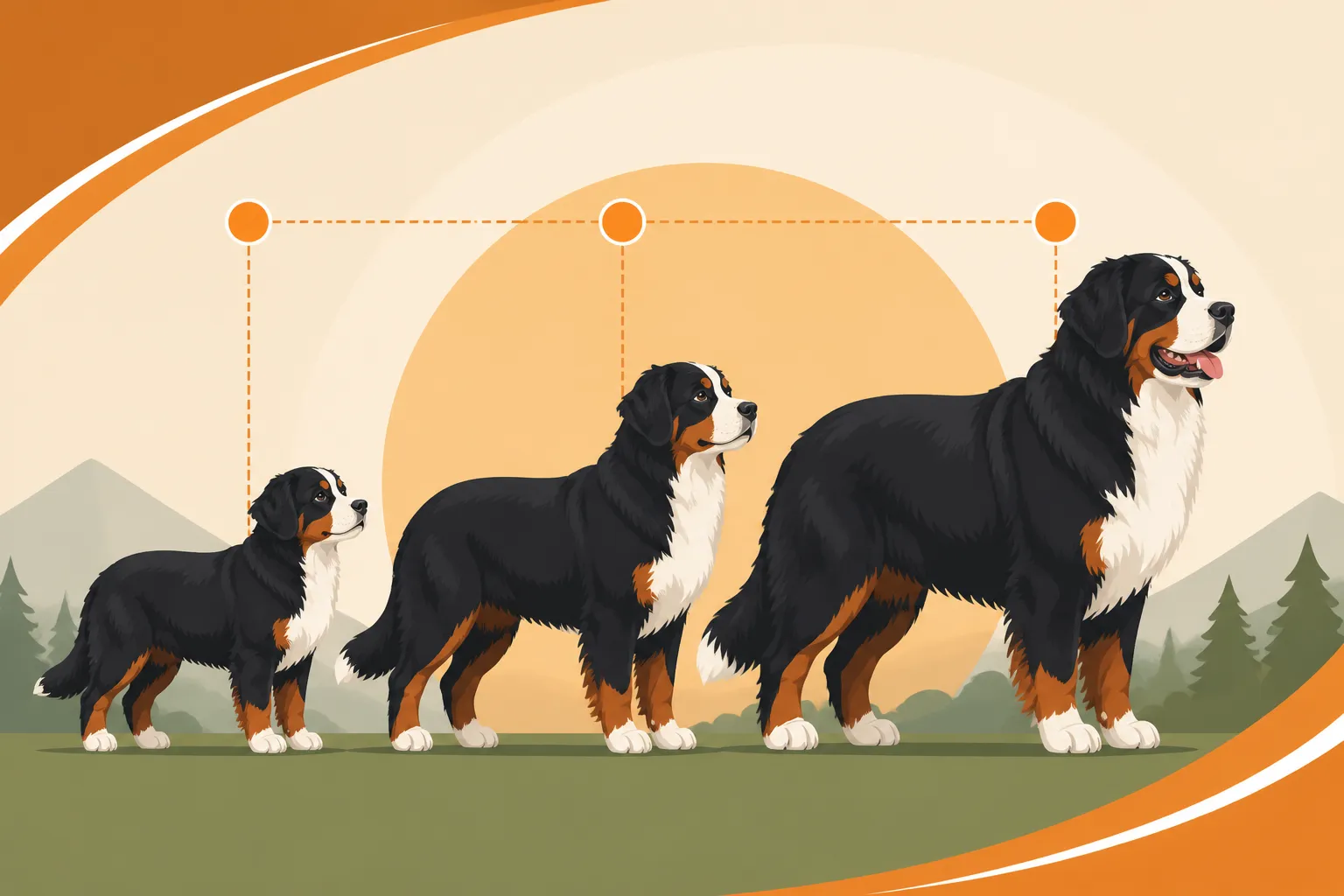
The Size Range the Bernese Mountain Dog Standard Allows
One of the most common questions I hear from aspiring Bernese Mountain Dog owners, or even those who already have a big Berner puppy growing like a weed, is about their ultimate size. It’s easy to feel overwhelmed by the sheer scale of these magnificent dogs, and it often leads to worries about whether your particular pup is growing "too fast" or "too big" or even "too small." This guide is here to shed light on what the breed standard truly expects regarding a Bernese Mountain Dog's size, helping you understand the numbers and what they mean for your furry family member.
Understanding the Bernese Mountain Dog Breed Standard
When we talk about dog breeds, the "standard" is like a blueprint, a detailed description of the ideal specimen. For Bernese Mountain Dogs, this standard guides breeders in their efforts and helps judges evaluate dogs in the show ring. It's not just about looks; it's also about preserving the health, temperament, and working ability that defines the breed.
Why Standards Exist
Breed standards aren't arbitrary rules created just to make life hard for breeders or owners. They exist to maintain the distinct characteristics of a breed, ensuring that a Bernese Mountain Dog truly embodies what a Bernese Mountain Dog should be. Think of it as a quality control measure. Without a standard, breeds could quickly diverge, losing their unique traits, temperament, and even their health predispositions. It’s about more than just aesthetics; it's about preserving centuries of selective breeding that created these wonderful companions.
For a Bernese, the standard helps ensure they retain their robust build, their specific coat type, and their generally good-natured and confident temperament. It's a living document that defines the essence of the breed, a crucial tool for anyone serious about the long-term health and integrity of Berners. When you look at The Bernese Mountain Dog Breed Standard, you'll see it covers everything from nose to tail, including the critical elements of size and proportion.
Who Sets the Standard?
In the United States, the American Kennel Club (AKC) publishes the official breed standard for the Bernese Mountain Dog, as developed by the Bernese Mountain Dog Club of America (BMDCA). Internationally, the Fédération Cynologique Internationale (FCI) sets a standard that is often adopted by clubs in other countries. While there can be minor differences between these standards, they generally align on the core characteristics, including size. These organizations work with breed clubs to continuously refine and interpret the standard, ensuring it remains relevant and beneficial to the breed's welfare.
It's a collaborative effort, involving experienced breeders, judges, and veterinary professionals who are dedicated to the breed. These individuals understand the history of the Bernese Mountain Dog, their original purpose in the Swiss Alps, and how those historical roles influenced their physical and mental traits. They are not just pulling numbers out of thin air; every aspect of the standard is considered for its impact on the dog's function, health, and overall well-being.
More Than Just Numbers
While this article focuses on the specific size ranges, it's crucial to remember that the standard is about more than just numbers on a measuring tape. It's about the overall impression – the balance, substance, and symmetry of the dog. A Bernese Mountain Dog might fall within the exact height and weight ranges but still not embody the ideal if they are too leggy, too fine-boned, or lacking the sturdy presence the breed is known for. Judges and discerning breeders look for a dog that is harmoniously constructed, where all parts fit together to create a powerful, agile, and well-proportioned animal.
The standard often uses descriptive terms like "sturdy," "powerful," and "balanced" because these qualities are just as important as the precise measurements. A Berner isn't meant to be a delicate dog; they were bred for hard work in mountainous terrain. Therefore, their physical structure needs to reflect that resilience and strength. A well-built Bernese should look capable of a day's work, not just a pretty face in the show ring.
The Official Size Specifications for Bernese Mountain Dogs
Let’s get down to the brass tacks: what are the actual numbers? Understanding these specifications will help you gauge whether your Bernese is growing as expected or if there might be something worth discussing with your veterinarian. Keep in mind these are ideals, and individual dogs will naturally have some variation.
Height at the Withers
The breed standard specifies height at the withers, which is the highest point of the shoulder blades. For male Bernese Mountain Dogs, the ideal height range is typically between 25 and 27.5 inches (approximately 63.5 to 70 cm). Females are generally a bit smaller, with an ideal height range of 23 to 26 inches (approximately 58.5 to 66 cm). This measurement is taken with the dog standing squarely on all four paws.
It's not uncommon to see a Berner slightly outside these ranges, especially pet-quality dogs not intended for the show ring. However, significant deviations can sometimes indicate health or structural issues, or simply that the dog doesn't conform closely to the breed ideal. When you hear The Twenty-Five to Twenty-Seven Inch Bernese Mountain Dog mentioned, that's precisely what we're talking about for males in the ring, with a slightly lower range for the ladies.
Weight Guidelines
Unlike height, the breed standard doesn't usually give a specific weight range in pounds or kilograms. Instead, it emphasizes proportionality to height and overall substance. A Bernese Mountain Dog should be "well-boned and muscular," with a weight that is proportionate to their height and structure. For males, this typically translates to a weight between 80 to 115 pounds (approximately 36 to 52 kg), and for females, 70 to 95 pounds (approximately 32 to 43 kg).
However, these are very rough estimates, and a veterinarian will often assess a dog's "body condition score" rather than a strict weight number. You should be able to feel your Berner's ribs without seeing them, and they should have a discernible waist when viewed from above. An underweight dog might lack substance, while an overweight dog puts undue stress on their joints, something we desperately want to avoid with a breed prone to orthopedic issues. If you're ever wondering What a Fit Bernese Mountain Dog Should Weigh, consult your vet for an individualized assessment.
Deviations and Disqualifications
The breed standard often outlines specific deviations that are considered faults, and some extreme deviations can even be disqualifications in the show ring. For instance, a dog that is significantly oversized or undersized for the standard might be faulted. While these faults primarily impact a dog's show career, they can sometimes signal underlying issues for a pet owner. A Berner that is significantly too small might lack the proper bone density or overall health, while one that is Whether a Hundred and Twenty Pound Berner Is Too Big could be at higher risk for joint problems or bloat.
The key isn't just the number, but what that number represents in terms of the dog's overall health and well-being. A Berner that is too tall and fine-boned might lack the desired "sturdy" quality, making them less robust. Conversely, an excessively heavy Berner (beyond what's healthy for their frame) isn't necessarily a "better" Berner; in fact, it can lead to a host of health problems. It's about finding that sweet spot where strength and agility meet, without tipping into extremes.
The Reality of Bernese Mountain Dog Size in Your Home
Beyond the show ring and breeding programs, the size of your Bernese Mountain Dog has very real implications for your daily life. Owning a giant breed means making adjustments, and understanding their physical needs and limitations is paramount to their comfort and your sanity!
Variability Within the Standard
Even within the acceptable ranges of the breed standard, you'll find a natural variability among Bernese Mountain Dogs. Some males might consistently be on the taller end of the spectrum, while others lean towards the middle. This isn't a flaw; it's just natural genetic diversity. Just like humans, no two Berners are exactly alike. This means your female might be a robust 25 inches, while your friend's male might be a lean 26 inches. Both are perfectly within standard, but their overall presence and weight might differ.
This variability is why relying solely on numbers can be misleading. A good breeder will aim for consistency, but nature always throws in its own variations. It’s also important to remember that the standard describes an ideal, and many wonderful, healthy, beloved Berners might fall just outside these precise measurements. What matters most is that your dog is healthy, well-proportioned, and living a comfortable life.
When Size Becomes a Concern
While some variation is normal, there are times when a Berner's size can become a genuine concern. Excessive weight, for example, even if the dog is within the height standard, puts immense strain on their joints, potentially worsening conditions like hip and elbow dysplasia. These dogs are already predisposed to Joint Disease in a Hundred Pound Bernese Mountain Dog, so adding extra pounds is a recipe for early onset arthritis and increased pain. An overweight Berner might also struggle more with heat and have a reduced quality of life.
Conversely, a Berner that is significantly undersized or overly delicate in build might not have the robust health needed for the breed. If you suspect your dog is too thin, or if they appear unusually leggy or slight for their age and expected size, it’s always best to consult your vet. They can help you determine if it's a nutritional issue, a genetic predisposition, or simply a natural variation. Proper nutrition, as discussed in Feeding an Adult Bernese Mountain Dog Safely, is vital for maintaining a healthy weight.
Accommodating a Large Dog
Bringing a Bernese Mountain Dog into your home means making some practical considerations for their size. Everything from their bed to your car needs to accommodate their substantial frame. You'll quickly discover that a standard crate won't cut it, and a comfortable orthopedic bed is a necessity, especially as they age. Think about the space they'll need to move around comfortably, both indoors and out. The Kind of Home a Bernese Mountain Dog Belongs In is one that can handle their majestic presence.
Transportation is another big one. Do you have a vehicle large enough for a 100+ pound dog? Ramps might become essential for getting them in and out of cars or up and down stairs as they get older to protect their joints. Even everyday items, like food bowls, should be appropriately sized. You'll find many excellent large-breed specific products, from giant dog beds to extra-large toys, at retailers like Chewy, making it easier to find durable items that stand up to Berner-sized love and play.
Growth and Development: Watching Your Bernese Mountain Dog Puppy Grow
Watching a Bernese Mountain Dog puppy grow is an astonishing experience. They seem to sprout inches overnight, transforming from fluffy bundles into imposing adults in what feels like the blink of an eye. This rapid growth phase requires careful management to ensure they develop into healthy adults.
Puppy Growth Expectations
Bernese Mountain Dog puppies grow incredibly quickly, especially during their first year. It's a period of intense skeletal development, where their bones are elongating and strengthening at an amazing pace. They'll gain significant height and weight each month, often reaching much of their adult height by 8-12 months, though they will continue to fill out and gain muscle mass until they are two or even three years old. What a Bernese Mountain Dog Weighs at Each Month can give you a general idea, but remember that individual growth rates can vary.
This rapid growth is why proper nutrition is so critical. Large breed puppy foods are formulated with specific calcium and phosphorus ratios to support controlled bone growth, preventing issues that can arise from growing too fast. Avoiding excessive protein or calcium in their diet during this crucial period is key to preventing orthopedic problems later on.
Factors Influencing Adult Size
Several factors play a role in determining your Bernese Mountain Dog's ultimate adult size. Genetics are, of course, the primary determinant. A puppy from parents who are both on the larger side of the standard is more likely to be a larger adult, and vice-versa. That's why reputable breeders are so transparent about their breeding stock's size and health clearances. Searching Berner-Garde Before Buying a Bernese Mountain Dog can offer valuable insights into a puppy's lineage and the size trends within that family line.
Beyond genetics, nutrition plays a crucial supporting role. Feeding a high-quality large breed puppy food, avoiding overfeeding, and ensuring appropriate exercise can help guide healthy growth. Undernutrition could stunt growth, while overnutrition can lead to excessive weight gain, stressing developing joints. Environmental factors, such as sustained intense exercise during growth spurts, can also negatively impact joint health, potentially affecting their mature size and conformation.
Avoiding Overgrowth
It might seem counter-intuitive, but for giant breeds like the Bernese Mountain Dog, you actually want to slow down their growth, not encourage it. Rapid growth, particularly when combined with excessive weight, puts immense stress on their developing joints, increasing the risk of hip and elbow dysplasia. Feeding a Bernese Mountain Dog Puppy to a Hundred Pounds isn't just about giving them enough calories, but the right kind of calories in the right proportions.
Talk to your veterinarian about appropriate large breed puppy food and how much to feed. They can help you monitor your puppy's weight and body condition to ensure they're growing at a healthy, steady pace rather than an explosive one. Gentle, age-appropriate exercise is also vital. Avoid high-impact activities like excessive jumping or long-distance running until their growth plates have closed, usually around 18-24 months of age.
The Impact of Size on a Bernese Mountain Dog's Life and Health
The sheer size of a Bernese Mountain Dog, while majestic, brings with it a unique set of health considerations and practical challenges that prospective owners must be prepared for. These aren't small dogs with big hearts; they're genuinely giant, and that carries implications for their entire lifespan.
Health Risks Associated with Large Breeds
Large and giant breeds, including the Bernese Mountain Dog, are unfortunately prone to certain health conditions directly related to their size and rapid growth. Orthopedic issues like hip and elbow dysplasia are common, where the joints don't develop properly, leading to arthritis and pain. The stress of carrying a substantial body weight exacerbates these conditions. Hips That Fail Under a Bernese Mountain Dog's Weight is a heartbreaking reality for many owners.
Another serious concern for deep-chested, large breeds like the Berner is Bloat, or Gastric Dilatation-Volvulus (GDV). This life-threatening condition occurs when the stomach fills with gas and twists, cutting off blood supply. It can happen rapidly and requires immediate emergency surgery. Bloat in a Deep-Chested Bernese Mountain Dog is a risk every Berner owner needs to be aware of and understand the signs for. These are just some examples of how their impressive size translates into specific health vulnerabilities.
Lifespan Considerations
It's a difficult truth that giant dog breeds generally have shorter lifespans than smaller dogs. While a smaller dog might live well into their teens, a Bernese Mountain Dog's lifespan is typically much shorter, often averaging around 7 to 8 years. This is a common frustration and sadness among Berner owners, as detailed in Why a Bernese Mountain Dog Lives Only Seven or Eight Years. Their rapid growth and the physical demands on their large bodies contribute to this shorter lifespan.
Sadly, cancer is also disproportionately prevalent in the breed, a factor that significantly impacts their longevity. While not directly tied to their size, the combination of a large body and certain genetic predispositions means that a Berner's life, though full of love, can often be tragically brief. This makes every moment with them even more precious and underscores the importance of proactive veterinary care throughout their lives.
Exercise Needs and Limitations
Despite their robust appearance, Bernese Mountain Dogs are not marathon runners. Their large size means they need moderate, consistent exercise, but not intense, high-impact activities that could strain their joints, especially during their growth phases. Long, strenuous hikes or continuous running on hard surfaces can be detrimental. Think pleasant walks, gentle play, and perhaps some carting or draft work once they are fully mature and conditioned.
As they age, or if they develop joint issues, their exercise needs will adapt. Living With a Bernese Mountain Dog Losing Its Back Legs is a testament to the fact that their mobility can decline, necessitating modifications to their routine. Swimming can be an excellent low-impact exercise for Berners of all ages, allowing them to burn energy without stressing their joints. Always be mindful of the temperature, especially for a heavily coated dog; a large body with a thick coat can overheat quickly in warm weather.
What Does "Sturdy" Really Mean? Beyond Just Height and Weight
When the breed standard uses terms like "sturdy" to describe a Bernese Mountain Dog, it's not simply a synonym for "heavy." It refers to a specific type of build and bone structure that is characteristic of the breed and essential for their historical function and overall health.
Bone Structure and Substance
"Sturdy" in the context of a Bernese Mountain Dog implies a strong, well-developed bone structure, or "substance." This means they have good, heavy bone, not delicate or fine bones like some lighter breeds. You can often feel this density when you handle a Berner's legs – they should feel substantial, not fragile. This solid bone structure provides the foundation for their powerful musculature and enables them to carry their weight and perform tasks like drafting with ease.
It's about the quality of their framework, not just the quantity of flesh covering it. A Berner that is too lightly boned, even if of appropriate height, will lack the robustness that defines the breed. Conversely, a dog that is simply fat isn't "sturdy"; they are unhealthy. The ideal is a strong, well-muscled body supported by solid, dense bone, showcasing their heritage as working dogs from the Swiss mountains.
Proportion and Balance
Sturdiness also goes hand-in-hand with proportion and balance. A well-proportioned Bernese Mountain Dog will have a body where all the parts fit together harmoniously. Their legs won't look too long or too short for their body, and their head will be in proportion to their massive frame. This balance isn't just aesthetic; it's functional. A dog that is well-balanced can move efficiently and powerfully, without putting undue strain on any particular part of their anatomy.
Imagine a finely tuned engine where every component works together. That's the ideal for a Bernese Mountain Dog. Their sturdiness allows for powerful movement, but their balance ensures grace despite their size. A properly built Berner can cover ground with an "effortless stride," a testament to their proportional build. It's the harmony of their structure that allows them to be both powerful and surprisingly agile.
The Sturdy Frame a Bernese Mountain Dog Standard Describes
Ultimately, when we talk about The Sturdy Frame a Bernese Mountain Dog Standard Describes, we're talking about a dog built for purpose. Historically, these dogs were used for pulling carts, driving cattle, and guarding farmsteads in the demanding terrain of the Alps. This required a dog with immense strength, endurance, and resilience. Their sturdy frame is a direct reflection of these working requirements. It’s not about being cumbersome or bulky, but about being powerfully built and substantial.
This means a strong back, deep chest, well-sprung ribs, and powerful hindquarters, all supported by those heavy bones. The coat, too, plays a part in this sturdy image, adding to their robust appearance and providing protection from the elements. It’s an overall picture of a dog that is ready for anything, a loyal and dependable companion with the physical prowess to back it up.
Bernese Mountain Dog Size Standards
To summarize the typical ranges, here's a quick overview:
| Characteristic | Male Bernese Mountain Dog | Female Bernese Mountain Dog |
|---|---|---|
| Height at Withers | 25 – 27.5 inches (63.5 – 70 cm) | 23 – 26 inches (58.5 – 66 cm) |
| Weight | 80 – 115 lbs (36 – 52 kg) | 70 – 95 lbs (32 – 43 kg) |
| Overall Impression | Sturdy, powerful, balanced | Sturdy, powerful, balanced |
| Bone Structure | Well-boned, substantial | Well-boned, substantial |
Remember, these are guidelines, and a healthy, happy Bernese Mountain Dog is more important than fitting exact numbers.
Disclaimer
This article is for general informational purposes only and does not constitute professional advice. Laws, prices and regulations vary by location and change over time. Consult a qualified professional for guidance on your specific situation.