Searching Berner-Garde Before Buying a Bernese Mountain Dog
Bringing home a Bernese Mountain Dog puppy is one of life's greatest joys, but the excitement can often be tinged with worry about their health, especially given the breed's known predispositions to certain conditions. It's a heavy responsibility to ensure you're making the most informed decision for a long, happy life together. This guide is here to walk you through exactly how the Berner-Garde database can be your most powerful ally in navigating the complex world of Bernese Mountain Dog health and making a confident choice.
What Exactly is the Berner-Garde Database?
Before you even start looking at adorable puppy pictures, you need to understand the tools available to you. The Berner-Garde database isn't just some dusty digital archive; it's a living, breathing testament to the dedication of Bernese Mountain Dog enthusiasts, breeders, and owners who are passionate about improving the breed's health and longevity. Think of it as a comprehensive medical and genealogical library for Berners worldwide.
The Purpose Behind Its Creation
Let's be real: Bernese Mountain Dogs, as much as we adore them, face some significant health challenges. We often hear heartbreaking stories about Why a Bernese Mountain Dog Lives Only Seven or Eight Years or the prevalence of specific cancers. The Berner-Garde Foundation was established precisely because of these concerns. Its core mission is to collect, store, and openly share health information and pedigrees to help breeders make more informed decisions when planning litters and to help puppy buyers like you research a potential puppy's lineage. It's about transparency and empowering the community to reduce the incidence of hereditary diseases that can cut short a Berner's life, such as The Cancer That Kills Half of All Bernese Mountain Dogs or serious orthopedic issues.
Who Contributes and What Information It Holds
The power of Berner-Garde lies in its collective effort. Responsible breeders are encouraged, and often required by their breed clubs, to submit health clearances, litter registrations, and even causes of death for their dogs and offspring. Owners, veterinarians, and even researchers also contribute. When you look up a dog, you might find a wealth of information including:
- Pedigree information: Detailed family trees, showing parents, grandparents, and beyond.
- Health clearances: Records for hips, elbows, eyes, heart, and genetic tests like those for Von Willebrand Disease or Degenerative Myelopathy. You can often see the actual OFA (Orthopedic Foundation for Animals) or PennHIP results.
- Causes of death: This is a crucial, albeit sometimes tough, piece of data. Knowing what a dog's relatives died from can highlight patterns in a specific line, especially concerning conditions like Histiocytic Sarcoma in a Bernese Mountain Dog.
- Litter information: Details about past litters, including the number of puppies and sometimes even the homes they went to.
It's a huge undertaking, but it provides a level of insight that simply wasn't available years ago, offering a critical layer of due diligence for anyone considering adding a Berner to their family.
Why You Absolutely Need to Use Berner-Garde Before Buying
Thinking of skipping this step because you trust your breeder? Don't. Even the most well-meaning breeders can overlook details, or a particular health issue might not have shown up in their immediate dogs yet. Berner-Garde acts as an objective, centralized resource, giving you invaluable data to make the best decision possible.
Unmasking Potential Health Risks in a Puppy's Lineage
The dream is to have a Bernese Mountain Dog that lives a long, healthy life, romping in the snow well into their golden years. The reality is that genetic predispositions are real. By diving into Berner-Garde, you can look at the sire (father) and dam (mother) of a prospective puppy, and then their parents, and their parents. You're looking for trends.
For example, if you see multiple dogs in a lineage listed with "cancer" as a cause of death, particularly at young ages, that's a significant flag. You might identify patterns of Joint Disease in a Hundred Pound Bernese Mountain Dog or notice that many dogs in that line passed away from specific conditions such as Bloat in a Deep-Chested Bernese Mountain Dog. While no database can guarantee a puppy will be free of disease, it can dramatically reduce your risk by helping you avoid lines with clear, recurring health issues. This proactive approach allows you to ask targeted questions to the breeder and understand the potential challenges you might face.
Verifying Breeder Claims and Ethical Practices
A responsible Bernese Mountain Dog breeder will be enthusiastic about sharing their dogs' health information. They often have all their dogs listed on Berner-Garde and can provide you with the necessary registration numbers to look up the parents of a litter yourself. If a breeder is hesitant or unable to provide this information, that's a red flag. The database helps you verify several things:
- Health Clearances: You can confirm that the parents indeed have the OFA Clearances a Bernese Mountain Dog Should Have for hips, elbows, heart, and eyes. This isn't just about a piece of paper; it's about reducing the likelihood of devastating orthopedic problems or hereditary eye conditions in your puppy.
- Longevity: You can see how long the relatives in the pedigree lived. While individual dogs will vary, a lineage where many dogs live to a respectable age for the breed (e.g., 8-10 years or more) is generally preferable to one where most dogs pass away at 5 or 6 years old. This aligns with seeking The Bernese Mountain Dog That Reaches Twelve.
- Openness: A breeder who actively participates in Berner-Garde and encourages you to use it is demonstrating transparency and commitment to the breed's health. This is a hallmark of ethical breeding.
This research also helps you plan for future costs. If a line shows a propensity for costly conditions, it might underscore the need for pet insurance from a provider like Healthy Paws, which can help mitigate the financial burden of unexpected veterinary bills.
Understanding Longevity and Causes of Death
It's a difficult topic, but understanding the breed's typical lifespan and common causes of death is essential. Berner-Garde is perhaps the best resource for this. You can specifically look at the reported causes of death for siblings, parents, and even further back generations. This isn't about predicting your specific dog's fate, but about understanding the genetic landscape they come from.
For instance, if you're researching a particular sire, and you notice several of his full or half-siblings died young from aggressive cancers, that knowledge can guide your decision. It helps you have a realistic expectation about potential health challenges, and it prepares you to be vigilant for early signs of trouble. While no one wants to think about the end, being informed helps you embrace the precious time you have and be proactive about preventative care and early detection, allowing you to ask your vet about Screening an Older Bernese Mountain Dog even before you might typically consider it.
How to Navigate and Search the Berner-Garde Database
The Berner-Garde website can look a little intimidating at first glance, but it's remarkably user-friendly once you know what to look for. Don't feel overwhelmed; just take it one step at a time.
Getting Started: What You'll Need From a Breeder
The first and most crucial step is to get the right information from your prospective breeder. Any reputable breeder should readily provide you with:
- Registered Names: The full, registered names of both the sire (father) and dam (mother) of the litter you're interested in. These often include kennel names and can be quite long.
- Registration Numbers: Usually AKC (American Kennel Club) or other national kennel club numbers. These are unique identifiers for each dog.
- Berner-Garde ID (Optional but helpful): Some breeders will provide the direct Berner-Garde ID for their dogs, which makes searching even easier.
If a breeder seems reluctant to give you this basic information, consider it a significant warning sign. Without it, your ability to perform due diligence is severely limited.
Step-by-Step Search Process
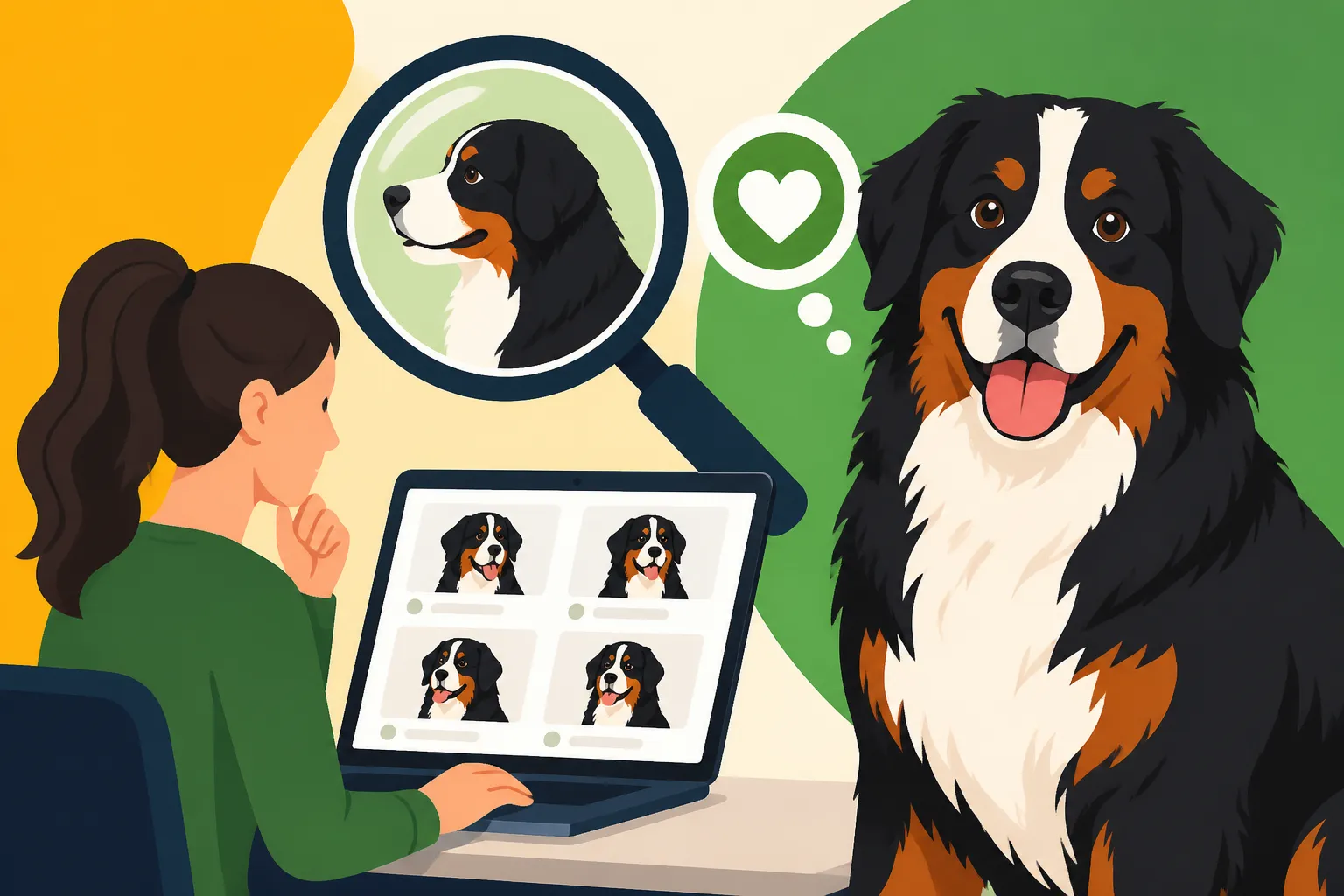
Once you have the necessary information, head over to the Berner-Garde website. Here's a simplified way to navigate it:
- Find the "Search" section: Look for a prominent "Search" or "Find a Dog" option on the main page.
- Enter dog's details: You'll typically find fields for "Registered Name" and "Registration Number." Enter either the sire's or dam's details. If you have the Berner-Garde ID, there's usually a specific field for that, which is the most direct route.
- Review the Dog's Profile: Once you hit search, you'll be taken to that specific dog's profile page. This page is a treasure trove of information.
- Pedigree Tab: This is where you can see their family tree, click on ancestors to view their profiles, and trace back generations.
- Health Tab: This section will list all submitted health clearances, including OFA hip/elbow grades, eye certifications, heart clearances, and genetic test results (like DM status). Pay close attention to the dates of these clearances.
- Offspring Tab: See what litters this dog has produced and click through to view the puppies' records, if submitted.
- Life/Death Tab: This tab provides details about the dog's lifespan and, importantly, the reported cause of death, if available. This is invaluable for assessing longevity patterns in the line.
Repeat this process for both the sire and the dam, and then often for their parents as well, to get a broader picture of the lineage. This deep dive will give you an understanding of the overall health trends within that family.
Interpreting the Results
Reading Berner-Garde can feel like deciphering a secret code at first, but certain key elements are crucial:
| Category | What to Look For | What it Means |
|---|---|---|
| OFA Hips | "Excellent," "Good," "Fair" (Pass) | Good joint structure, lower risk of hip dysplasia. "Dysplastic" is a fail. |
| OFA Elbows | "Normal" (Pass) | Healthy elbow joints. Grades of 1, 2, 3 indicate increasing severity of dysplasia. |
| OFA Cardiac | "Normal" | No auscultation or echocardiogram abnormalities. |
| OFA Eyes | "Normal" (within 12 months) | Eyes free of hereditary conditions. Annual re-certification is key. |
| DM (SOD1) | "Clear," "Carrier" | "Clear" means two normal genes. "Carrier" means one normal, one affected gene; typically doesn't develop DM. |
| vWD (Von Willebrand Disease) | "Clear," "Carrier" | "Clear" means two normal genes. "Carrier" means one normal, one affected gene; typically doesn't bleed abnormally. |
| Cause of Death | "Cancer," "Histiocytic Sarcoma," "Hemangiosarcoma," "Lymphoma" | Look for patterns and age of death. High incidence of early-onset cancer in a line is a concern. |
| Longevity | Age at death (e.g., 8+ years) | A general indicator of how long dogs in that line tend to live. |
For genetic tests like Degenerative Myelopathy (DM) or Von Willebrand Disease (vWD), you'll see results like "Clear," "Carrier," or "Affected." It's important that at least one parent of your puppy is "Clear" for any testable recessive genetic disease to ensure your puppy won't be "Affected." If both parents are "Carriers" for the same condition, then their offspring could be "Affected."
Seeing a detailed The Bernese Mountain Dog Health Panel on a dog's profile indicates a breeder dedicated to full transparency. When you're looking at supplements from retailers like Chewy or specialized diets from a brand like Ollie, understanding a dog's genetic predispositions through Berner-Garde can help you choose products that proactively support their health, especially for joint care or sensitive stomachs that might be indicated by family history.
Common Pitfalls and How to Avoid Them
Even with a powerful tool like Berner-Garde, there are ways to misinterpret information or miss critical details. Being aware of these pitfalls will make your research even more effective.
Dealing with Incomplete or Missing Records
You might search for a dog and find a profile with only partial information, or even no profile at all. This is a common pitfall.
- No Records at All: If a breeder cannot provide registration numbers or names that yield results on Berner-Garde for the parents, or if the parents are simply not listed, this is a serious red flag. It either means the breeder is not contributing to the database (which suggests a lack of transparency or commitment to breed health), or the dogs are not purebred and registered, which introduces a whole host of other concerns. In these cases, it's often best to politely thank the breeder and move on. Remember, you're trying to prevent future heartbreak and potentially massive vet bills.
- Incomplete Records: Sometimes a dog will have a profile, but only partial clearances are listed (e.g., only hips, but no elbows or eyes). Ask the breeder why certain clearances are missing. Were they done but not submitted? Were they never done? Was there a problem that prevented a passing grade from being submitted? A responsible breeder will have answers and likely explanations, but a lack of explanation should raise suspicion. Sometimes breeders avoid submitting bad results, so a missing clearance isn't necessarily a good thing.
The goal is transparency. The more information a breeder provides, and the more that information is verifiable through Berner-Garde, the more confident you can be in their practices.
The Importance of a Full Picture, Beyond Just Clearances
While health clearances are vital, they're only one piece of the puzzle. A common mistake is to simply check for "passed" on the parents' hips and elbows and stop there. To truly understand a line, you need to dig deeper.
- Look at Siblings and Aunts/Uncles: Don't just focus on the immediate parents. Look at the health and longevity of their full and half-siblings, as well as their parents' siblings. Are there common health issues appearing across a broader family group? A parent might have "Good" hips, but if all their siblings had "Dysplastic" hips, that's important context. This holistic view helps reveal patterns that might not be obvious from just one or two individuals.
- Consider Age of Clearances: Hip and elbow clearances are typically done after a dog is two years old. If a young dog has clearances, that's great. But if an older dog has never had certain clearances, or hasn't had updated eye exams, that's a point to discuss with the breeder.
- Don't Ignore Causes of Death: This cannot be stressed enough. A dog dying young from cancer, even if it had "Excellent" hips, tells you something important about the genetic predisposition within that line. It provides crucial insight into What Ends a Bernese Mountain Dog's Life within specific family trees.
Recognizing Red Flags and When to Ask More Questions
Your Berner-Garde research should empower you, not just to find a puppy, but to ask intelligent, informed questions. Here are some red flags that should prompt further discussion or reconsideration:
- Consistent Early Deaths: If you see multiple dogs in a pedigree consistently dying before age 6 or 7, especially from the same cause (e.g., various forms of cancer like The One in Four Bernese Mountain Dogs With Histiocytic Sarcoma), it suggests a concerning trend.
- Lack of Clearances for Older Dogs: If a dog has been bred multiple times but lacks comprehensive health clearances, it's a major concern.
- Questionable Pedigrees: If the pedigree seems sparse, or there are gaps in information that a breeder can't explain, it warrants caution.
- "Pet Quality" Used as an Excuse: Some breeders might use "pet quality" to justify a lack of clearances or less-than-ideal health. All Bernese Mountain Dogs, whether show dogs or beloved family pets, deserve to come from health-tested lines. This is not about snobbery; it's about responsible breeding and the puppy's future well-being.
- "Outdated" or "Old" Database Claims: If a breeder tries to dismiss Berner-Garde as outdated or irrelevant, be wary. While no database is perfect, it remains the gold standard for Bernese Mountain Dog health tracking.
Using Berner-Garde before buying a Bernese Mountain Dog is an act of love and responsibility. It's about giving yourself the best chance at a healthy, happy life with your future furry family member, and supporting breeders who are genuinely working to improve the breed.
Disclaimer
This article is for general informational purposes only and does not constitute professional advice. Laws, prices and regulations vary by location and change over time. Consult a qualified professional for guidance on your specific situation.