The Innkeeper Who Saved the Bernese Mountain Dog
It’s a truly humbling thought to consider how many beloved dog breeds we cherish today might have simply vanished into the annals of history, lost to time and changing societal needs. The majestic Bernese Mountain Dog, with its stunning tricolor coat and gentle eyes, faced just such a precarious future. This guide will delve into the remarkable story of an unsung hero, a humble innkeeper whose tireless dedication pulled this magnificent breed back from the brink of extinction and ensured its legacy for generations to come.
The Fading Mountain Dogs of Switzerland
Imagine the Swiss Alps in the late 19th century. Life was tough, centered around subsistence farming and livestock. The dogs of these valleys, hardy and versatile, were working animals first and foremost. They guarded livestock, pulled small carts laden with milk or cheese to market, and were companions to the isolated farmers. Among these dogs were the ancestors of what we now know as the Bernese Mountain Dog, often referred to locally as "Dürrbächler" dogs, after the small hamlet of Dürrbach where they were particularly prevalent.
However, despite their utility, these dogs weren't a formally recognized breed. There was no concerted effort to maintain their lineage, no organized breeding programs, and certainly no official registry. As industrialization began to creep into rural areas, bringing with it more efficient transportation and changing agricultural practices, the traditional roles of these working dogs began to diminish. People started to favor imported breeds, seen as more fashionable or specialized. The Dürrbächler, like many other indigenous farm dogs across Europe, slowly began to fade away, their numbers dwindling, their unique characteristics at risk of being diluted or lost entirely through indiscriminate crossbreeding. It was a silent crisis, unfolding against the backdrop of stunning natural beauty, a stark reminder of how easily even the most resilient creatures can disappear without dedicated human intervention. Why the Bernese Mountain Dog Nearly Disappeared
Franz Schertenleib: The Innkeeper with a Vision
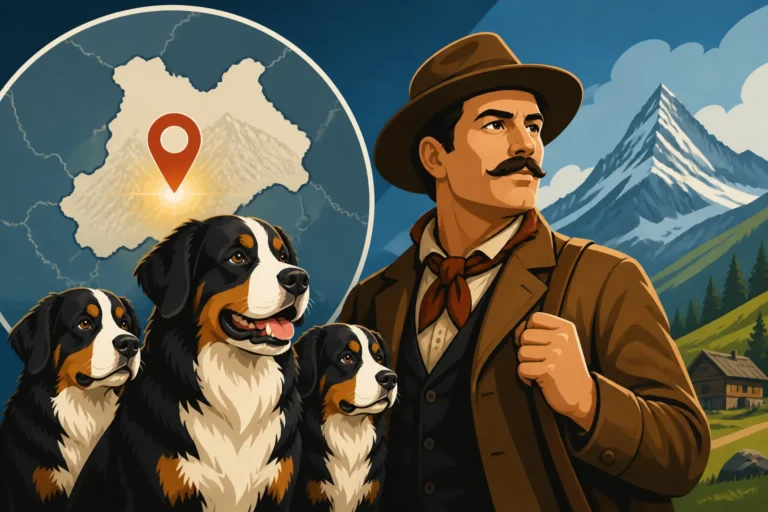
Enter Franz Schertenleib. Born in 1868, Schertenleib was an innkeeper from the Gasthof zum Kreuz in Burgdorf, a town in the Canton of Bern, Switzerland. Unlike many of his contemporaries who were swayed by the allure of foreign breeds, Schertenleib possessed a deep, unwavering passion for the traditional, sturdy, tri-colored farm dogs of his native valleys. He saw in them not just working animals, but dogs of immense character, intelligence, and loyalty – a true piece of Swiss heritage.
Schertenleib was no ordinary enthusiast; he was a man of action. Recognizing the urgent need to preserve these dogs, he embarked on a personal mission. He traveled extensively throughout the remote valleys, visiting farms and remote homesteads, seeking out the best examples of these Dürrbächler dogs. He wasn’t just observing; he was actively acquiring them, often purchasing dogs and puppies to safeguard their genetic lines. This was a monumental task in a time before widespread transportation and communication, requiring immense dedication and a keen eye for sound conformation and temperament. His efforts were driven by a singular vision: to ensure that the distinct Dürrbächler type, with its characteristic markings and robust build, did not vanish forever. His commitment laid the groundwork for future generations, who would benefit from his foresight, easily finding everything from specialized large-breed kibble to durable leashes for their Berners through retailers like Chewy, a convenience unimaginable in his era. Franz Schertenleib and the Bernese Mountain Dogs He Found
From Dürrbachler to Berner Sennenhund: Formalizing the Breed
Schertenleib's individual efforts, while crucial, eventually needed broader support to ensure the long-term survival and recognition of the breed. His fervent advocacy and the growing interest he sparked attracted other prominent figures, most notably Professor Albert Heim, a renowned Swiss geologist and a leading authority in cynology (the study of canines). Heim, recognizing the scientific and cultural importance of these native dogs, lent his considerable expertise and influence to the cause.
In 1907, thanks largely to the groundwork laid by Schertenleib and the organizational skills of Heim and others, the first official breed club, initially known as the "Schweizerischer Dürrbach-Klub," was founded. This was a pivotal moment. The club set about formalizing the breed, establishing a definitive breed standard that described the ideal appearance, temperament, and working characteristics. It was Professor Heim who proposed renaming the breed to "Berner Sennenhund," or Bernese Mountain Dog, a name that rooted it firmly in its geographical origin and historical purpose as a "Sennenhund" (alpine pasture dog) from the canton of Bern. This new official recognition meant that breeding efforts could be coordinated, health records could be maintained (a precursor to modern databases), and the future of the breed was secured. It also meant a collective vision for the breed, ensuring its distinctiveness. Today, resources like The Bernese Mountain Dog Breed Standard are readily available, a testament to these foundational efforts, guiding owners on everything from proper nutrition to health monitoring, with products easily accessible through platforms like Chewy to meet specific breed needs. Albert Heim and the Name Berner Sennenhund
| Aspect | Before Schertenleib's Intervention (Late 19th Century) | After Schertenleib's Efforts & Club Formation (Early 20th Century) |
|---|---|---|
| Status | Unrecognized farm dog, known as "Dürrbächler" | Formally recognized breed, "Berner Sennenhund" or Bernese Mountain Dog |
| Numbers | Dwindling, at risk of extinction | Stabilizing, with a growing registered population |
| Breeding | Unsystematic, often accidental, crossbreeding common | Organized, purposeful breeding guided by a written standard |
| Characteristics | Varied, prone to dilution | Standardized, distinctive traits preserved and promoted |
| Future Outlook | Uncertain, high risk of disappearance | Secure, foundation for international recognition laid |
The Enduring Legacy of a Passionate Protector
Franz Schertenleib's commitment reverberates through every aspect of the Bernese Mountain Dog's existence today. Without his tireless work, his vision, and his active search for the remaining Dürrbächler dogs, it’s highly probable that this magnificent breed would not grace our lives. His dedication ensured that the breed's fundamental traits — its gentle nature, its robust build, and its striking tri-color coat — were preserved and passed down. The Dürrbach Club Founded in 1907 was the formal body, but Schertenleib was the passionate heart that got it started.
His legacy extends beyond mere preservation; it's about the very essence of what makes a Berner so special. We can thank him for the dogs that pull carts in modern draft competitions, for the loyal companions that lean into our legs, and for the therapy dogs that bring comfort to so many. The formalization of the breed allowed for its eventual spread across the Atlantic, with organizations working to maintain health and temperament, exemplified by resources like the Berner-Garde database. While the work continues to address breed-specific health challenges like The Cancer That Kills Half of All Bernese Mountain Dogs, the fact that these challenges can even be studied is due to the existence of the breed itself.
Today, Bernese Mountain Dog owners enjoy a wealth of resources and products, from specialized grooming tools to breed-specific training guides and even orthopedic beds designed for their large frames. You can easily order these items from online retailers like Chewy, ensuring your Berner receives the best possible care, something Schertenleib could only have dreamed of. His story serves as a powerful reminder that sometimes, the greatest acts of preservation come from individuals with a simple, profound love for a creature and the unwavering will to protect it. Every time you see a Bernese Mountain Dog, remember the innkeeper who saved a legacy. The Hundred and Seven Dogs Registered by 1910
Disclaimer
This article is for general informational purposes only and does not constitute professional advice. Laws, prices and regulations vary by location and change over time. Consult a qualified professional for guidance on your specific situation.