The Hundred and Seven Dogs Registered by 1910
Imagine a time when the magnificent Bernese Mountain Dog, a breed we cherish today, was teetering on the brink of obscurity, scattered across remote valleys with no formal recognition. Many potential owners today don't realize the critical steps taken over a century ago to bring this wonderful breed back from the brink. This guide will delve into the remarkable journey leading up to the pivotal year of 1910, when a mere 107 Bernese Mountain Dogs were officially registered, marking a crucial turning point in their history.
The Fading Echoes: Bernese Mountain Dogs Before 1900
Before the formalization of breeds as we know them, the Swiss Alps were home to various working farm dogs. These robust, loyal companions were integral to rural life, performing tasks that were essential for survival in challenging mountainous terrain. However, their numbers were never systematically tracked, and by the late 19th century, the traditional roles that sustained breeds like the Bernese Mountain Dog were rapidly diminishing, pushing these wonderful animals closer to the edge of extinction.
Scattered Dogs and Local Names
For centuries, dogs resembling what we now call the Bernese Mountain Dog roamed the Swiss countryside, particularly in the Bernese Oberland region. They weren't known by a single, unified name but rather by various local appellations, often reflecting the valleys or hamlets where they were most common. You might hear them called "Dürrbachhund" after the Dürrbach area, or "Gelbbäckler" (yellow-cheeked ones) due to their distinct tan markings. Each farm likely had its own sturdy, tricolored dog, bred for resilience and working ability rather than a consistent aesthetic standard. These dogs were prized for their utility, not their pedigree, a concept that was still very much in its infancy. Their presence was deeply woven into the fabric of daily life, assisting with herding, guarding, and pulling carts laden with milk or produce.
The Loss of Traditional Roles
The late 19th century brought significant societal changes to rural Switzerland. Industrialization began to creep into agricultural practices, and transportation methods were evolving. Where once a farmer relied on a strong, reliable dog to pull a cart of dairy products to market, new roads and horse-drawn wagons or even early motorized vehicles started to take over these duties. The need for a dog solely dedicated to draft work or herding cattle became less acute, and as their specialized roles diminished, so did the incentive for farmers to maintain pure breeding lines. These magnificent working dogs, once indispensable, found their traditional purposes fading away, leading to a decline in their focused breeding and numbers.
The Looming Extinction
As their traditional work disappeared and cross-breeding became more common with other local farm dogs or even foreign breeds brought in, the distinct characteristics of the Bernese Mountain Dog began to blur. Without concerted efforts to preserve them, the fear was very real that these unique dogs would simply vanish, their genetic traits diluted beyond recognition. It's a stark reminder of how fragile a breed's existence can be when its utility wanes. The charming, gentle giants we know today were, at one point, just a few generations away from being completely absorbed into the general population of Swiss farm dogs, forever lost to history. This precarious situation highlights Why the Bernese Mountain Dog Nearly Disappeared.
A Spark of Hope: Early Efforts to Revive the Breed
Fortunately, not everyone was content to let these wonderful dogs fade into memory. A few passionate individuals, driven by a deep appreciation for the Dürrbachhund's beauty, temperament, and historical significance, recognized the urgent need for preservation. Their dedicated efforts laid the foundation for the breed's resurgence and the formalization of its standards.
Franz Schertenleib's Passionate Search
One of the most pivotal figures in the Bernese Mountain Dog's early history was Franz Schertenleib, an innkeeper from Burgdorf, Switzerland. Schertenleib wasn't a formal breeder or a scientist; he was a practical man who loved these dogs and understood their importance to Swiss heritage. Troubled by their dwindling numbers and the lack of a consistent type, he took it upon himself to travel the various valleys and farms of the Bernese Oberland, seeking out the best examples of the traditional Dürrbachhund. His mission was simple yet profound: to find and gather healthy, typical specimens that still embodied the traits of the old farm dogs. His work was truly the beginning of a conscious effort to save the breed, and his efforts are detailed in Franz Schertenleib and the Bernese Mountain Dogs He Found. He convinced farmers to let him acquire or breed their best dogs, recognizing that without such intervention, these dogs would soon be gone.
The Dürrbach Club's Formation
Schertenleib's passionate advocacy and groundwork soon attracted the attention of other enthusiasts, including Professor Albert Heim, a renowned geologist and canine expert. Heim played a crucial role in establishing the first official breed club. In 1907, a group of dedicated individuals came together to form the "Schweizerische Dürrbach-Klub" (Swiss Dürrbach Club), later becoming the Bernese Mountain Dog Club. This was a monumental step. For the first time, there was an organized body committed to defining, preserving, and promoting the breed. This club's formation marked a significant shift from informal farm breeding to a structured approach to canine husbandry. It provided a platform for breeders to connect, share knowledge, and collectively work towards a common goal of protecting these dogs. You can read more about The Dürrbach Club Founded in 1907 and its vital role.
Defining the Dürrbachler Standard
With the formation of the club, one of the immediate priorities was to establish a definitive breed standard. This was crucial because, without a consistent set of characteristics, efforts to preserve the breed would be fragmented and ineffective. Professor Heim, with his extensive knowledge of canine anatomy and breed development, was instrumental in drafting this first standard. It outlined the desired physical traits, such as size, coat color and markings, head shape, and overall conformation, as well as temperament. This standard served as a blueprint for breeders, guiding their selections and ensuring that future generations of dogs conformed to a recognizable "type." It moved the Dürrbachhund from being a collection of similar-looking farm dogs to a defined breed with specific, repeatable characteristics, a crucial step for any breed's long-term survival. The development of this early standard was the precursor to what we now understand as The Bernese Mountain Dog Breed Standard.
The 1910 Milestone: Registering the First Bernese Mountain Dogs
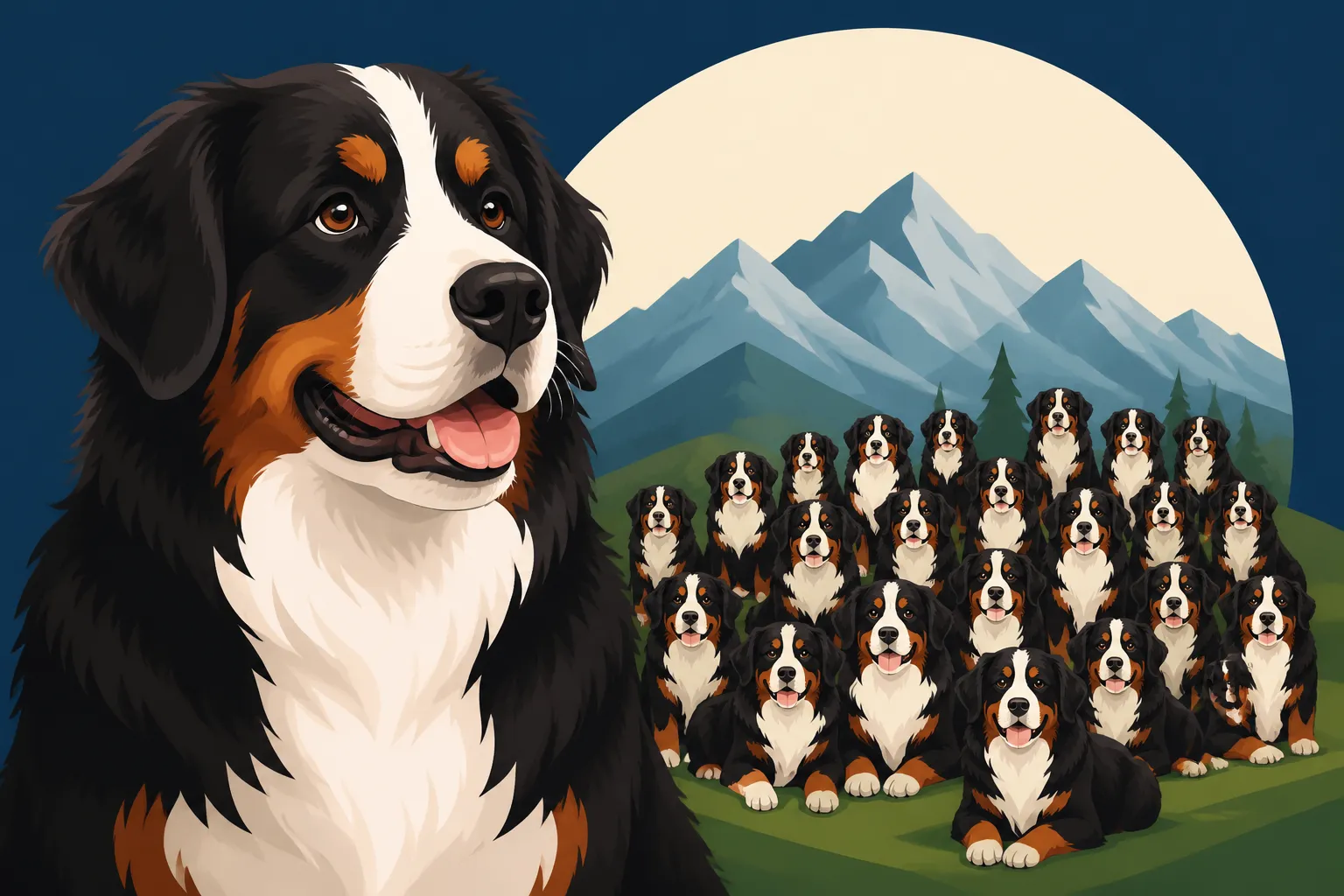
The year 1910 stands as a truly landmark moment in the history of the Bernese Mountain Dog. It was in this year that the Swiss Dürrbach Club, having established its framework and breed standard, officially registered the first cohort of these dogs. The number, 107, might seem small by today's standards, but it represented a colossal achievement and a powerful statement of intent for the breed's future.
The Significance of Official Recognition
Before 1910, while Dürrbachhunds certainly existed, they were largely undocumented. Their births, parentage, and physical traits were recorded informally, if at all, within individual farm families. The act of official registration through the Swiss Dürrbach Club brought them into a recognized system of pedigree tracking. This was not just a bureaucratic formality; it conferred legitimacy and a defined identity upon the breed. It meant that these 107 dogs were acknowledged as distinct, valuable examples of a specific breed, rather than just generic farm dogs. This recognition was vital for attracting new breeders and owners, securing public interest, and ultimately, ensuring their continued existence. It laid the foundation for systematic breeding programs that aimed to enhance and stabilize the breed's characteristics, a far cry from the more haphazard breeding of previous generations.
The Foundation Stock and Their Legacy
These initial 107 registered dogs formed the true foundation stock for the modern Bernese Mountain Dog breed. They were the genetic bedrock upon which all future generations would be built. Careful selection of these individuals for registration was paramount; they needed to embody the desired physical traits and possess sound temperaments as outlined in the nascent breed standard. Breeders painstakingly evaluated each dog, looking for correct tricolor markings, sturdy build, and that characteristic gentle disposition. While we don't have detailed biographies for all 107, we know that their progeny were carefully tracked, forming the first traceable pedigrees. Every Bernese Mountain Dog alive today can trace its lineage back to these pioneering dogs, a testament to the foresight and dedication of those early club members. They were literally building a breed from the ground up. How Many Bernese Mountain Dogs Existed in 1910 gives further insight into this crucial number.
Early Challenges in Standardizing the Breed
Even with the enthusiasm and organization of the Dürrbach Club, the path to standardizing the Bernese Mountain Dog was not without its hurdles. The 107 registered dogs, while representing the best available specimens, still exhibited a degree of variation. Remember, these were dogs primarily selected for working ability over generations, not show ring uniformity. There were debates about ideal size, the exact placement and intensity of markings, and the nuances of coat texture. Establishing a consistent "look" while maintaining the essential working dog qualities and health was a delicate balancing act. Furthermore, the limited gene pool meant that breeders had to be extremely careful to avoid excessive inbreeding, which could lead to health issues. It was a learning process, involving careful observation, selective breeding, and ongoing refinement of the standard to guide future development. This period was critical in moving from a regional landrace to a globally recognized breed.
Beyond the Numbers: What Those 107 Dogs Represented
The registration of 107 Bernese Mountain Dogs in 1910 was far more than a simple count; it was a profound declaration of commitment to a breed's future. It signaled a new era of intentional breeding, preservation, and ultimately, global recognition for these magnificent dogs.
A Blueprint for Future Generations
The establishment of a formal registry and breed standard provided an invaluable blueprint for all subsequent breeding efforts. It meant that breeders no longer relied solely on anecdotal knowledge or local preferences. Instead, they had a published document detailing the ideal Bernese Mountain Dog, guiding their choices of breeding pairs and helping them evaluate puppies. This structure was essential for propagating desired traits and weeding out undesirable ones. It helped ensure that the core characteristics that made these dogs so special – their distinctive tricolor coat, strong build, and affectionate yet confident nature – would be faithfully passed down. This careful planning meant that the breed's essence would not be lost to time, but rather strengthened and consistently reproduced. The very notion of a "pedigree" began with records like these, allowing future generations to track bloodlines and make informed breeding decisions.
The Genetic Bottleneck and Its Implications
While the registration of 107 dogs was a triumph, it also created what we call a "genetic bottleneck." Starting a breed with such a small number of founders, however carefully selected, inherently limits the genetic diversity available to the entire future population. In simpler terms, all Bernese Mountain Dogs descending from these 107 individuals share a relatively narrow genetic foundation. This can have long-term implications for a breed's health and resilience. While early breeders focused on visible traits and temperament, the hidden genetic predispositions were unknown. Today, we understand that limited genetic diversity can increase the susceptibility to certain inherited conditions, which sadly, is a reality many Bernese Mountain Dog owners face with specific health challenges. This is why discussions around Whether Cancer Is Bred Into the Bernese Mountain Dog or the breed's propensity for joint issues are so vital in modern times. Maintaining and broadening genetic diversity where possible remains a crucial aspect of responsible breeding today.
Here's a simplified view of the impact of the 1910 registration:
| Aspect | Before 1910 (Pre-Registration) | After 1910 (Post-Registration) |
|---|---|---|
| Identity | Local farm dog, various names | Official breed: Dürrbachhund (later Bernese Mtn Dog) |
| Documentation | Informal, anecdotal | Formal registry, pedigrees |
| Breeding Focus | Utility, local survival | Standardized traits, breed preservation |
| Genetic Diversity | Broader, unmanaged | Bottlenecked by founder effect |
| Future Outlook | Decline, potential extinction | Preservation, growth, international recognition |
Laying the Groundwork for International Recognition
The systematic approach initiated by the Swiss Dürrbach Club, culminating in the 1910 registration, was the essential first step towards the Bernese Mountain Dog gaining recognition beyond Switzerland's borders. Without a defined standard and a verifiable registry, it would have been impossible for other national kennel clubs to acknowledge the breed. This foundational work provided the credibility needed for the breed to eventually be imported, admired, and bred in other countries. It allowed for organized expansion, rather than individual dogs simply being taken overseas without context. Soon, the Dürrbachhund, under its new name – the Berner Sennenhund (Bernese Mountain Dog), a change influenced by Professor Albert Heim – would begin its journey to becoming one of the most beloved giant breeds worldwide. This officialization was critical for events such as The 1937 AKC Decision on the Bernese Mountain Dog, marking its entry into the American dog fancy.
The Journey Continues: Growth and Evolution Post-1910
The 107 registered dogs of 1910 were just the beginning. From that small, vital core, the Bernese Mountain Dog breed embarked on a remarkable journey of growth, refinement, and increasing popularity around the globe. The efforts of those early pioneers ensured that this magnificent breed not only survived but thrived.
Expanding the Gene Pool
One of the ongoing challenges for any breed founded on a limited number of individuals is managing the gene pool. Following the initial registrations, careful breeders understood the importance of judiciously introducing new, healthy lines where possible, to expand genetic diversity without compromising the established breed type. This often involved searching for unregistered but purebred Dürrbachhunds in remote areas that still carried the original characteristics, or very carefully considering outcrosses to similar, compatible breeds in the early stages, though this practice became less common as the breed solidified. The goal was always to reinforce the desired traits while minimizing the risks associated with a narrow genetic base. The historical records, meticulously kept by clubs like the Berner-Garde database today, help trace these lineages and understand the genetic heritage of our modern Berners.
The Breed's Changing Name and Identity
The name itself underwent an important evolution shortly after the foundational registrations. While initially known as the "Dürrbachhund" after its area of prominence, Professor Albert Heim, who was a driving force in the breed's formalization, proposed a more encompassing name: "Berner Sennenhund." "Berner" referred to the canton of Bern, where the dogs originated, and "Sennenhund" is a German term for Alpine pasture dogs, or dairy dogs, reflecting their heritage as farm dogs. This renaming helped to differentiate it from other Swiss breeds and gave it a more formal, recognized identity. This identity highlighted the breed's roots in The Swiss Valley the Bernese Mountain Dog Comes From and its traditional working roles. It emphasized its connection to the region of Bern and its functional history, making the name a clear descriptor of its origin and purpose. Understanding What Sennenhund Means in a Bernese Mountain Dog's Name adds another layer to appreciating the breed's historical context.
Modern Bernese Mountain Dog Lineages
From those 107 registered dogs and the subsequent careful breeding programs, the Bernese Mountain Dog has evolved into the beloved companion animal we know today. Modern breeders continue to honor the legacy of those early pioneers by striving for dogs that conform to the breed standard in terms of appearance, temperament, and health. While challenges, particularly concerning lifespan and certain inherited conditions, persist due to the breed's genetic history, dedicated individuals and organizations are committed to health testing and responsible breeding practices. Resources are readily available, even through popular retailers like Chewy, for owners to access everything from specialized large-breed dog food to joint supplements, which are often recommended for a breed prone to joint issues. We strive to provide our Berners with the best possible life, a stark contrast to their humble and precarious beginnings. This continuous effort ensures the Bernese Mountain Dog remains a cherished part of countless families around the world. For modern Bernese owners seeking the best care for their companion, considering products like robust leashes and harnesses found on platforms like Chewy is essential for managing a large breed.
Disclaimer
This article is for general informational purposes only and does not constitute professional advice. Laws, prices and regulations vary by location and change over time. Consult a qualified professional for guidance on your specific situation.