The Bernese Mountain Dog Topline the Standard Wants
Many Bernese Mountain Dog owners, especially those new to the breed or perhaps interested in conformation, often wonder about specific aspects of their dog's structure, and one term that comes up frequently is "topline." It's not just a fancy show term; a dog's topline is crucial for their overall health, movement, and ability to carry their substantial weight comfortably. This guide will deep dive into what the breed standard expects for a Bernese Mountain Dog's topline, what that actually looks like, and why it's so important for your beloved companion's well-being throughout their life.
What Exactly Is a Topline?
When we talk about a dog's topline, we're referring to the line created by the dorsal aspect of the body, starting from just behind the withers (the highest point of the shoulder blades) and extending all the way to the tail set. Think of it as the dog's back from a profile view. For a Bernese Mountain Dog, this isn't just about aesthetics; it’s a direct reflection of their underlying skeletal structure and the musculature that supports it. A correct topline suggests a powerful, well-balanced dog, built for the demanding work they historically performed in the Swiss Alps.
Defining the Bernese Topline
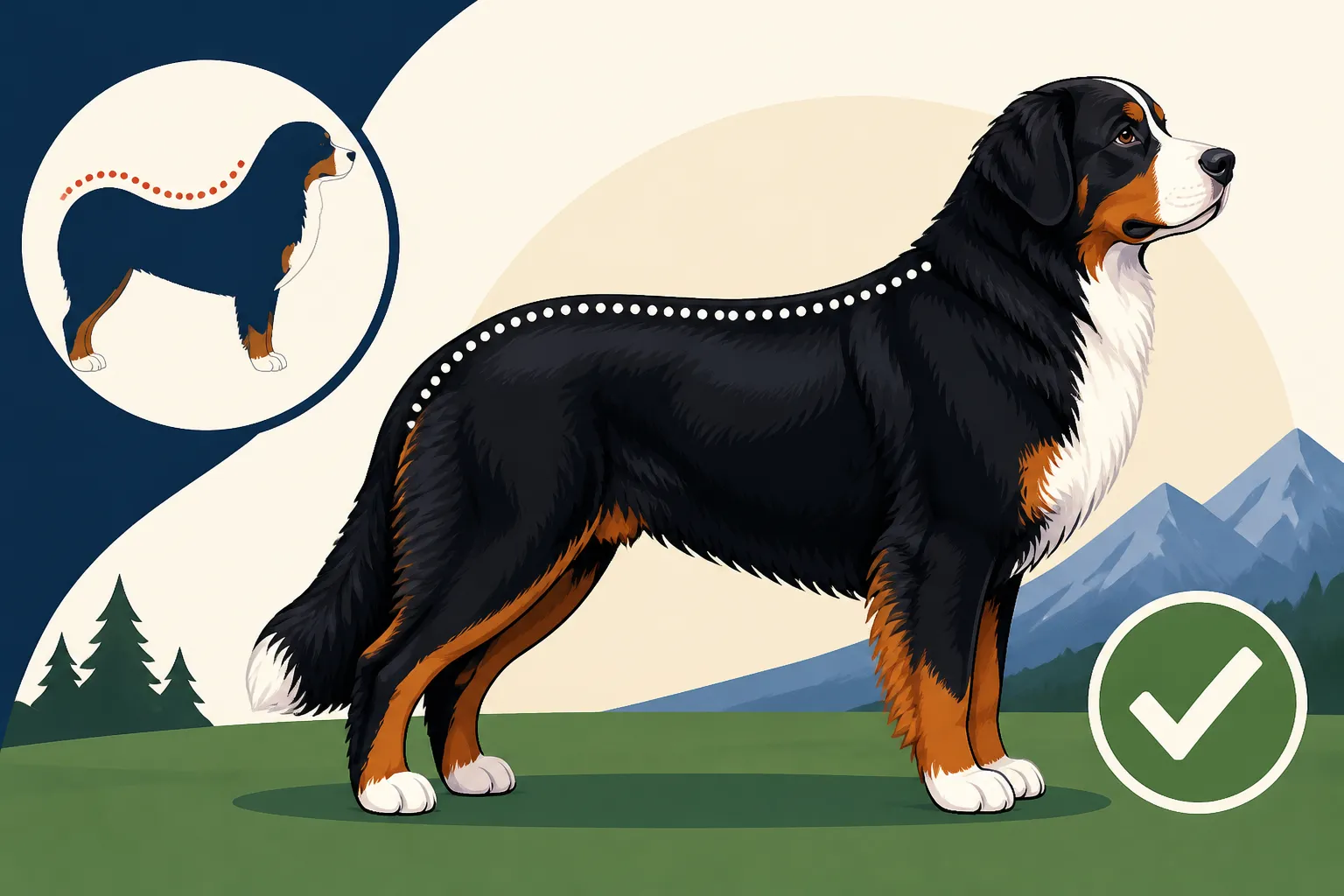
The Bernese Mountain Dog breed standard calls for a topline that is "firm and level." This seemingly simple phrase carries a lot of weight when it comes to understanding the ideal structure of these magnificent dogs. "Firm" implies that when you run your hand along their back, it should feel solid and taut, not soft, bouncy, or weak. It signifies well-developed musculature along the spine, providing essential support. "Level" means it shouldn't dip significantly (known as a swayback) or arch excessively (known as a roach back). Instead, it should present a relatively straight, horizontal line from the withers to the point where the tail begins. This ideal profile allows for efficient transfer of power from the hindquarters through the back, enabling the powerful movement necessary for their traditional tasks, like pulling carts or driving livestock. Understanding this foundational element helps us appreciate the Bernese not just as beautiful companions, but as working dogs whose form follows function. What a Bernese Mountain Dog Did on a Swiss Farm highlights these historical roles.
Imagine a Bernese gracefully trotting across a field; that smooth, unencumbered movement is largely due to a well-constructed topline that allows their body to act as a cohesive unit. Any weakness or deviation in the topline can disrupt this flow, making movement less efficient and potentially causing discomfort over time. For an owner, simply feeling your dog's back can give you a lot of information. A young, healthy Berner should have a back that feels dense with muscle and doesn't give easily under light pressure. This firmness is a hallmark of good conditioning and proper skeletal alignment, ensuring they can stand, move, and even lie down with ease.
The Role of the Spine and Ribcage
The topline isn't just skin and fur; it's the external manifestation of the dog's vertebral column and the strong network of muscles, ligaments, and tendons that surround it. The spine, made up of individual vertebrae, provides the core support for the entire body. The ribcage, extending from the thoracic vertebrae, protects vital organs and provides attachment points for many of the muscles that stabilize the back and enable movement. A Bernese Mountain Dog, being a large and substantial breed, requires an exceptionally strong and stable spinal column to support its significant weight and robust build.
Proper development of this underlying bone structure and musculature begins in puppyhood. Rapid growth in large breeds like the Bernese means that their bones and joints are particularly vulnerable if not supported correctly. A diet formulated for large breed puppies, which typically has controlled calcium and phosphorus levels, is crucial. This helps prevent skeletal abnormalities that could impact the topline later in life. Companies like Chewy offer a wide selection of large breed puppy foods designed with these specific nutritional needs in mind, making it easier for owners to provide the best start. Feeding a Bernese Mountain Dog Puppy to a Hundred Pounds delves deeper into these nutritional considerations.
Beyond diet, appropriate exercise is vital for building strong back muscles without putting undue stress on developing joints. Over-exercising a young Bernese puppy on hard surfaces can be detrimental, just as a lack of exercise can lead to weak musculature. The goal is steady, controlled development that allows the spine and its supporting structures to mature robustly. A healthy spine and strong back muscles are the unsung heroes of a good topline, ensuring the Bernese can maintain its characteristic sturdy and powerful silhouette throughout its life.
The Ideal Bernese Mountain Dog Topline: Standard Descriptors
Understanding the specific descriptors in the breed standard for the Bernese Mountain Dog's topline can really help you appreciate what makes a truly exemplary specimen. It's not just a flat line, but a dynamic, powerful contour that speaks to the dog's strength and agility.
Level and Firm: The Desired Profile
As mentioned, the standard calls for a topline that is "firm and level." This means that when viewed from the side, the back should present a straight, horizontal line from the highest point of the shoulder (the withers) to the point where the pelvis begins to slope towards the tail (the croup). There should be no noticeable dip or hump along this line. A truly level topline is indicative of a well-angulated and balanced dog, allowing for efficient transfer of energy from the powerful hindquarters to the front. The word "firm" is equally important. It implies well-developed loin and back muscles that are taut and strong, not soft or pliable. When a Bernese is standing alert or moving, these muscles should be engaged, providing a solid foundation for their substantial body.
In the show ring, a judge will often run their hand along the dog's back to assess this firmness. They're feeling for the underlying musculature and bone structure. A saggy or soft topline can indicate weak conditioning, poor genetic predisposition, or even underlying health issues. For the average owner, observing your dog standing naturally is a great way to assess their topline. Does it look straight and strong? Does it hold its shape when they move? These are important questions, as a robust topline contributes significantly to the dog's overall physical integrity and their ability to move with grace despite their size. Remember, The Bernese Mountain Dog Breed Standard emphasizes these structural details for a reason.
The Slight Rise Over the Loin
While the standard emphasizes a "level" topline, it also often allows for a "slight rise over the loin." This is a subtle, natural arch that occurs where the thoracic vertebrae (mid-back) transition into the lumbar vertebrae (loin, closer to the hindquarters). It’s crucial not to confuse this slight rise with a "roached" back, which is an exaggerated, often rigid arch that can indicate structural issues or even pain. The natural rise over the loin in a Bernese Mountain Dog is actually a sign of power. It's where the mighty muscles of the hindquarters connect and generate force for propulsion.
This subtle elevation facilitates powerful rear drive, enabling the Bernese to push off the ground with strength and move with purpose. Without this natural, muscular arch, the dog might appear to lack hindquarter strength or might not have the athletic capability expected of the breed. Imagine a powerful sprinter – their back isn't perfectly flat; there's a certain muscular tension and contour that aids in their explosiveness. Similarly, the Bernese's slight rise in the loin indicates that muscular readiness and capability for movement. When you see a Bernese with an The Effortless Stride a Bernese Mountain Dog Should Have, chances are they possess this ideal, slightly rising loin.
Tail Set and Its Relationship to the Topline
The tail set, or where the tail originates on the dog's body, is intimately connected to the topline and is another important aspect described in the breed standard. For the Bernese Mountain Dog, the tail should be "set well on, following the line of the back." This means the base of the tail should flow smoothly from the croup (the area just above the tail) as a natural extension of the topline, rather than appearing to be set too high or too low. A high-set tail might give the appearance of a shorter back or an abrupt ending to the topline, while a very low-set tail can make the hindquarters appear weak or sloping.
The way the tail is carried also contributes to the overall picture. While the tail should normally be carried low, sometimes with a slight curve, it may be carried higher when the dog is excited or moving. However, it should never curl over the back or be carried so high as to break the graceful line of the topline. The tail acts as a natural counterbalance for the dog, especially during movement, turns, and changes in speed. A well-set tail, flowing harmoniously from the topline, indicates a complete and balanced structure. When considering The Tail Carriage a Bernese Mountain Dog Standard Wants, you're looking for this seamless integration.
Why the Topline Matters Beyond the Show Ring
While the breed standard focuses on the ideal topline for conformation, its importance extends far beyond ribbon chasing. A healthy, correct topline is fundamental to a Bernese Mountain Dog's overall health, comfort, and ability to enjoy a fulfilling life as a family companion. It dictates how they move, how they bear their weight, and ultimately, how comfortably they can age.
Impact on Movement and Agility
The topline directly influences a Bernese Mountain Dog's movement and agility. A level, firm topline allows for an efficient transfer of power from the hindquarters to the front, facilitating a smooth, ground-covering stride. When the topline is weak or incorrectly formed, this energy transfer is disrupted. Imagine a chain with a weak link – it won't be able to pull weight effectively. Similarly, a Bernese with a poor topline might develop an awkward gait, exhibit stiffness, or have reduced endurance during walks or play. They might appear to shuffle their feet, lack drive from the rear, or experience discomfort with prolonged activity.
For a breed originally tasked with navigating varied terrain and pulling carts, efficient movement is paramount. Even if your Bernese is a beloved couch potato, the ability to move comfortably is essential for their quality of life. A dog that struggles to move fluidly is more prone to muscle strain, joint pain, and an overall reluctance to engage in activity. This can lead to a vicious cycle of decreased activity, weight gain, and further muscle atrophy, exacerbating existing structural issues. A strong, correct topline ensures that your Berner can bound through the yard, enjoy a long hike, or simply get up from a nap without undue effort or pain.
Bearing Weight and Structural Integrity
Bernese Mountain Dogs are, undeniably, big dogs. Adult males can easily weigh over 100 pounds, and females are not far behind. This substantial weight needs to be supported by a robust skeletal and muscular system, and the topline is a key component of this structural integrity. A firm, level topline helps distribute the dog's weight evenly across their body, reducing excessive strain on individual joints, particularly the hips and elbows which are already prone to issues in large breeds. Every Pound a Bernese Mountain Dog's Hips Carry underscores the sheer force these joints manage.
Consider the spine as the main beam of a bridge. If the beam is weak or saggy, the entire structure becomes compromised and susceptible to damage. In a Bernese, a weak topline means the spine and its supporting muscles are constantly under increased stress. This chronic strain can contribute to or worsen conditions like degenerative disc disease, arthritis, and other spinal issues as the dog ages. You might notice an older Bernese whose once-proud, level back has started to sag. This often correlates with a decrease in mobility and an increase in discomfort, making simple actions like getting up from a lying position or climbing stairs a significant challenge. Ensuring a strong topline from a young age through proper nutrition and exercise is an investment in your dog's long-term comfort and mobility.
How a Strong Topline Contributes to Longevity
While a Bernese Mountain Dog's lifespan is sadly often shorter than many owners wish, a strong and healthy topline can significantly contribute to their overall quality of life and comfort during those precious years. A dog that moves well, without pain or stiffness in its back, is a happier and more active dog. This sustained activity keeps muscles strong, helps maintain a healthy weight, and promotes good circulation, all of which are factors in overall well-being. Why a Bernese Mountain Dog Lives Only Seven or Eight Years often brings discussions about quality of life into sharp focus.
Conversely, a dog suffering from back pain or instability due to a poor topline may become sedentary, leading to weight gain, muscle atrophy, and a diminished enjoyment of life. This decline in physical condition can indirectly impact their longevity by increasing the risk of other health problems. Owners often spend a lot of time and resources on joint care for their Bernese, and rightly so. However, the backbone of a strong skeletal system often gets overlooked. Supporting the topline through appropriate exercise, a balanced diet, and perhaps even targeted supplements (which can be easily sourced from retailers like Chewy) can make a tangible difference in how comfortably a Bernese lives through its senior years. It allows them to maintain their zest for life, play with their family, and enjoy their walks for as long as possible.
Common Topline Variations and What They Mean
Even in the most carefully bred lines, variations in topline can occur. Understanding these deviations from the ideal can help owners identify potential issues early and seek appropriate veterinary advice. Not every variation is a major health crisis, but some can signal underlying problems that need attention.
Swayback or Dipped Topline
A "swayback," also known as a "dipped" or "soft" topline, is one of the most common deviations from the ideal level back. It describes a noticeable depression or sag in the mid-back region, often just behind the withers or further back towards the loin. When you look at the dog's profile, the spine appears to dip downwards rather than maintaining a straight, horizontal line. This can give the dog a somewhat elongated or weak appearance.
There can be several reasons for a swayback. Genetically, some dogs are simply predisposed to having weaker back structures or looser ligaments. Poor muscle tone and conditioning are also major contributors; a lack of exercise or an inappropriate diet can lead to weak back muscles that cannot adequately support the spine. In older Bernese Mountain Dogs, a swayback can be a sign of muscle atrophy and the natural weakening of connective tissues that comes with age. In females, multiple litters can sometimes lead to a softened or dipped topline due to the significant strain on the abdominal and back muscles during pregnancy and nursing. Arthritis in a Bernese Mountain Dog by Six often goes hand-in-hand with such structural changes. The consequences can range from mild cosmetic concerns to significant discomfort and reduced mobility. Dogs with a pronounced swayback may experience chronic back pain, difficulty with activities like jumping or climbing, and increased strain on their hips and knees due to altered weight distribution.
Roached or Arched Topline
In contrast to a swayback, a "roached" or "arched" topline describes an exaggerated upward curve in the back, typically over the loin area. While the Bernese standard allows for a slight rise over the loin for muscular power, a true roach back is much more pronounced and often appears stiff and inflexible. The back seems to hunch upwards rather than flowing smoothly.
A roached topline can sometimes be structural, meaning the dog is born with a certain conformation that causes this arch. However, it can also be an indicator of pain or an attempt to compensate for other physical issues. Dogs with abdominal discomfort, spinal problems (like disc disease), or even certain types of lameness may involuntarily arch their backs to relieve pressure or shift weight. For example, a dog experiencing pain in its hindquarters might unconsciously tuck its tail and arch its back. The Bernese Mountain Dog Whose Back Legs Give Out often exhibit changes in their posture and gait, which can manifest as an arched back. If you notice your Bernese suddenly developing a roached topline, especially if accompanied by stiffness, reluctance to move, or changes in behavior, it's crucial to consult your veterinarian immediately. It could be a sign of a painful condition that needs urgent attention.
Addressing Topline Concerns
If you have concerns about your Bernese Mountain Dog's topline, whether it's a developing swayback, an unexplained arch, or simply a lack of firmness, the first and most important step is always a veterinary consultation. A vet can help rule out underlying medical conditions, such as spinal issues, arthritis, or muscle injuries, and provide an accurate diagnosis. They may recommend imaging like X-rays or a thorough physical examination to assess the skeletal and muscular integrity.
Once any medical issues are addressed, there are several steps an owner can take to support a healthy topline. Proper nutrition, as discussed earlier, is paramount from puppyhood. For adults, maintaining a lean body condition is critical. What a Fit Bernese Mountain Dog Should Weigh is a great resource to understand this. Every extra pound your Bernese carries adds strain to their back and joints. Regular, appropriate exercise, focused on core strength and muscle development, can also help. This might include controlled walks, swimming (which is low-impact), or specific canine physical therapy exercises recommended by a professional. Joint supplements, which you can easily find at Chewy, containing ingredients like glucosamine and chondroitin, might also be recommended to support overall joint health, which indirectly benefits the spine. Starting a Bernese Mountain Dog on Joint Medication Young can be a proactive step for many owners. Finally, providing supportive bedding, like an orthopedic dog bed, can offer comfort and support to a dog with a weakening or compromised topline, ensuring they get restful sleep without putting undue pressure on their back.
| Topline Feature | Ideal Bernese Topline Description | Potential Implications of Deviation |
|---|---|---|
| Overall Profile | Level and firm from withers to croup, with a slight rise over the loin. | Swayback (dip): weakness, discomfort; Roached (arch): stiffness, pain |
| Musculature | Well-developed, strong back muscles, firm to the touch. | Weak/soft: lack of support, instability. |
| Movement | Smooth, powerful, efficient stride, indicative of strong rear drive. | Stiff, restricted, wobbly gait, reduced endurance. |
| Tail Set | Set smoothly into the croup, following the line of the back. | High or low set: can affect balance and overall appearance. |
Disclaimer
This article is for general informational purposes only and does not constitute professional advice. Laws, prices and regulations vary by location and change over time. Consult a qualified professional for guidance on your specific situation.