Whether Two Bernese Mountain Dogs Ever Match
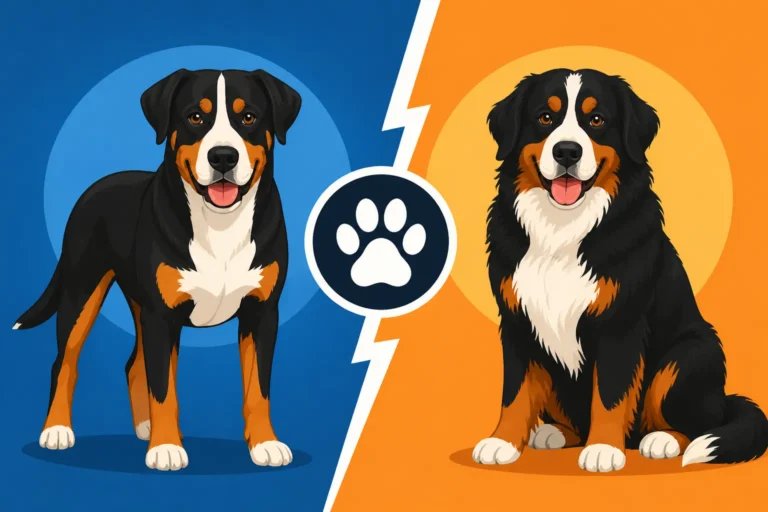
A pair of Bernese Mountain Dogs may share the same classic black, rust, and white pattern, but their markings are not exact copies. One may have a wide white blaze, another a narrow one; rust patches and white feet vary too. This guide explains what makes each Berner’s pattern distinctive, which markings are typical, and why coat care can change how similar two dogs look.
Why Bernese Mountain Dogs Share a Similar Pattern
The tricolor pattern is part of the breed’s identity
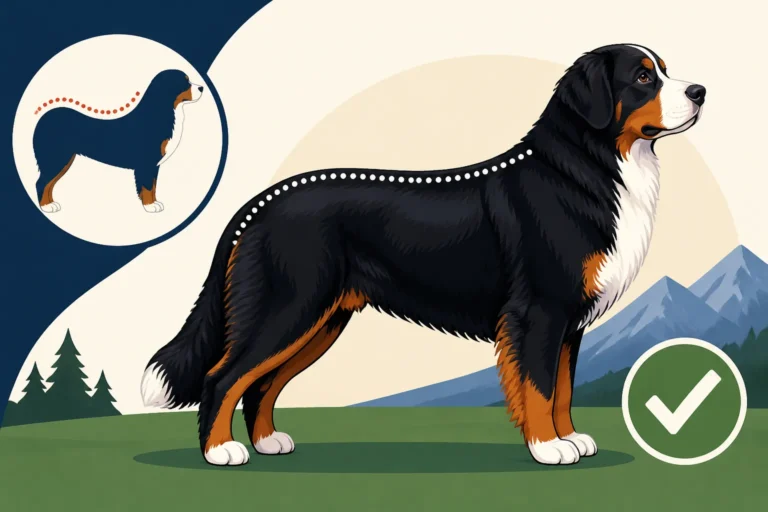
Bernese Mountain Dogs are known for a black base coat with rust-colored markings and white areas. You will often see white on the face and chest, rust above the eyes and on the cheeks, and rust on the legs. The overall combination gives many Berners a recognizable look, even when the details differ.
That shared pattern can make two dogs look remarkably alike at first glance. If you see a Berner across a park, you may recognize the broad tricolor outline before you can tell whether its face markings or feet are different. It is a little like noticing two people wearing the same team colors: the palette matches, but the individual details do not.
The pattern is not just a coincidence of grooming or coat length. It is a characteristic feature of the breed, and the breed standard describes how the colors and markings should appear. For a fuller look at the expected appearance, see The Bernese Mountain Dog Breed Standard. The distinctive three-color combination is also explored in Why the Bernese Mountain Dog and Its Cousins Are Tricolor.
Breed-standard markings still allow for variation
A breed standard describes a preferred overall appearance, not a template that makes every dog identical. Berners can have the expected tricolor arrangement while differing in the width, shape, and placement of individual markings. A blaze may run straight down the center of one dog’s face and be slightly offset on another. The white on the chest may form a broad cross-like shape, or it may look narrower or less sharply outlined.
The amount of white on the toes and tail can vary, too. Some dogs have noticeably white feet; others have dark feet with only small white tips. One dog’s rust leg markings may reach higher than another’s. These differences are normal and help give each dog a recognizable face and silhouette.
If you are comparing puppies or trying to learn which markings are typical, keep in mind that “similar” is not the same as “identical.” The general arrangement matters more than a precise match between individual patches. Bernese Mountain Dog Markings and What They Mean explains the common color areas in more detail, while Whether a Bernese Mountain Dog Can Be Any Other Color covers how the breed’s recognizable palette differs from unusual color patterns.
Which Details Make Each Berner Look Different
Face markings are often the easiest to compare
Many owners notice the face first. A white blaze may be wide or narrow, long or short, and neatly centered or slightly uneven. The white around the muzzle can also vary in shape. Rust spots above the eyes may appear prominent on one dog and smaller on another, changing the expression each face seems to have.
A small difference can make a big visual impression. Imagine two littermates sitting side by side: both have dark eyes, rust brows, and white facial markings, but one has a bold stripe from forehead to nose while the other has a slim stripe that fades before reaching the nose. They may look unmistakably like Berners, yet you might never confuse one for the other once you know them.
The markings around the eyes and muzzle do not have to be mirror images to look balanced. They may be slightly irregular from one side to the other, which is part of why individual faces look so distinct. For examples of the facial white marking, read The Blaze on a Bernese Mountain Dog's Face.
Chest, legs, and tail add more individual variation
The white chest marking is one of the most noticeable features when a Berner is sitting or standing toward you. It may look like a broad patch, a narrower stripe, or a shape that spreads across the chest. The familiar description of a Swiss cross refers to the white chest pattern, but its precise outline is not identical on every dog. The Swiss Cross on a Bernese Mountain Dog's Chest looks more closely at that marking.
Rust areas can differ in size and placement as well. One dog may have bright, clearly defined rust patches on the legs, while another’s markings appear more subtle beneath the longer coat. The rust above the eyes is particularly noticeable because it can make a dog look alert, quizzical, or gentle, depending on its shape and the dog’s expression. See Rust Markings on a Bernese Mountain Dog for more on these areas.
The tail can add another small clue. A white tip is often seen, but its length and visibility vary. Some dogs show a clear white tip when the tail is raised; on others, it is less obvious beneath the feathering. Looking at a face, chest, legs, and tail together is more useful than judging a dog by one white patch alone.
| Area to compare | Common variation | Why two dogs may still look alike |
|---|---|---|
| Face | Blaze width, length, and alignment | Both may have a central white marking and rust brows |
| Chest | Width and outline of the white patch | The tricolor arrangement remains recognizable |
| Legs | Height and shape of rust markings | Long coat feathering can soften the visible edges |
| Feet | Amount of white on toes or paws | White feet are not equally prominent on every dog |
| Tail | Size and visibility of a white tip | Feathering may partly conceal the marking |
Can Two Berners Ever Look Exactly Alike
Littermates can be especially similar without matching exactly
Two puppies from the same litter may inherit similar coloring and show the same broad pattern. If they have similar builds, coat lengths, and expressions, a quick glance can make them seem almost interchangeable. That resemblance can be strongest when they are young, before their coats have developed their full adult texture and feathering.
Even littermates usually have small differences you can learn to spot. One might have a tiny break in its facial blaze, a wider chest patch, or a rust marking that reaches farther down one leg. Owners often discover those distinctions through everyday routines: the dog that always sits on the left side of the kitchen mat, the one with the white toe on its front paw, or the one whose blaze is slightly crooked.
Photographs can exaggerate or hide those differences. Lighting, camera angle, a wet coat, and the way the dog is standing can all change how its markings appear. A front-facing photo may make two dogs look quite alike, while a side view reveals differences in their legs, chest, or tail.
Coat length and grooming can make markings seem different
A Bernese Mountain Dog’s long double coat can partly cover or soften the edges of its color patches. Feathering on the legs and tail may make boundaries harder to see, especially when the coat is damp, tangled, or packed with loose undercoat. When a dog sheds its undercoat, the coat can lie differently and reveal markings that seemed less obvious before.
Grooming does not change the underlying color pattern, but it can affect how clearly you see it. Brushing away loose hair and gently separating the coat helps you compare the markings without pulling or irritating the skin. If you are putting together a basic grooming kit, Chewy is one place owners may look for general coat-care supplies. Choose tools suited to a long double coat, and use them gently rather than trying to flatten or reshape the coat.
For example, after a muddy walk, the rust on one dog’s legs may be hidden beneath damp feathering while another dog’s cleaner coat looks sharply defined. Once both coats are dry and brushed, the difference may be much less dramatic. Chewy may also be a convenient place to browse routine grooming essentials, but a comb or brush will not make two dogs’ natural markings match.
How to Tell Two Similar Berners Apart
Look for a few reliable features instead of one
If you live with two dogs that look alike, choose two or three clear identifiers rather than relying on an overall impression. You might notice the shape of each blaze, a white toe, a particular rust patch, or the amount of white at the tail tip. Build and movement can help as well, though puppies may change considerably as they grow.
A practical comparison is to look at the dogs in the same light and from the same angle. Check their faces first, then compare chest markings and front feet. If their coats are long, part the feathering gently to see whether a color patch is simply hidden. Avoid assuming that a difference in appearance means a different color pattern; coat position and lighting can make familiar markings look altered.
For everyday identification, it is sensible to use more than appearance. Dogs that are hard to tell apart can wear clearly distinguishable collars or tags, and you can teach them separate names and cues. A collar does not replace identification records or supervision, but it can save confusion during a busy moment at the door or in the yard.
Keep appearance in perspective when choosing a puppy
A puppy’s markings can be appealing, and it is natural to have favorites. Still, a particular blaze shape or amount of white does not tell you whether a dog will be a good companion, how it will behave, or what its health will be like. If you are choosing a puppy, ask about health testing, temperament, and the breeder’s approach to raising and socializing the litter—not just which puppy has the most dramatic markings.
Photos can also make markings look more symmetrical or vivid than they appear in person. If you are comparing dogs from different litters, ask to see straightforward images in natural light, ideally including a face view and a standing view. For a better sense of how coat patterns are described, Bernese Mountain Dog Markings and What They Mean is a useful reference point, but a photo should not be treated as a substitute for meeting a dog and learning about its background.
The short answer is that two Bernese Mountain Dogs can look very similar, especially if they are related, but their markings are rarely exact matches. Shared colors and a familiar pattern give the breed its unmistakable look; the small differences in blaze, chest, legs, feet, and tail are what make each dog’s appearance its own.
Disclaimer
This article is for general informational purposes only and does not constitute professional advice. Laws, prices and regulations vary by location and change over time. Consult a qualified professional for guidance on your specific situation.