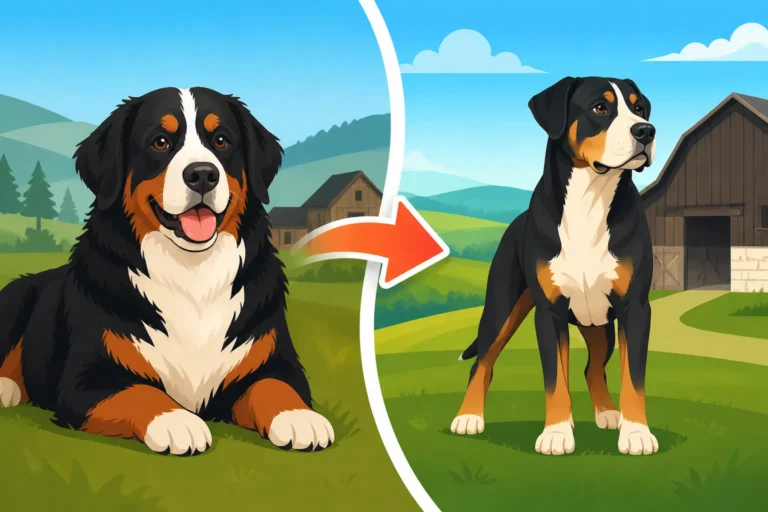
How Much a Cart Dog Bernese Mountain Dog Could Haul
A Bernese Mountain Dog was bred to work, but that does not mean there is one reliable weight it can safely haul. The load depends on the dog, cart, harness, footing, distance, and weather. This guide explains what historical farm work can—and cannot—tell you, how to build a safe carting routine, and why a dog’s comfort matters more than a number.
What Bernese Mountain Dogs hauled on Swiss farms
Their farm work was practical, not a weight-lifting contest
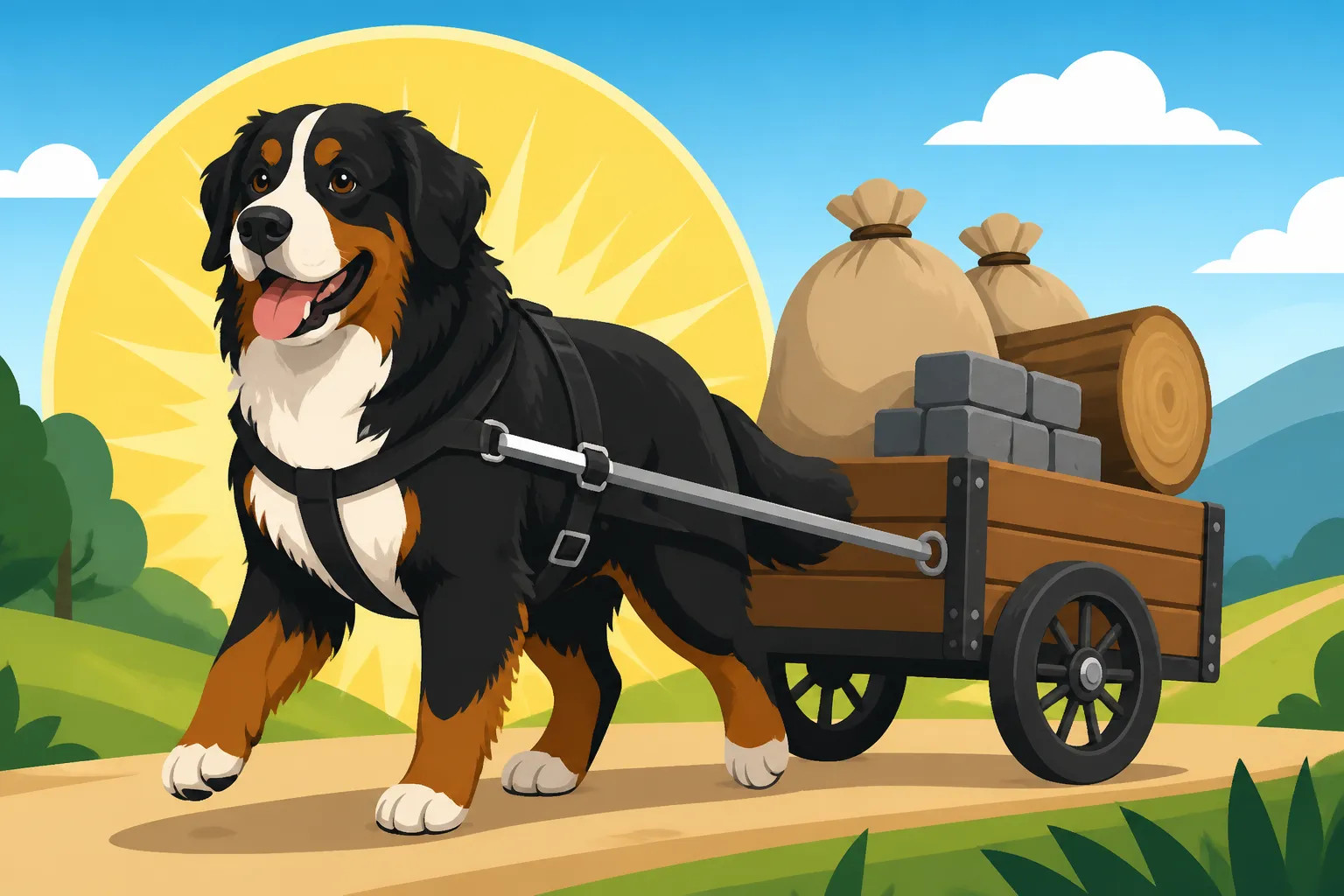
Bernese Mountain Dogs come from the canton of Bern in Switzerland, where farm dogs helped with everyday jobs. They could move goods in carts, assist around livestock, and accompany farmers between the farm and local markets. A cart might carry milk cans or other farm items, but the dog’s job was to help move a load—not to prove how much weight it could pull.
The work varied with the cart, the road, the distance, and the load. A small cart on a firm, level lane is a very different task from a heavy cart on a steep, muddy track. Even two dogs of similar size could have different strength, coordination, confidence, and stamina.
That makes it difficult to turn the breed’s history into a trustworthy maximum hauling figure. The historical record does not establish one standard load that every Bernese Mountain Dog could pull. For more context on the breed’s original work, see What Swiss Farmers Used Bernese Mountain Dogs For and Whether Bernese Mountain Dogs Really Pulled Milk to Market.
A dog’s body weight is not its safe pulling capacity
It can be tempting to assume that a large dog can pull a large load. But body weight alone does not tell you how much force a dog can safely produce or sustain. A heavy dog may be out of condition, still growing, recovering from an injury, or managing joint trouble. A lighter dog may be fit and practiced, but still need a suitable cart and sensible workload.
The cart matters just as much as the dog. Wheel size, axle condition, load placement, and balance affect how much effort is needed to get the cart moving and keep it rolling. A load that seems manageable on smooth pavement may become difficult when wheels sink into grass, catch on gravel, or meet a slope.
So when someone asks how much a cart dog Bernese Mountain Dog could haul, the most honest answer is that there is no single safe weight for the breed. Think in terms of a specific dog doing a specific task under specific conditions, with training and comfort guiding the decision.
How to think about load and effort
The number on the cart does not tell the whole story
A cart’s total weight includes the cart itself as well as everything placed inside it. That distinction matters: an empty cart may already require effort to start moving, and a loaded cart can behave differently as the load shifts. If you are testing a new setup, know the cart’s weight and add any cargo gradually rather than guessing.
The ground and route change the demands, too. A short pull on a smooth, level surface is not equivalent to a longer route with turns, rough patches, or an incline. Stopping and starting can also be tiring, especially if the cart does not roll freely. This is why a single haul-weight claim can give owners a misleading sense of what is appropriate.
Practical draft activities offer a structured way to learn how a dog works with a cart, but a test or training exercise should not be treated as a universal maximum. To understand the sport’s expectations, read What a Draft Test Asks of a Bernese Mountain Dog and The Novice Draft Title a Bernese Mountain Dog Earns First. These activities emphasize cooperation and control as well as pulling.
Start with the dog, then assess the equipment
Before adding cargo, consider the dog’s age, health, and physical development. A puppy’s growing body is not ready for adult carting work. For an adult dog, a veterinary check is a sensible first step, especially if there has been limping, stiffness, reluctance to exercise, or a previous orthopedic problem.
Next, make sure the cart rolls smoothly and is stable when loaded. Check that the wheels turn freely, the load sits securely, and the cart does not tip or pull awkwardly around corners. The harness should fit the individual dog, allow comfortable movement, and connect properly to the cart. A poorly fitted harness can rub, restrict movement, or distribute pressure badly.
For help with fitting and conditioning, see Fitting a Draft Harness to a Bernese Mountain Dog and Building a Bernese Mountain Dog's Fitness for Draft Work. If you are gathering routine care supplies, a retailer such as Chewy may be one place to look for grooming or paw-cleaning basics; those supplies do not replace suitable cart equipment or professional advice about fit.
| Factor | Why it changes the effort | A sensible check |
|---|---|---|
| Cart weight | The dog must move the cart before cargo is added | Weigh or confirm the cart’s empty weight |
| Load placement | An unstable load can shift or affect balance | Secure cargo low and evenly |
| Surface | Soft, rough, or uneven ground increases resistance | Begin on a firm, level route |
| Distance and hills | Longer pulls and slopes increase exertion | Start short and avoid steep routes |
| Harness fit | Pressure or rubbing can make movement uncomfortable | Check fit before and after each session |
| Dog’s condition | Age, fitness, health, and recovery affect capability | Ask your veterinarian about concerns |
Introducing a Bernese Mountain Dog to carting
Teach the skills before asking for a pull
Carting should begin as a gradual learning process, not by attaching a heavy load and hoping the dog figures it out. First, teach basic cues such as walking forward, stopping, turning, and waiting. These skills matter around a cart because the dog needs to respond calmly, including when the equipment makes unfamiliar sounds or behaves differently behind them.
Introduce the cart while it is stationary. Let the dog investigate at their own pace, reward relaxed interest, and avoid forcing them close if they are worried. Once the dog is comfortable, practice walking beside the empty cart and getting used to its movement and noise. Keep sessions brief enough that the dog remains willing and attentive.
Only after the dog is relaxed with the equipment should you begin very light, controlled pulling. Increase difficulty in small steps: first comfort with the harness, then moving the empty cart, then short sessions on predictable ground. The dog should not be dragged, pushed into the cart, or corrected for showing uncertainty. If the dog stops, startles, or tries to avoid the equipment, reduce the challenge and rebuild confidence.
Watch the dog, not just the cart
A dog may continue moving even when tired or uncomfortable, especially if they are eager to please. Look for changes in gait, repeated slowing, lagging behind, unusual panting, reluctance to turn, or attempts to stop. Also check for rubbing under the harness and inspect the paws after working on rough ground.
End the session if your dog seems distressed, unsteady, unusually tired, or unwilling to continue. Give water and a chance to rest, and keep the next outing easier if the previous one seemed demanding. In warm conditions, be particularly cautious: Bernese Mountain Dogs have a thick double coat and can struggle in heat. Choose cool times of day and stop if your dog shows signs of overheating.
After a session, look over the harness contact areas and the dog’s feet. If you use basic cleaning or grooming supplies from Chewy or another retailer, they can help with routine tidying after a muddy outing, but they cannot address an injury. Persistent soreness, limping, or a clear change in behavior deserves veterinary attention.
Keeping cart work safe and enjoyable
Make comfort more important than a bigger load
It is natural to feel curious about what a strong, sturdy-looking Berner can pull. But adding more weight is not the only way to make carting engaging. A dog can enjoy learning cues, navigating turns, standing calmly in harness, or completing a short route with a very modest load. These skills build teamwork without turning each outing into a strength test.
If you want a sport framework, look for experienced draft instructors or a local breed club that can assess your equipment and technique. A knowledgeable coach can help you notice issues that are easy to miss, such as a cart that tracks poorly or a harness that shifts as the dog turns. The goal is a dog that moves comfortably and understands the task—not an impressive load for the sake of a story.
Cart work may not suit every dog. Some Berners are uneasy around rolling equipment, while others have health or mobility concerns that make pulling inappropriate. A dog’s willingness is important, but enthusiasm alone does not guarantee that an activity is physically suitable. If you have questions about joints or past injuries, Whether Pulling a Cart Hurts a Bernese Mountain Dog's Joints is a useful related topic to explore with your veterinarian.
Build a routine around the individual dog
Keep a simple record of the cart, approximate load, route, weather, session length, and how your dog behaved during and afterward. You do not need elaborate tracking: a few notes can reveal whether the dog is comfortable with gradual progress or whether a certain surface, distance, or condition seems to be too much.
Plan rest days and let the dog’s response shape the next session. If your Berner is stiff or reluctant the following day, pause carting and discuss the change with a veterinarian rather than assuming it is ordinary tiredness. If everything is going well, progress slowly and change only one thing at a time, such as distance or terrain.
When planning equipment or aftercare, Chewy may be convenient for ordinary pet supplies, but choose a harness and cart based on proper fit and function rather than convenience alone. For a dog with a known medical issue, ask your veterinarian what activities are appropriate before starting or continuing a pulling routine.
The historical Bernese Mountain Dog was a capable farm helper, but that history does not give modern owners a universal hauling limit. Your dog’s health, the cart, the route, and the training all matter. Start with a suitable dog and equipment, build skills gradually, and treat relaxed, comfortable movement as the measure of success.
Disclaimer
This article is for general informational purposes only and does not constitute professional advice. Laws, prices and regulations vary by location and change over time. Consult a qualified professional for guidance on your specific situation.