The Age a Bernese Mountain Dog Should Be Bred
Choosing a breeding age for a Bernese Mountain Dog is not simply a matter of waiting for the first heat or checking a calendar. Owners also have to consider growth, health clearances, temperament, and the risks of pregnancy. This guide explains why responsible breeding usually waits until a dog is physically mature and has completed appropriate veterinary screening.
Why age matters before breeding a Bernese Mountain Dog
A Bernese Mountain Dog may look like a grown dog well before its body and behavior are fully mature. That gap matters: breeding too early can mean making decisions before health results are available or before the dog’s adult temperament is clear. Waiting gives owners and veterinarians a better basis for judging whether breeding is appropriate at all.
Why the first heat is not a green light
A female Bernese Mountain Dog can have her first heat before she is physically or behaviorally mature. A heat cycle means she may be capable of becoming pregnant; it does not mean pregnancy is advisable. A young dog is still developing, and a breeder may not yet have the health information needed to make a responsible decision.
Waiting also gives the owner time to observe the dog as an adult. For example, a puppy who was easygoing at home may become more fearful or reactive as she matures. Temperament is part of responsible breeding, not an afterthought to be considered only once a dog is old enough to conceive. A breeding decision should reflect the dog’s overall suitability, not just her reproductive cycle.
This is one reason not to plan a mating around the first heat. The owner may feel pressure because a dog is in season, but there is no need to treat that cycle as a breeding opportunity. Prevent accidental mating, keep a record of the cycle, and discuss timing with a veterinarian rather than relying on the calendar alone.
Why owners commonly wait until about two years
For a female, a common responsible benchmark is to wait until she is at least two years old and has completed the health evaluations appropriate for breeding. This is a practical minimum, not a guarantee that she is ready. Her health, maturity, test results, reproductive history, and veterinary assessment still matter.
Age is especially relevant because some important orthopedic evaluations are generally performed when a dog is mature enough for the results to be meaningful. Waiting until adulthood can help breeders assess hips and elbows rather than making a breeding decision based on a young dog’s appearance or early screening alone. For a deeper look at the screening process, see The Four OFA Clearances on a Bernese Mountain Dog and Which Tests a Bernese Mountain Dog Breeder Should Show.
A male does not carry a pregnancy, but that does not make early breeding automatically responsible. Waiting can allow time for a clearer adult assessment, completed health testing, and a more reliable picture of temperament. A young male’s ability to sire puppies is not the same thing as evidence that he should.
Age is one part of suitability, not the whole decision
Two dogs of the same age can be very different candidates. One may have completed recommended evaluations and show stable, sound adult behavior; another may have unresolved health concerns or an incomplete screening record. The number of birthdays cannot settle those questions.
Breeders also need to consider the family history behind the dog. Bernese Mountain Dogs are affected by serious inherited and breed-associated health concerns, so a clear examination of one dog does not erase risk across a pedigree. Reviewing relatives’ health histories and lifespan can help put an individual dog’s results in context. Reading Longevity Into a Bernese Mountain Dog Pedigree explores why those family details matter.
Health screening and veterinary preparation
A suitable breeding age gives owners time to gather information, but it does not replace veterinary care. Before a planned mating, discuss the dog’s health, screening schedule, and reproductive fitness with a veterinarian familiar with large-breed dogs. If the dog has a known condition or an unusual reproductive history, a veterinary reproductive specialist may be helpful.
Complete breed-relevant screening before mating
Health testing should be planned before a mating, not started after a pregnancy is underway. Depending on the dog and recommendations from breed and veterinary professionals, screening can include orthopedic, eye, cardiac, and genetic evaluations. The appropriate tests and timing can vary, so confirm what is recommended for the specific dog and keep official records rather than relying on a verbal assurance that the parents are “healthy.”
A clear result does not mean a dog can never develop a health problem, and a test is only useful when its scope and limitations are understood. Ask what each evaluation checks, whether the result is final or preliminary, and how the finding affects the proposed pairing. A discussion of breeder responsibilities is available in What the BMDCA Asks of Bernese Mountain Dog Breeders, while Whether Breeders Can Screen Bernese Mountain Dogs for Cancer addresses the limits of screening for cancer risk.
| Decision point | Why it matters | What to do before breeding |
|---|---|---|
| Physical maturity | Pregnancy and breeding place demands on the dog, and a young dog may not yet be fully developed | Discuss readiness with a veterinarian and avoid breeding at the first heat |
| Orthopedic health | A mature assessment may provide more useful information than an early impression | Complete the recommended hip and elbow evaluations and retain the records |
| Other health screening | Eye, cardiac, and genetic concerns may affect a responsible pairing | Confirm the appropriate tests for both dogs with a veterinarian and breed resources |
| Temperament | Adult behavior is part of a dog’s suitability for breeding | Evaluate the dog in ordinary situations and consider persistent fear or reactivity |
| Family history | Individual test results do not show the full picture of a line | Review health, longevity, and known conditions among relatives |
| Reproductive fitness | Age alone cannot identify every pregnancy or mating risk | Arrange a pre-breeding examination and ask about cycle timing and delivery planning |
Arrange a pre-breeding visit rather than guessing at timing
A pre-breeding appointment is a chance to review the dog’s overall health and talk through the practical plan. For a female, the veterinarian can discuss reproductive history, body condition, cycle tracking, and any concerns that could affect pregnancy or delivery. For a male, the conversation may include general health and whether reproductive evaluation is appropriate.
Bring health-test reports, vaccination and medical records, details of prior heat cycles if applicable, and information about the proposed mate. If the female has had previous pregnancies, include the outcomes and any complications. A vet can only give useful guidance when the history is complete.
Owners sometimes focus on finding the “right day” of a heat cycle and overlook the larger question of whether the mating should happen. Cycle timing is a veterinary and breeding-management issue, not something that can be reliably settled by counting days from the first sign of bleeding. Keep the dog safely separated from intact males during the cycle unless a planned breeding is being managed with appropriate professional guidance.
Choosing a responsible time for a female or male
The decision is not identical for both sexes. A female faces the physical demands and risks of pregnancy and whelping, while a male’s readiness depends on health, maturity, and the quality of the breeding decision. In either case, fertility alone is an inadequate measure of readiness.
Female Bernese Mountain Dogs need time to mature
For a female, waiting until at least about two years old is a common minimum, with the additional condition that she has completed relevant health testing and has been evaluated as a suitable candidate. Some dogs may need more time, or may not be appropriate to breed at all. If health results are incomplete or a veterinarian has concerns, postpone the plan rather than treating the minimum age as a deadline.
The reason to wait is practical as well as ethical. An owner needs time to learn how the dog moves, behaves, and maintains condition as an adult. A female who is still growing, underweight, overweight, anxious, or affected by a medical problem should not be rushed into pregnancy simply because she has reached a particular age.
The number of litters is not a target to maximize. Each pregnancy and delivery carries demands, and decisions about whether to breed again should take the female’s recovery and veterinary advice into account. There is no single age or litter count that substitutes for an individual assessment.
Male dogs also need a mature, evidence-based evaluation
A male Bernese Mountain Dog may be capable of fathering puppies before he has completed the evaluations that make him a responsible breeding prospect. Waiting for maturity allows owners to assess adult structure, health, and temperament and to complete the tests relevant to the breeding plan.
The male’s owner has a responsibility to investigate the proposed pairing, too. That means reviewing the female’s health information and family history, asking how the breeder plans to raise and place puppies, and considering whether the pairing complements both dogs rather than focusing on one attractive trait. A popular or handsome male is not automatically a good match for every female.
Both owners should agree on documentation and responsibilities before mating. Written plans can clarify health records, veterinary communication, puppy placement expectations, and what happens if the breeding does not go as planned. What a Bernese Mountain Dog Breeder Puts in Writing offers a related look at the importance of clear agreements.
There is no universal last age that makes every dog safe to breed
Owners often ask when a dog becomes “too old” to breed. There is no single cutoff that answers that question for every Bernese Mountain Dog. Age-related health, prior reproductive history, body condition, and veterinary findings all affect the decision. A veterinarian should assess an older female individually before any breeding is considered.
For a male, age does not remove the need for current health evaluation or responsible mate selection. Fertility can change, and medical or mobility issues may affect whether breeding is sensible. The fact that a male has produced puppies before does not mean he remains an appropriate candidate indefinitely.
When in doubt, prioritize the dog’s welfare over a planned litter. A breeder should be willing to cancel or postpone a mating if new information raises concern. The purpose of waiting is not to hit a magic birthday; it is to make a better-informed decision with the dog’s long-term wellbeing in view.
Planning for pregnancy and the puppies
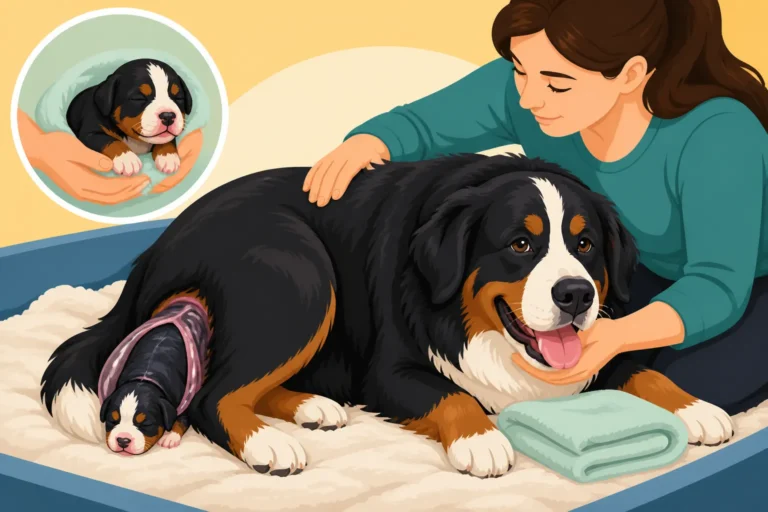
Even when a dog is old enough and has passed appropriate screening, breeding requires substantial preparation. Responsible planning includes veterinary care, a safe environment, emergency arrangements, and the time and resources to care for puppies. Before committing, read about Whether a Bernese Mountain Dog Has Large Litters and Attending a Bernese Mountain Dog Through Labor to understand how much preparation may be involved.
Make a realistic care plan before mating
Before breeding, identify the veterinarian who will provide pregnancy and whelping guidance, and understand how to reach emergency care if problems arise. Set aside a quiet, clean space for the mother and litter, and plan how you will supervise them. Whelping can be unpredictable, so a plan should include who can help and how the mother and puppies will get veterinary attention if needed.
There are everyday logistics as well. You may need appropriate bedding, cleaning supplies, puppy-safe equipment, and a way to keep records for each puppy. Some owners use retailers such as Chewy to replenish ordinary pet-care supplies, but buying supplies is only one small part of preparation; it cannot replace veterinary guidance or hands-on experience.
Budgeting should account for routine care as well as unexpected needs. Puppy food, cleaning materials, veterinary visits, and possible emergency care all belong in the plan. Owners who wait until puppies arrive to think through costs may find themselves making rushed decisions at an already stressful time.
Plan for the puppies’ lifelong placement
Responsible breeding continues after delivery. Puppies need attentive care, appropriate veterinary oversight, early handling, and carefully considered homes. The breeder should be prepared to answer questions from prospective owners and to support the puppies’ welfare after they leave.
That responsibility begins before mating with honest communication about the parents’ health records and known family history. Prospective owners should have a chance to ask questions and understand what information is available. Visiting a Bernese Mountain Dog Litter Before Choosing can help readers understand what to look for when meeting a breeder and litter.
For breeders, keeping organized records can make those conversations clearer. Save test results, veterinary notes, mating and pregnancy information, and the details of each puppy’s placement. If you are stocking supplies for routine puppy care, a retailer such as Chewy may be one practical option, but the central preparation is still informed veterinary care and a responsible placement plan.
A practical checklist before deciding
Before proceeding, ask yourself whether every item below has a clear answer:
- Is the dog mature enough, and has the female passed the commonly used minimum age of about two years?
- Have both dogs completed the health screening recommended for them?
- Have you reviewed relevant family health history, not just the parents’ test results?
- Has a veterinarian discussed the individual dog’s fitness for breeding?
- Are both dogs’ adult temperaments suitable for a responsible pairing?
- Is there a plan for pregnancy care, whelping, and emergency veterinary support?
- Can you provide appropriate care and lifelong placement support for the puppies?
- Are you prepared to postpone or cancel the breeding if a health or welfare concern appears?
If several answers are uncertain, waiting is the responsible choice. A Bernese Mountain Dog should not be bred just because she has come into heat, a male is fertile, or a litter is desired. The better benchmark is maturity combined with appropriate health screening, veterinary guidance, and a credible plan for every dog and puppy involved.
Disclaimer
This article is for general informational purposes only and does not constitute professional advice. Laws, prices and regulations vary by location and change over time. Consult a qualified professional for guidance on your specific situation.