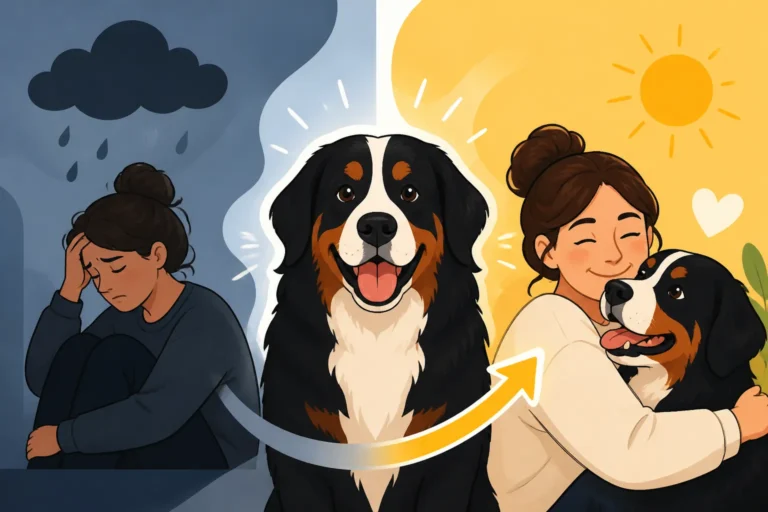
What Bernese Mountain Dog Owners Wish Someone Had Said
A Bernese Mountain Dog can look like the perfect family dog: affectionate, striking, and happy to be near its people. Then the shedding starts, the puppy grows faster than expected, or a warm afternoon turns a normal walk into a safety concern. This guide covers the practical realities owners often wish they had understood before bringing a Berner home.
The size and coat change everyday life
A gentle giant still needs a big-dog plan
A Bernese puppy may seem manageable at first, but the dog in your home will eventually need room to turn around, stretch out, and move without knocking into everything. That affects more than the size of the bed. It can shape your choice of car, the layout of your hallway, and whether a visitor can comfortably move around your living room when your dog has settled across the floor.
Training matters because even a friendly Berner can pull hard, jump up, or crowd someone without meaning to. Teach loose-leash walking, polite greetings, and a reliable “wait” while the dog is still small enough to guide easily. A child, older adult, or anyone with limited balance should not be expected to manage a large, excited dog on a leash without support and practice.
Think through the unglamorous logistics, too. If your dog is ill or injured, you may need to help them into a vehicle or arrange a veterinary visit. A ramp, nonslip flooring, and a well-fitted harness can make daily handling easier. Planning ahead is especially useful if your home has steep stairs or slippery floors.
For a broader suitability check, read The Kind of Home a Bernese Mountain Dog Belongs In and Whether a Bernese Mountain Dog Is Right for You. A Berner can thrive in different kinds of homes, but the best fit is one where people have realistically considered space, time, exercise, and care—not just the dog’s appearance.
The coat is lovely, but it is not low-maintenance
The long tricolor coat brings a steady supply of loose hair. You will find it on clothes, rugs, car seats, and sometimes in places you have just cleaned. Seasonal shedding can make the amount feel especially dramatic. Regular brushing helps remove loose undercoat and catches tangles before they tighten, particularly behind the ears, around the legs, and beneath the tail.
Set up a routine you can actually maintain. A few short brushing sessions each week are often easier than waiting until the coat is full of loose hair or mats. Keep brushes and a comb somewhere convenient, and get your dog used to having paws, ears, and feathering handled while young. If your dog dislikes grooming, brief, calm sessions with rewards can be more productive than trying to finish everything at once.
A long coat does not mean the dog should be shaved for summer. The coat helps insulate the body, and shaving can interfere with its natural function. Instead, focus on shade, water, a cool indoor place to rest, and walks at cooler times of day. For practical expectations about the hair, see The Bernese Mountain Dog Shed and What It Fills.
A Berner’s comfort depends on the home setup
A Berner may choose the coolest patch of floor, follow you from room to room, and lean against your legs while you cook. That affectionate closeness is part of the appeal, but it also means the dog needs a comfortable place to rest that is not in the middle of every doorway. Teaching a settle cue and providing a bed or mat can help everyone share the space.
A nonslip path between resting areas, food, water, and the door can be useful, particularly for puppies with clumsy feet and older dogs with stiff joints. If your home has hardwood or tile, runners can reduce slipping. Keep water bowls accessible, and choose a spot where a large dog can eat without being jostled by foot traffic.
| Everyday reality | What can help |
|---|---|
| Large dog in a narrow hallway | Keep a clear resting area away from doorways |
| Hair on furniture and floors | Brush consistently and keep cleaning tools handy |
| Slippery floors | Add secure, washable runners |
| Difficult car entry | Practice calmly and consider a ramp |
| Grooming resistance | Start with brief handling sessions and rewards |
The daily care is steady, not complicated
Food and weight need attention as your dog grows
A Berner puppy grows into a large dog, but faster growth is not automatically better. Feed a complete diet appropriate for the dog’s life stage, and ask your veterinarian to help choose a feeding plan. Avoid adding calcium or other supplements without veterinary direction; extra nutrients can be inappropriate for a growing large-breed puppy.
Portion guidance on food packaging is a starting point, not a precise prescription for every dog. Activity, age, reproductive status, and individual metabolism all matter. Keep an eye on body condition rather than relying on the coat or a number on the scale. Because the coat can hide shape, use your hands: you should be able to feel the ribs without pressing hard, while the waist should be visible from above.
Food is also part of the household budget and routine. If recurring supplies are difficult to keep track of, some owners use services such as Chewy to organize ordinary pet-food and care purchases. Whichever way you shop, check that the food is suitable for your dog’s age and needs, and discuss major diet changes with your veterinarian. More guidance is available in Feeding an Adult Bernese Mountain Dog Safely.
Exercise should suit the dog in front of you
Berners need regular movement and mental activity, but they are not built for every kind of exercise in every condition. A puppy’s growing body calls for sensible, age-appropriate activity rather than long forced runs or repeated high-impact jumping. For an adult, daily walks, sniffing opportunities, and low-impact play can make a satisfying routine.
Adjust activity to the individual dog. A young, healthy Berner may enjoy a longer walk in cool weather, while an older dog or one with joint discomfort may do better with shorter outings. If your dog is reluctant to move, limps, or seems sore after exercise, do not assume it is laziness. Pause strenuous activity and contact a veterinarian for advice.
Warm weather requires particular caution. A black double coat can make heat management challenging, and a dog may overheat before an owner expects it. Walk early or late when conditions are cooler, provide shade and water, and stop if your dog is panting heavily, slowing down, or struggling. For signs that call for urgent care, learn the warning signs in Heat Stroke in a Bernese Mountain Dog.
Grooming and supplies are easier when they have a home
Many owners find it easier to brush when the tools are close by rather than stored in a hard-to-reach cupboard. Keep a brush, comb, towels, nail-care supplies, and dog-safe cleaning products in one practical spot. Chewy is one option some households use to find routine supplies, but the important part is choosing tools that suit your dog’s coat and teaching your dog to tolerate them calmly.
Do not overlook paws and ears. Check feet after muddy walks or outings where burrs, road salt, or debris may collect in the feathering. Look at the ears regularly, especially if they are damp after swimming or bathing. A sudden smell, redness, discharge, or persistent scratching is a reason to ask your veterinarian for advice rather than trying a random treatment.
Bathing a large, thick-coated dog takes planning because the coat can stay wet for a long time. Use a dog-appropriate shampoo, rinse thoroughly, and dry the coat well. If home grooming is uncomfortable or impractical, ask a groomer how they handle large double-coated breeds and be clear that you do not want the coat shaved as a routine solution.
Health and lifespan deserve honest preparation
Good care helps, but it cannot guarantee a long life
One of the hardest realities of the breed is that Berners are often short-lived compared with many smaller dogs. Owners may find it painful to hear this before they fall in love with a puppy, but going in with open eyes can help you make thoughtful choices about veterinary care, finances, and the time you spend together. The details are discussed in Why a Bernese Mountain Dog Lives Only Seven or Eight Years.
That does not mean every Berner will have the same health problems or follow the same timeline. It does mean routine veterinary care is important, and any new lump, persistent limp, change in appetite, or unexplained change in energy deserves attention. When something seems off, write down what you noticed and when it began. Specific observations can make a veterinary conversation more useful.
A health history from the breeder can help you ask informed questions, but it cannot guarantee a particular outcome for an individual dog. Keep records of examinations, test results, medications, and changes in behavior. If you are considering a puppy, ask what health screening has been completed for the parents and where you can review the results.
Prevention is partly about noticing small changes
A yearly wellness visit gives you a chance to discuss weight, movement, dental care, skin, ears, and any changes you have seen at home. As your dog ages or develops a health concern, your veterinarian may recommend a different checkup schedule. It can help to describe everyday changes plainly: “She takes longer to stand after naps,” or “He stopped jumping into the car,” rather than deciding on your own what the change means.
Keep an eye on mobility. Difficulty rising, stiffness after rest, reluctance to climb stairs, or a new limp can have different causes. A veterinarian can examine your dog and help decide what testing or treatment is appropriate. Avoid giving human pain medication unless a veterinarian specifically instructs you to; some common medicines can be dangerous for dogs.
A first-aid kit and a plan for getting a large dog to a clinic are sensible household preparations. Make sure you know which clinic to call after hours and have a way to transport your dog safely. Health concerns can also create unexpected costs, so it is worth thinking in advance about how you would manage an emergency. For a fuller look at long-term expenses, see What a Bernese Mountain Dog Costs Over Its Whole Life.
Older dogs may need the home to change with them
A dog that once bounded up the stairs may eventually need help, more rest, or a different exercise routine. That shift can be gradual. Watch for changes in sleeping, appetite, toileting, grooming tolerance, and willingness to join family activities. Small adjustments—such as moving a bed to the main floor or adding rugs—can make daily life easier without requiring a major overhaul.
Older Berners may need more frequent coat checks because reduced mobility can make it harder for them to shift position or groom themselves through normal movement. Keep brushing gentle, and break grooming into manageable sessions if standing is tiring. Ask your veterinarian whether a change in diet, exercise, or pain management is appropriate rather than assuming that slowing down is simply part of aging.
Temperament and time with people matter as much as looks
Affectionate does not mean independent
Many Berners are strongly attached to their families. That can be wonderful when you want a companion nearby, but it can be difficult if your dog is expected to spend long stretches alone without preparation. Gradually teach your puppy that short, calm separations are safe. Offer a comfortable resting place, practice leaving and returning without a big emotional buildup, and increase time alone slowly.
If a dog panics, howls, damages doors, or cannot settle when left, simply letting them “get used to it” may make the problem worse. Ask a veterinarian or qualified behavior professional for help, especially if the distress is intense. The topic is explored in The Bernese Mountain Dog That Cannot Bear Being Left.
Chewy may be useful for finding ordinary enrichment items, such as food puzzles, but a toy alone will not solve separation distress. Choose safe items that match your dog’s chewing habits, supervise new products, and use them as part of a gradual training plan rather than as a substitute for it.
Training works best when it is kind and consistent
A Berner’s size makes manners practical safety skills. Teach the dog to walk on a loose leash, wait at doors, come when called, and greet people with four paws on the floor. Use small, clear training sessions and reward the behavior you want. Harsh corrections can undermine trust and may make a sensitive dog more hesitant or worried.
Training is not just for puppies. Adolescence can bring bursts of strength, distraction, and apparent forgetfulness. If your dog suddenly ignores a cue in a busy setting, practice it again in a quieter place and build up gradually. Give visitors simple instructions, too: ask them to wait for the dog to approach, avoid leaning over the dog, and reward calm greetings.
A dog’s friendly reputation should not be treated as a guarantee that every individual will enjoy every person, child, or dog. Supervise interactions, give the dog a way to move away, and teach children to leave the dog alone while eating or resting. Those habits are useful even with a gentle, well-socialized family pet.
The best preparation is practical and emotional
Before bringing a Berner home, talk through who will handle feeding, walks, grooming, training, and veterinary appointments. Decide where the dog will sleep, how you will manage travel, and what you will do if the dog needs help getting into the car. If supplies tend to run out at inconvenient moments, Chewy or another shopping option may help you plan regular replenishment; keep the focus on having suitable food and care items on hand rather than buying more than you need.
Most of all, be prepared to love a dog whose needs will change over time. There will be muddy feathering, hair on the clean laundry, training setbacks, and days when a planned walk needs to be shortened. There will also be quiet companionship: a big warm body beside the sofa, a familiar face waiting at the door, and a dog who wants to be part of ordinary family life.
Knowing the less glamorous parts does not take away from the joy. It helps you offer a Berner a more comfortable, realistic home—and helps you appreciate the time you share without expecting the breed to be easier, healthier, or more independent than it is.
Disclaimer
This article is for general informational purposes only and does not constitute professional advice. Laws, prices and regulations vary by location and change over time. Consult a qualified professional for guidance on your specific situation.