What Crossing a Bernese Mountain Dog Changes
A Bernese Mountain Dog mix may look like a softer-coated Berner, a smaller one, or something entirely unexpected. That uncertainty can be exciting—and a little stressful when you are trying to estimate adult size, grooming, temperament, or health needs. This guide explains what crossing a Bernese Mountain Dog with another breed can change, what may stay familiar, and what no one can promise.
What a Bernese Mountain Dog mix may inherit
Appearance and adult size can be hard to predict
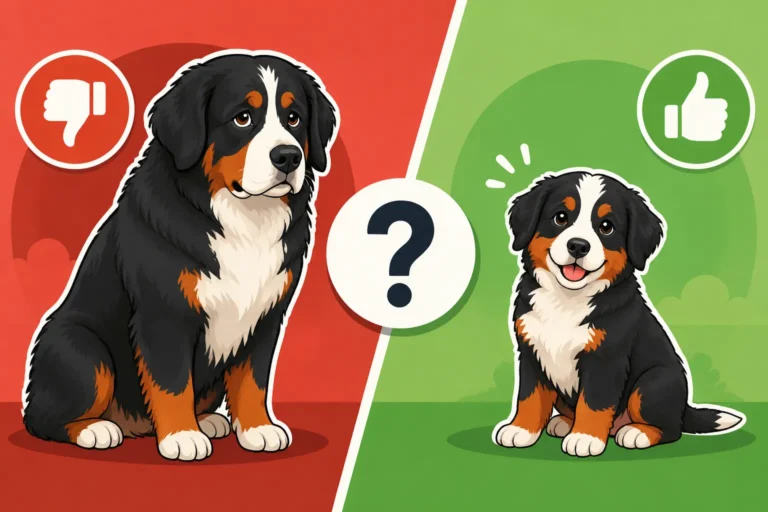
A mixed-breed puppy does not necessarily land halfway between its parents. A puppy from a Bernese Mountain Dog and a smaller breed might grow closer to the Berner’s size, the other parent’s size, or somewhere between. Even puppies in the same litter can develop differently.
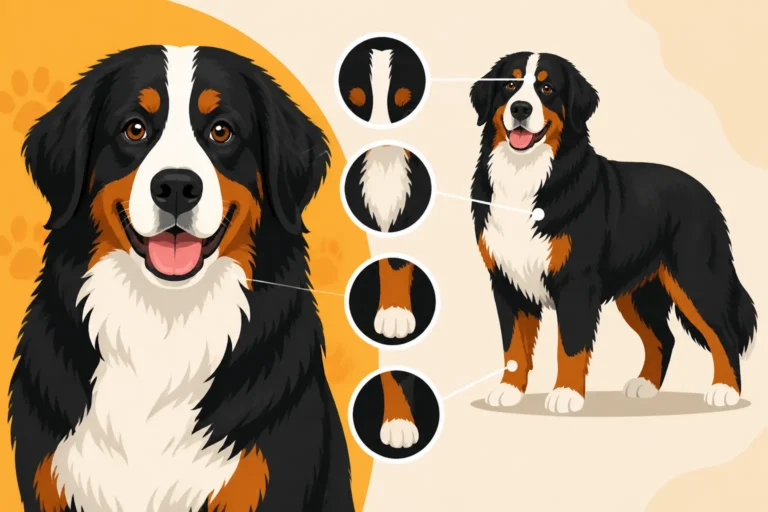
The same goes for coat and markings. A Berner’s long, dense coat and classic black, rust, and white pattern are recognizable, but a cross may have a shorter or curlier coat, different coloring, or a different balance of markings. A puppy that looks strongly like one parent early on may change as its coat and body mature.
Ask about both parents’ actual adult size, build, and coat—not just the breed names. A breeder who has raised previous generations of the same cross may be able to describe the range they have seen, but past puppies still cannot guarantee what an individual dog will become. For a reference point, How Big a Bernese Mountain Dog Gets covers the size range of the purebred parent; a mix may fall outside it.
| Trait | What may come from the Berner parent | What the other parent may change | What to plan for |
|---|---|---|---|
| Adult size | A large frame and substantial weight | Height and build may shift up or down | Plan for a range, not a precise puppy estimate |
| Coat | A dense coat, feathering, and seasonal shedding | Coat length, curl, texture, and shedding may differ | Groom the coat the dog actually has |
| Color and markings | Black, rust, and white may appear | The other parent’s coloring may alter the pattern | Do not assume every puppy will look like a Berner |
| Temperament | Some Berner-like friendliness or sensitivity may appear | Activity, sociability, and independence may differ | Evaluate the individual dog and its behavior |
| Health | Inherited risks can come from either side | The mix may carry conditions associated with both breeds | Review family history and veterinary screening |
Coat care is not automatically easier in a cross
People often choose a cross hoping for less shedding or simpler grooming. That can happen in an individual dog, but the word “mix” does not guarantee a low-maintenance coat. Coat texture and shedding depend on inherited traits, and even puppies from the same litter may need different routines.
A long or dense coat can still trap loose hair, collect burrs, and tangle behind the ears, under the legs, and around the tail. A curlier coat may shed less visibly but can mat if it is not brushed and trimmed appropriately. A short coat may be easier to brush, yet still shed enough to show up on clothing and furniture.
Before choosing a puppy, ask to meet the adult dogs and learn what their grooming routine involves. If adopting an adult mix, inspect the coat directly and ask what care the dog tolerates. A basic grooming setup—such as suitable brushes, combs, and nail-care tools—can be found through general pet retailers such as Chewy, but the right tools depend on the dog’s coat. For a fuller look at the Berner side of the equation, see Grooming a Bernese Mountain Dog's Long Tricolor Coat.
Health and lifespan are not guaranteed to improve
A mixed breed can inherit health risks from either parent
Crossing a Bernese Mountain Dog with another breed does not erase the Berner parent’s inherited risks. Nor does it mean a puppy will necessarily develop a condition found in either breed. Genetics are not a simple checklist where one breed’s health profile cancels out the other’s.
The responsible question is not just “Is this a mix?” but “What health information is available for both parents and their relatives?” Ask for relevant screening records, the names of tests performed, and what the results mean. A seller’s general reassurance that the parents are healthy is not a substitute for documentation.
This matters even when the cross is marketed as healthier, hardier, or longer-lived. Those descriptions are not guarantees for an individual dog. Whether a Bernese Mountain Dog Mix Escapes the Cancer looks specifically at the assumption that a mix avoids the breed’s cancer concerns, while Which Tests a Bernese Mountain Dog Breeder Should Show can help you understand the value of asking for verifiable records.
No one can promise a longer life because a dog is mixed
A mixed dog may live longer than a particular purebred relative, or it may not. Lifespan is influenced by many factors, including inherited health, body condition, preventive care, and chance. The other parent’s breed can provide context, but it cannot predict exactly how long a cross will live.
Be wary of claims that a particular cross reliably outlives a Bernese Mountain Dog. A designer name or a mixed pedigree does not provide a lifespan guarantee. Even a breeder with experience raising that cross cannot know an individual dog’s future health.
If lifespan is a major concern, ask about the ages and health histories of close relatives on both sides. That information is more useful than a broad promise about hybrid vigor. You can also compare the question with Whether a Bernedoodle Outlives a Bernese Mountain Dog, which addresses a commonly repeated assumption about a popular Berner cross.
Temperament and daily life depend on the individual dog
Berner-like friendliness is possible, not assured
Bernese Mountain Dogs are often valued for their affectionate, people-oriented nature, but a cross is not a guaranteed copy of a purebred Berner’s temperament. The other parent may contribute different tendencies, and puppies within one litter can vary. Some may be outgoing and eager to greet people; others may be more reserved, energetic, or independent.
Early experiences matter too. Thoughtful socialization and patient training help a puppy learn how to handle new people, places, sounds, and routines. They do not change every inherited tendency, but they give the dog a better chance to build confidence and good habits.
If you are choosing a puppy, observe how it responds to ordinary handling and unfamiliar situations, without expecting a brief visit to reveal its adult personality. Ask the breeder how they raise and socialize puppies, and how they match puppies with homes. For a broader sense of what life with the Berner parent can involve, read The Kind of Home a Bernese Mountain Dog Belongs In.
Match the dog’s needs to your household, not its label
A large mix may need the same practical planning as a large purebred dog: room to rest comfortably, a safe way to get in and out of the car, and a person who can manage the dog on leash. If the dog inherits a heavy build, jumping in and out of vehicles or navigating slippery floors may be harder as it ages. A smaller-looking puppy can also grow into a much larger adult than a family expected.
Think through your routine honestly. Who will handle walks, grooming, training, and veterinary visits? Can you manage a dog that pulls or becomes excited around visitors? Is there a cool, comfortable place to rest in warm weather? The answers matter more than whether the dog is called a “mini,” “designer,” or “hybrid” Berner.
If you are considering a cross partly because you want a smaller, healthier, or easier dog, examine that expectation before committing. Whether a Mini Bernese Mountain Dog Is Healthier explores why a smaller label does not automatically mean fewer health concerns. For an adult dog, the observed size, movement, coat, and behavior are more informative than a marketing name.
How to choose or adopt a Bernese Mountain Dog cross carefully
Ask for records and specific answers
A responsible breeder should be willing to discuss the health and temperament of both parent dogs, show relevant records, and answer questions without pressuring you to decide quickly. Ask what is known about close relatives, what screening has been completed, and whether there have been health or behavior concerns in earlier litters.
Ask about the puppies’ daily care as well. Find out how they are introduced to handling, household sounds, people, and new experiences. Ask what support the breeder provides if the dog develops an unexpected health or temperament need. Reading Longevity Into a Bernese Mountain Dog Pedigree is also useful when you are trying to interpret family history rather than rely on a simple breed label.
Be cautious when a seller promises a precise adult weight, a particular coat, no shedding, or freedom from inherited illness. A breeder may describe what they hope or expect, but genetics do not allow certainty about every puppy. If the answers are vague or records are unavailable, it is reasonable to keep looking.
Adoption lets you assess more of the dog you are getting
With an adult rescue or rehomed dog, you can often see its current size, coat, energy level, and response to everyday handling. That does not reveal everything about future health or behavior, but it reduces some of the guesswork that comes with a young puppy.
Ask the rescue or previous caregiver about the dog’s medical history, known sensitivities, walking behavior, comfort around children or other animals, and tolerance for grooming. If the dog is new to the organization, some details may be unknown. In that case, plan for a veterinary exam and give the dog time to settle before judging how it will behave in your home.
For either a puppy or adult, prepare for the real needs in front of you. Choose food based on the dog’s age and individual condition, and ask your veterinarian for guidance if you are unsure what is appropriate. Chewy is one place owners may use to purchase routine supplies, but a retailer cannot determine a dog’s nutritional or medical needs. The dog’s veterinarian is the right person to discuss those questions.
A Bernese Mountain Dog cross can be a wonderful companion, but the cross itself is not a promise of a particular size, coat, temperament, or lifespan. Focus on the individual dog, documented family health information, and whether its likely needs fit your household. That approach leaves less room for surprises—and helps you choose for the dog you may actually bring home, rather than the one a label suggests.
Disclaimer
This article is for general informational purposes only and does not constitute professional advice. Laws, prices and regulations vary by location and change over time. Consult a qualified professional for guidance on your specific situation.