Buying the Rake and Dryer a Bernese Mountain Dog Needs
Anyone who has ever tried to groom a Bernese Mountain Dog with subpar tools knows the frustration: wrestling with a matted coat, enduring endless shedding season, or spending hours trying to get that dense double coat truly dry. It’s not just about aesthetics; proper grooming with the right equipment is essential for your Berner's health and comfort, preventing painful mats and skin issues. This guide will walk you through choosing the absolute best rakes and high-velocity dryers to make grooming your magnificent companion a manageable, even enjoyable, task.
The Undeniable Need for Quality Grooming Tools for Your Bernese Mountain Dog
Let's be honest, living with a Bernese Mountain Dog means living with hair. A lot of hair. Their stunning double coat, a thick outer layer over a dense, woolly undercoat, is designed to protect them from the harsh Swiss elements. It's magnificent, but it's also a magnet for dirt, burrs, and tangles, and it sheds—oh, how it sheds. Trying to tackle this glorious mane with a flimsy brush or a human hairdryer is like trying to empty a swimming pool with a teacup. It's ineffective, frustrating, and can actually cause more harm than good to your dog's skin and coat.
Many Berner owners, myself included, have fallen into the trap of thinking a regular brush will suffice. The reality hits hard during shedding season, or when you find a mat the size of a small bird's nest behind their ears or on their legs. These aren't just cosmetic issues; unchecked mats can pull on the skin, causing pain, irritation, and even skin infections. A damp coat that never fully dries can also lead to skin problems like hot spots. Investing in specialized tools isn't a luxury; it's a necessity for maintaining your Bernese Mountain Dog's well-being and keeping your home from turning into a furry tumbleweed farm.
Why Your Berner's Coat Demands Special Attention
The Bernese Mountain Dog’s coat isn't just "long hair"; it's a complex, multi-layered insulation system. The longer, slightly wavy outer coat is coarser and acts as a protective barrier, repelling water and dirt. Beneath it lies a soft, dense undercoat that provides warmth. These two layers work together, but they also mean that shedding is a year-round event, with major "blow-outs" in spring and fall. Without the right tools, this undercoat gets trapped, leading to matting and discomfort.
Think about the sheer volume of hair. When your Berner comes in from a romp in the snow, that undercoat can hold an incredible amount of moisture. If not thoroughly dried, it can stay damp against the skin for hours, even days, creating a perfect breeding ground for bacteria and yeast. This isn't just about preventing "dog smell"; it's about preventing painful skin conditions that often require veterinary intervention. The proactive approach of regular, thorough grooming with appropriate tools saves both you and your furry friend a lot of heartache (and potentially hefty vet bills down the line).
The Frustration of Ineffective Grooming
If you've ever spent an hour brushing your Bernese Mountain Dog, only to find another clump of loose hair clinging to the couch ten minutes later, you know the feeling of futility. Regular brushes often only skim the surface, leaving the crucial undercoat untouched. This leaves old, dead hair in place, which then forms mats and continues to shed all over your home. It’s a battle you can’t win with inadequate equipment.
Consider the effort involved in trying to bathe and dry a hundred-pound dog. A standard towel only gets so much water out, and a human hairdryer is simply not powerful enough to penetrate that dense double coat, nor is it safe due to heat settings and motor design for continuous, high-volume use on a dog. The sheer physical exertion and the time commitment quickly become overwhelming, leading many owners to either neglect grooming or shell out significant money for professional services. While professional groomers are wonderful, equipping yourself with the right tools empowers you to manage routine care at home, making those professional visits less frequent and more focused.
Deciphering the World of Rakes for Your Bernese Mountain Dog
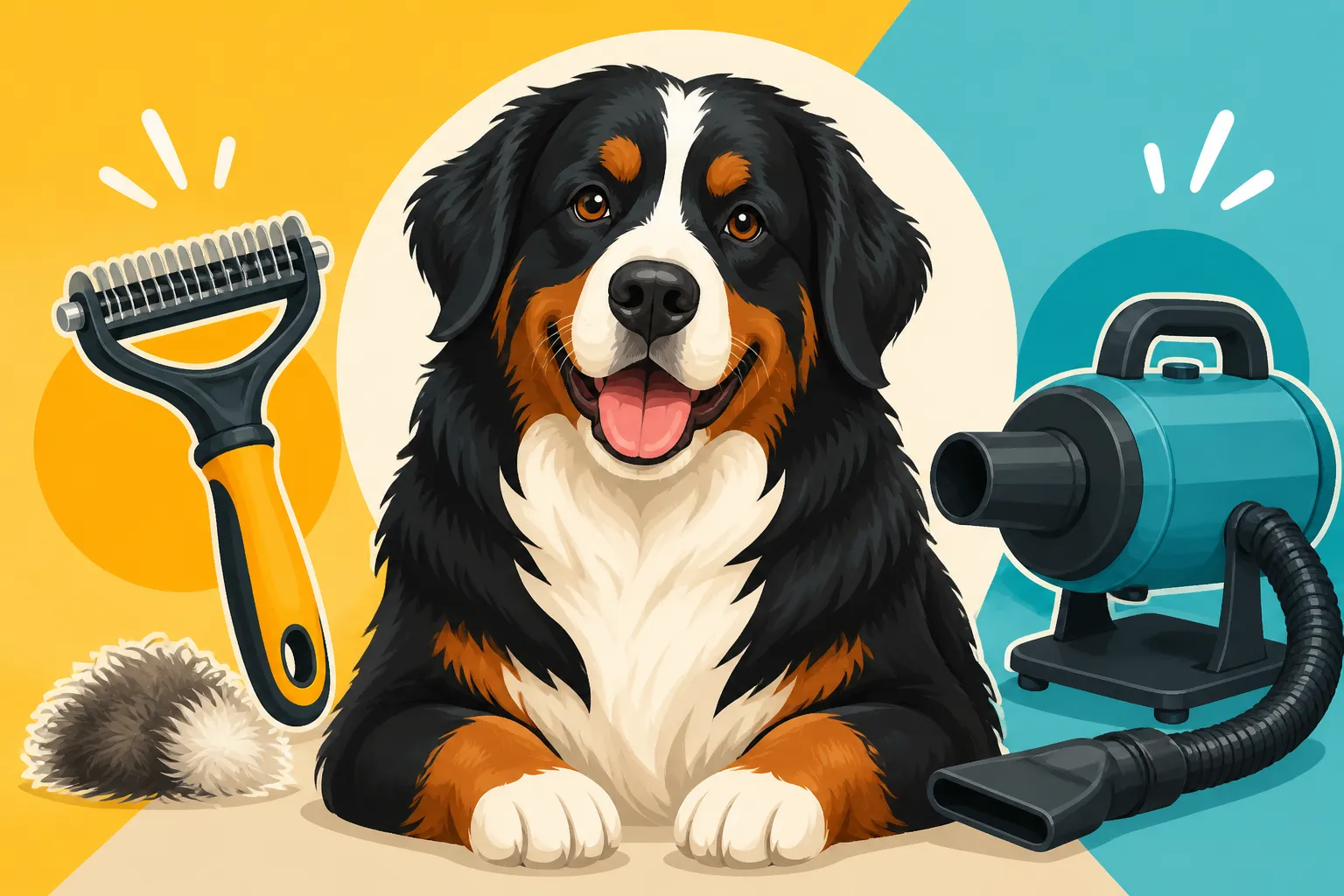
When it comes to tackling your Bernese Mountain Dog's formidable undercoat and preventing mats, a good quality grooming rake is your absolute best friend. Forget those flimsy wire brushes or comb-like tools; a proper undercoat rake is designed to reach deep into the coat, gently pulling out loose, dead undercoat without damaging the topcoat or irritating the skin. It’s a game-changer for reducing shedding and keeping their coat healthy and tangle-free.
But not all rakes are created equal, and choosing the right one can feel a bit daunting. You’ll find various styles, tooth lengths, and materials. Understanding these differences will help you select the tool that works most effectively for your specific Berner's coat type and density. The goal is always to remove the loose undercoat cleanly and efficiently, making the grooming process smoother for both of you.
Undercoat Rakes: Your First Line of Defense
An undercoat rake is specifically designed to penetrate the outer guard hairs and remove the loose, dead undercoat that would otherwise cause mats and excessive shedding. These typically have one or two rows of long, sturdy teeth that are spaced appropriately to glide through the coat. For a Bernese Mountain Dog, you'll want teeth that are long enough to reach through their dense topcoat to the undercoat below.
When choosing an undercoat rake, look for one with rounded, blunt tips on the teeth. This is crucial for your dog's comfort and safety. Sharp teeth can scratch the skin, causing pain and even infection. Start with a rake that has widely spaced teeth if your dog is prone to heavy matting, as this will help you work through larger sections more easily. As their coat improves, or for maintenance, you can use a rake with slightly closer-set teeth for a more thorough job. You might find a good selection of various rake types on pet supply sites like Chewy. Remember that regular, gentle use is key, focusing on small sections at a time. Getting a rake down through a Bernese Mountain Dog's coat takes practice and patience, but it's incredibly rewarding.
Dematting Rakes: For the Tougher Tangles
Sometimes, despite your best efforts, your Berner will develop mats. These can be particularly common in areas where friction occurs, like behind the ears, under the legs, or around the "trousers" on their hind end. Mats in a Bernese Mountain Dog's ruff or tangles behind a Bernese Mountain Dog's elbows are common culprits. For these more stubborn tangles, a dematting rake can be invaluable. These tools often have sharp, inwardly curved blades that are designed to cut through mats rather than pull them.
It’s important to use a dematting rake with extreme caution. Always read the instructions carefully and use gentle, short strokes. The blades are sharp, and improper use can easily cut your dog's skin. I recommend only using a dematting rake on actual mats, not for general grooming. If a mat is very large or tight against the skin, it’s always safer to visit a professional groomer or your vet, as they may need to carefully clip it out. Cutting a mat out of a Bernese Mountain Dog's coat requires precision and care, and sometimes a professional touch is truly best. If you're tackling smaller mats, remember to hold the skin taut at the base of the mat to minimize pulling and discomfort.
Harnessing the Power of a High-Velocity Dryer
After a bath, getting your Bernese Mountain Dog truly dry is arguably more challenging than the washing itself. Their thick double coat can hold an astonishing amount of water, and if not dried properly, it can lead to skin issues, unpleasant odors, and even chill your dog in cooler weather. This is where a high-velocity dog dryer becomes an indispensable tool. It’s not just a fancy hairdryer; it’s a powerful piece of equipment specifically designed for the job.
A high-velocity dryer works by blasting a concentrated stream of unheated or lightly warmed air at high speed, pushing water out of the coat and separating the hairs. This not only dries your dog much faster but also helps to "blast out" any remaining loose undercoat that brushing might have missed. It’s a fantastic way to finish a thorough grooming session and ensure your Berner is completely dry and fluffy.
Why a Human Hairdryer Just Won't Do
It’s tempting to grab your own hairdryer after bathing your Bernese, but please resist the urge! Human hairdryers operate at much higher temperatures, which can quickly overheat a dog's skin, leading to burns. Dogs don't dissipate heat the same way humans do, and that dense coat traps heat easily. Furthermore, the motor in a human hairdryer isn't built for the prolonged, heavy-duty use required to dry a large dog, and you risk burning out the motor.
A high-velocity dryer, on the other hand, is designed with a powerful motor that moves a large volume of air at speed, usually with minimal or no heat. The force of the air is what does the drying, not extreme temperatures. This makes it much safer and far more efficient for your Bernese Mountain Dog's coat. How long a wet Bernese Mountain Dog takes to dry with towels alone can be hours, risking skin problems, but a good high-velocity dryer can cut that time significantly.
Choosing the Right High-Velocity Dryer
When selecting a high-velocity dryer, consider a few key features. Power is paramount; look for models with strong CFM (Cubic Feet per Minute) ratings, as this indicates the volume of air moved. Multiple speed settings are also a plus, allowing you to start on a lower setting to acclimate your dog and gradually increase the power. Most quality dryers will also have a heat-off setting or a low heat option, which is ideal for Berners.
Nozzle attachments are also important. A flat, wide nozzle helps with general drying, while a narrower, concentrated nozzle can be used for tough-to-dry areas or to "line dry" the coat, pushing out more undercoat. Look for a durable hose and a stable unit that won't tip over easily, especially when you're maneuvering around a large dog. Brands like B-Air and Flying Pig Grooming offer popular and reliable models. You can often find great deals and read reviews for these types of professional pet dryers on online retailers such as Chewy. Whether a Force Dryer Is Worth It for a Bernese Mountain Dog is a resounding yes from experienced owners!
Other Essential Grooming Tools for Your Bernese Mountain Dog
While the rake and high-velocity dryer are arguably the "big guns" in your Bernese Mountain Dog grooming arsenal, they are by no means the only tools you'll need. A comprehensive grooming kit for your Berner should include several other items to keep their coat, nails, and ears in top condition. These supplementary tools address specific needs and help complete a thorough grooming routine, ensuring your dog is comfortable, healthy, and looking their best.
Having a variety of tools allows you to adapt to different situations, from daily quick brushes to deep cleaning after a muddy adventure. It's about being prepared for whatever your playful Berner gets into and maintaining their majestic appearance with ease.
Brushes for Everyday Maintenance
Beyond the undercoat rake, a good pin brush and slicker brush are indispensable for daily or every-other-day maintenance. A pin brush, with its widely spaced metal pins, is excellent for working through the longer guard hairs, detangling minor knots, and generally tidying the coat. It’s a great way to start a grooming session, gently working through the outer coat before going deeper with a rake.
A slicker brush, with its fine, short wire bristles, is particularly good for removing loose hair from the outer coat and smoothing the feathering on your Berner's legs and tail. It can also help with small surface mats that haven't yet reached the undercoat. Always use a slicker brush gently, especially on sensitive areas, as the bristles can irritate the skin if used too vigorously. Regular brushing, even for just a few minutes a day, can significantly reduce shedding around the house and prevent major matting from forming. How often a Bernese Mountain Dog should be brushed really depends on the season and activity level, but consistency is key.
Nail Care and Ear Cleaning Tools
Don't forget the nails and ears! Long nails can cause discomfort, lead to splayed feet, and even contribute to joint issues over time. A sturdy pair of nail clippers, suitable for large breeds, is essential. Look for clippers with sharp blades that make a clean cut, reducing the chance of splitting the nail. Many owners also find a Dremel-style nail grinder to be very effective, as it allows for gradual trimming and can smooth sharp edges. Introduce these tools slowly and positively to your puppy to make nail care a stress-free experience.
Your Bernese Mountain Dog’s floppy ears, while adorable, can trap moisture and debris, making them prone to ear infections. Regular cleaning is crucial. You’ll need a vet-approved ear cleaning solution and soft cotton balls or gauze. Never use cotton swabs deep inside the ear canal. Gently wipe the visible parts of the ear, checking for redness, discharge, or unusual odors. If you notice any signs of infection, consult your veterinarian. Cleaning a Bernese Mountain Dog's ear flaps should be part of your routine.
Grooming Table and Restraints
Grooming a large dog like a Bernese Mountain Dog can be physically demanding. A professional grooming table, even a portable one, can save your back and make the process much safer and more efficient. A sturdy table with a non-slip surface and an adjustable grooming arm allows you to comfortably work on your dog at an appropriate height, reducing strain on both of you.
Pairing a grooming table with a simple grooming loop or restraint is also beneficial. This isn’t to punish or harm your dog, but rather to keep them safely in position and prevent them from jumping off the table. It helps maintain control, especially during tasks like drying or nail trimming, ensuring the safety of both you and your Berner. Just remember to always supervise your dog closely when they are on the table and never leave them unattended.
| Tool Type | Purpose | Best For | Usage Frequency | Key Feature to Look For |
|---|---|---|---|---|
| Undercoat Rake | Removing loose, dead undercoat and preventing mats | Major shedding periods, dense undercoats | 2-3 times per week, or as needed | Rounded teeth, sturdy construction, appropriate tooth length |
| Dematting Rake | Cutting through stubborn mats | Already formed mats (use with extreme caution) | As needed, rarely | Sharp, inwardly curved blades (for mats only) |
| High-Velocity Dryer | Rapidly drying thick coats after bathing, blowing out undercoat | Post-bath, removing excess water, shedding control | After every bath | Powerful CFM, variable speed, low/no heat option |
| Pin Brush | Detangling outer coat, general daily brushing | Everyday grooming, finishing touches | Daily | Long, rounded pins, comfortable handle |
| Slicker Brush | Removing loose surface hair, smoothing feathering | Fine hair areas, light detangling, smoothing | Several times a week | Fine wire bristles, gentle action |
| Nail Clippers/Grinder | Trimming nails to prevent overgrowth | Regular nail maintenance (every 2-4 weeks) | Every 2-4 weeks | Sharp blades for clippers, quiet motor for grinder |
| Ear Cleaner | Preventing ear infections and removing debris | Routine ear hygiene, especially after swimming | Weekly to bi-weekly | Vet-approved solution, soft cotton balls |
| Grooming Table | Elevating dog for easier, safer grooming | All grooming tasks at home | For all grooming sessions | Non-slip surface, adjustable height, grooming arm |
Disclaimer
This article is for general informational purposes only and does not constitute professional advice. Laws, prices and regulations vary by location and change over time. Consult a qualified professional for guidance on your specific situation.