Lifting a Hundred Pounds of Bernese Mountain Dog
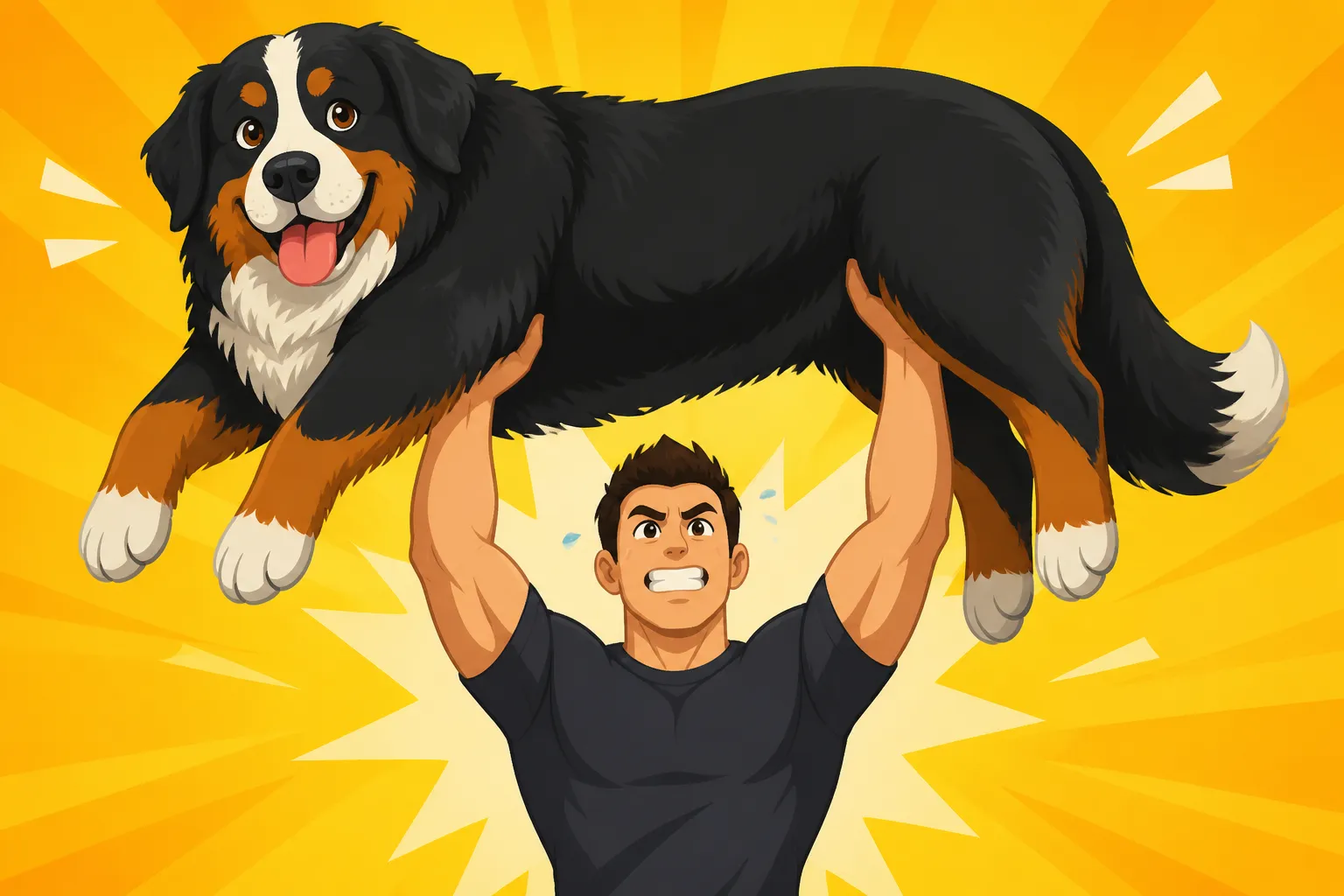
We've all been there: your magnificent Bernese Mountain Dog, all fluff and affection, decides at the most inconvenient moment that they are now a hundred-pound (or more!) statue. Maybe they're injured, perhaps they've just had surgery, or maybe they're simply being stubborn and refusing to get in the car. Whatever the reason, suddenly you're faced with the daunting task of moving a very large, possibly unwilling, animal. This isn't just a matter of brute strength; it's about technique, safety for both you and your beloved Berner, and understanding when to call for help. This guide will walk you through the practicalities of lifting and safely maneuvering your giant companion, addressing the very real frustrations and concerns that come with such a big dog.
The Reality of a Hundred-Pound Dog (and More!)
Let's be honest, those adorable Bernese Mountain Dog puppies grow up fast. One minute they're a cuddly fluffball you can scoop up with one arm, and the next, you're looking at a majestic, hundred-pound (or even hundred-and-twenty-pound) canine companion. While their size is part of their charm, it also presents unique challenges, especially when it comes to mobility. The sheer volume and weight of a full-grown Berner mean that moving them, particularly if they're not cooperating, is a serious undertaking. It's not like lifting a twenty-pound terrier; this is a whole different ballgame that requires thought, planning, and often, assistance.
Why Lifting Becomes Necessary (and Often Unexpected)
The scenarios where you might need to lift your Bernese Mountain Dog are varied and can often catch you off guard. It's not just about getting them into the car for a fun outing; it can be about emergencies, post-surgical care, or navigating age-related mobility issues. Imagine your Berner suddenly develops a limp on a walk – a common concern for a breed prone to joint issues – and can't put weight on a leg. You're miles from the car, and your dog, usually a trooper, is now utterly refusing to move. How do you get them to safety without causing further injury?
Or perhaps your Berner needs to visit the vet for a routine check-up, but the exam table is just a little too high, and they're feeling a bit nervous or stiff. Suddenly, that hundred pounds feels like two hundred. Then there are the truly stressful situations, like after an emergency. If your Berner experiences something like bloat, which requires immediate veterinary intervention, every second counts. The Half-Hour That Decides a Bloated Bernese Mountain Dog can literally mean the difference between life and death, and you need to get them into the car and to the clinic as quickly and safely as possible. Being prepared for these moments can make all the difference, reducing stress for both you and your dog.
The Physical Demands on the Owner
Lifting a Bernese Mountain Dog isn't just about their weight; it's also about their size, their floppy nature when they're unwell, and their potential to be uncooperative. A human body isn't designed to lift a large, heavy, awkward object that can also wriggle. Without proper technique, you risk injuring your back, shoulders, or knees. Many Berner owners have stories of tweaked backs or strained muscles from trying to help their dog. It's a testament to our love for them that we even attempt it, but it's crucial to protect ourselves in the process.
This is especially true if you find yourself needing to lift your Berner frequently, perhaps due to a chronic condition like arthritis. Arthritis in a Bernese Mountain Dog by Six is sadly common, and as they age, their ability to navigate stairs or jump into a vehicle diminishes. Repetitive improper lifting can lead to cumulative strain on your own body, turning a short-term need into a long-term ache for you. It's important to recognize that you are not a superhero, and sometimes, you need mechanical assistance or another person to ensure everyone's safety.
Understanding Your Berner's Anatomy for Safe Lifting
To lift a Bernese Mountain Dog safely, you need a basic understanding of their anatomy and where their weight is distributed. Their center of gravity is relatively low, and their long back can be vulnerable if they are lifted improperly. You should never lift a dog by their front or back legs alone, as this puts immense strain on their joints and spine. When they are not well, their joints, particularly their hips and elbows, can be extremely sensitive. Many Berners suffer from conditions like Hips That Fail Under a Bernese Mountain Dog's Weight or elbow dysplasia, making these areas particularly fragile.
Knowing how to support their body evenly, cradling their chest and hindquarters, is key. Their deep chest also means that pressure across the ribcage needs to be distributed carefully, not concentrated in one spot. If you're dealing with an older Berner who might be experiencing The Bernese Mountain Dog Whose Back Legs Give Out due to degenerative myelopathy, ensuring their rear end is fully supported is paramount. This anatomical awareness helps you lift not just with strength, but with intelligence and care, minimizing discomfort and potential injury to your precious companion.
Techniques for Safely Lifting and Moving Your Berner
So, you're faced with the challenge. Your magnificent Bernese Mountain Dog needs to move, and they can't or won't do it themselves. This isn't a task to be rushed or approached haphazardly. It requires a calm demeanor, clear communication (if another person is helping), and often, some clever techniques or tools. Remember, the goal is always to keep both you and your Berner safe and as comfortable as possible.
The Two-Person Lift: When and How to Coordinate
For a dog weighing a hundred pounds or more, a two-person lift is almost always the safest and most practical option. This distributes the weight more evenly and reduces strain on each individual. It's especially crucial for dogs who are injured, unconscious, or too weak to assist. The key here is coordination. Before you even touch your dog, discuss the plan. Decide who will take the front and who will take the back.
The person at the front should reach under the dog's chest, just behind their front legs, offering solid support to their torso. The person at the back should cup their hands under the dog's hindquarters, supporting their rear end and hips. On a count of three (or whatever signal you agree upon), lift simultaneously and slowly. Keep your backs straight, bend at your knees, and use your legs, not your back, to lift. If your dog is conscious and able to follow cues, a gentle "up!" can alert them to what's happening. Practicing this, even with a healthy dog, can be beneficial so that if an emergency strikes, you're both prepared. It’s a lot like moving a heavy piece of furniture – communication is everything.
Solo Lifting for Smaller Moves (and When Not To)
While a two-person lift is ideal, sometimes you're on your own. Solo lifting a hundred-pound Bernese Mountain Dog is extremely difficult and should be reserved for very short distances, small adjustments, or when absolutely unavoidable, and only if you have a strong back and excellent technique. This is not a situation to take lightly. You risk serious injury to yourself, and potentially to your dog if you lose your grip.
For a solo lift, you might be able to manage a "bear hug" style lift for a very short duration, where you squat down, wrap your arms around your dog's torso (just behind the front legs and in front of the hind legs), and stand up slowly, keeping your back straight. This is still incredibly strenuous. Alternatively, for very short lifts (like getting them onto a low platform), you might manage to lift their front end first, then pivot to lift their back end. Never attempt to lift your Berner this way if they are severely injured, unconscious, or violently uncooperative. In those instances, calling for professional help or waiting for another person is the only responsible choice. Remember, your safety matters too.
Specialized Gear: Harnesses, Slings, and Stretchers
This is where smart tools really shine for Bernese Mountain Dog owners. Investing in mobility aids can be a game-changer, turning a potentially dangerous struggle into a manageable task. A good quality lifting harness or sling can provide handles that allow you to lift or assist your dog without awkward grappling. These are particularly invaluable for older dogs, those recovering from surgery like Cruciate Surgery on a Hundred Pound Bernese Mountain Dog, or Berners with chronic joint issues.
Full-body harnesses with multiple handles allow for more even distribution of weight. Some designs even have separate front and rear sections, letting you lift just their hindquarters if Living With a Bernese Mountain Dog Losing Its Back Legs is becoming a challenge. You can find excellent options from pet supply retailers like Chewy or even specialized mobility aid brands. For larger dogs who are completely immobile due to injury or illness, a pet stretcher (often used by vets or emergency services) might be the only safe way to move them. These often require two people to carry, but they ensure your Berner is fully supported and stable, preventing further injury. Teaching your Bernese Mountain Dog to accept these aids early on can make future stressful situations much smoother. Harnesses That Lift a Bernese Mountain Dog can offer significant peace of mind.
| Lifting Situation | Recommended Approach | Considerations |
|---|---|---|
| Minor Assistance | Front/Rear Support Sling | Great for stairs, car entry; less strain for short duration. |
| Injury/Immobility | Two-Person Lift with Full-Body Harness | Essential for safety and even weight distribution. |
| Emergency Transport | Stretcher (if available) | Best for completely immobile dogs, prevents further injury. |
| Short Solo Lift | "Bear Hug" Technique (Extreme Caution) | Only for very short distances, healthy owner, minimal dog movement. |
| Stubbornness/Refusal | Lure with treats, gentle guidance | Avoid lifting if possible; use training cues first. |
Preventing the Need for Lifting: Proactive Care and Training
While knowing how to lift your Bernese Mountain Dog is essential, wouldn't it be even better to minimize the situations where lifting is necessary? Proactive care, smart training, and a focus on maintaining your Berner's physical health can go a long way in keeping them mobile and cooperative, reducing the physical burden on you and the stress on them.
Building Strength and Mobility (for both you and your dog!)
A healthy, fit Bernese Mountain Dog is naturally more agile and less prone to sudden mobility crises. Regular, appropriate exercise for a Bernese Mountain Dog is vital. This doesn't mean marathon runs, which can be hard on their joints, especially when young, but rather consistent, moderate activity that builds muscle tone and maintains a healthy weight. Whether a Lean Bernese Mountain Dog Lives Longer is a question many owners consider, and indeed, maintaining a healthy weight significantly reduces stress on their joints, delaying the onset or severity of conditions like hip and elbow dysplasia.
For us humans, parallel fitness is important! If you're going to be a Berner parent, working on your own core strength and proper lifting mechanics will benefit you greatly. Understanding how to use your legs, not your back, and being mindful of your posture will prepare you for those unexpected moments when your giant companion needs a hand (or two!). Moreover, consider consulting your vet about joint supplements that might be beneficial, especially as your Berner ages, to support their cartilage and overall joint health.
Training for Cooperation: Getting Your Berner to Help
Training isn't just about "sit" and "stay"; it's also about preparing your Bernese Mountain Dog for real-life situations, including being handled and moved. Teaching them cues that encourage cooperation during physical assistance can be invaluable. Commands like "up," "step in," or "wait" can be used to guide them into cars, onto ramps, or even to stand still while you adjust a harness. Think about training for vet visits: Teaching a Bernese Mountain Dog to Stand for Grooming or examination can be adapted to make them more comfortable with people touching and maneuvering their body.
Early socialization is key. Accustoming your Berner puppy to being handled, having their paws touched, and being gently lifted (when they are small enough) can make them more accepting of physical intervention later in life. Positive reinforcement is always the way to go with Berners; they are sensitive souls. A calm, encouraging tone and plenty of high-value treats can turn a potentially frightening experience into a positive one. If your Bernese Mountain Dog struggles with cooperation, a personalized training plan might involve breaking down the actions into smaller, less intimidating steps, perhaps with the help of a professional trainer.
Managing Joint Health to Reduce Mobility Issues
For Bernese Mountain Dogs, joint health is a lifelong concern. They are predisposed to several orthopedic conditions that can significantly impact their mobility and necessitate assistance from their human companions. Joint Disease in a Hundred Pound Bernese Mountain Dog is a pervasive issue within the breed, covering everything from hip and elbow dysplasia to osteochondritis dissecans (OCD) and arthritis. Being proactive about managing their joint health can potentially extend their comfortable mobility and reduce the need for difficult lifts.
This means providing a high-quality diet appropriate for large breeds, especially during their crucial growth phases to prevent overly rapid growth, which can exacerbate joint issues. Regular, controlled exercise, as mentioned, is critical. Avoid high-impact activities, especially when they are young. Routine veterinary check-ups are also paramount. Your vet can monitor their joint health, recommend appropriate supplements (like glucosamine and chondroitin, often found in high-quality foods from brands like Ollie or Chewy, or as separate supplements), and discuss pain management strategies if arthritis begins to set in. Creating a home environment with good traction (rugs on slippery floors) and providing orthopedic beds can also make a huge difference in their comfort and ability to move independently, postponing the day you might need A Cart for a Bernese Mountain Dog Losing Its Legs.
When to Seek Professional Help (and Not Attempt to Lift Alone)
There are definitely times when the desire to help your Bernese Mountain Dog must be balanced with the practical realities of their size and the severity of their condition. Attempting to lift a gravely injured or extremely distressed hundred-pound dog by yourself can be dangerous for everyone involved. Knowing when to call in the professionals is a sign of responsible pet ownership.
Recognizing Serious Injuries or Sudden Weakness
Sometimes, your Berner's inability to move isn't just a matter of a little stiffness or temporary stubbornness. Sudden lameness, inability to bear weight on a limb, severe pain, or unexplained weakness spreading through their body are all red flags. If you suspect a serious injury, like a broken bone or a severe ligament tear, or if your dog collapses, attempting to force them into a position or lift them incorrectly could worsen the injury. This is where your veterinarian comes in.
Conditions like acute injuries or sudden onset of neurological issues (which can happen with The Bernese Mountain Dog Whose Back Legs Give Out for example, if it's a sudden decline) require a vet's assessment before any extensive movement. Watch for signs of extreme pain, vocalization, aggression (even from a usually docile Berner), or difficulty breathing. In these situations, your primary goal should be to keep your dog as still and comfortable as possible while you contact your vet for advice on how to proceed. They may instruct you on a minimal movement technique or advise that you wait for professional assistance.
Veterinary Assistance: From Clinic Trips to Home Visits
When your Bernese Mountain Dog is too heavy, too painful, or too unwilling to move, your vet clinic is your first call. Explain the situation clearly, describing your dog's symptoms and their approximate weight. Many clinics are equipped to handle large breed emergencies and can offer advice. They might instruct you to use a makeshift stretcher (like a sturdy blanket or a board) or suggest ways to stabilize your dog for transport. Some clinics even have staff or equipment dedicated to assisting large dog owners in loading and unloading.
For truly immobile or critically ill Berners, discussing a home visit from your veterinarian might be an option. While not always available or ideal for every situation, especially emergencies, it can be a lifesaver for older dogs or those in severe pain who cannot tolerate a car ride. Veterinary services are becoming increasingly aware of the challenges large dog owners face, and many offer mobile services or dedicated "large dog" protocols. Be sure to check with your vet what their procedures are for such scenarios, especially if you have a health insurance plan like Healthy Paws, which might help cover emergency vet costs.
Mobility Aids and Long-Term Support
For Berners facing progressive mobility challenges, the conversation often moves beyond emergency lifting to long-term support. If your dog is diagnosed with a condition that will gradually reduce their ability to walk or stand, like advanced arthritis or degenerative myelopathy, mobility aids become essential. We've already touched on harnesses and slings, but there are also ramps for cars and stairs, orthopedic dog beds that ease pressure on joints, and even specialized carts or wheelchairs for dogs who have lost the use of their hind legs. A Cart for a Bernese Mountain Dog Losing Its Legs can truly transform a dog's quality of life and give them back some independence.
These tools allow your Bernese Mountain Dog to maintain a degree of self-sufficiency and dramatically reduce the instances where you have to physically lift their full weight. Discuss these options with your vet or a canine physical therapist. They can help you choose the right equipment and teach you how to use it safely and effectively. Investing in these aids, along with regular physiotherapy or hydrotherapy, can greatly improve your Berner's comfort and allow you both to navigate their later years with dignity and less physical strain. Remember, caring for an older Bernese Mountain Dog often means adapting and finding new ways to support their beautiful, heavy bodies.
Disclaimer
This article is for general informational purposes only and does not constitute professional advice. Laws, prices and regulations vary by location and change over time. Consult a qualified professional for guidance on your specific situation.