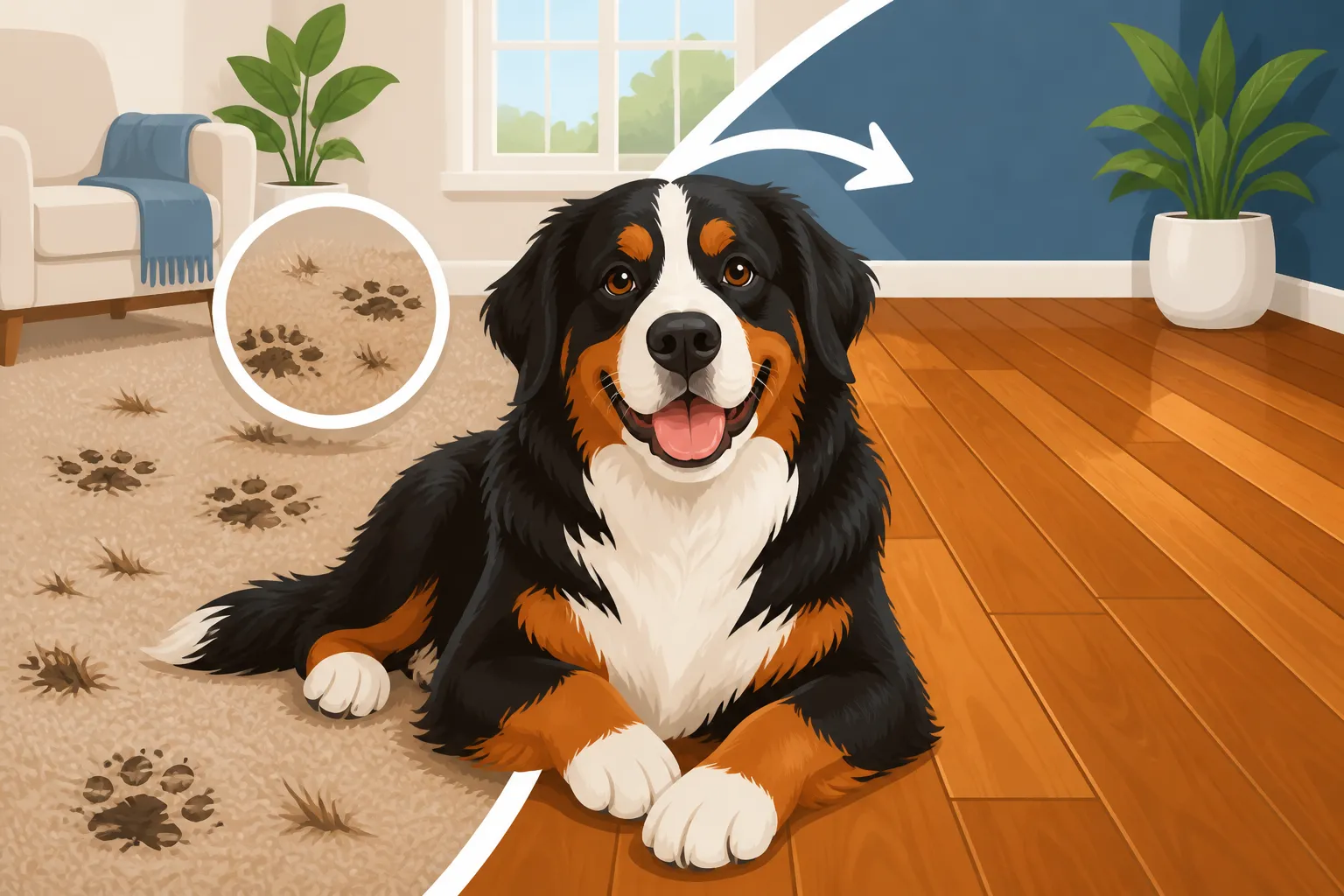
Flooring a Bernese Mountain Dog Household Replaces
Bringing a magnificent Bernese Mountain Dog into your home is an absolute joy, but let's be realistic: their impressive size, luxurious coat, and penchant for playful antics can wreak havoc on your beautiful floors. Many Berner owners quickly discover that their existing flooring simply isn't up to the task, leading to scratches, stains, and constant cleaning battles. This guide is here to help you navigate the unique challenges Bernese Mountain Dogs present to your household surfaces and explore the best flooring options to keep both your home looking great and your beloved companion comfortable and safe.
The Unique Challenges a Bernese Mountain Dog Poses for Your Floors
Living with a Bernese Mountain Dog is an experience filled with love, laughter, and, let's face it, a lot of hair and sometimes, a little slobber! These gentle giants, while incredibly sweet, are not delicate creatures. Their sheer size and specific breed traits can put a considerable strain on your home's flooring, forcing many owners to consider a total replacement sooner than they ever anticipated. It's not just about aesthetics; it's also about practicality and your dog's long-term health.
The Sheer Size and Weight Factor
Imagine a one-hundred-pound fluffy bulldozer rumbling through your living room. That's essentially what you're dealing with when a full-grown Bernese Mountain Dog gets a burst of energy indoors. Their weight alone can cause pressure marks on softer flooring materials over time, especially if they have a favorite spot to lie down. When they run, turn sharply, or even just get up from a nap, those large paws with their sometimes-sharp nails can leave their mark.
Think about the impact when your Berner enthusiastically greets you at the door, sliding to a stop on a slick surface. Or perhaps they get a case of the "zoomies" and skid across the room, leaving behind gouges on hardwood or vinyl. These aren't just minor scuffs; over years, the cumulative effect of a heavy dog constantly moving, jumping, and playing can significantly degrade your flooring, making it look worn and tired well before its expected lifespan. It's a testament to their joyful spirit, but a headache for your home maintenance.
Shedding, Drool, and Mess: The Daily Grind
Bernese Mountain Dogs are famous for their magnificent double coats, which unfortunately come with a significant amount of shedding. This isn't just a seasonal event; it's a year-round reality. Hair will get everywhere – it'll weave itself into carpets, cling to soft furnishings, and accumulate in corners. Even with diligent brushing, which is a must for these dogs, the shedding is a constant battle. The Bernese Mountain Dog Shed and What It Fills isn't an exaggeration; you'll quickly learn how much hair a single Berner can produce!
Beyond the fur, Berners can be notorious droolers, especially after a drink of water or an exciting walk. That slobber can sling onto walls and, inevitably, onto your floors. Water bowls become mini-ponds, and those big paws track in mud, dirt, leaves, and whatever else they pick up on their adventures outside. Any flooring that isn't easy to wipe down instantly will quickly show the evidence of their daily life. This constant onslaught of organic matter and moisture demands a surface that can withstand frequent cleaning and resist staining and odor absorption. Keeping a House Livable With a Bernese Mountain Dog becomes a full-time job without the right flooring.
Joint Health and Traction Considerations
This point is perhaps the most critical for the long-term well-being of your Bernese Mountain Dog. Like many large breeds, Berners are unfortunately predisposed to a range of joint issues, including hip and elbow dysplasia, and later in life, arthritis. Joint Disease in a Hundred Pound Bernese Mountain Dog and Arthritis in a Bernese Mountain Dog by Six are very real concerns for Berner owners. Slippery floors, such as highly polished hardwood, smooth tile, or some types of laminate, can exacerbate these conditions dramatically.
When a large dog struggles for traction, their legs splay out, putting immense stress on their joints. This constant slipping and sliding can lead to pain, fear of movement, and even accelerate the progression of existing joint problems. Imagine your Berner trying to get up from a comfortable sleep only to slide and struggle, their muscles straining. This isn't just uncomfortable; it's genuinely harmful. Providing a surface with good grip is not just a convenience; it's a crucial part of preventative care and managing symptoms as they age. A secure footing allows them to move confidently, stand up without fear, and reduce the likelihood of painful falls or injuries.
Common Flooring Types and How They Fare with a Bernese Mountain Dog
Choosing flooring for a Bernese Mountain Dog household requires a careful balance of durability, ease of cleaning, and providing adequate traction. What might seem like a great choice for a smaller, less shedding breed can quickly become a regrettable decision when a hundred-pound Berner moves in. Let's break down some of the most common flooring materials and how they stand up to the "Berner Test."
Hardwood Floors: Beauty vs. Reality
Ah, hardwood. The classic choice, admired for its warmth, elegance, and timeless appeal. Many homeowners dream of solid hardwood throughout their house, and it certainly adds a touch of sophistication. However, with a Bernese Mountain Dog, that dream can quickly turn into a scratched-up, water-stained nightmare. The biggest issue is, predictably, those big, heavy paws. Even with regularly trimmed nails, a large dog's weight and movement can leave undeniable indentations and scratches on all but the hardest wood species. Softer woods like pine or even some oaks will show wear much faster than denser options like hickory or Brazilian cherry.
Beyond scratches, water damage is a significant concern. Drool, splashed water from the bowl, or even an accidental puddle (we've all been there, right?) can seep into the seams, causing warping, staining, and buckling over time. While some finishes offer better protection, no hardwood floor is truly impervious to standing water. The upkeep can also be quite demanding; scuff marks require buffing, and deep scratches often mean sanding and refinishing, a costly and disruptive process. The aesthetic appeal of hardwood is undeniable, but the reality for a Berner owner is often one of constant vigilance and eventual wear that detracts from its initial beauty.
Carpet: Comfort but a Cleaning Nightmare?
For sheer comfort, warmth, and sound absorption, carpet is often unmatched. It also offers excellent traction, which is a huge bonus for your Berner's joints, making it easier for them to get up and move around without slipping. A soft, plush carpet can feel luxurious underfoot for both humans and canines. However, this comfort comes at a steep price when you live with a Bernese Mountain Dog.
The thick, plush fibers that make carpet so inviting are also incredibly effective at trapping dog hair, dirt, dander, and odors. Your powerful vacuum will be getting a workout, and even then, deep-seated hair can be a challenge. Accidents, whether from a puppy or an older dog, are absorbed directly into the padding, making thorough cleaning incredibly difficult and often leaving lingering smells and stains. While stain-resistant carpets have improved, they are not foolproof, especially against repeated exposure or strong odors. Imagine cleaning up a muddy paw print or an upset stomach on a light-colored carpet – it's a cleaning marathon. You'll be reaching for those heavy-duty carpet cleaners on Chewy far more often than you'd like, and often, the only true solution for persistent odors or stains is professional cleaning or, eventually, replacement.
Tile and Stone: Durable but Hard on Joints
Tile and natural stone floors (like ceramic, porcelain, slate, or travertine) are incredibly durable, water-resistant, and relatively easy to clean. They can withstand a lot of abuse from large dogs without showing scratches or dents, and spills are usually a quick wipe away. In warmer climates, their coolness underfoot can also be a blessing for a double-coated Berner, helping them stay comfortable. Cooling Mats and Where a Bernese Mountain Dog Lies are often found right next to these kinds of floors!
However, the major drawback for Bernese Mountain Dogs is the hardness and potential slipperiness of these materials. The unforgiving surface offers little cushion for heavy joints, which can be detrimental to a breed prone to orthopedic issues. Older dogs with arthritis or conditions like The Bernese Mountain Dog Whose Back Legs Give Out will find moving on tile or stone particularly difficult and painful. When wet, many types of tile become extremely slick, posing a significant fall risk for a large, heavy dog. While adding area rugs can mitigate some of these issues, you're still dealing with a predominantly hard surface. The grout lines, while adding aesthetic appeal, can also be a magnet for dirt and grime, requiring regular scrubbing to keep clean, especially if your Berner tracks in mud or dirt frequently.
Laminate Flooring: The Budget-Friendly Compromise?
Laminate flooring offers the appeal of hardwood or tile at a more accessible price point, and it's often marketed as durable and scratch-resistant. Many laminates are indeed more resistant to superficial scratches than real wood, and they come in a vast array of styles and colors. Cleaning is generally easy with a damp mop, and some higher-quality options boast decent water resistance.
However, laminate often falls short in a few key areas for Bernese Mountain Dog households. Firstly, many types of laminate can be quite slippery, particularly if they have a smooth, glossy finish. This lack of traction can be just as problematic for a Berner's joints as slippery tile. Secondly, while surface spills might be fine, laminate is generally not as water-resistant as tile or vinyl plank. If water penetrates the seams and gets to the core layer, it can swell and buckle, ruining the floor. Lastly, while resistant to scratches, sharp impacts (like a dropped heavy bowl or a particularly enthusiastic play session) can chip the top layer, which is very difficult to repair without replacing the entire plank. It can be a good intermediate option, but careful selection is paramount.
The Best Flooring Options for Bernese Mountain Dog Households
When it comes down to it, finding flooring that stands up to the unique demands of a Bernese Mountain Dog while also being comfortable and easy to maintain isn't always straightforward. Thankfully, modern flooring technology has given us some excellent contenders that genuinely make life easier for Berner owners and better for their furry friends.
Luxury Vinyl Plank (LVP) and Luxury Vinyl Tile (LVT)
This is often the champion choice for Bernese Mountain Dog homes, and for good reason. LVP and LVT are engineered flooring products that mimic the look of hardwood or stone with impressive realism, but they offer superior performance in a pet-filled household. The core benefits for Berner owners are numerous:
- Durability: LVP/LVT is highly resistant to scratches and dents, making it far more forgiving than real hardwood under heavy paws.
- Water Resistance: Most LVP/LVT products are waterproof or highly water-resistant, meaning drool, splashed water, and even accidents won't penetrate and cause damage. Cleanup is a breeze – just wipe it up!
- Traction: Many LVP/LVT styles have textured surfaces that provide excellent grip, significantly reducing the risk of your Berner slipping and sliding. This is invaluable for their joint health.
- Comfort: While not as soft as carpet, LVP/LVT has a slight give compared to tile or concrete, offering a bit more cushion for your dog's joints and making it more comfortable to lie on.
- Maintenance: It's incredibly easy to clean. Regular sweeping or vacuuming (a good quality vacuum that copes with Vacuums That Cope With a Bernese Mountain Dog is still essential!), and occasional damp mopping are usually all it takes to keep it looking great.
From a practical standpoint, LVP and LVT check almost every box. They can be installed as floating floors (click-and-lock) or glued down, offering flexibility. They perform wonderfully in high-traffic areas and truly stand up to the daily life with a large, active dog. Pair it with Runners and Rugs for a Bernese Mountain Dog That Slips in key areas, and you have a winning combination for comfort and longevity.
Polished Concrete: Modern and Resilient
For those who appreciate a modern, industrial aesthetic, polished concrete is an incredibly durable and long-lasting option. It's essentially indestructible under a Bernese Mountain Dog's weight and claws, and it's completely waterproof, making messes incredibly easy to clean. You can customize the look with various colors and finishes, from glossy to matte.
The main downsides are its extreme hardness and coldness. Like tile, it offers no cushioning for joints, which means you'll absolutely need to supplement it with generous area rugs, especially in areas where your Berner spends a lot of time relaxing. It can also be very cold underfoot, which some Berners might appreciate in summer, but it can be uncomfortable in winter. Professional installation is also required, which can be an investment upfront. However, if properly installed and sealed, polished concrete can last a lifetime, demanding very little maintenance beyond sweeping and mopping. It's a fantastic choice for basements, utility rooms, or contemporary homes, provided you cushion it strategically for your dog.
Cork Flooring: Natural and Cushy (with Caveats)
Cork flooring is an interesting alternative that offers several appealing qualities for a Bernese Mountain Dog household, though it comes with some important considerations. Made from the bark of cork oak trees, it's a natural, sustainable, and surprisingly resilient material.
- Cushioning: Cork is naturally soft and springy, providing excellent cushioning underfoot. This is fantastic for a Berner's joints, reducing impact and making it more comfortable for them to move and rest.
- Traction: Its natural texture offers good grip, minimizing slipping.
- Insulation: Cork has natural insulating properties, making it warmer than tile or concrete, and it also absorbs sound, creating a quieter home.
- Anti-microbial: It naturally resists mold, mildew, and pests.
However, cork isn't without its challenges. While it's relatively durable, it's still softer than LVP or tile and can be susceptible to scratches from a Berner's nails if not properly maintained. It also requires careful sealing to be truly water-resistant, and these seals need to be maintained over time. Standing water can still cause damage, and strong stains might penetrate if not cleaned quickly. For a Bernese Mountain Dog home, you'd want to invest in high-quality, dense cork with a durable finish and be diligent about immediate spill clean-up. While a wonderful option for comfort, its maintenance demands are higher than LVP.
Strategies for Protecting Your Floors, No Matter What You Choose
Even with the most durable flooring, living with a Bernese Mountain Dog requires a proactive approach to floor care. These gentle giants, with their size, fur, and loving personalities, will inevitably leave their mark. But by implementing a few key strategies, you can extend the life of your floors, keep your home cleaner, and ensure your Berner remains happy and healthy.
Regular Cleaning and Maintenance is Key
This might seem obvious, but consistent and thorough cleaning is your first line of defense. For Bernese Mountain Dogs, daily maintenance is often necessary, especially when it comes to shedding. You'll want a heavy-duty vacuum capable of handling the sheer volume of fur. Vacuums That Cope With a Bernese Mountain Dog can make a huge difference in keeping hair at bay. Many Berner owners find robotic vacuums incredibly helpful for daily upkeep, running them once or twice a day to capture the constant shedding. A good force dryer can also help in removing loose undercoat before it even hits the floor, reducing the amount of hair you have to clean up.
Beyond hair, immediate clean-up of spills, drool puddles, and tracked-in mud is crucial. Don't let anything sit, especially on hardwood or laminate, as moisture can cause lasting damage. Keep appropriate cleaning supplies on hand – gentle, pet-safe floor cleaners are readily available from retailers like Chewy. Always check that your cleaning products are suitable for your specific flooring material to avoid dulling finishes or causing damage. Diligent cleaning not only keeps your home looking good but also prevents odors from setting in, which can be a real struggle with a large, double-coated dog.
Strategic Use of Rugs and Mats
No matter what type of hard flooring you choose, incorporating rugs and mats is a smart move for a Bernese Mountain Dog household. They serve multiple purposes: protecting your floors, providing traction, and adding comfort. Place durable, washable mats at all entryways to trap dirt and moisture before it gets tracked throughout the house. Non-slip rugs are essential in high-traffic areas, especially where your Berner likes to run, play, or get up from a nap. This is particularly important for supporting their joint health, giving them a secure grip. Runners and Rugs for a Bernese Mountain Dog That Slips can prevent painful falls and reduce strain on hips and elbows.
Consider placing large, soft area rugs in living spaces where your Berner enjoys lounging. These offer a comfortable, cushioned spot for them to rest, protecting your hard floors from pressure points and providing a warm place in colder months. Investing in Orthopedic Beds Sized for a Bernese Mountain Dog on top of these rugs provides an even greater level of comfort and support. Look for rugs that are easy to clean or machine washable, and always ensure they have a non-slip backing to prevent them from becoming a hazard themselves.
Nail Trimming and Paw Care
One of the simplest yet most effective ways to protect your floors from scratches is to keep your Bernese Mountain Dog's nails meticulously trimmed. Long nails act like miniature rakes, digging into flooring with every step and movement. Regular nail trims, ideally weekly or bi-weekly depending on growth, are paramount. If you struggle with this, consider professional grooming or ask your vet for guidance. Cutting a Bernese Mountain Dog's Nails Without a Fight is a skill worth mastering for every Berner owner.
Beyond nails, pay attention to paw care. After walks, especially in muddy or sandy conditions, wipe your Berner's paws to remove any grit, stones, or debris that could scratch floors. Some owners even use paw balm to keep pads healthy and prevent cracking, which can also make them more susceptible to picking up unwanted materials. Taking a few moments to clean paws at the door can save hours of cleaning and prevent costly damage to your flooring. While not directly related to flooring, general good health, which can be supported by pet insurance providers like Healthy Paws, ensures your Berner is as mobile and comfortable as possible, further reducing the risk of floor damage from struggling or falling.
Training and Management
Smart training and management strategies can also go a long way in protecting your floors. Designate specific eating and drinking areas, perhaps with a waterproof mat underneath, to contain spills and drool. Consider using slow feeders or elevated bowls, not only for your dog's digestion but also to keep their eating area tidier. Brands like Ollie, known for their fresh dog food, can reduce digestive upset, which in turn might lead to fewer unexpected accidents on your floor.
Training your Bernese Mountain Dog to respect boundaries, such as not jumping on furniture or waiting politely at doors, helps minimize accidental damage. For puppies, consistent Getting a Bernese Mountain Dog Puppy Clean Indoors through crate training or frequent potty breaks is essential to prevent early accidents from permanently staining floors. Teaching a "place" command can encourage them to settle on their designated bed or rug, rather than sprawling out on bare floor where they might scratch or drool. By being mindful and consistent in these areas, you create a more harmonious environment for both your Berner and your home.
| Flooring Type | Durability (Scratches/Dents) | Water Resistance | Traction for Berners | Joint Impact | Maintenance | Cost Shape |
|---|---|---|---|---|---|---|
| Hardwood | Low to Medium | Low | Low | High (slippery) | High | High |
| Carpet | High | Very Low | High | Low (cushioned) | Very High (hair/stains) | Medium |
| Tile/Stone | Very High | Very High | Low (slippery when wet) | Very High | Medium (grout) | Medium to High |
| Laminate | Medium to High | Low to Medium | Low to Medium | High (slippery) | Medium | Low to Medium |
| Luxury Vinyl Plank/Tile | High to Very High | Very High | High | Low (cushioned) | Low | Medium |
| Polished Concrete | Very High | Very High | Medium | Very High | Low | Medium to High |
| Cork | Medium | Medium (sealed) | High | Low (cushioned) | Medium to High (sealing) | Medium to High |
Disclaimer
This article is for general informational purposes only and does not constitute professional advice. Laws, prices and regulations vary by location and change over time. Consult a qualified professional for guidance on your specific situation.