What a Bernese Mountain Dog Does Instead of Guarding
It’s a common misconception to assume that every large, imposing dog breed is naturally predisposed to be a formidable guard dog, standing sentinel over your home and family with a snarl and a warning bark. Many new Bernese Mountain Dog owners, drawn to their impressive size and stoic appearance, might wonder what role their gentle giant will play in home security, only to discover a profoundly different reality. This guide is here to shed light on the true nature of the Bernese Mountain Dog, explaining what they genuinely excel at and why traditional guarding isn't typically on that list, helping you set realistic expectations for your loving companion.
Understanding the Bernese Mountain Dog's Innate Temperament
When you bring a Bernese Mountain Dog into your life, you're not getting a fierce protector in the traditional sense, but something far more valuable: a devoted, loving, and deeply empathetic companion. Their heritage and inherent personality dictate a different kind of role within the family.
A History of Companionship, Not Confrontation
To truly understand why Bernese Mountain Dogs aren't typically guard dogs, we need to glance back at their origins. Hailing from the picturesque farmlands of the Swiss Alps, these magnificent dogs were bred for a variety of tasks, but none involved aggressive guarding. Their primary jobs included droving cattle, pulling carts laden with dairy products or other farm goods to market—hence the draft work skills you often see celebrated today—and, perhaps most importantly, serving as loyal farm companions. They lived alongside their human families, often sleeping in barns with livestock, where their presence alone was a deterrent. They were valued for their intelligence, strength, and good nature, not for territorial aggression or an instinct to attack intruders.
Imagine a Swiss farmer needing a reliable dog to accompany him on a long journey to market, pulling a heavy cart of milk and cheese. Aggression would have been a liability, not an asset. Instead, they needed a dog that was steady, tractable, and friendly enough to interact with various people and animals along the way. Their deep connection to human families fostered a desire for closeness rather than isolation on guard duty. If you're curious about their roots, delve into The Swiss Valley the Bernese Mountain Dog Comes From.
The "Gentle Giant" Persona in Practice
The moniker "gentle giant" isn't just a cute phrase; it's a profound descriptor of the Bernese Mountain Dog's core personality. These dogs possess an almost unparalleled sweetness and good nature that define their interactions with the world. They are typically calm, even-tempered, and remarkably patient, especially with children and other animals. This inherent gentleness means that while they might be physically capable of deterring a threat, their first instinct is usually not confrontation. They're more likely to lean into your leg for a reassuring pat than to lunge at a stranger.
This gentle nature extends to their daily lives. A Bernese Mountain Dog prefers harmony and companionship over conflict. They thrive on being part of the family unit, often following their favorite humans from room to room, just wanting to be near. This deep-seated desire for connection leaves little room for the aggressive territoriality often seen in true guard breeds. Their size certainly commands respect, but it's usually their kind eyes and wagging tail that make the lasting impression.
Natural Affection and People-Pleasing
Bernese Mountain Dogs are, at their heart, people-pleasers. They derive immense satisfaction from making their human companions happy and being showered with affection in return. This strong bond often translates into a dog that is highly sensitive to its owner's moods and desires. They want to be involved, to offer comfort, and to receive love. This affectionate nature is fundamentally at odds with the detached, often suspicious temperament required of a dedicated guard dog.
Their deep loyalty is expressed through companionship, not aggression. They want to curl up at your feet while you work, join you on leisurely strolls, and greet you with enthusiasm when you return home. This overwhelming desire for connection and positive interaction means they are less inclined to view new people as threats and more likely to see them as potential sources of attention or new friends. The breed standard itself emphasizes their good-natured and self-confident temperament, steering far away from traits associated with aggressive guarding. Understanding The Bernese Mountain Dog Breed Standard can illuminate these desired qualities.
Alertness vs. Aggression: The Bernese Mountain Dog's Warning System
While they might not be traditional guard dogs, Bernese Mountain Dogs are not entirely oblivious to their surroundings. They possess a natural alertness that serves a different, but still valuable, purpose.
The Bark as an Alarm Bell
Your Bernese Mountain Dog might not be a guard dog, but they can certainly be an excellent alarm system. They are generally observant dogs and will often bark to signal the arrival of a visitor, a strange noise, or anything unusual within their territory. This isn't usually an aggressive bark, but more of a deep, resonant "alert" sound that lets you know something is happening. Think of it less as a threat and more as a helpful notification.
For instance, if someone approaches your front door, your Berner will likely let out a few booming barks, perhaps even rushing to the door to investigate. However, once they see you acknowledge the visitor, their alarm system usually disengages, often transitioning into polite (or even eager) curiosity. This initial bark can be startling due to their size and voice, which is often enough to make an unwelcome guest think twice. However, it's rare for a Bernese Mountain Dog to escalate beyond this initial vocal warning unless they perceive a direct and immediate threat to their loved ones.
Observing, Not Intervening
When confronted with strangers or unusual situations, a Bernese Mountain Dog's typical response is one of observation rather than immediate intervention. They might stand between you and the perceived "threat" – a behavior often misinterpreted as guarding – but this is usually a protective instinct driven by their desire to keep their loved ones close and safe, rather than a readiness to attack. They're assessing the situation, relying on your cues for how to proceed.
Picture this: a new delivery person walks up your driveway. Your Bernese Mountain Dog might get up, walk to the window or door, and watch them intently, perhaps letting out a low growl or a few barks. But if you open the door and calmly accept the package, your Berner will likely relax, perhaps even offering a polite sniff. Their massive size and calm, watchful demeanor are often enough to make strangers think twice, creating a natural deterrent without any actual aggression. This passive form of "guarding" is often exactly what many families need: a presence that makes people feel secure, without the unpredictable aggression of a truly protective breed.
Understanding Their Body Language
It's crucial for any Bernese Mountain Dog owner to understand their dog's body language to differentiate between a genuinely uneasy dog and one simply being curious or vocal. A Bernese Mountain Dog that is simply alerting you will usually have a relatively relaxed body, perhaps a curious head tilt, and a tail that might wag slowly or be held loosely. Their hackles rarely go up unless they are truly agitated or frightened.
In contrast, a genuinely fearful or aggressive dog would display stiff body posture, a tucked or rigid tail, direct prolonged eye contact, and often bared teeth or a curled lip. These aggressive signals are exceptionally rare in a well-socialized Bernese Mountain Dog. If your Berner does exhibit any signs of fear or aggression, it's typically a response to a past negative experience or a lack of proper socialization, not an innate guarding instinct. In such cases, professional guidance is highly recommended. Recognizing when your Bernese Mountain Dog is showing Lumps a Bernese Mountain Dog Owner Should Not Watch can also apply to behavioral changes, signaling something is amiss.
Socialization: Shaping a Confident, Not Confrontational, Companion
Proper socialization is absolutely key for a Bernese Mountain Dog, not to make them aggressive, but to ensure they grow into confident, well-adjusted adults who understand how to appropriately interact with the world around them. Without it, their natural reservation could turn into shyness or fear.
Early Exposure to the World
The foundation of a well-adjusted Bernese Mountain Dog begins in puppyhood. Exposing your Berner puppy to a wide variety of sights, sounds, people, and other friendly dogs during their critical socialization period (roughly 3 to 16 weeks of age) is paramount. This isn't about making them extroverted, but about teaching them that the world is a generally safe and predictable place. Take them to safe, low-stress environments like quiet parks, pet-friendly stores (if appropriate and allowed), or carefully selected puppy classes. Allow them to observe and interact positively with calm, friendly strangers who offer gentle pets and treats.
Think about introducing them to people of all ages, wearing different hats, carrying umbrellas, or using wheelchairs. Expose them to the sounds of traffic, vacuums, and thunderstorms (played softly at first). The goal is to create positive associations with novel experiences. A well-socialized Bernese Mountain Dog will be confident in new situations, rather than fearful or overwhelmed, which further reduces any inclination towards defensive behaviors. For more insights on this crucial stage, refer to Socializing a Reserved Bernese Mountain Dog Puppy.
Controlled Introductions to Strangers
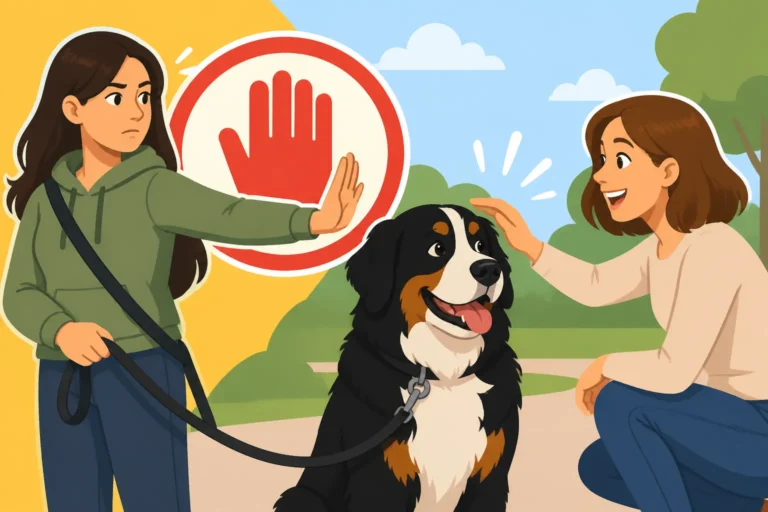
Bernese Mountain Dogs can be naturally reserved with strangers, which is different from being fearful or aggressive. They often prefer to observe before engaging. When introducing your Bernese Mountain Dog to new people, especially in your home, it's best to manage the situation calmly and avoid overwhelming them. Ask visitors to approach slowly, avoid direct eye contact initially, and let your Berner come to them. Encourage gentle, calm interactions, perhaps with a treat.
It’s important to respect their space if they choose to keep a little distance at first. Never force an interaction. Your Berner needs to feel secure and in control of the situation. Over time, and with repeated positive experiences, they will often warm up to new acquaintances, sometimes even initiating their signature "Berner lean" for a hug. This controlled approach prevents them from feeling threatened and developing unwanted behaviors.
The Role of Training in Building Confidence
Positive reinforcement training plays an enormous role in building a Bernese Mountain Dog's confidence. Commands like "sit," "stay," "come," and "leave it" give your dog structure and a sense of understanding their world. When they know what's expected of them and are consistently rewarded for desirable behaviors, they become more secure in their responses. This confidence replaces uncertainty, which can be a trigger for unwanted behaviors in any breed.
Enroll in a good puppy class or consider online training programs. For instance, services like BAXTER & Bella offer comprehensive online puppy programs that can guide you through the crucial stages of socialization and basic obedience. These programs emphasize positive reinforcement, which is ideal for the sensitive Bernese temperament. A confident Berner is a calm Berner, and a calm Berner is less likely to react out of fear or uncertainty, reinforcing their role as a friendly family member rather than a guard dog. Training a Bernese Mountain Dog Without Breaking It offers more wisdom on their sensitive nature.
The Bernese Lean: Their Unique Way of "Protecting"
If you've spent any time around a Bernese Mountain Dog, you've likely experienced "the lean." It's one of their most endearing and characteristic behaviors, and it perfectly illustrates their approach to connection and "protection."
The Lean as an Affectionate Gesture
The Bernese lean is exactly what it sounds like: your big, beautiful Bernese Mountain Dog pressing their full weight against your legs. It's not about trying to push you over (though their weight can certainly make you feel like you might topple!), nor is it an attempt to guard you from an invisible threat. Instead, it's a profound expression of affection, trust, and a desire for physical contact. It's their way of saying, "I love you, I'm here, and I want to be as close to you as possible."
This behavior starts early in puppyhood and often continues throughout their lives. It's a hallmark of the breed's deep emotional connection to their humans. When your Berner leans on you, they're seeking reassurance, offering comfort, and simply reveling in your presence. It’s a wonderful, warm feeling that is unique to these big, soft-hearted dogs. They are, quite simply, deeply tactile creatures. Read more about this unique behavior in The Bernese Mountain Dog That Leans on Everyone.
Seeking Proximity and Connection
At its core, the Bernese lean is a profound act of seeking proximity and connection. These dogs thrive on being part of the family, and physical contact is a vital part of that bond. Whether you're standing in the kitchen, sitting on the couch, or even trying to move from one room to another, your Berner will often try to maintain physical contact, often with a subtle lean or by resting their head on your lap.
This constant desire for closeness means they often become your "shadow," following you from room to room, just wanting to be in the same space. It's not clinginess in a needy way, but rather a reflection of their affectionate and social nature. They want to experience life with you, side-by-side, or rather, hip-to-hip! This desire for constant, gentle contact is completely different from the watchful, sometimes aloof nature of a traditional guard dog.
More Cuddler Than Protector
Ultimately, the Bernese lean reinforces the idea that these dogs are far more cuddler than protector. Their instinct is to nurture, comfort, and connect, not to guard or confront. When they lean, they are offering their steadfast presence, their comforting weight, and their unwavering loyalty. This is their form of security—a deep, emotional bond that provides a different kind of safety and reassurance to their family.
While the physical act of leaning might make someone pause, it's not meant to intimidate. It’s an invitation for affection, a request for a scratch behind the ears, or simply a declaration of love. If you're looking for a dog that will fiercely defend your property against all comers, the Bernese Mountain Dog isn't the right fit. If you're looking for a dog that will lovingly lean on you through thick and thin, providing unparalleled companionship and emotional support, then you've found your perfect match.
Household Dynamics: Living with a Bernese Mountain Dog's True Nature
Integrating a Bernese Mountain Dog into your home means understanding and embracing their natural inclinations, especially concerning how they interact with people and their environment. Their role in the household is defined by their inherent sweetness, not by aggression.
Welcoming Guests with a Wagging Tail
One of the most heartwarming aspects of owning a Bernese Mountain Dog is watching them interact with guests. While they might offer an initial "alarm bark" to announce an arrival, once they realize a visitor is welcome, their demeanor typically shifts to one of curious enthusiasm. You'll often find them attempting to greet guests with a gentle wagging tail, a soft nose nudge, and often, of course, a lean. They're typically quite friendly, even with unfamiliar faces, once they've been given the signal that these new people are "okay."
This welcoming nature means you generally don't have to worry about your Bernese Mountain Dog being overly suspicious or aggressive with friends and family who visit. They are more likely to solicit pets and attention than to stand guard. Of course, consistent socialization helps reinforce this positive behavior, but their fundamental nature is one of acceptance and good cheer. They want to be part of the social gathering, observing from a comfortable spot, and occasionally checking in for a head scratch.
Children and Other Pets: A Natural Nanny
Bernese Mountain Dogs are renowned for their incredible patience and gentle disposition, making them exceptional family dogs, especially around children and other pets. They often have a high tolerance for the playful antics of kids, viewing them more as fragile charges than nuisances. They are famous for being "nanny dogs," gently supervising and participating in family life without ever being overbearing. For more on this, check out A Bernese Mountain Dog Around Children.
They are typically excellent companions for other animals, often coexisting peacefully with cats, smaller dogs, and even various farm animals if raised with them. Their calm demeanor and lack of inherent prey drive (when properly socialized) contribute to this harmonious coexistence. This isn't to say that all Berners are immediately perfect with every creature, but their foundational temperament is one of acceptance and peace. Their sheer size can be a factor to consider, as accidental bumps can happen, but their intentions are always pure and gentle.
Security Through Presence, Not Force
While they may not actively guard, the sheer presence of a Bernese Mountain Dog provides a significant level of security. Their impressive size—often weighing over a hundred pounds with a deep, resonating bark—is a natural deterrent. Most potential intruders would think twice before attempting to enter a property where such a magnificent dog is clearly present. This passive security is one of the most valuable "guarding" traits they possess.
It’s the psychological effect of their large stature and deep bark that truly serves a protective role. Knowing there’s a formidable, though gentle, presence inside is often enough. They don't need to be aggressive to be effective in this regard. Their job is to alert, to observe, and to simply exist as a loving, imposing figure within the family home. In a world where many seek fierce protectors, the Bernese Mountain Dog offers a more nuanced, gentle, yet still effective form of home security: a loving presence that also happens to be quite large and loud when it needs to be. What a Bernese Mountain Dog Asks of a New Owner highlights the deep commitment required for these gentle giants.
Training for Appropriate Responses and Preventing Misunderstandings
Even with the most gentle of breeds, clear communication through training is essential. For Bernese Mountain Dogs, training is about guiding their natural good nature into appropriate behaviors, ensuring they remain confident and well-mannered companions, not just at home but also out in the wider world.
Teaching "Go To Your Place" or "Settle"
One of the most useful commands for a naturally exuberant (or simply very friendly) Bernese Mountain Dog is "go to your place" or "settle." Because Berners love people so much, they can sometimes be a bit overwhelming, especially with their affectionate leaning and desire for attention. Teaching them to calmly go to a designated bed or mat when guests arrive, or when things get a bit too exciting, is invaluable. This helps manage their greetings, ensuring visitors aren't accidentally knocked over by a happy, wagging tail or a well-intentioned lean.
This command also gives your dog a sense of purpose and a comfortable "safe space" during busy times. You can use a comfortable, orthopedic dog bed (many excellent options are available on Amazon for large breeds) as their designated "place." Practice this in various situations, rewarding calm behavior generously. This isn't about isolating your dog, but teaching them self-control and providing a clear expectation for how to behave in certain scenarios. It empowers them to make good choices.
Reinforcing Calmness with Positive Methods
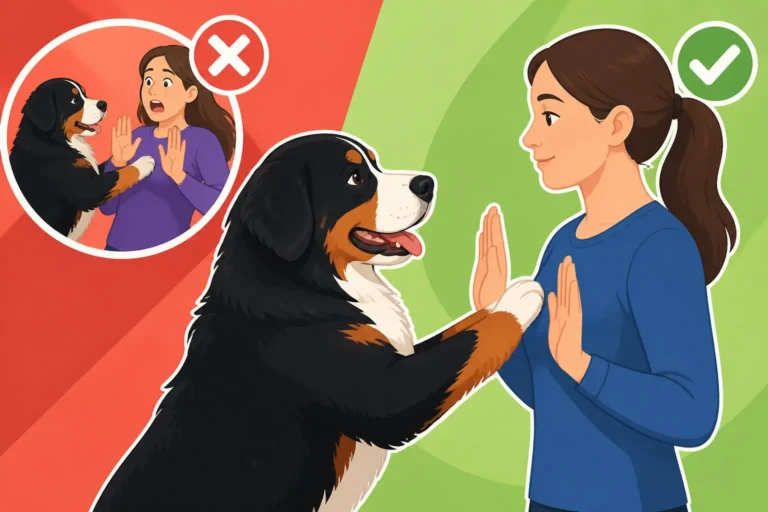
Given their sensitive nature, Bernese Mountain Dogs respond best to positive reinforcement methods. Harsh corrections, yelling, or physical punishment can easily damage their trust and lead to a fearful or withdrawn dog, rather than a well-behaved one. Instead, focus on rewarding the behaviors you want to see. For example, if your Bernese Mountain Dog is prone to jumping up, instead of scolding, turn your back until all four paws are on the floor, then immediately praise and reward them for staying down.
This approach builds a stronger bond and encourages your Berner to actively participate in learning because it's a positive experience. They are intelligent dogs, but they need to be treated with kindness and understanding. Patience is also key; some Bernese Mountain Dogs can take a little longer to mature, often staying in a "puppy brain" phase until they're two or three years old. Understanding Why a Bernese Mountain Dog Stays a Puppy Until Three can help manage expectations during these adolescent years. Consistency and gentle repetition will yield the best results for a well-mannered Bernese companion.
Seeking Professional Guidance for Behavioral Nuances
While Bernese Mountain Dogs are generally good-natured, every dog is an individual. If you encounter persistent behavioral challenges, such as excessive shyness, reactivity to certain stimuli, or difficulty with new introductions, don't hesitate to seek professional guidance. A certified professional dog trainer or veterinary behaviorist can assess your dog's specific situation and provide tailored strategies. They can help you understand the root cause of the behavior and implement effective, humane training plans.
For new puppy owners, a comprehensive program like BAXTER & Bella’s online puppy school can be a fantastic resource. They provide structured lessons, live Q&A sessions, and a supportive community, which can be particularly helpful for managing the unique challenges of raising a giant breed puppy. These resources can help you proactively address potential issues before they become ingrained, ensuring your Bernese Mountain Dog develops into the best companion they can be. Early intervention and expert advice are always better than letting problems fester.
The True Value of a Bernese Mountain Dog: Companionship and Joy
While the Bernese Mountain Dog may not fit the traditional mold of a guard dog, their true value lies in something far more profound and enduring: their unparalleled ability to offer companionship, emotional support, and boundless joy. These qualities are what truly enrich the lives of those fortunate enough to share their homes with these magnificent dogs.
Emotional Support and Unconditional Love
One of the most remarkable gifts a Bernese Mountain Dog brings into your life is their capacity for emotional support and unconditional love. They are incredibly intuitive creatures, often seeming to sense your moods and offering comfort exactly when it's needed most. Whether you're feeling down, stressed, or just needing a quiet presence, your Berner will often be right there, offering a gentle nudge, a soft head resting on your lap, or simply their warm, steady presence.
This deep emotional connection is what makes them such cherished family members. They don't judge, they don't demand, they simply love. Their devotion is unwavering, a constant source of comfort and stability in a sometimes chaotic world. For many, this quiet, loving companionship is far more valuable than any guarding instinct. They become the heart of the home, drawing everyone together with their gentle spirit.
Participation in Family Activities
Bernese Mountain Dogs thrive on being included in family activities. They don't need intense, high-impact exercise, but they absolutely adore being part of whatever their humans are doing. Whether it's a leisurely walk around the neighborhood, a drive to pick up the kids from school, a quiet evening watching TV, or even a picnic in the park, your Berner will want to be by your side. They enjoy simple pleasures and the joy of shared experiences.
They are known for being adaptable and happy to follow your lead, as long as it means they get to spend time with you. This desire for inclusion means they fit seamlessly into most family routines, becoming an integral part of daily life. This shared participation strengthens the bond and ensures they feel like a truly valued member of the pack. Remember that a Bernese Mountain Dog is most content when they are with their family, wherever that may be. Think about The Kind of Home a Bernese Mountain Dog Belongs In.
Their Legacy: A Heart of Gold, Not a Guard Dog's Temper
In summary, the Bernese Mountain Dog's legacy is defined not by a fearsome guarding instinct, but by a heart of gold. They are a breed built on loyalty, affection, and a gentle spirit. While their size may be intimidating, their temperament is anything but. They are here to be companions, family members, and sources of immense comfort and joy.
If you are looking for a dog to protect your home with aggression, the Bernese Mountain Dog is likely not the right choice. But if you seek an intelligent, devoted, patient, and loving companion who will lean into you with all their weight, offer gentle comfort, and bring a constant source of warmth and laughter to your life, then the Bernese Mountain Dog is truly unmatched. They remind us that the most valuable protection often comes not from force, but from an unwavering, gentle love.
| Trait Category | Traditional "Guard Dog" Expectations | Bernese Mountain Dog Reality |
|---|---|---|
| Primary Role | Deter and confront intruders aggressively. | Companion, family member, draft dog. |
| Response to Strangers | Suspicious, territorial, potentially aggressive. | Reserved initially, then friendly/curious, may lean for attention. |
| Barking | Deep, threatening, continuous territorial barks. | Alarm bark to announce arrivals, then typically settles. |
| Temperament | Independent, aloof, protective of property. | Affectionate, people-oriented, sensitive, desires closeness. |
| Interaction with Children | Can be tolerant but not always gentle or patient. | Exceptionally patient, gentle, and tolerant. |
| Interaction with Other Pets | Can be dominant, potentially aggressive with other animals. | Generally harmonious, good with other pets when socialized. |
| Physical Contact | May prefer distance, not typically a "cuddler." | Loves physical contact, famous for the "Berner lean." |
| Motivation | Instinct to protect territory/pack hierarchy. | Desire for companionship, affection, and to please family. |
Disclaimer
This article is for general informational purposes only and does not constitute professional advice. Laws, prices and regulations vary by location and change over time. Consult a qualified professional for guidance on your specific situation.