Fitting a Draft Harness to a Bernese Mountain Dog
Getting a draft harness that truly fits your magnificent Bernese Mountain Dog is crucial, not just for their comfort and safety but for successful and enjoyable draft work. A poorly fitted harness can cause chafing, restrict movement, lead to injuries, and even deter your dog from wanting to participate in carting. This guide will walk you through everything you need to know about selecting, measuring for, and properly fitting a draft harness, ensuring your Berner is happy and healthy in their pulling endeavors.
Understanding the Anatomy of a Draft Harness for Bernese Mountain Dogs
When you’re looking at draft harnesses, you'll quickly realize they are a different beast entirely from your everyday walking harness. For a powerful, large breed like the Bernese Mountain Dog, this specialized design is absolutely non-negotiable. It’s all about distributing pressure correctly and allowing for unrestricted movement while pulling significant weight.
Key Components and Their Purpose
A proper draft harness is an intricate piece of equipment, each part designed with a specific function in mind to ensure efficiency and comfort for your working dog. It's not just a collection of straps; it's an engineered system.
First, you have the breastplate, which is perhaps the most visible and critical component. This wide, padded strap goes across your Berner’s chest, resting against the shoulders. Its primary job is to distribute the pulling force evenly across the dog's chest, preventing concentrated pressure on the windpipe or a single point on the shoulders. Imagine trying to pull a heavy load with a thin rope across your chest – it would dig in and be incredibly uncomfortable, even painful. The breastplate acts as that wide, supportive surface, allowing your dog to lean into the load without pain.
Next are the traces, which are the straps that extend from the breastplate back to the cart or other equipment your dog is pulling. These need to be robust and adjustable, as their length directly impacts how efficiently your dog can pull and how comfortably the cart tracks behind them. If the traces are too long, the cart might lag or swing; too short, and it could interfere with your dog’s natural stride.
The saddle (sometimes called the back pad) sits over your Bernese’s back, typically padded to prevent rubbing. This component is where the traces attach, but it also helps stabilize the entire harness and can include rings for attaching other equipment, like a hold-back strap or guide lines. It ensures the harness stays centered and doesn't shift during movement, which is vital for maintaining balance and preventing uneven pressure.
Further back, you’ll find the breeching. This crucial strap goes around the dog's hindquarters, just below the tail. Its role is to help the dog hold back or slow the cart, especially on downhill slopes or when stopping. Without proper breeching, all the braking force would be absorbed by the front of the harness, potentially causing discomfort or injury to your dog’s shoulders or neck. It essentially allows your Bernese to use their powerful hindquarters for braking, engaging their natural strength effectively.
Finally, the girth or belly band secures the harness around the dog’s rib cage. This strap keeps the breastplate and saddle in place, preventing the harness from riding up or slipping sideways. It needs to be snug enough to hold everything securely but not so tight that it restricts breathing or causes chafing. A well-placed girth will sit comfortably behind the front legs, allowing for full range of motion. Understanding these parts helps you see why Teaching a Bernese Mountain Dog to Pull a Cart is a specialized skill requiring specialized gear.
Why a Standard Walking Harness Isn't Enough
Many well-meaning Bernese owners try to repurpose a regular walking harness for draft work, thinking "a harness is a harness," but this is a common and potentially harmful misconception. The design philosophies are fundamentally different, and ignoring these differences can lead to significant problems for your large, powerful Berner.
A standard walking harness, whether it's a front-clip, back-clip, or no-pull style, is primarily designed for leash control during walks. Their stress points are typically focused on the shoulders, chest bone, or even the neck area, aiming to redirect pulling behavior or simply provide a comfortable attachment point for a leash. When a Bernese Mountain Dog, a breed known for its substantial size and strength, puts its full weight and power into pulling a cart with such a harness, the forces are distributed incorrectly. A thin strap digging into their chest or across their windpipe under a heavy load can cause severe pain, impede breathing, and even lead to long-term physical damage.
Moreover, walking harnesses lack the robust construction and wide weight-distributing surfaces necessary for draft work. They often use lighter-duty materials, smaller buckles, and narrower straps that are simply not engineered to withstand the sustained strain of pulling a cart, wagon, or sled. The fabric might tear, the buckles could fail, or the straps could chafe mercilessly as they dig into your dog's skin under pressure. Imagine trying to lift a heavy box with a thin string instead of a wide strap – the string cuts into your hand. It's the same principle for your dog.
The absence of crucial components like proper breeching is another significant flaw. Without breeching, your Bernese has no comfortable way to slow down or stop the cart, putting immense strain on their front end. This can exacerbate existing joint issues or even create new ones, which is a serious concern for a breed already prone to conditions like hip and elbow dysplasia. Joint Disease in a Hundred Pound Bernese Mountain Dog is a real worry, and a poor harness fit only compounds that risk. Investing in a proper draft harness is not an indulgence; it's an essential safety and welfare consideration for any Bernese Mountain Dog engaging in carting or similar activities.
Essential Measurements for a Perfect Fit
Getting the right fit for a draft harness isn't about guesswork; it's all about precise measurements. A harness that's even slightly off can cause discomfort, rub sores, restrict movement, or simply not function as intended. For a breed as substantial and strong as the Bernese Mountain Dog, accuracy is paramount.
Tools You'll Need and How to Measure Accurately
Before you even think about ordering a harness, you need to gather your tools and prepare your Berner. You'll primarily need a flexible tape measure, the kind tailors use, which allows you to wrap it smoothly around your dog’s curves. A helper can also be invaluable, especially with a large, sometimes wiggly, dog. You might also want a pen and paper to jot down your numbers immediately.
The most critical aspect of accurate measurement is ensuring your Bernese Mountain Dog is standing square and naturally. Don't have them slouching, sitting, or stretching. A natural, relaxed stance is key. You want them standing tall, head up, and all four paws evenly beneath them. If your dog is moving around a lot, try to make it a positive experience with treats and praise. Some owners find it easier to measure after a good walk when the dog is a bit tired and more likely to stand still.
When taking measurements, ensure the tape measure is snug against their body but not tight enough to indent the fur or skin. You should be able to slide a finger easily under the tape. For long-haired breeds like Berners, you might need to push the fur down a bit to get closer to the actual body measurement, rather than measuring over a thick layer of fluff. Take each measurement at least twice to ensure consistency. If there’s a significant difference, measure a third time. Jot down the numbers clearly, indicating what each measurement corresponds to. This detailed approach will prevent a lot of frustration down the line when the harness arrives.
Critical Measurement Points on Your Bernese
There are several key points on your Bernese Mountain Dog's body that require precise measurement for a well-fitting draft harness. Each contributes to the overall comfort and effectiveness of the gear.
-
Neck Circumference (Base of Neck): Measure around the thickest part of your dog's neck, where it meets the shoulders. This is similar to where a collar would sit, but you want to ensure it's broad enough for comfort. This measurement influences the fit of the top part of the breastplate.
-
Chest Depth/Girth (Widest Part of Chest): This is one of the most important measurements. Measure around the widest part of your dog's rib cage, just behind their front legs. This determines the overall size of the main body of the harness and ensures the girth strap sits comfortably without restricting breathing or movement.
-
Back Length (Withers to Tail Base): Measure from the highest point of their shoulders (the withers) along their spine to the base of their tail. This helps ensure the saddle piece of the harness is appropriately sized and sits correctly without extending too far back or being too short.
-
Length from Shoulder to Point of Draft: This measurement helps determine the ideal length of the traces. You'll measure from the point of the shoulder (where the breastplate will rest) back to where the shafts of the cart will connect. This ensures the cart is neither too close nor too far, allowing for natural movement.
-
Breeching Circumference (Around Hindquarters): Measure around your dog's hindquarters, just below the tail, encompassing the strong muscles of the upper thighs. This determines the size of the breeching strap, which is crucial for braking and holding back the cart.
-
Distance from Girth to Breeching: Measure the length along your dog's side, from where the girth will sit behind the front legs to where the breeching will rest around the hindquarters. This helps ensure the side straps of the harness are long enough to connect these two essential components comfortably and securely.
It’s worth noting that some Bernese Mountain Dogs might have slight asymmetries, so if you're custom ordering, providing measurements for both sides for certain areas could be beneficial. Double-checking these points before placing an order will save you a world of hassle.
Step-by-Step Guide to Fitting the Harness
Once you have your draft harness in hand, it's time for the moment of truth: putting it on your Bernese Mountain Dog and adjusting it for a perfect fit. This isn't a one-and-done process; it might take a few tries and some patience to get it just right.
Initial Placement and Adjustments
Before you even start, lay out the harness so you can orient yourself. Identify the breastplate, the saddle, the traces, and the breeching. Many harnesses are designed to go over the head first, with the breastplate positioned on the dog's chest.
- Head and Neck: Gently guide your Bernese's head through the neck opening, ensuring the breastplate sits correctly over their chest and shoulders. The top of the breastplate should rest comfortably at the base of the neck, not too high that it restricts breathing or too low that it slips down their front legs.
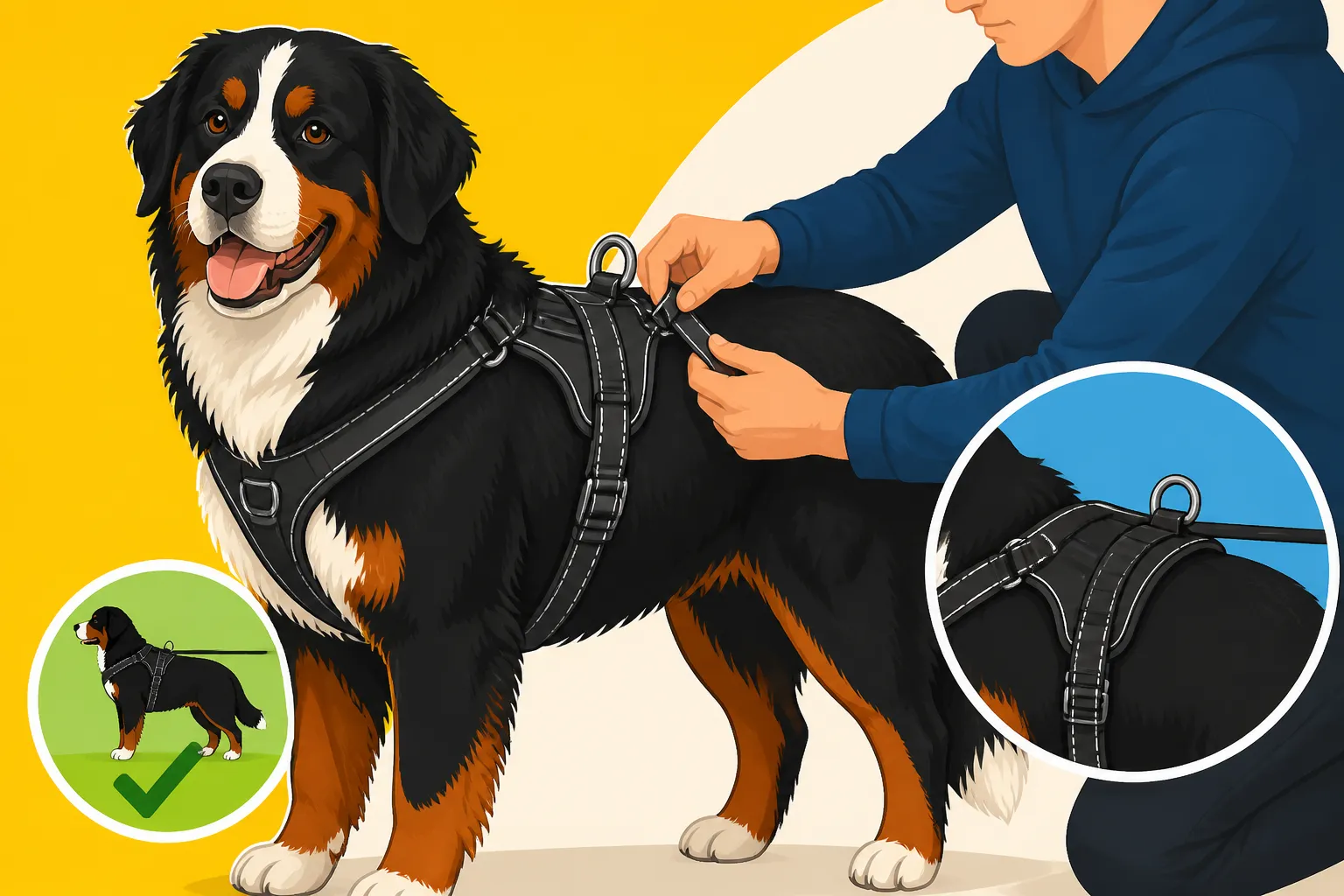
- Girth Placement: Bring the girth strap underneath your dog's belly, just behind the front legs, and buckle it to the saddle on the other side. You'll want it snug enough that the harness doesn't shift, but not so tight that it digs in. A good rule of thumb is the "two-finger rule": you should be able to comfortably slide two fingers flat under the girth strap. Any tighter, and it's too restrictive; any looser, and the harness will move too much, potentially causing chafing or instability.
- Breastplate Position: The breastplate itself should sit wide across the chest, distributing pressure evenly. It should not impede the natural movement of the shoulder blades. Take a moment to watch your Bernese walk a few steps; their shoulders should move freely without the harness rubbing or catching. The goal is to maximize the surface area of the breastplate against the chest to spread out the load. This initial positioning is critical, as it sets the foundation for the rest of the fit. Remember, a comfortable dog is a willing worker, and getting The Bernese Mountain Dog That Quits After One Correction can happen if they associate discomfort with the harness.
Fine-Tuning for Comfort and Function
After the initial placement, it’s time to dial in the details, ensuring every strap is where it needs to be and adjusted to perfection. This is where the harness truly becomes an extension of your Bernese Mountain Dog.
- Traces Length: The traces are the straps connecting the harness to the cart. Their length is incredibly important for proper drafting mechanics. When your Bernese is standing squarely, the traces should extend directly back to the cart shafts without significant slack or tension. They should allow for a full, natural stride without the cart bumping into your dog's hind legs or pulling them off balance. Too long, and the cart can swerve; too short, and it can interfere with their gait. Many traces are adjustable, allowing you to find that sweet spot. Remember, the traces should be evenly adjusted on both sides to prevent uneven pulling.
- Breeching Position: The breeching strap goes around your Berner's hindquarters. It should rest comfortably, neither too high on the flank nor too low that it interferes with their hock joints. Like the girth, the "two-finger rule" applies here for snugness. The breeching should be secure enough to hold back the cart effectively but not so tight that it pinches or restricts the powerful movement of their rear legs. It should lie flat against the body, not twisted or bunched.
- Saddle Stability and Side Straps: The saddle, or back pad, should sit centrally on your Bernese’s back, between their withers and the base of their tail. It should be stable and not slide side-to-side. The straps connecting the girth and breeching to the saddle should run along your dog's sides without twisting or digging in. These side straps help keep the entire harness aligned. Adjust them so they are taut but not overly tight.
- Overall Balance and Movement Check: Once all adjustments are made, have your Bernese walk, trot, and even turn in the harness without the cart attached. Observe their gait closely. Look for any signs of restriction, rubbing, or awkward movement. The harness should move with your dog, not against them. Pay close attention to the areas around the armpits, chest, and hindquarters for any signs of chafing. A well-fitted harness will feel like a second skin, allowing your Bernese to move freely and powerfully. You might even consider doing a short, light pull with the cart once you're confident in the fit, gradually increasing the load as your dog gets used to it, as discussed in How Much Weight a Bernese Mountain Dog Should Pull.
Common Fitting Mistakes and How to Avoid Them
Even with the best intentions and careful measurements, it's easy to make a few common fitting errors. For a working dog like a Bernese Mountain Dog, these mistakes can range from minor discomfort to serious injury, hindering their ability and desire to participate in draft work. Knowing what to look for can save you and your Berner a lot of trouble.
Too Loose, Too Tight, or Misaligned Components
These are the most frequent culprits behind an ill-fitting harness, and each comes with its own set of problems.
A harness that's too loose might seem harmless, but it's a recipe for chafing and instability. If the girth or breeching straps are too slack, the entire harness can shift and rub against your Bernese's skin, especially in areas like the armpits or inner thighs where skin is sensitive. This leads to raw spots, hair loss, and discomfort. A loose harness also means inefficient power transfer to the cart. If the breastplate isn't held firmly, it can ride up, putting pressure on the windpipe, or slip down, impeding shoulder movement. The traces can become tangled or caught, creating a hazard. Imagine trying to steer a car with a loose steering wheel – it’s just not effective or safe.
Conversely, a harness that's too tight is immediately uncomfortable and can restrict your Berner's natural movement and even breathing. A girth that's too snug can compress the rib cage, making it hard for your dog to take deep breaths, especially during exertion. Tight straps can dig into the skin, causing pain and pressure sores. Around the shoulders, a tight breastplate can inhibit the full range of motion, shortening your dog’s stride and potentially leading to muscle strain or joint pain. For a breed prone to The Bernese Mountain Dog Whose Back Legs Give Out, any undue strain is to be avoided. Always remember that two-finger rule!
Misaligned components are often a result of either incorrect initial placement or improper adjustment. If the breastplate is angled incorrectly, it might concentrate pressure on one side of the chest instead of distributing it evenly. If the saddle isn't centered on the back, the harness can pull to one side, leading to an unbalanced gait and uneven strain. The breeching, if too high or low, won't perform its function effectively and can cause discomfort. It's not enough for the straps to be merely "on" the dog; they need to be in their intended anatomical positions to work correctly and comfortably. Taking the time to adjust each strap meticulously will prevent these alignment issues.
Signs of Discomfort or Poor Fit During Work
Your Bernese Mountain Dog, while stoic, will often give you subtle (or not-so-subtle) cues if their harness isn't fitting properly. Being attuned to these signs is crucial for their well-being and for fostering a positive relationship with draft work.
One of the most obvious signs is reluctance to work or a change in enthusiasm. If your usually eager Berner suddenly seems hesitant to get harnessed up or shows less interest in pulling, the harness could be the culprit. They might try to nip at the harness, shake their head excessively, or even try to rub against objects to relieve pressure. This is their way of telling you something isn't right.
Physically, look for changes in gait or posture. A dog with a poorly fitting harness might shorten their stride, especially in the front or rear, attempting to avoid pressure points. They might develop an awkward or stiff walk, hold their tail differently, or even walk with a hunched back. Uneven muscle development can also occur over time if the harness consistently pulls them off balance.
After work, inspect your dog's body thoroughly. Look for any red marks, chafing, bare spots where fur has been rubbed off, or swelling, particularly around the chest, armpits, behind the front legs (where the girth sits), and around the hindquarters (from the breeching). These are clear indicators of friction and pressure. Even if you don't see visible marks, gently palpate these areas. If your dog flinches or shows sensitivity, it's a strong sign of discomfort.
Finally, observe their behavior during rest. A dog constantly licking or chewing at an area covered by the harness, or unusually restless after being unharnessed, might be experiencing lingering discomfort. Remember, your Bernese wants to please you, but pain can override that desire. Prioritizing their comfort is key to long-term enjoyment of Teaching a Bernese Mountain Dog to Pull a Cart.
Choosing the Right Materials and Brands
When it comes to draft harnesses for a Bernese Mountain Dog, the materials used and the reputation of the brand are just as important as the fit. You need a harness that can withstand the strength and weight of your dog, the demands of the work, and the elements, all while remaining comfortable.
Material Considerations for Durability and Comfort
The choice of material for a draft harness significantly impacts its durability, comfort, and maintenance. Two primary categories dominate the market: natural leather and various synthetic options.
Leather harnesses are often considered traditional and have a classic aesthetic. High-quality leather is incredibly durable, molding to your dog's body over time for a custom-like fit. It's also breathable and can be surprisingly comfortable once broken in, resisting chafing due to its natural pliability. However, leather requires significant care and maintenance. It needs to be cleaned, conditioned, and protected from excessive moisture to prevent cracking, drying out, or rot. It can be heavy, and when wet, it becomes even heavier, taking a long time to dry. Initial cost for a good leather harness is typically higher, but with proper care, it can last for many years, even decades.
Synthetic harnesses are typically made from nylon, polypropylene, or specialized webbing materials. These are generally lighter, water-resistant, and much easier to clean than leather. Many synthetic harnesses incorporate neoprene or fleece padding in critical areas (like the breastplate and girth) to enhance comfort and prevent chafing. They are also often more readily available and can be a more budget-friendly option. While durable, the lifespan of synthetic materials can vary, and cheaper options might fray or degrade faster than high-quality ones. Over time, some synthetic materials can stiffen or become abrasive if not cleaned regularly, especially if exposed to dirt and sweat.
| Feature | Leather Harness | Synthetic Harness |
|---|---|---|
| Durability | Excellent, long-lasting with proper care | Good to excellent, depending on material quality |
| Comfort | Molds to body, breathable; can be heavy/stiff initially | Lighter, often padded for immediate comfort; less breathable |
| Maintenance | High (cleaning, conditioning, drying) | Low (easy to clean, quick-drying) |
| Water Resistance | Poor; can stiffen, crack, or rot when wet | Good; typically water-resistant, quick-drying |
| Weight | Heavier, especially when wet | Lighter |
| Cost | Generally higher initial investment | Varies, often more budget-friendly |
| Aesthetics | Classic, traditional | Modern, varied colors |
Regardless of material, ensure all hardware (buckles, rings, adjusters) is robust, rust-resistant, and securely attached. For a large dog like a Bernese, flimsy plastic buckles or weak D-rings simply won't cut it under the kind of strain a draft harness experiences. Look for stainless steel or solid brass hardware for maximum reliability.
Reputable Brands and Custom Options
While I can't recommend specific models or current prices, I can guide you on what to look for in terms of reputable manufacturers and the benefits of custom options.
When searching for a draft harness, you'll find a variety of manufacturers, some specializing exclusively in working dog equipment, others offering a wider range. A reputable brand typically uses high-quality materials, offers excellent craftsmanship, and provides detailed sizing guides or even custom-fitting services. They often have a long history in the working dog community and receive positive reviews from experienced carting enthusiasts. Look for brands that clearly outline their materials, construction methods, and safety features. You might find a good selection of various draft harnesses on platforms like Amazon, offering different styles and materials, which can be a good starting point for comparison.
However, for a Bernese Mountain Dog, especially one that might be at the upper end of the breed standard in size or has unique body proportions, a custom-made harness can be an invaluable investment. Off-the-shelf harnesses, even from good brands, are designed for "average" dogs. A custom harness maker will take your specific measurements (and potentially even photos) and craft a harness that is perfectly tailored to your Berner's physique. This eliminates guesswork, minimizes the risk of chafing or improper pressure distribution, and maximizes both comfort and performance. While the initial cost might be higher, the long-term benefits in terms of your dog's health, comfort, and willingness to work often outweigh the expense. It's often said that a custom harness can make all the difference in turning a good carting dog into a great one. Don't be afraid to ask around in Bernese Mountain Dog clubs or online forums for recommendations for trusted custom harness makers; word-of-mouth is often the best resource for specialized equipment. Many breeders or experienced owners can offer advice, such as those you might encounter through training programs like BAXTER & Bella, which, while focused on overall training, often connect owners with resources for specific activities like drafting. The investment in a custom fit for The Running Costs of a Hundred Pound Bernese Mountain Dog can pay dividends in preventing future health issues.
Maintaining Your Draft Harness
A well-fitted, high-quality draft harness is a significant investment in your Bernese Mountain Dog's working life. To protect that investment and ensure its longevity and continued performance, proper maintenance is essential. Neglecting your harness can lead to premature wear, material degradation, and ultimately, compromise your dog's safety and comfort.
Cleaning and Storage for Longevity
Regular cleaning is paramount, regardless of whether your harness is leather or synthetic. Sweat, dirt, mud, and natural oils from your dog's coat can accumulate, causing materials to stiffen, rot, or harbor bacteria.
For synthetic harnesses: These are generally quite easy to clean. After each use, especially if dirty, wipe down the harness with a damp cloth to remove loose dirt. For a deeper clean, most synthetic harnesses can be washed by hand in warm, soapy water (using a mild detergent or dog-safe shampoo). Pay close attention to padded areas where dirt can become embedded. Rinse thoroughly to remove all soap residue, as this can irritate your dog's skin. Air dry completely before storing. Never put a synthetic harness in a washing machine or dryer, as this can damage the material and hardware.
For leather harnesses: Leather requires a more delicate touch. After each use, wipe down the leather with a damp cloth to remove surface dirt and sweat. For a deeper clean, use a specialized leather cleaner, following the product instructions carefully. Avoid harsh chemicals or excessive water. After cleaning and drying, condition the leather regularly with a good quality leather conditioner. This keeps the leather supple, prevents it from drying out and cracking, and helps repel water. Pay attention to stitching, as dirt and moisture can weaken threads.
Proper storage is also crucial. Always ensure the harness is completely dry before putting it away. Storing a damp harness can lead to mildew, rot (especially for leather), and unpleasant odors. Store it in a cool, dry place, away from direct sunlight or extreme temperatures, which can degrade materials over time. Hang the harness rather than folding or crumpling it, which can cause creases or put undue stress on certain components. This helps maintain its shape and extends its life. Some owners even have dedicated harness hooks in a tack room or mudroom.
Regular Checks for Wear and Tear
Beyond routine cleaning, a habit of thorough inspection before and after each use is vital. This proactive approach allows you to spot potential problems early, before they become a safety hazard or cause discomfort.
Focus on all critical areas:
- Stitching: Examine all seams and stitched areas. Look for loose threads, fraying, or stitches that are starting to unravel. Weak stitching is a major point of failure, especially under the strain of pulling.
- Hardware: Check all buckles, D-rings, O-rings, and adjusters. Ensure they are secure, functional, and free from rust, cracks, or bends. Test each buckle to make sure it latches and releases smoothly. Any signs of damage to hardware mean the harness needs immediate repair or replacement. For example, a bent D-ring could break under pressure, detaching your Berner from the cart, which can be dangerous.
- Webbing/Leather Integrity: Inspect the material itself. For synthetic webbing, look for fraying, tears, thin spots, or signs of stretching. For leather, check for deep cracks, scuffs, areas of excessive wear, or signs of drying out despite conditioning. Pay particular attention to edges and areas that might rub.
- Padding: If your harness has padding, check that it's still plush and securely attached. Compressed, flattened, or detached padding means it's no longer providing adequate cushioning and can lead to rubbing or pressure points. Over time, padding can also degrade, losing its effectiveness.
- Adjustability: Ensure all adjustment straps still move freely and hold their position once set. Slips in adjustment buckles can cause the harness to loosen during work, leading to an improper fit.
If you find any significant wear, fraying, or damage, address it immediately. Minor issues might be repaired by a professional saddler or harness maker, but major damage often necessitates replacement. Never compromise on your Bernese Mountain Dog's safety and comfort by using a worn-out or damaged harness. Keeping your gear in top condition contributes not only to its lifespan but directly to the success and enjoyment of draft work with a Bernese Mountain Dog.
Disclaimer
This article is for general informational purposes only and does not constitute professional advice. Laws, prices and regulations vary by location and change over time. Consult a qualified professional for guidance on your specific situation.