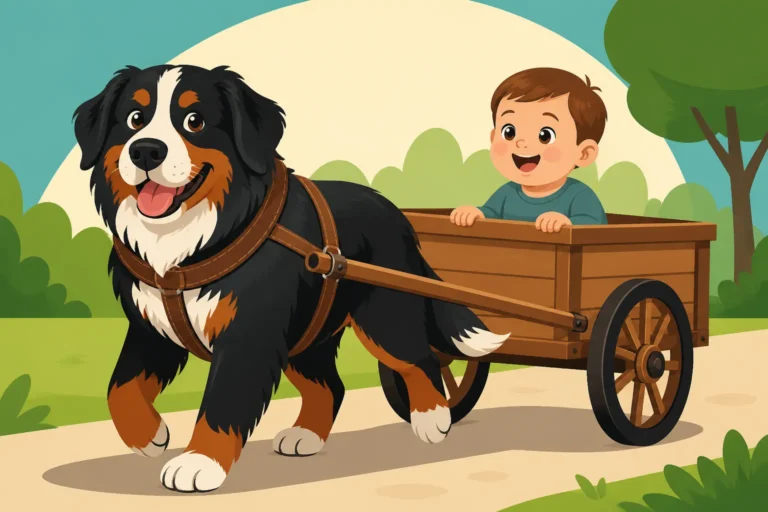
Whether a Bernese Mountain Dog Works for Food
It’s a common scenario: you have a treat in your hand, your majestic Bernese Mountain Dog looks at it, then at you, then ambles away as if to say, "Is that all?" We all want to believe our Berners will do anything for a tasty morsel, but often, their motivation can be a bit more nuanced than a simple 'food drive.' This guide will explore whether food truly moves the Bernese Mountain Dog, how to use it effectively if it does, and what other motivators might be the key to their cooperation.
Understanding the Bernese Mountain Dog's Unique Approach to Motivation
Bernese Mountain Dogs are known for their sweet, affectionate nature, but when it comes to training, they often come with their own distinct set of rules. Unlike some breeds that are endlessly eager to please or driven by an insatiable appetite, Berners tend to possess a thoughtful, sometimes independent streak. This isn't to say they are stubborn or untrainable; rather, it means their motivation often stems from a deeper connection and understanding, rather than just a simple exchange for food. You might find yourself wondering What a Bernese Mountain Dog Will Actually Work For because what works for one dog might not land with your Berner.
The Independent Streak and "Berner Lean"
While Bernese Mountain Dogs crave companionship and are generally devoted to their families, they also have a subtle independence that can sometimes be misinterpreted as stubbornness. They're not necessarily trying to defy you; they're simply processing the request and weighing its immediate value to them. This isn't the kind of independence that makes them run off for miles, but rather a quiet assessment in the moment. If a task doesn't immediately strike them as worthwhile, or if the reward isn't compelling enough, they might just decide it's not worth their effort.
This independent streak also ties into their famous "Berner lean" – that gentle, full-body press they give you. It’s a sign of affection and comfort, but it also speaks to their desire for close physical connection. Sometimes, that physical praise and connection can be a higher reward than a dry biscuit. They want to be with you, and often, that's enough for them to consider your requests, as long as they feel like a partnership rather than a command.
Sensitivity to Correction and Patience
Bernese Mountain Dogs are famously sensitive souls. They don't respond well to harsh words or heavy-handed training methods. A sharp tone or a frustrated sigh can cause them to shut down completely, making any training attempt unproductive. If you find yourself having to give repeated, firm corrections, you might notice your Berner simply retreating or looking away, almost as if they've The Bernese Mountain Dog That Quits After One Correction. This sensitivity means that positive reinforcement, especially when using food, needs to be handled with care and consistency.
Patience is a virtue when training a Berner. They aren't always the quickest to catch on, not because they lack intelligence, but because they often take their time to think things through. They absorb information at their own pace, and rushing them can lead to frustration for both you and your dog. Building a strong, trusting relationship where they feel safe and understood is paramount, far more so than just doling out treats for every little thing. This foundation of trust will eventually make them more receptive to any form of reward, including food.
Food as a Motivator: The Good, the Bad, and the "Meh"
So, does food work? The short answer is: sometimes, and it depends on the food, the situation, and the individual Berner. Food can be a powerful tool in your training arsenal, but it's crucial to understand how to leverage it effectively and when it might fall short. It's not always about whether they work for food, but how they perceive the value of that food.
High-Value vs. Low-Value Treats
Not all food is created equal in the eyes of a Bernese Mountain Dog. A piece of their regular kibble, while perfectly acceptable for a daily meal, often holds very little motivational power in a training session, especially when there are distractions. For these gentle giants, you typically need to pull out the "big guns" – what we call high-value treats. These are usually soft, smelly, and utterly delicious, things they don't get every day.
Think small pieces of cooked chicken, cheese, hot dogs, or even specially formulated soft training treats. These types of rewards cut through distractions and capture their attention. Conversely, a low-value treat, like a dry biscuit, might get a polite sniff and then be ignored. It’s all about context and perceived rarity. Using the right kind of treat can make all the difference when you're trying to Teaching a Bernese Mountain Dog to Lie Down in a busy park versus a quiet living room.
| Reward Type | Description | Example for Berners | Best Use Case |
|---|---|---|---|
| High-Value | Irresistible, rare, often smelly and soft. | Cooked chicken, tiny cheese cubes, hot dogs. | New behaviors, high distraction environments, recall. |
| Medium-Value | Enjoyable, but not extraordinary; more substantial than kibble. | Store-bought soft training treats, freeze-dried liver. | Reinforcing known behaviors, moderate distraction. |
| Low-Value | Something they like, but wouldn't go out of their way for. | Their own daily kibble, a basic dry biscuit. | Maintenance, general positive reinforcement, no distractions. |
The Distraction Factor
A Bernese Mountain Dog in a calm, familiar environment might be perfectly happy to perform a few basic commands for a medium-value treat. However, introduce a squirrel, a new person, or another dog, and suddenly that same treat loses all its appeal. Their concentration is limited, and their focus can easily be diverted. This is where the concept of "reinforcement hierarchy" comes into play. In a highly distracting environment, you need an even higher value reward to compete with whatever has caught their attention.
This is a key reason why many Berner owners find it challenging to use food as the sole motivator. You might be working on Teaching a Bernese Mountain Dog to Stay Put in your yard, and they're doing great for some tasty bits. But take that same exercise to a bustling farmers' market, and your Berner might just decide the smells and sights are far more interesting than your chicken scraps. It requires careful thought about how to build up their resilience to distractions, often by starting with food in low-distraction areas and gradually increasing the challenge.
Satiety and Weight Management
Another practical consideration is satiety. Bernese Mountain Dogs are large dogs, and while their enthusiasm for food might seem limitless at times, they can fill up. If you're using a lot of treats throughout a training session, especially if they are high-calorie, you need to factor this into their daily food intake. Overfeeding can lead to weight issues, which are particularly detrimental to a large breed prone to joint problems. This is especially important when considering The Daily Ration a Hundred Pound Berner Gets.
Many trainers advocate using a portion of their daily kibble allowance as training treats, especially for maintenance behaviors. However, as noted, kibble often lacks the "wow" factor for a Berner. This means you might need to be creative, breaking up high-value treats into tiny, pea-sized portions to maximize training opportunities without overfeeding. You can also explore specialized low-calorie training treats available on platforms like Amazon, but always prioritize quality and adjust their main meals accordingly.
Alternative Motivators Beyond Just Food
While food certainly has its place, relying solely on it for your Bernese Mountain Dog's motivation can limit your training potential. Berners respond beautifully to a variety of other rewards that tap into their affectionate nature, intelligence, and desire for connection. Diversifying your reward system can make your Berner a more engaged and enthusiastic learner.
Praise and Affection
For many Berners, sincere verbal praise and physical affection are incredibly powerful motivators. A calm, enthusiastic "Good dog!" paired with a gentle ear scratch or a comforting pat on the chest can be just as, if not more, rewarding than a treat, especially once they understand the behavior you're asking for. They thrive on positive interaction and feeling like they’ve pleased you. This is where their desire to be part of the family really shines through.
Imagine your Berner finally executing a perfect recall in a new environment. Instead of just stuffing them with treats, drop to their level, give them a big hug (if they enjoy it), and lavish them with happy, encouraging words. This builds a positive emotional association with the behavior and strengthens your bond. It's about letting them know they've done well and that their efforts are recognized and appreciated by their most important person. This type of reward also helps when you're working on something like A Bernese Mountain Dog Puppy Biting in Play, where redirection and positive reinforcement for appropriate interaction are key.
Play and Toy Rewards
While perhaps not as high-drive for toys as a Border Collie or a working Labrador, many Berners enjoy a good game, especially with their favorite people. A short tug session, a gentle retrieve of a soft toy, or even a brief romp in the yard can be an excellent reward for completing a challenging task. The key is to make the play interactive and short, ensuring it doesn't become a distraction itself.
A favorite soft toy, perhaps one they only get during training sessions, can become a very high-value reward. This allows you to tap into their playful side and provides a release for their energy after focusing intensely. Some Berners might not show immediate enthusiasm for toys, but with consistent, positive introduction, and by making the play a direct consequence of a desired behavior, you can cultivate this as a strong motivator. Finding durable, large-breed appropriate toys can often be done through online retailers like Amazon, offering a wide selection to discover what your Berner loves.
Environmental Rewards
Environmental rewards are often overlooked but can be incredibly effective, especially for a dog that enjoys exploring and being part of family activities. This involves using access to desired activities or locations as a reward. For example, asking your Berner to "sit" and "stay" at the door before being allowed outside for a walk. The reward isn't a treat, but the walk itself. Or, asking them for a polite "down" before they get to join you on the couch for cuddle time.
These types of rewards teach self-control and reinforce the idea that good manners lead to good things. It integrates training seamlessly into their daily life, making it less about "doing tricks for food" and more about "cooperating to get what they want." This approach is particularly useful for big, calm dogs like Berners who might naturally prefer a quiet walk or a comfy spot over a frenzied play session or a piece of kibble. It helps them understand boundaries and expectations, making everyday interactions smoother.
Making Food Work (When It Does)
Even with other motivators, food still has an important role, especially for initial learning and high-stakes situations. The trick is to use it intelligently and strategically, rather than just mindlessly handing out snacks. If you’re using food, make it count.
Timing and Delivery
The timing of your food reward is absolutely critical. A treat delivered even a second too late can reward the wrong behavior. For a Bernese Mountain Dog, who might take a moment to process, precision is even more important. The moment their paw touches the ground in a perfect "down," or their nose meets your hand for a "touch," that treat needs to be there. This immediate association helps them understand exactly what they're being rewarded for.
Delivery also matters. Don't just toss a treat at them from a distance. Get close, make eye contact, and deliver the treat gently. This adds a layer of positive interaction and reinforcement from you. If you're working on basic obedience or house manners, an online puppy school resource like BAXTER & Bella can offer detailed modules on proper timing and delivery techniques, which are crucial for success with any breed, including the thoughtful Berner. They emphasize building a strong, clear communication channel between you and your dog.
The Power of Variety and Surprise
Imagine eating the same meal every single day. Eventually, even your favorite food would lose its appeal. The same goes for your Bernese Mountain Dog's treats. Introducing variety keeps things interesting and can prevent them from becoming "bored" of their rewards. Keep a few different high-value options on hand and rotate them. One day it might be chicken, the next cheese, the next a special training treat.
The element of surprise can also boost motivation. Sometimes, your Berner might perform a behavior perfectly without an expectation of a treat. If you then unexpectedly produce a super-high-value reward, it creates a powerful positive reinforcement that can increase their willingness to perform that behavior again in the future. It teaches them that sometimes, good things happen even when they're not explicitly "working" for them, which builds a strong general positive association with training.
Using Food Lures and Fading
For teaching new behaviors, food can be an excellent lure. Holding a high-value treat near your Bernese Mountain Dog's nose and using it to guide them into a desired position (like moving it over their head to encourage a sit) is a gentle and clear way to communicate what you want. Once they reliably perform the action with the lure, the next step is to "fade" the lure. This means gradually making the hand motion smaller and less reliant on the food itself, until your Berner responds to just your verbal cue or hand signal.
The goal is always to move beyond the lure to the verbal cue or hand signal. If you always need a treat in your hand for your Berner to obey, then they're only responding to the presence of food, not the command itself. The journey from lure to verbal cue is where true learning and generalization happen. This process requires patience and consistency, but it ensures your Bernese Mountain Dog isn't just a "food machine" but a dog who understands and responds to your requests. Many professional trainers, including those at BAXTER & Bella, offer fantastic guidance on how to effectively fade lures and ensure your dog learns the command, not just the presence of a treat.
Disclaimer
This article is for general informational purposes only and does not constitute professional advice. Laws, prices and regulations vary by location and change over time. Consult a qualified professional for guidance on your specific situation.