Turning Down Strangers Who Want to Pet a Berner
It’s a scene Bernese Mountain Dog owners know all too well: you’re out enjoying a walk with your beautiful, fluffy companion, and before you know it, you’re surrounded. Strangers, drawn in by your Berner’s undeniable charm, rush up, often reaching out a hand without a word. While many Berners are social butterflies, not every dog or owner is always up for an impromptu meet-and-greet. This guide will walk you through empathetic yet firm strategies for politely, but effectively, turning down those eager requests to pet your Bernese Mountain Dog, ensuring peace of mind for both you and your beloved companion.
Understanding Why Strangers Are Drawn to Your Bernese Mountain Dog
Let's be honest, it's hard to blame people for being captivated by a Bernese Mountain Dog. Their sheer presence, combined with their striking looks, acts like a magnet in public spaces. Understanding this natural allure can help us prepare for the inevitable approaches and develop strategies for managing them.
The Irresistible Charm of a Berner
Bernese Mountain Dogs possess a unique blend of majesty and undeniable cuteness that makes them utterly irresistible to many people. Their substantial size, often over a hundred pounds, immediately catches the eye, making them stand out in any crowd. Then there's that gorgeous tricolor coat – the rich black, the crisp white blaze, and those warm rust markings – it's a living work of art that people simply want to touch. Their fluffy fur, especially around the neck and legs, looks incredibly soft and inviting, practically begging for a pat.
Beyond their looks, Berners often project an air of gentle friendliness. They carry themselves with a calm demeanor, and their expressions can seem inherently sweet and approachable. This combination makes them seem like big, cuddly teddy bears just waiting for affection. People often react with exclamations of "Oh, look at the giant teddy bear!" or "Can I pet your fluffy dog?" It's a testament to their inherent appeal, but it also creates a constant challenge for owners who need to manage these interactions. The desire to connect with such a beautiful creature is strong, and often, that desire overrides common courtesies like asking permission first.
The Misconception of Universal Friendliness
While the Bernese Mountain Dog breed standard often describes them as "good-natured" and "self-confident," this doesn't translate to every individual Berner being a fan of every stranger, every time. It's a common misconception that all dogs, especially large, seemingly gentle ones, are universally friendly and eager for attention from anyone. The truth is, just like people, dogs have varying personalities, moods, and comfort levels. Some Berners might be true socialites, thriving on every interaction, while others might be more reserved, even a little A Bernese Mountain Dog That Is Aloof With Strangers.
Even a generally friendly Berner can have an off day. Maybe they're tired, feeling a little under the weather, or perhaps that particular stranger's approach was too fast, too loud, or too direct for their comfort. A puppy might be overstimulated, or an older dog might have joint pain that makes unexpected pats uncomfortable. It's also crucial to remember that constant, unsolicited attention can be overwhelming for any dog, friendly or not. Owners have a responsibility to advocate for their dog's comfort and emotional well-being, which means recognizing when an interaction isn't appropriate, even if the dog could tolerate it. We need to look beyond the "happy to see you" tail wag and consider if the interaction is truly beneficial for our dog in that moment.
Common Scenarios and the Need for Boundaries
Life with a Bernese Mountain Dog means regular outings inevitably turn into public performance art, with your dog as the star. Navigating these interactions respectfully, both for your dog and the public, requires setting clear boundaries.
Public Spaces: Parks, Sidewalks, and Stores
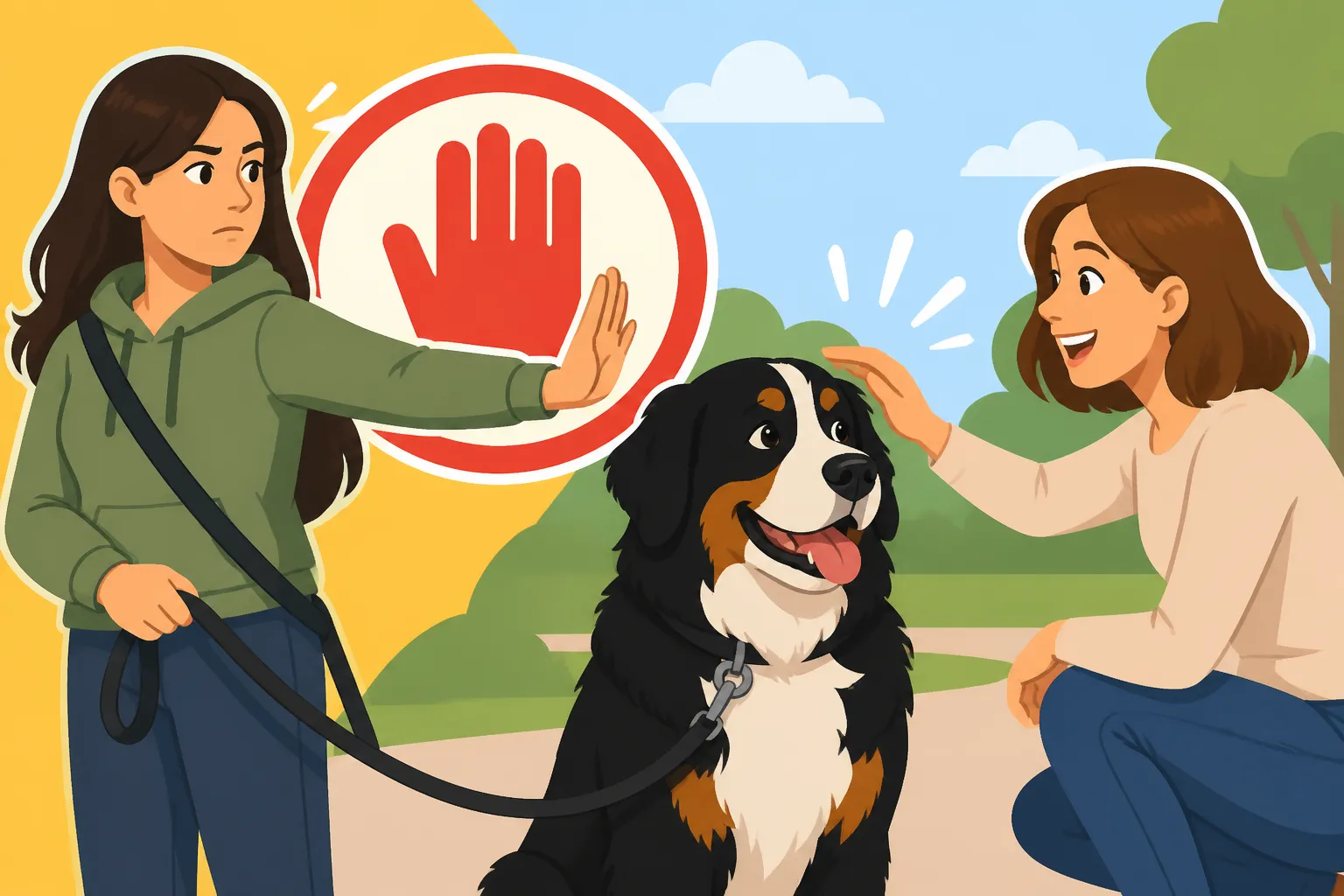
Picture this: you’re walking your majestic Bernese Mountain Dog down a bustling sidewalk. Suddenly, a child, eyes wide with wonder, breaks free from their parent's hand and dashes straight for your dog, arms outstretched, squealing with delight. Or perhaps you’re at a pet-friendly outdoor market, trying to browse handmade soaps, and an adult approaches, bending down, making direct eye contact, and saying, "Oh, he's so beautiful! Can I pet him?" without waiting for a reply before their hand is already reaching out. These scenarios are incredibly common. It’s not just about a quick pat on the head; sometimes people want to hug, grab, or even try to lift a part of your dog, completely oblivious to your Berner's personal space or your own comfort.
Managing these unexpected encounters requires vigilance and a proactive approach. A large dog like a Bernese Mountain Dog, even one with excellent Leash Manners on a Hundred Pound Bernese Mountain Dog, can accidentally knock someone over if they lunge or shift unexpectedly, especially if a stranger surprises them. The challenge is amplified when you're trying to Socializing a Reserved Bernese Mountain Dog Puppy who might be overwhelmed by too many new experiences, or even just working on basic obedience in a distracting environment. Public spaces are unpredictable, and without clear boundaries, every outing can become a stressful negotiation rather than an enjoyable stroll.
Protecting Your Berner's Space and Comfort
Setting boundaries isn't about being rude; it's about being responsible. Every dog has a personal bubble, a comfort zone, and when that space is invaded repeatedly without permission, it can have consequences for their behavior and emotional health. Imagine if strangers constantly touched you without asking—it would be unsettling, right? For a dog, especially one who might be naturally a bit reserved or sensitive, this can lead to anxiety, fear, or even reactivity over time. A dog that is always braced for an uninvited touch might start displaying avoidance behaviors, like pulling away, tucking its tail, or trying to hide behind you. In more severe cases, a dog might feel the need to defend its space, leading to growling or snapping as a last resort because its subtle cues were ignored.
Furthermore, some Berners might be silently tolerating discomfort rather than enjoying the interaction. They might not show overt signs of stress, but a perceptive owner can often pick up on subtle cues if they know Whether a Bernese Mountain Dog Hides Discomfort. It’s our job to be their advocate. By clearly communicating that not every interaction is welcome, we teach our dogs that we will protect them, which builds trust and confidence. This protection allows them to relax more in public, knowing they don't always have to be "on" for every passing stranger. It also helps prevent accidental negative experiences that could shape their future reactions to people.
Practical Strategies for Politely Declining Interactions
So, how do you navigate these situations without feeling like you're being unkind or awkward? It's all about having a few go-to phrases and techniques in your toolkit that clearly communicate your boundaries.
Verbal Cues and Body Language
One of the most effective ways to manage interactions is through clear, consistent verbal cues and supportive body language. When you see someone approaching with the obvious intent to pet, be proactive. Don't wait for them to ask or, worse, to reach out. Step slightly in front of your dog, creating a gentle barrier with your body. This subtle action often signals that you're in control of the interaction and that your dog is not immediately available.
Here are some phrases you can use, depending on the situation:
- "He's actually in training right now, so we need to stay focused!" This is a fantastic all-around phrase because it implies a very important task is at hand. You can even use it if your dog is just practicing walking nicely. If you're using an online program like BAXTER & Bella, you can genuinely say your dog is in training, reinforcing the idea that it's an ongoing process that requires concentration.
- "She's not feeling very social today, but thanks for asking!" This offers a gentle excuse without implying your dog is aggressive, simply that they're not in the mood. It normalizes the idea that dogs, like people, have days when they prefer their space.
- "We're working on manners, so no greetings right now, please." Again, this emphasizes training and boundaries.
- "He's a little shy with strangers." This works well for more reserved Berners, or if you simply want to avoid a longer conversation. It sets a clear expectation without being confrontational.
- "I appreciate that, but we're in a bit of a hurry!" A simple, polite way to keep moving without needing a detailed explanation.
Your tone should be friendly but firm. Smile, make eye contact, but don't linger. Keep walking if appropriate. Your goal isn't to be rude, but to be effective in communicating your dog's needs and your boundaries. Having a reliable "leave it" cue for your dog can also be invaluable, allowing you to redirect their attention away from a potential interaction before it even starts. It's especially useful when your Berner might otherwise become distracted, making it harder to maintain How Long a Bernese Mountain Dog Will Concentrate on your walk.
Utilizing Visual Aids and Tools
Sometimes, a verbal cue isn't enough, or you might find yourself in situations where you simply don't want to engage in a conversation every few minutes. This is where visual aids can be incredibly helpful. These tools act as a silent but clear message to passersby, preempting many approaches before they even happen.
Think about vests, bandanas, or leash sleeves that clearly state "Do Not Pet," "In Training," "Give Me Space," or "Service Dog in Training." These items are widely available on platforms like Amazon and can be surprisingly effective. When people see a dog wearing such an item, they are generally much more likely to respect the boundary without you having to say a word. It takes the onus off you to constantly explain and allows you to enjoy your walk more peacefully. For a sensitive Berner, or one who is reactive or recovering from an injury, these visual cues are invaluable for signaling to the world that an interaction might not be appropriate.
Here's a quick comparison of the pros and cons of using such gear:
| Feature | Pros | Cons |
|---|---|---|
| Clarity | Immediately communicates a boundary without verbal exchange. | Some people still ignore or don't understand the message. |
| Reduced Stress | Less need for owner to constantly intervene; more peaceful walks. | Might draw more attention from curious individuals initially. |
| Empowerment | Gives owner confidence in advocating for their dog's space. | Requires consistent use to be effective. |
| Dog Comfort | Helps prevent unwanted touches that could upset sensitive dogs. | Dog needs to be comfortable wearing the gear. |
| Accessibility | Easily found on online retailers like Amazon. | Can sometimes be misconstrued as the dog being "mean" or "aggressive." |
While a vest won't stop every single person, it significantly reduces the number of unsolicited approaches. It shifts the burden of communication from an awkward verbal exchange to a clear visual one, making your outings much more manageable. Remember, the goal is to create a positive experience for your Berner, and sometimes that means minimizing potentially stressful interactions with strangers. This also aligns with principles of positive reinforcement training, like those taught by BAXTER & Bella, where clarity and avoiding stressful situations are paramount for your dog's learning and well-being.
Handling Persistent or Rude Individuals
Despite your best efforts with polite verbal cues and visual aids, you might occasionally encounter someone who is persistent, dismissive, or even downright rude. It's frustrating, but having a plan for these tougher interactions can help you maintain your composure and protect your Bernese Mountain Dog.
Remaining Calm and Assertive
It's tempting to get drawn into an argument when someone ignores your request or tries to tell you how to manage your own dog. However, engaging in a heated discussion rarely benefits anyone and can elevate the stress for both you and your Berner. The key is to remain calm, firm, and assertive. Your primary goal is to protect your dog and end the interaction quickly, not to win a debate.
If someone ignores your polite "He's in training" and continues to reach for your dog, you might need to escalate slightly:
- "Please, do not touch my dog." This is a direct, clear command, not a request. Say it calmly but with conviction, stepping further into your dog's space if necessary.
- "My dog is not to be petted today." No excuses, no apologies, just a statement of fact.
- If they persist and claim your dog looks friendly: "He may look friendly, but he's not available for petting right now. Thank you for understanding." This acknowledges their perception but doesn't yield your boundary.
Remember, your body language should reinforce your words. Stand tall, keep your shoulders back, and maintain eye contact if you feel safe doing so, or simply turn your body to block their access to your dog. If you have A Bernese Mountain Dog That Will Not Come When Called, now is the time to double down on recall training so you can swiftly exit any uncomfortable situation. You are your dog's advocate, and sometimes that means being more assertive than you might naturally prefer. It's not about being aggressive, but about clearly stating and enforcing your boundaries for the well-being of your companion. Some Berners are very sensitive, and a harsh or rude interaction could really impact them, especially if they are prone to The Bernese Mountain Dog That Quits After One Correction in training settings due to a negative experience.
When to Disengage or Change Course
Sometimes, the best strategy is simply to disengage and remove yourself and your Bernese Mountain Dog from the situation. You don't owe a persistent stranger a lengthy explanation or an argument. Your priority is your dog's safety and comfort, and your own peace of mind.
If someone is being particularly pushy or making you uncomfortable, don't hesitate to:
- Turn and walk away: This is often the most effective and simplest solution. A quick, polite "We really must go" as you turn and walk in another direction can put an end to the interaction without further confrontation.
- Redirect your dog: If your Berner is focused on the person, use a strong "let's go!" cue, or offer a high-value treat to get their attention and move them away. This shows the person that your dog is listening to you, not them, and that the interaction is over.
- Cross the street: If you see someone approaching who looks like they might ignore boundaries, or if an interaction is starting to feel uncomfortable, simply cross the street. It’s a physical barrier that clearly communicates your desire for space.
- Use a known command: Ask your Bernese Mountain Dog to "sit" or "stay" facing you, effectively turning their back to the approaching person. This sends a clear signal that they are occupied and not available for interaction. This reinforces good manners and can be especially useful when you're working on Teaching Strangers How to Greet a Bernese Mountain Dog in a controlled manner, and need to decline an uncontrolled greeting.
Remember, you are empowered to protect your Bernese Mountain Dog. You don't have to sacrifice your dog's comfort, or your own, for the sake of a stranger's desire to pet them. By having a clear plan, using assertive language, and knowing when to simply walk away, you can ensure that your walks remain a positive and enjoyable experience for both of you.
Disclaimer
This article is for general informational purposes only and does not constitute professional advice. Laws, prices and regulations vary by location and change over time. Consult a qualified professional for guidance on your specific situation.