Whether a Toddler Is Safe Beside a Bernese Mountain Dog
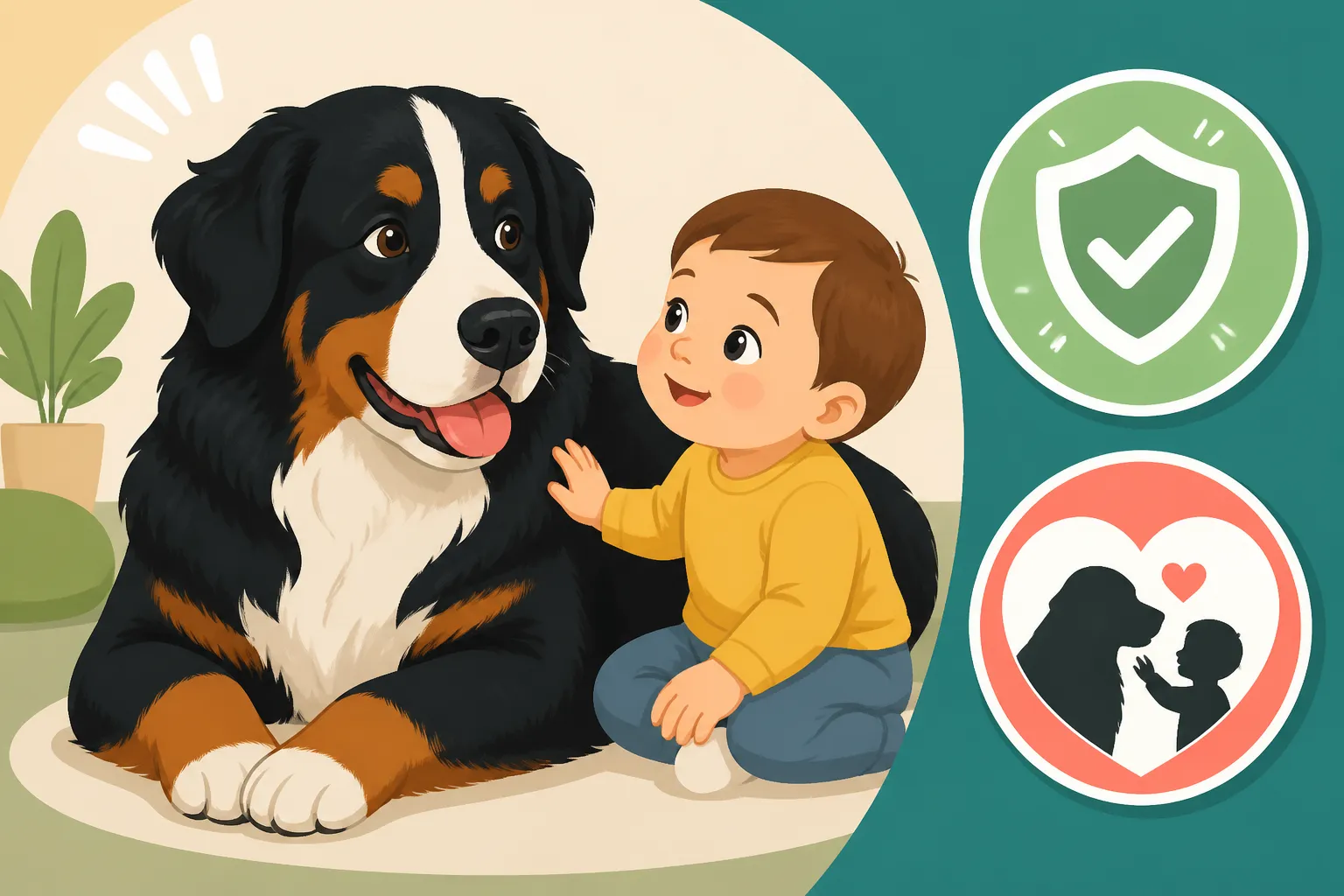
Bringing a Bernese Mountain Dog into a home with a toddler can feel like navigating a tightrope – you adore your gentle giant, but the sheer size difference and unpredictable nature of both a young child and a large dog can spark real anxiety. Many parents worry about accidental bumps, misinterpreted cues, or even resource guarding, wondering if their beloved Berner truly is as safe with their little one as their loving nature suggests. This guide will explore the unique dynamics of Bernese Mountain Dogs and toddlers, offering practical advice and insights to ensure a harmonious and safe environment for everyone in your family.
Understanding the Bernese Mountain Dog Temperament Around Children
The Bernese Mountain Dog is widely renowned for its calm, gentle, and affectionate nature, often earning the endearing nickname "gentle giant." This reputation isn't unfounded; many Berners are incredibly patient and tolerant, especially with children they've grown up with. However, it's crucial to remember that a dog, regardless of breed, is still an animal with instincts and individual personality quirks.
The Gentle Giant Reputation: Is It Always True?
While the breed standard for Bernese Mountain Dogs emphasizes a good-natured and self-confident temperament, this doesn't automatically translate to every single dog being perfectly suited for life with a rambunctious toddler without any effort. Their size alone means that an accidental bump or a playful paw can send a small child sprawling, even if there's no malice intended. A Berner’s tail wag, full of joy and enthusiasm, can be at face-level for a toddler, leading to an unexpected swat. It’s not about aggression, but about sheer physical presence and the potential for unintentional consequences.
You'll find countless stories of Berners who are absolute saints with children, allowing them to climb, tug, and generally explore with boundless patience. These stories are wonderful, and they highlight the potential for this breed. But this potential is often realized through careful breeding, early socialization, and consistent training from a very young age. It's not a given.
Individual Differences in Berners: Not All Are the Same
Just like people, every Bernese Mountain Dog has its own unique personality. Some are naturally more outgoing and robust, shrugging off minor annoyances, while others might be more reserved, sensitive, or easily startled. A Bernese Mountain Dog that is generally calm with adults might react differently to the erratic movements, loud noises, or sudden approaches of a toddler.
Factors like a dog's past experiences, the quality of their early socialization, and even their genetic lineage can play a huge role. A Berner from a reputable breeder who focuses on temperament and exposes puppies to various stimuli, including children, from a young age is likely to have a head start. On the other hand, a rescue Berner with an unknown history might require more time, patience, and professional guidance to ensure a safe interaction with a toddler. It's essential to assess your specific dog's personality and comfort levels, rather than relying solely on generalized breed descriptions.
Their Protective Instincts (or Lack Thereof): How They React to Threats to Their 'Pack'
Bernese Mountain Dogs were originally farm dogs in the Swiss Alps, tasked with herding cattle, guarding property, and pulling carts. While they are not typically aggressive guard dogs in the way some breeds are, they do possess a natural protective instinct towards their family, which they consider their "pack." This protective nature usually manifests as a watchful presence rather than overt aggression. They are more likely to bark at strangers or stand between their family and perceived threats.
However, a toddler's roughhousing with another child or even a perceived threat from a well-meaning visitor could be misinterpreted by a Berner, especially if the dog feels the child is in danger or distress. It’s a fine line to walk, understanding when their protective instinct is beneficial and when it might lead to a misunderstanding. It’s rarely about aggression towards the child, but rather a misjudgment of a situation involving the child. This is why supervision and understanding canine body language become absolutely critical. You want your dog to be watchful, but not reactive in a way that could cause harm.
Supervision and Training: The Cornerstones of Safety
Even the most good-natured Bernese Mountain Dog requires careful management and consistent training when sharing a home with a toddler. This isn't about blaming the dog or the child; it's about setting everyone up for success and preventing potential issues before they arise.
Always Actively Supervise: Why This is Non-Negotiable
This is the golden rule, and it cannot be stressed enough: never leave a toddler and a Bernese Mountain Dog unsupervised, even for a second. Accidents can happen incredibly quickly, and even a well-behaved dog might react unpredictably if startled or in pain. Active supervision means you are present, attentive, and ready to intervene at any moment. This isn't just about preventing bites; it's about preventing unintentional knocks, falls, or stressful situations for both the child and the dog.
Think about it like this: a toddler is still learning cause and effect, boundaries, and how to interact gently. A Bernese Mountain Dog, while intelligent, doesn't understand the nuanced rules of human society. It's up to you, the adult, to be the bridge, constantly monitoring interactions and guiding both parties. Even if you step away for "just a minute" to grab something from the kitchen, that minute can be enough. Utilize physical barriers like baby gates or crates if you need to briefly leave the room, ensuring a safe separation. You might also find invaluable advice in resources like Introducing a Bernese Mountain Dog to a Newborn which covers similar early safety protocols.
Teaching the Dog Boundaries: Commands and Consistency
Training your Bernese Mountain Dog is paramount. Strong obedience cues not only make your dog a better canine citizen but also provide you with the tools to manage interactions with your toddler. Focus on commands like "leave it," "stay," "down," and "go to your place." A "place" command is particularly useful, teaching your Berner to go to a designated bed or mat and stay there calmly, even amidst toddler chaos. This gives the dog a safe retreat and keeps them out of the immediate play area when needed. Brands like BAXTER & Bella offer comprehensive online training programs that can guide you through these essential commands from the comfort of your home, making it easier to integrate training into your busy family life.
Consistency is key. Every member of the household, including older children, needs to reinforce the same rules and commands. If your dog is allowed to jump on adults, they won't understand why they can't jump on a toddler. Establish clear boundaries early and stick to them. It's also important to understand Whether a Bernese Mountain Dog Takes Correction and tailor your training approach accordingly; these dogs can be sensitive.
Teaching the Toddler Respect: Age-Appropriate Lessons
It’s just as important to teach your toddler how to interact appropriately with the dog. While very young toddlers won’t fully grasp complex rules, you can start instilling basic concepts through gentle guidance. Show them how to "pet nicely" with a soft hand, rather than grabbing fur or ears. Teach them not to disturb the dog when it’s eating, sleeping, or in its crate. Use positive reinforcement when your toddler is gentle, praising and rewarding them.
As they grow older, you can introduce more specific rules, such as "no pulling tails," "no climbing on the dog," and "give the dog space." Modeling respectful behavior yourself is the most powerful teaching tool. If you respect the dog’s boundaries, your toddler is more likely to follow suit. For specific guidance on managing puppy mouthing that could later become an issue with a toddler, you might review Teaching a Bernese Mountain Dog Puppy to Stop Mouthing.
Early Socialization: Crucial for a Harmonious Home
Socializing your Bernese Mountain Dog puppy effectively is one of the best investments you can make in ensuring their comfort and safety around children. Early and positive exposure to a variety of sights, sounds, people, and experiences, including well-behaved children, helps them develop into well-adjusted adults. This means carefully controlled, positive interactions where the puppy feels safe and rewarded.
A puppy class can be invaluable, not just for obedience but for structured socialization. Consider joining one that uses positive reinforcement methods. When bringing a puppy home, ensure they have positive experiences with children, always supervised. Never force interactions, and always end on a good note. If your Berner puppy is showing any signs of shyness or reservation, seeking advice on Socializing a Reserved Bernese Mountain Dog Puppy can be very helpful. The goal is to build confidence and positive associations, rather than fear or anxiety.
Setting Up a Safe Environment for Both Dog and Child
Creating a physically safe environment is paramount when a large dog and a toddler coexist. It minimizes opportunities for accidental injury and helps prevent resource guarding or overstimulation for both parties.
Creating "Dog-Free" Zones: Importance of Safe Spaces for Both
Every dog, especially one sharing a home with a small child, needs a safe, private retreat where they can go to be undisturbed. This "dog-free" zone should be a place where your Bernese Mountain Dog can rest, eat, and chew toys without interruption from your toddler. A crate, a designated bed in a quiet room, or an area blocked off by a baby gate are all excellent options. Never allow your toddler to enter this space. This teaches the child respect for the dog's boundaries and gives the dog much-needed downtime. You can find robust baby gates and crates suitable for a large Bernese Mountain Dog on platforms like Amazon.
Conversely, it can also be beneficial to have "toddler-free" zones, especially during playtime with small toys or meal times. This prevents your Berner from accidentally stepping on or eating small toys, and it keeps your child safe from an enthusiastic dog. These separate spaces reduce the constant need for active supervision by creating inherent safety buffers. Teaching your dog a solid "go to your place" command allows you to direct them to their safe space, as discussed in Teaching a Bernese Mountain Dog to Stay on a Mat.
Securing Food and Toys: Preventing Resource Guarding
Resource guarding is a natural dog instinct where they protect valuable items like food, toys, or even prime resting spots. While not all Berners exhibit this, it’s a potential issue that can become dangerous, particularly when a curious toddler approaches. Always feed your Bernese Mountain Dog in their designated feeding area, away from your toddler, and ensure they are undisturbed while eating. Elevated food bowls can make it more comfortable for large breeds, and slow feeders can help prevent bloat, a serious concern for Berners.
Likewise, manage high-value toys. Ensure your dog has their own indestructible chew toys, perhaps from a reputable brand found on Amazon, that are distinctly different from your toddler’s toys. Pick up your toddler's toys when they're not actively playing to avoid confusion. If your Berner shows any signs of guarding (stiffening, growling, darting glances), seek professional help immediately. This is not a behavior to ignore or try to manage without expert guidance, especially with a child in the house.
Safe Play Areas: Designated Spaces for Interaction
While supervision is key, designating specific times and areas for supervised interaction can also be beneficial. This might be a rug in the living room where your dog and child can sit together while you read a book, or a fenced yard for a controlled romp. The key is "controlled." Keep interactions short, positive, and always under your direct watch.
Avoid games that might overstimulate your Bernese Mountain Dog, such as tug-of-war where they might get too excited or chase games that could lead to accidental collisions. Instead, encourage calm, shared activities like gentle petting or practicing simple commands. This approach helps teach both your dog and your toddler how to interact calmly and respectfully.
Recognizing Warning Signs: Understanding Canine Communication
It's a common misconception that dogs only growl or bite without warning. In reality, dogs communicate extensively through body language long before they resort to such overt signals. Learning to read these subtle cues is paramount for keeping both your Bernese Mountain Dog and your toddler safe.
Subtle Canine Cues: Understanding Dog Body Language
Your Bernese Mountain Dog will tell you, if you know how to listen, when they are uncomfortable, stressed, or nearing their limit. These signs are often subtle and can be easily missed if you're not paying close attention.
Here's a table of common dog body language signals and what they might indicate:
| Body Language Signal | Possible Meaning (in context of toddler interaction) | What to Do |
|---|---|---|
| Lip Licking | Stress, anxiety, appeasement | Create distance, redirect dog, intervene. |
| Yawning (not tired) | Stress, anxiety, appeasement | Separate dog and child, provide quiet space. |
| Turning Head/Body Away | Avoidance, discomfort, wants to disengage | Physically separate, allow dog to retreat. |
| Ears Pinned Back/Lowered | Fear, anxiety, submission | Immediate separation, ensure dog feels safe. |
| Whale Eye (whites of eyes showing) | Stress, fear, feeling threatened | Move dog or child away gently. |
| Stiff Body/Tail | Tension, discomfort, potential for escalation | Separate immediately, remove stressor. |
| Freezing/Immobility | Extreme stress, fear, preparing to react | Critical: Remove child or dog immediately. |
| Low Growl/Lip Curl | Warning, "I'm uncomfortable, stop!" | Immediate action required: Separate all. |
Being attuned to these signals, even the smallest ones, allows you to intervene before your dog feels the need to escalate their communication. You'll find more insights into this in Reading Fear in a Bernese Mountain Dog That Retreats. It’s about being proactive, not reactive.
Toddler Triggers: What Behaviors Might Provoke a Reaction
Toddlers, with their developing motor skills and limited understanding, can unwittingly engage in behaviors that might trigger discomfort or stress in a dog. These include:
- Sudden, unpredictable movements: A toddler running, stumbling, or suddenly lunging can startle a large dog.
- Loud noises: Screaming, shouting, or sudden loud bangs can be overwhelming for a dog's sensitive hearing.
- Invading personal space: Hugging too tightly, lying on the dog, or cornering them can make a dog feel trapped.
- Pulling hair, ears, or tail: Even accidental tugs can cause pain.
- Taking objects: Grabbing a toy or food from a dog, especially if the dog is resource-guarding, is a major trigger.
- Eye contact: Prolonged, direct eye contact can be perceived as a challenge by some dogs.
Understanding these common triggers allows you to better manage situations. It’s not about the toddler being "bad," but about their natural developmental stage. Your role is to protect both of them by anticipating these triggers and preventing them from escalating.
When to Separate: Knowing When to Intervene Immediately
If you observe any of the subtle canine cues indicating discomfort, or if your toddler is engaging in a potentially triggering behavior, it's time to intervene. Don't wait for the situation to worsen. Calmly, but firmly, separate the dog and the child. This might mean calling your dog to its "place" or gently moving your toddler to another area.
The goal is to prevent any negative interaction, not just to stop an impending bite. Even if your Berner simply gets up and walks away from your child, respect that signal. It means they've had enough. Constantly reinforcing that your dog has an escape route and that you will advocate for their space builds trust and confidence, making them less likely to feel trapped and forced to escalate their communication. When in doubt, always separate. It’s better to be overly cautious than to regret an incident. If you're struggling with managing their size around small people, advice on Stopping a Bernese Mountain Dog Putting Paws on People can be very relevant.
Bringing a Bernese Mountain Dog and a toddler together requires dedication, knowledge, and consistent effort. While the breed's gentle nature is a wonderful foundation, it is the responsible actions of the adults in the household that truly ensure a safe and loving environment for every family member.
Disclaimer
This article is for general informational purposes only and does not constitute professional advice. Laws, prices and regulations vary by location and change over time. Consult a qualified professional for guidance on your specific situation.