Teaching a Bernese Mountain Dog to Stay on a Mat
It can be incredibly challenging when your sweet, lovable Bernese Mountain Dog insists on being right underfoot, especially when you’re trying to cook dinner, entertain guests, or simply move around your home without tripping. These gentle giants, with their famously affectionate "Velcro" personalities, often struggle with the concept of personal space, making a dedicated "place" or "mat stay" an invaluable tool. This guide will walk you through teaching your Bernese Mountain Dog to happily and calmly stay on their mat, bringing more harmony and safety to your shared life.
Why a "Mat Stay" Is Crucial for Your Bernese Mountain Dog's Well-being
Let's be honest, those big, beautiful Berners are hard to say no to, especially when they gaze up at you with those soulful eyes. But allowing them to always be in your space, no matter how well-intentioned, can lead to some real frustrations and even safety concerns. A "mat stay" isn't just about control; it's about providing your dog with structure, a sense of security, and teaching them how to relax in a designated spot, even amidst household activity.
Managing the "Velcro" Nature
Bernese Mountain Dogs are renowned for their intense loyalty and desire to be close to their families. It's one of the most endearing qualities, but it also means they can become quite the trip hazard or an accidental roadblock in busy areas. Think about it: trying to carry a hot plate of food through the kitchen while your 100-pound Berner is subtly leaning against your legs. Or perhaps you have guests over, and your gentle giant is constantly seeking attention, nudging hands, or placing their head in laps. This isn't them trying to misbehave; it's their natural instinct to connect. Teaching a mat stay provides an acceptable outlet for this desire to be near you, but in a structured, calm way. They learn that being on their mat means they're still part of the family, just with a little more personal space. This mental exercise can also help with some of the anxieties that can sometimes manifest if a Berner feels left out or unsure where they should be. It gives them a job, a purpose, and a clear instruction.
Safety in the Home
A big dog means big impact, even when they're trying to be careful. A "mat stay" command becomes a safety net in many household situations. Imagine someone coming to the door: instead of your Bernese joyfully bounding to greet them, potentially knocking over a small child or an elderly visitor, they can be calmly directed to their mat. Or consider a repair person or delivery driver entering your home. Giving your Berner a designated, comfortable spot to relax away from the door allows them to feel secure without interfering with the task at hand. This also extends to moments like cooking, where sharp objects, hot liquids, or delicate items are in play. Having your Berner calmly on their mat keeps them out of harm's way and prevents accidental collisions. It’s not just about their safety; it’s about the safety of everyone and everything in your home. A Bernese Mountain Dog Around Children can greatly benefit from a solid mat stay, giving both dog and child a clear boundary and fostering respect.
Creating Calmness and Structure
Bernese Mountain Dogs thrive on routine and clear expectations. While they are intelligent, they also appreciate knowing what's expected of them. A mat stay isn't just a physical boundary; it's a mental one. It teaches them to settle, to be patient, and to engage their brains in a constructive way. When they know that "mat" means relaxation and a reward for staying put, they learn to self-regulate their excitement and energy. This can be particularly beneficial for A Bernese Mountain Dog That Will Not Settle in the Evening or one who becomes overstimulated easily. It's a foundational command that builds confidence and can translate into better behavior in other areas, such as waiting patiently for their food bowl or holding a "stay" command during walks. The mental effort involved in maintaining a mat stay, especially with distractions, can be surprisingly tiring for a dog, leading to more relaxed behavior overall.
Essential Preparations Before You Start Training
Before you jump headfirst into teaching your Berner this new skill, a little preparation goes a long way. Setting yourself and your dog up for success from the very beginning will make the entire process smoother and more enjoyable for both of you. Remember, Berners can be sensitive, so positive reinforcement and a clear understanding of expectations are key.
Choosing the Right Mat or "Place"
The "mat" you choose for your Bernese Mountain Dog needs to be comfortable, durable, and clearly distinguishable as their spot. This isn't just any rug; it's their personal relaxation station. For a large breed like a Berner, an Orthopedic Beds Sized for a Bernese Mountain Dog can be a fantastic choice, especially as they get older and their joints need more support. You'll want something that's easy to clean, as Berners shed and can track in dirt. Consider materials that are machine washable or at least easy to wipe down. Old bath mats, small rugs, or even a designated dog bed can work, as long as it's something your dog can comfortably lie on and that you can easily move to different locations if you want to generalize the command later. The key is that it's a specific item, not just a random spot on the floor. For convenience, you can find a wide variety of suitable, durable mats and beds on Amazon.
Gathering Your Training Tools
Successful training relies on having the right tools readily available. For mat training, you'll need:
- High-Value Treats: These are treats your Bernese Mountain Dog absolutely adores – small, soft, smelly, and easily digestible. Think tiny pieces of cooked chicken, cheese, or specialized training treats. These are crucial for motivating your Berner, who, while intelligent, might occasionally be Whether a Bernese Mountain Dog Is Stubborn when not sufficiently motivated.
- A Clicker (Optional but Recommended): A clicker acts as a precise marker for desired behavior. When your Berner's paws hit the mat, a click followed by a treat quickly communicates "YES! That's exactly what I want!" If you're new to clicker training, plenty of resources are available online, and you can find affordable clickers on Amazon.
- A Leash (for initial guidance): Sometimes, a light leash can help gently guide your Berner onto the mat or prevent them from wandering off too soon in the early stages.
- Patience and Positive Reinforcement: These aren't physical tools, but they are absolutely essential. Berners respond best to kindness and clear, consistent communication. Avoid harsh corrections, as The Bernese Mountain Dog That Sulks After a Telling Off is a very real thing and can derail your training efforts. Focus on rewarding what you do want.
Setting the Stage for Success
Before you even begin, think about the environment. Start your mat training sessions in a quiet, low-distraction area of your home. This might be a living room when no one else is around, or a quiet corner of the kitchen. Too many distractions early on will only frustrate both you and your Berner. Ensure your dog has had a chance to relieve themselves and has had a bit of mild exercise so they aren't bursting with energy. Keep your training sessions short and sweet, typically 5-10 minutes, especially for a breed that might have Training Sessions Short Enough for a Bernese Mountain Dog. You want to end each session on a high note, with your Berner feeling successful and eager for the next one. Also, make sure you're in a good mood! Dogs are incredibly attuned to our emotions. If you're stressed or impatient, your Berner will pick up on it.
Step-by-Step Guide to "Mat Stay" Training
Now that you're prepared, let's dive into the actual training process. Remember, consistency is your best friend here. Don't rush, and celebrate every small victory with your magnificent Bernese Mountain Dog.
Introducing the Mat and Lure
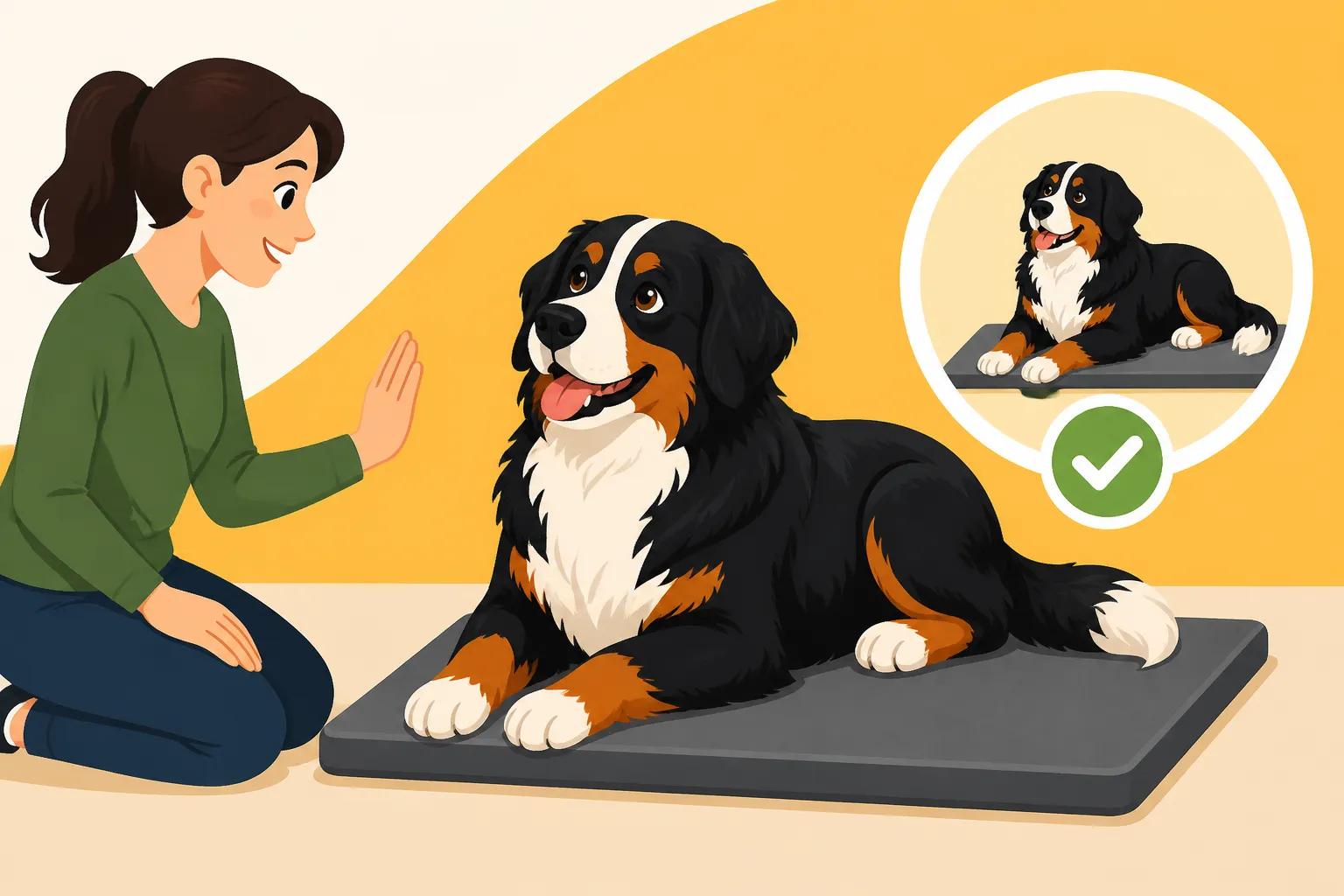
The very first step is to create a positive association with the mat. Place the mat on the floor. With a high-value treat in your hand, lure your Bernese Mountain Dog towards and onto the mat. Don't say anything yet. As soon as all four paws are on the mat, mark the behavior (with a click or a verbal "yes!") and immediately reward them with the treat. Repeat this several times. Your goal is for your Berner to think, "Hey, being on this mat makes good things happen!" If they lie down naturally, even better – mark and reward heavily! Don't worry about duration or a cue word at this stage; focus purely on getting them to step onto and settle on the mat willingly. Some Berners might be a little hesitant at first, especially if the mat feels new or unusual. Keep the energy positive and enticing. If they seem uncertain, try placing a treat directly on the mat to encourage them to approach.
Once they are consistently stepping onto the mat when lured, you can start to build a little duration. As they stand or lie on the mat, give them a few quick, consecutive treats (a "jackpot" of treats) while they are still on the mat. Then, gently toss a treat off the mat to reset and start again. This teaches them that staying on the mat continues to earn rewards. For more structured online guidance on these initial steps, resources like BAXTER & Bella offer comprehensive positive reinforcement training programs that can be a great supplement to your efforts. It's all about making the mat the most wonderful place to be.
Adding the Verbal Cue and Duration
Once your Bernese Mountain Dog is readily getting onto the mat with a lure, it's time to add a verbal cue. As you lure them onto the mat, just before they step on, say your chosen word, like "Mat," "Place," or "Bed." As soon as they are on, mark and reward. Repeat this for several sessions. Soon, you'll find that just saying the word "Mat" will prompt them to move towards their designated spot.
Now, let's tackle duration. Once they're on the mat, start by rewarding them for staying for just one second, then two, then three. Gradually increase the time they need to stay on the mat before you mark and reward. You can deliver multiple treats while they are still on the mat, saying "good mat" softly as you do. Then, release them with a clear "Okay!" or "Free!" and toss a treat off the mat. If your Berner gets off the mat before you release them, simply reset without fuss, lure them back on, and try for a shorter duration. Don't hold a grudge; remember, this is a learning process, and Whether a Bernese Mountain Dog Learns Slowly means patience is paramount. Building up from just a few seconds to a full minute or more will take many repetitions across several days or even weeks.
Increasing Distance and Distractions
With your Berner comfortably staying on the mat for a minute or two in a quiet environment, it's time to generalize the skill.
First, introduce distance. Start by taking one step away from the mat, then return, mark, and reward if your Berner stays. Gradually increase the number of steps you take away. If they get up, guide them back to the mat, shorten the distance, and try again. Work on walking in a full circle around them while they stay.
Next, add mild distractions. This might be you jingling your keys, tapping your foot, or moving a chair nearby. Start with very low-level distractions and gradually increase them. If your Berner breaks their stay, it means the distraction was too much. Scale it back and try again. Don't forget that What a Bernese Mountain Dog Will Actually Work For is often high-value food, so ensure your treats are enticing enough to compete with these new challenges.
| Training Phase | Focus | Duration | Distance | Distractions | Release Cue |
|---|---|---|---|---|---|
| Phase 1: Foundation | Positive Association | 1-3 seconds | 0 steps | None | "Okay!" |
| Phase 2: Cue & Hold | Verbal Cue & Short Stay | 5-30 seconds | 0-1 step | None | "Okay!" |
| Phase 3: Distance | Moving Away | 30-60 seconds | 1-5 steps | Minimal (e.g., quiet talking) | "Okay!" |
| Phase 4: Distraction | Household Activity | 1-5 minutes | Room range | Moderate (e.g., walking around, mild noises) | "Okay!" |
| Phase 5: Generalization | Real-life Scenarios | 5+ minutes | Different rooms, outside | High (e.g., visitors, cooking) | "Okay!" |
Finally, start practicing in different rooms and eventually even outside in a safe, enclosed area. The goal is for your Bernese Mountain Dog to understand that "mat" means their specific mat, no matter where it's placed. Remember, each new location or distraction is like starting over slightly, so be prepared to reduce your expectations and build back up. You can incorporate practices like Teaching a Bernese Mountain Dog to Stay Put to reinforce the core concept of remaining in place.
Common Challenges and Troubleshooting
Even with the best intentions and methods, you might run into some bumps in the road. It’s completely normal, especially with a large, intelligent, and sometimes sensitive breed like the Bernese Mountain Dog. Don't get discouraged!
My Berner Won't Stay
If your Bernese Mountain Dog is struggling to stay on the mat, the most common reasons are that you're asking for too much, too soon, or your rewards aren't high-value enough. Go back to basics:
- Shorten the duration: Can your Berner stay for just one second? Reward that! Build up slowly, second by second.
- Increase the reward: Are you using their absolute favorite treats? If not, switch to something irresistible. Sometimes even a favorite toy can work as a reward for a Berner, as Whether a Bernese Mountain Dog Cares About Toys is often individual.
- Reduce distractions: Is the environment too busy? Move to a quieter room, or try training when the house is empty.
- Clarify the release cue: Make sure your "Okay!" or "Free!" is distinct and consistent. If they're anticipating the release, they might get up early.
- Check for discomfort: Is the mat comfortable? If your Berner is older, perhaps Arthritis in a Bernese Mountain Dog by Six is making it uncomfortable to lie down for extended periods. Ensure their mat is soft and supportive. If they truly seem to be ignoring a cue they previously knew, then a Bernese Mountain Dog ignoring a cue it knows might be related to a lack of motivation or too many distractions.
Distractions Are Too Much
When the real world intrudes, even a well-trained Berner can struggle. This is where patience and systematic desensitization come in.
- Gradual exposure: Don't go from zero distractions to a full party instantly. Start with someone walking quietly by, then someone talking, then a mild noise, then someone entering the room. Each step should be successful before moving to the next.
- Distance from distraction: Initially, have the distraction happen farther away from the mat. As your Berner improves, you can bring the distraction closer.
- Treat value: You might need to escalate your treat value when working with high distractions. A piece of kibble won't compete with a ringing doorbell for many Berners.
- Practice, practice, practice: This isn't a one-and-done command. Integrate short mat stays into your daily routine. Ask your Berner to go to their mat when you answer the door, when you eat dinner, or when you're on the phone. The more they practice with real-life distractions, the better they'll become. If you're struggling to implement this consistency, online training resources are invaluable. BAXTER & Bella, for example, offers guidance on how to manage and overcome distraction training, building upon foundational obedience.
Making it a Long-Term Habit
The goal isn't just to teach the "mat stay" but to make it a reliable, long-term behavior.
- Consistency is key: Everyone in the household needs to use the same cue and expectations. If one person allows your Berner to follow them everywhere, it undermines the training.
- Maintain rewards: Even when your Bernese Mountain Dog is a pro, don't stop rewarding them entirely. Occasional surprise high-value treats keep the behavior strong and enjoyable. Sometimes, the reward can simply be praise, a gentle pat (if they enjoy it), or the opportunity to relax near their family.
- Integrate into daily life: Use the mat stay frequently. Ask your Berner to go to their mat during mealtimes, while you're working, or when you have visitors. Make it part of their routine. This helps generalize the command and prevents them from getting bored or deciding it's no longer necessary.
- Fade the lure: Over time, you should be able to phase out the lure completely, relying only on the verbal cue.
- Review and refresh: If you notice the behavior slipping, go back a step or two in your training. Shorten the duration, reduce distractions, and remind your Berner of the expectations. Remember, Teaching a Bernese Mountain Dog to Settle is a journey, not a destination, and reinforcing good habits is an ongoing process throughout their lives.
Disclaimer
This article is for general informational purposes only and does not constitute professional advice. Laws, prices and regulations vary by location and change over time. Consult a qualified professional for guidance on your specific situation.