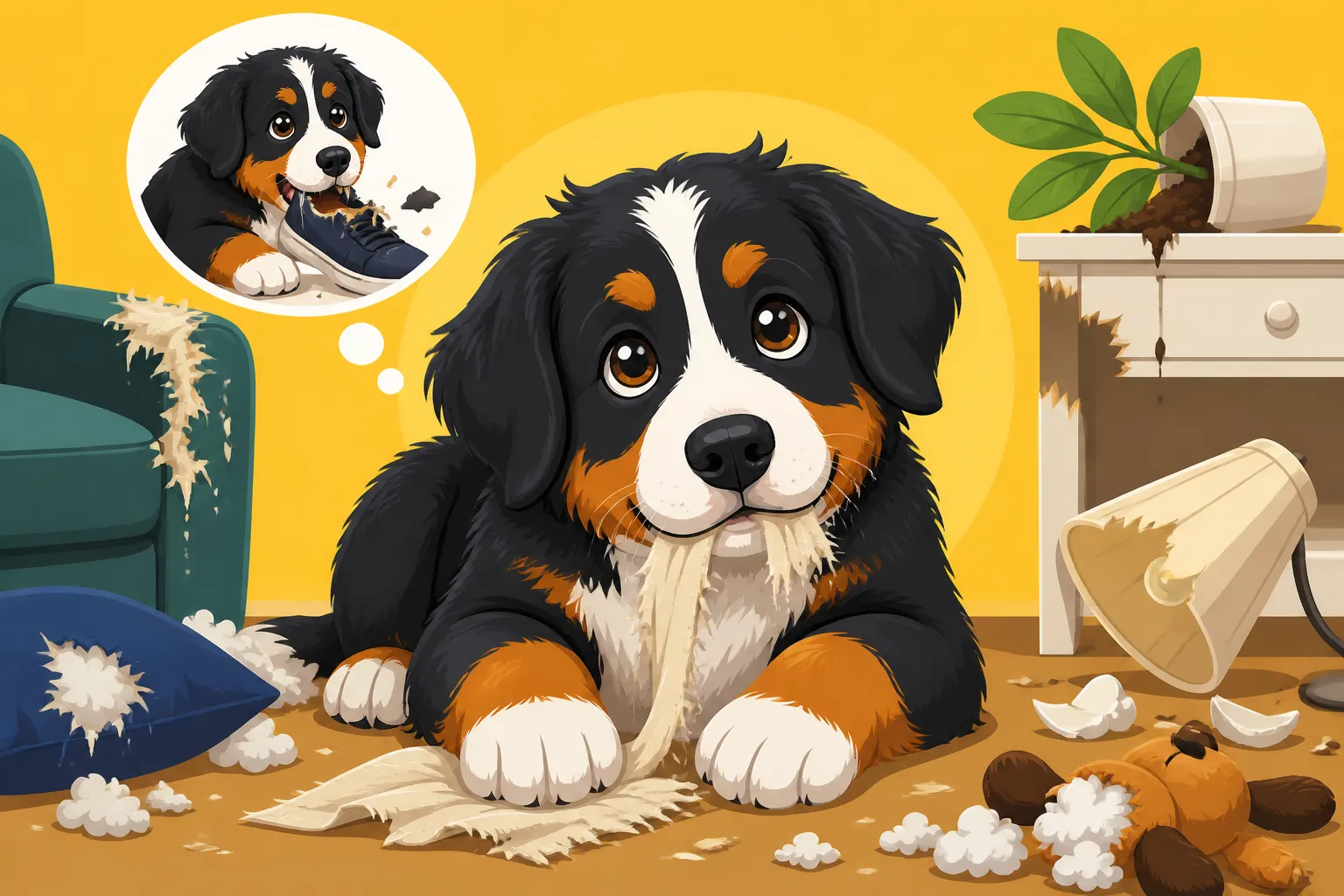
The Chew Damage a Bernese Mountain Dog Puppy Does
Bringing a Bernese Mountain Dog puppy into your home is an absolute joy, filled with adorable fluff and clumsy antics. However, many new Berner parents quickly realize that those cute puppy teeth aren't just for nibbling; they're capable of some serious destruction, turning household items into unrecognizable chew toys faster than you can say "drop it!" This guide is here to walk you through the often frustrating but entirely normal world of Bernese Mountain Dog puppy chewing, offering realistic strategies to protect your home and your sanity.
The Inevitable Reality of Puppy Chewing in a Bernese Mountain Dog
Let's face it, puppy chewing isn't a uniquely Bernese Mountain Dog trait, but when you combine the natural instincts of a growing dog with the sheer size and power of a Berner pup, you've got a recipe for potential havoc. It’s not just a phase they "might" go through; it's a fundamental part of their development. Understanding why they chew and the extent of damage they can inflict is the first step in managing it effectively.
Why Bernese Mountain Dogs Are Prone to Chewing
Like all puppies, Bernese Mountain Dogs chew for a variety of reasons, and their robust nature just amplifies the impact. First and foremost, there's teething. From about three weeks to six months, those sharp little needle teeth are making way for permanent adult teeth, and the pressure of chewing offers immense relief to their sore gums. Anything they can get their jaws around becomes a dental massage tool.
Beyond teething, chewing is an exploratory behavior. Puppies use their mouths to investigate their world, much like human babies use their hands. It's how they learn about textures, tastes, and the properties of objects. For a large, curious breed like the Berner, this means everything from your rug to your shoe to the leg of your coffee table is fair game for investigation. Add to this boredom, anxiety, or excess energy, and chewing becomes a self-soothing or stimulating activity. A Bernese Mountain Dog puppy that isn't getting enough mental or physical exercise, or one that's feeling a little overwhelmed by a new environment, might turn to chewing as an outlet.
The Scale of Destruction You Can Expect
When we talk about "chew damage" from a Bernese Mountain Dog puppy, we're not talking about a little gnawing on a slipper. We're talking about potential structural damage. Their jaws are surprisingly strong, even as puppies, and they grow incredibly fast. That tiny fluffball you brought home at eight weeks will be a significant, strong dog in a matter of months. This means items like wooden furniture legs, baseboards, electrical cords, and even drywall are not safe if left unattended. Imagine coming home to find a crater in your wall or a table leg whittled down to a precarious stump – it happens.
Soft furnishings are also highly susceptible. Cushions, blankets, carpets, and even entire dog beds can be shredded into confetti in minutes. This isn't out of spite; it's simply a puppy following its instincts with the physical capability to cause significant damage. Recognizing this potential before it happens allows you to implement preventative measures rather than reactive ones. Many owners underestimate how quickly a Berner puppy can graduate from small bites to serious demolition. It's vital to protect your belongings and your pup from ingesting anything harmful. For insights into suitable chew items, you might want to read What a Teething Bernese Mountain Dog Can Safely Destroy.
Preventing and Managing Destructive Chewing
The key to surviving the puppy chewing phase with a Bernese Mountain Dog is proactive management and consistent training. You can't stop a puppy from chewing entirely, nor should you want to, as it's a natural behavior. Your goal is to redirect that instinct onto appropriate items and to keep inappropriate items out of reach.
Puppy-Proofing Your Home for a Giant Breed
Puppy-proofing for a Bernese Mountain Dog isn't just about moving small, tempting items out of reach. It requires a more robust approach due to their size and reach. Think about securing anything valuable or dangerous that is within their eventual adult standing height.
Here's a checklist for Berner puppy-proofing:
- Elevate or Cover Wires: Electrical cords are incredibly tempting and highly dangerous. Use cord protectors, run them through PVC pipes, or secure them high up where your puppy can't reach.
- Secure Cabinets and Drawers: Childproof latches aren't just for human toddlers; they're essential for preventing a curious Berner puppy from accessing cleaning supplies, medications, or even just your Tupperware drawer, which can become an impromptu chew fest.
- Remove Tempting Furniture: If possible, temporarily remove or block access to highly chewable furniture legs. Bitter apple spray can deter some pups, but determined chewers might just ignore it. Consider sturdy gates, easily found on platforms like Amazon, to block access to certain rooms when you can't supervise directly. Read Beds, Crates and Gates Sized for a Bernese Mountain Dog for more ideas.
- Store Shoes and Clothing: This seems obvious, but it's often the most common casualty. Keep all shoes, socks, and laundry behind closed doors. The texture and scent of these items are incredibly appealing to puppies.
- Inspect Your Yard: If your Berner puppy spends time outdoors, ensure your yard is free of toxic plants, small objects they could ingest (like rocks or gardening tools), and any gaps in fencing they could exploit.
| Item Type | High Risk Examples | Protection Strategy |
|---|---|---|
| Electrical | Cords, chargers, power strips | Cord protectors, run through conduit, secure high |
| Furniture | Table legs, chair legs, baseboards | Bitter spray (if effective), physical barriers, gates |
| Personal | Shoes, socks, remote controls, phones | Store in closed cabinets/drawers, out of reach |
| Household | Plants, cleaning supplies, trash cans | Move to inaccessible areas, secure with latches |
| Bedding/Fabric | Blankets, cushions, dog beds | Provide designated, durable chew toys instead, supervise |
Effective Chew Toy Strategies
Simply buying a few chew toys isn't enough; you need a strategy. Bernese Mountain Dogs are intelligent and strong, so their chew toys need to be durable, engaging, and varied.
- Variety is Key: Offer a rotation of different textures and types of chew toys. This keeps things interesting. Think about hard rubber toys, nylon chews, treat-dispensing toys, and even appropriate natural chews like bully sticks or dental chews. Some puppies prefer softer textures for their sore gums, while others crave something really firm.
- Size Matters: Always choose toys appropriate for your Berner's size and chewing strength. A toy too small can be a choking hazard, and a flimsy toy will be destroyed in minutes, potentially leading to ingestion of pieces. As your Berner grows, their toys need to grow with them.
- Supervised Chewing: Especially with new toys or natural chews, always supervise your puppy. This allows you to intervene if a toy breaks apart or if they try to ingest pieces too large. This is also important because some toys that are safe for an hour can become unsafe if a piece breaks off and could be swallowed.
- Interactive Chews: Toys that dispense treats or require mental effort to get a reward can keep a Berner puppy engaged for longer periods, reducing boredom chewing. Puzzle toys are fantastic for this purpose, challenging their minds as well as satisfying their chewing instinct.
Incorporating Training and Mental Stimulation
Chewing often stems from boredom or a lack of appropriate outlets for energy. Regular, consistent training and plenty of mental and physical stimulation are crucial.
- Consistent Training: Start early with basic obedience commands like "leave it" and "drop it." These commands are invaluable for redirecting your puppy from inappropriate chewing. If your Berner puppy starts gnawing on a chair leg, a firm "leave it" followed by offering an appropriate chew toy, then praising them for taking the toy, reinforces good habits. An online program like BAXTER & Bella can be incredibly helpful for structured training that you can do at home, guiding you through these critical early stages.
- Scheduled Exercise: Bernese Mountain Dogs need regular, appropriate exercise. While puppies shouldn't be over-exercised due to their developing joints, short, frequent play sessions can burn off excess energy. Avoid hard surfaces for too long to protect their growing bodies, a topic explored in Hard Surfaces and a Growing Bernese Mountain Dog. Remember, too much high-impact exercise can actually be detrimental for a large breed puppy. The "five minute rule" per month of age is a good guideline for walks: The Five Minute Rule and a Bernese Mountain Dog Puppy.
- Mental Stimulation: Mental work can be just as tiring as physical exercise. Engage your Berner puppy with puzzle toys, scent games, and short training sessions throughout the day. This taps into their natural intelligence and helps satisfy their need to "work" and engage their brains, which can reduce their inclination to chew out of boredom. For dealing with mouthing behavior that often precedes chewing, consider strategies discussed in The Bernese Mountain Dog Puppy That Mouths Hands.
- Crate Training: A properly introduced crate can be an invaluable tool. It provides a safe, chew-proof space for your puppy when you can't supervise them directly. Never use the crate as punishment, and ensure it's a positive space for your Berner. A detailed guide like Crate Training an Adult Bernese Mountain Dog can offer useful insights, even for puppies.
When Chewing Becomes a Problem and What to Do
While some chewing is normal, there's a point where it crosses into problem behavior. Recognizing the signs and knowing when to seek additional help can prevent further damage and ensure your puppy's well-being.
Identifying Problem Chewing vs. Normal Puppy Behavior
It's important to distinguish between normal, exploratory puppy chewing and destructive chewing that indicates a deeper issue. Normal chewing typically happens when the puppy is unsupervised or bored, but can be redirected easily with an appropriate toy. The chewing stops when engaged in other activities or when provided with an alternative.
Problem chewing, however, might involve:
- Persistent Chewing: The puppy obsessively chews a specific inappropriate item, even when redirected, or immediately returns to it.
- Ingestion of Non-Food Items: Swallowing pieces of blankets, toys (that aren't meant to be ingested), or household items is a red flag. This can lead to gastrointestinal blockages, which are serious and often require expensive emergency surgery.
- Chewing Related to Separation Anxiety: If destructive chewing only occurs when you leave the house, and is accompanied by other symptoms like barking, howling, pacing, or house-soiling, it might be a sign of separation anxiety.
- Self-Mutilation: In rare cases, severe anxiety or boredom can lead to a puppy chewing on themselves excessively, causing sores or hair loss.
Understanding your Bernese Mountain Dog's overall behavior and routine is crucial. Are they getting enough sleep? Are they stressed by changes in their environment? Are they truly comfortable when left alone? Sometimes, what seems like pure destructiveness is a cry for help or a manifestation of unmet needs.
Seeking Professional Help
If you've implemented all the management and training strategies and your Berner puppy's destructive chewing persists or worsens, it's time to call in the professionals.
- Veterinarian Check-up: First, rule out any underlying medical issues. Pain (especially dental pain beyond normal teething discomfort), nutritional deficiencies, or even certain illnesses can sometimes manifest as excessive chewing. Your vet can give your pup a clean bill of health or identify any physical reasons for the behavior. They can also advise on the safety of certain chews.
- Certified Professional Dog Trainer or Behaviorist: For persistent behavioral issues, a certified professional dog trainer or a veterinary behaviorist can provide tailored guidance. They can help you identify the root cause of the chewing (e.g., severe boredom, anxiety, resource guarding) and develop a comprehensive behavior modification plan. They often observe your puppy in their home environment to get a full picture. Websites like the Association of Professional Dog Trainers (APDT) or the Certification Council for Professional Dog Trainers (CCPDT) can help you find qualified professionals in your area.
- Addressing Anxiety: If separation anxiety is suspected, a behaviorist will be essential. They might recommend counter-conditioning, desensitization exercises, or in some severe cases, medication to help manage the anxiety while you work on behavior modification. Remember, separation anxiety is not a training issue alone; it's a panic disorder.
Addressing Underlying Issues
Beyond professional guidance, there are practical steps you can take to address common underlying issues:
- Increase Mental Stimulation: If boredom is a factor, double down on puzzle toys, short training sessions, and even beginner scent work. Hiding treats around the house for your Berner to sniff out can be incredibly engaging.
- Ensure Adequate, Appropriate Exercise: Review your exercise routine. Are they getting enough physical activity for a growing Bernese Mountain Dog, keeping in mind the need to protect their joints? Short, frequent walks and playtime are usually better than one long, strenuous outing.
- Establish a Predictable Routine: Dogs thrive on routine. Predictable feeding times, potty breaks, play sessions, and rest times can reduce anxiety and give your puppy a sense of security, making them less likely to resort to destructive behaviors.
- Provide a Safe Den: A comfortable, secure crate or den where your puppy feels safe and can relax can significantly reduce anxiety-induced chewing. Make it a positive space with comfy bedding and chew toys.
Living with a Chewing Berner: Long-Term Solutions
The puppy stage doesn't last forever, but the habits you instill now will influence your Bernese Mountain Dog's behavior for years to come. Building a foundation of good habits and consistent management is key to a harmonious life with your large companion.
Consistent Management and Supervision
As your Bernese Mountain Dog puppy grows into adolescence, their chewing needs will evolve, but the need for management and supervision won't disappear entirely. They might move past the teething phase, but the instinct to chew will remain.
- Ongoing Puppy-Proofing: Don't let your guard down too soon. Just because they're past the "puppy shark" phase doesn't mean they won't occasionally revert to old habits, especially if bored or stressed. Keep dangerous items out of reach and continue to provide appropriate outlets.
- Continue to Offer Appropriate Chews: Your adult Bernese Mountain Dog will still enjoy a good chew. Invest in durable, adult-sized chew toys that can stand up to their strong jaws. Rotate these toys to keep them novel and exciting. Natural bones (vet-approved) or long-lasting dental chews can also be excellent options.
- Supervised Freedom: As your Berner matures and demonstrates trustworthiness, gradually increase their unsupervised access to different areas of the home. Start with short periods in a puppy-proofed room and slowly expand as they prove they can be trusted. Always have appropriate chew toys readily available in these areas.
- Understand Adolescent Behavior: Bernese Mountain Dogs mature slowly, often remaining quite puppy-like in behavior until they are two or even three years old. This means that adolescent chewing can still be an issue. They might "test" boundaries or act out if they feel neglected or under-stimulated. This period is a critical time for consistent training and reinforcing good habits.
Understanding the Stages of Puppy Development
Knowing what to expect developmentally can help you anticipate and manage chewing behavior.
- Birth to 8 Weeks: Focus is on nursing, basic social interaction, and early exploration. Chewing at this stage is minimal, mostly mouthing littermates and mothers.
- 8 Weeks to 4 Months (The "Oral Exploration" Phase): This is often when you bring your Berner puppy home. They use their mouths to explore everything. Teething begins around 3-4 weeks and ramps up significantly. This is when redirection to appropriate toys and strict puppy-proofing is critical. The cost of raising a Berner during this time, including potential damage, can add up, so be prepared: The Monthly Bill in a Bernese Mountain Dog's First Year.
- 4 Months to 6-8 Months (Intense Teething & Chew Drive): This is the peak of teething as permanent teeth erupt. Your puppy will have an almost insatiable urge to chew. They will also be gaining significant strength and size, making their chewing even more impactful. Continue with a variety of appropriate, durable chew toys and consistent redirection. This is where patience is truly tested!
- 8 Months to 2-3 Years (Adolescence and Maturation): While the intense teething phase is over, chewing can continue due to boredom, anxiety, or simply habit. Your Berner will be much stronger now, capable of more serious damage. This phase requires continued vigilance, exercise, mental stimulation, and consistent training reinforcement. Understanding What Fast Growth Costs a Bernese Mountain Dog's Joints during this period emphasizes the importance of balanced activity.
By understanding the "why" behind your Bernese Mountain Dog's chewing and implementing proactive strategies, you can navigate this challenging puppy phase with far less stress and damage. Patience, consistency, and a good supply of appropriate chew toys will be your best allies.
Disclaimer
This article is for general informational purposes only and does not constitute professional advice. Laws, prices and regulations vary by location and change over time. Consult a qualified professional for guidance on your specific situation.