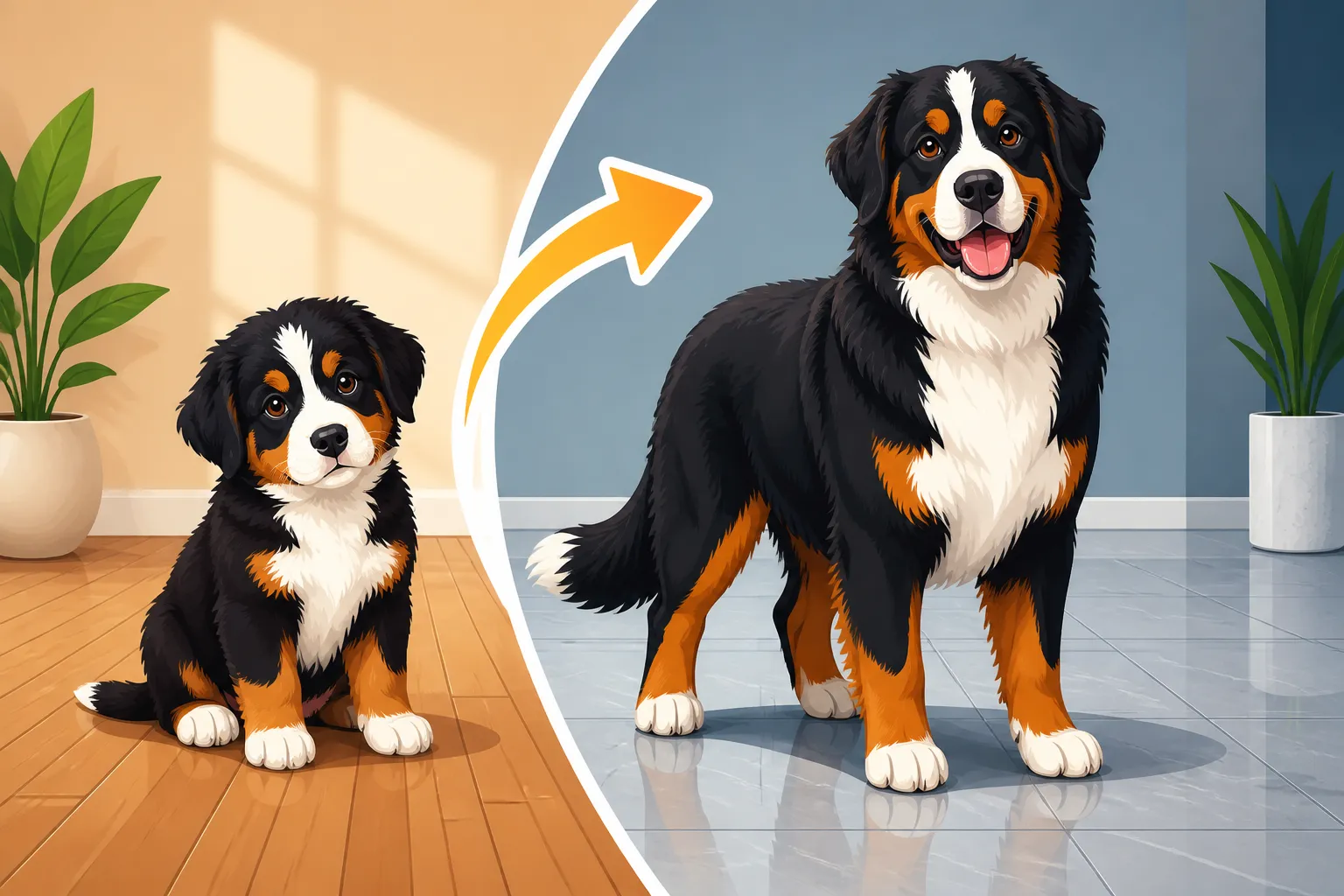
Hard Surfaces and a Growing Bernese Mountain Dog
Bringing a Bernese Mountain Dog puppy home is an absolute joy, a whirlwind of fluffy paws and boundless energy. But as these adorable giants grow at an astonishing rate, many new owners find themselves grappling with a subtle yet significant concern: the impact of hard surfaces on their rapidly developing bodies. It’s a common worry, watching your beloved Berner puppy slide across the kitchen tile or bounce awkwardly on concrete, and this guide is here to shed light on why these surfaces matter and how you can protect your growing companion.
The Delicate Dance of Puppyhood: Why Hard Surfaces are a Concern for Bernese Mountain Dogs
It’s easy to underestimate just how fragile a Bernese Mountain Dog puppy's skeletal system is, even though they look robust and grow so quickly. Unlike smaller breeds, their sheer size and accelerated growth put unique stresses on their bones, joints, and ligaments during these critical developmental months. Owners often feel a pang of anxiety when their clumsy puppy takes an awkward tumble, and it’s right to be concerned. This isn't just about avoiding a scraped knee; it's about setting the stage for long-term joint health in a breed prone to orthopedic challenges.
The Rapid Growth Factor in Berners
Bernese Mountain Dog puppies don't just grow; they explode in size. They can go from a tiny, cuddly ball of fluff to a substantial, hundred-pound dog in a surprisingly short amount of time. This rapid growth, while amazing to witness, means their bones, muscles, and connective tissues are constantly playing catch-up. Imagine a building being constructed at breakneck speed – every beam and support needs to be perfectly aligned and given time to settle before the next floor is added. For a Berner puppy, their skeletal system is undergoing a similar, high-speed construction project.
This accelerated development phase means their bones are growing in length much faster than the surrounding soft tissues can always adapt. Their muscles might not be strong enough yet to fully stabilize their rapidly elongating limbs, and their ligaments and tendons are still gaining tensile strength. When you combine this rapid, somewhat uncoordinated growth with the everyday movements on unforgiving surfaces, you create a recipe for potential strain. A simple slip on a polished floor, which a fully mature dog might shrug off, can put excessive torsional force on a puppy's still-forming joints, potentially leading to microtraumas that accumulate over time. What Fast Growth Costs a Bernese Mountain Dog's Joints is a topic many owners find themselves pondering as their puppy rockets upwards in size.
Understanding Their Developing Joints and Ligaments
The joints of a growing Bernese Mountain Dog puppy are not miniature versions of an adult dog’s. They contain growth plates (also known as epiphyseal plates), which are areas of cartilage near the ends of long bones where new bone tissue forms. These growth plates are softer and more vulnerable to injury than the surrounding bone until they completely close, usually around 12 to 18 months of age, sometimes later for giant breeds like Berners. Any significant impact, twisting, or repetitive stress on these plates can cause damage, potentially leading to abnormal bone growth, pain, and even long-term orthopedic problems such as hip and elbow dysplasia, which are sadly prevalent in the breed.
Ligaments and tendons, which connect bones to other bones and muscles to bones respectively, are also still developing their full strength and elasticity. They are more susceptible to strains and tears during this period of rapid growth and increased activity. Think of it like trying to run a marathon with unconditioned muscles and joints; your body simply isn't ready for the stress. When a young Bernese Mountain Dog puppy slides, jumps, or lands awkwardly on a hard surface, these soft tissues are put under immense strain. The forces transmitted through their still-soft bones and developing ligaments can be far more damaging than if the same event occurred in a fully mature, skeletally sound adult. This is why minimizing undue stress on their system, especially concerning hard surfaces, is so critical for their future comfort and mobility. Every Pound a Bernese Mountain Dog's Hips Carry truly highlights the burden on these crucial joints from a young age.
Identifying the Risky Zones: Common Hard Surfaces to Watch Out For
It’s not always obvious which surfaces pose the biggest threat. Sometimes, it’s the ones we live with every day, the very foundations of our homes. For a Bernese Mountain Dog puppy, anything that doesn't offer traction or cushioning can become a potential hazard. Understanding these risky zones, both indoors and out, is the first step in creating a safer environment for your beloved companion.
Indoor Culprits: Hardwood, Tile, and Laminate
Walk into many modern homes, and you'll find a beautiful expanse of hardwood, gleaming tile, or sleek laminate flooring. While aesthetically pleasing for us, these surfaces can be treacherous for a Bernese Mountain Dog puppy. Their smooth, non-porous nature offers very little grip for paws, especially for a large, rapidly growing puppy whose coordination might not yet be fully developed.
Imagine your Berner puppy, full of enthusiasm, charging across the living room to greet you. On carpet, they might slide a little, but the friction and cushioning quickly bring them to a halt. On hardwood or tile, that same burst of speed can turn into an uncontrolled slide, their legs splaying out to the sides in an attempt to regain balance. This splaying motion puts immense, unnatural strain on their hips and shoulders. Over time, repeated minor slips and falls on these surfaces can contribute to the development or worsening of joint conditions like hip and elbow dysplasia. It’s not necessarily one dramatic fall, but the cumulative effect of countless small, jarring movements that worries many Berner owners. Even getting up from a lying position on a slick floor can be a struggle, causing them to push and strain their joints unnecessarily.
Many owners have shared stories of their puppies developing a hesitant gait or becoming reluctant to cross certain areas of the house because they've learned these spots are slippery. It's a real frustration to see your puppy struggling on what should be a comfortable home environment. Runners and Rugs for a Bernese Mountain Dog That Slips is often the solution that first comes to mind for tackling these indoor hazards.
Outdoor Challenges: Concrete, Pavement, and Ice
While we often focus on indoor flooring, the great outdoors presents its own set of hard surface challenges. Concrete sidewalks, asphalt driveways, and paved paths are ubiquitous in most communities, and they offer no give whatsoever. For a Bernese Mountain Dog puppy with still-developing joints, these surfaces transmit every impact directly back up their legs and into their skeletal system.
Think about a vigorous game of fetch or a long walk on a hard concrete path. Every jump, every sudden stop, every change in direction, sends a jolt through their growth plates and nascent joints. Repetitive pounding on unforgiving surfaces can contribute to inflammation and micro-damage. This is particularly crucial during their puppy and adolescent phases when their bones are still soft and pliable. Owners naturally want to exercise their growing Berners, but the type and surface of that exercise need careful consideration.
Beyond the impact, there's also the issue of slipperiness, particularly with wet pavement or, even worse, ice. A Bernese Mountain Dog, with its dense coat and sheer mass, can be a force of nature, but even they struggle on slick surfaces. A bad slip on ice or wet concrete can result in significant ligament tears or fractures, injuries that are far more severe and painful than a mere bump or bruise. In colder climates, Road Salt Caught in a Bernese Mountain Dog's Feathering is another outdoor concern, but the danger of icy, hard surfaces often overshadows it due to the potential for serious orthopedic injury.
| Surface Type | Traction Level | Impact Absorption | Common Risks for Berners | Recommended Solution |
|---|---|---|---|---|
| Hardwood/Tile | Low | Low | Slips, splaying, joint strain | Rugs, runners, non-slip paw pads |
| Laminate | Low | Low | Similar to hardwood | Area rugs, traction socks |
| Concrete/Pavement | Moderate (dry) | Very Low | High impact, joint concussion | Grass, soft trails, controlled activity |
| Ice | Very Low | Low | Falls, fractures, sprains | Avoid entirely, use paw protection/booties |
| Carpet | High | High | Minimal | Ideal for play and rest |
| Dirt/Grass/Trails | High | Moderate-High | Minimal, natural cushioning | Ideal for exercise and exploration |
Practical Solutions for a Pawsitive Environment: Making Your Home Safer
It might feel overwhelming to think about all these potential risks, but the good news is that many practical, simple solutions exist to make your home and routine much safer for your growing Bernese Mountain Dog. We're not talking about bubble-wrapping your puppy, but rather making thoughtful adjustments that support their healthy development.
Softening Indoor Spaces: Rugs, Runners, and Mats
The most immediate and impactful change you can make indoors is to introduce soft, grippy surfaces. Think of rugs and runners as your Berner puppy's personal safety nets. Strategically place them in high-traffic areas, like hallways, in front of the couch, and especially where your puppy eats, drinks, and sleeps. Anywhere they might get a burst of energy or need to push off to stand up should be covered.
Choose rugs with non-slip backings to prevent them from sliding around themselves. Brands like Amazon and Chewy offer a vast selection of sizes, styles, and materials, making it easy to find something that fits your home's aesthetic and your budget. Area rugs can anchor larger spaces, while runners are perfect for long hallways. Don't forget bath mats in bathrooms or entryways if those areas have tile. Even temporary yoga mats or puzzle piece foam mats can be incredibly helpful in play areas, providing both grip and cushioning. The goal is to create a "safe path" or "traction zones" that your Berner can confidently navigate without fear of slipping. This simple act can significantly reduce the cumulative stress on their joints from daily indoor movement.
Beyond rugs, consider specific traction solutions. Some owners use dog socks or paw pads with rubber grips on them. These can be particularly useful for older Berners or those already showing signs of joint weakness, but they can also provide an extra layer of protection for active puppies on slippery floors. It's all about providing that crucial friction that their paws naturally lack on smooth surfaces.
Managing Outdoor Adventures: Controlled Play and Protective Gear
Outdoor time is essential for a Bernese Mountain Dog puppy's physical and mental development. They need fresh air, exercise, and exploration. The key is how and where they get it. Prioritize soft, natural surfaces for walks and play whenever possible. Lush grass fields, soft dirt trails, and sandy beaches are ideal. These surfaces absorb impact, provide excellent traction, and encourage more natural joint movement. When planning your walks, actively seek out parks or nature trails that offer these forgiving terrains.
Avoid long, strenuous walks or high-impact activities like repeated jumping or hard stops on concrete or asphalt, especially during their intense growth phases. Short, frequent sessions on varied terrain are much better for their developing bodies than one long, jarring outing on pavement. If you must walk on hard surfaces, keep the pace moderate and the duration shorter. Remember, a Bernese Mountain Dog puppy can tire out surprisingly quickly due to their rapid growth, and pushing them too hard on hard surfaces is counterproductive. The Five Minute Rule and a Bernese Mountain Dog Puppy is excellent guidance for managing puppy exercise.
For very young puppies or those with known orthopedic sensitivities, protective gear like dog boots can offer some cushioning and grip on harder surfaces, though it's still best to minimize exposure. In hot climates, these boots also offer crucial protection against Pavement Temperature and a Bernese Mountain Dog's Pads. The goal isn't to restrict their activity entirely, but to guide it towards environments that support rather than endanger their developing musculoskeletal system.
The Role of Proper Nutrition and Exercise
While surfaces are a critical factor, they're just one piece of the puzzle. Proper nutrition and controlled exercise are equally vital in supporting a Bernese Mountain Dog puppy's healthy joint development. It’s a delicate balance, and getting it wrong can exacerbate the risks posed by hard surfaces.
When it comes to nutrition, it’s not simply about feeding enough food, but feeding the right kind. Giant breed puppy formulas are specifically designed to support slow, steady growth rather than rapid, unchecked weight gain. They typically have carefully balanced calcium-to-phosphorus ratios and moderate protein levels. Excessive calories or imbalanced nutrients can lead to faster-than-ideal growth, putting even more stress on vulnerable growth plates. Consult with your veterinarian on the best food choices for your Berner puppy, and consider reputable brands that offer specific large-breed puppy formulas. Some premium dog food brands, like Ollie, focus on fresh, balanced meals that cater to specific needs, but always check their nutritional analysis against large breed puppy guidelines.
Exercise, as mentioned, needs to be controlled and appropriate for their age. While they might have bursts of energy, their stamina and joint resilience are not those of an adult dog. Over-exercising a Bernese Mountain Dog puppy can be just as detrimental as too little exercise, especially on hard surfaces. Structured play on soft ground, short walks, and mental stimulation are far superior to forced runs or long hikes. The aim is to build muscle strength and coordination gently, without overtaxing their still-forming joints. Remember, their minds might be eager for adventure, but their bodies are still under construction. How Little a Bernese Mountain Dog Puppy Should Do is a great resource for understanding appropriate activity levels.
Long-Term Well-being: Beyond Puppyhood on Hard Surfaces
The concerns about hard surfaces don't magically disappear once your Bernese Mountain Dog hits adulthood. While their growth plates will have closed and their bones will be fully formed, the foundation laid during puppyhood — and the continued stress they encounter — still plays a significant role in their long-term joint health. For a breed known for its propensity for orthopedic issues, vigilance and continued care are paramount throughout their lives.
Continued Vigilance for Adult Berners
Even after your Bernese Mountain Dog is fully grown, hard surfaces can still pose challenges, especially as they age. Repetitive impact from walking or playing on concrete can contribute to the wear and tear on joints, potentially accelerating the onset or worsening of arthritis. This is particularly relevant given that Arthritis in a Bernese Mountain Dog by Six is a common reality for many in the breed. An adult Berner, even a healthy one, can still slip on tile or hardwood, and while a fall might not damage growth plates, it could lead to sprains, strains, or exacerbate existing conditions.
Maintaining a comfortable home environment with adequate traction remains important. Those rugs and runners you put down for your puppy? Keep them. They will continue to provide comfort and safety for your adult Bernese Mountain Dog, reducing the effort needed to get up and navigate the house. For outdoor exercise, continue to prioritize soft surfaces where possible. If your Berner loves to hike, choose trails with natural ground rather than paved paths. The goal is to minimize unnecessary stress on their hardworking joints, helping to preserve their mobility and comfort for as long as possible. Remember, a Bernese Mountain Dog's lifespan is often shorter than we'd wish, as explored in Why a Bernese Mountain Dog Lives Only Seven or Eight Years, making every effort to maintain their quality of life crucial.
Recognizing Signs of Discomfort or Injury
No matter how many precautions you take, life happens. It's essential to be attuned to the subtle signs that your Bernese Mountain Dog might be experiencing discomfort or injury, whether from a fall on a hard surface or simply the cumulative effect of daily life. Berners are notoriously stoic and often hide pain, making early detection even more important. Whether a Bernese Mountain Dog Hides Discomfort is a valid concern for many owners.
Watch for changes in gait: a subtle limp, stiffness, or reluctance to use a particular leg. Are they moving slower than usual? Are they hesitant to jump into the car or climb stairs that they once navigated with ease? Pay attention to how they get up from a lying position – do they struggle or take longer? Licking or chewing at a particular joint can also be a sign of pain.
Any unexplained changes in appetite, energy levels, or behavior (such as irritability or withdrawal) can also be indicators of discomfort. If you notice any of these signs, don't delay in consulting your veterinarian. Early diagnosis and intervention can often make a significant difference in managing orthopedic conditions and maintaining your Bernese Mountain Dog's quality of life. Regular check-ups are always a good idea, and your vet can help you tailor an exercise and nutrition plan that supports their joints throughout their life. Screening an Older Bernese Mountain Dog can help proactively identify and manage potential issues.
Disclaimer
This article is for general informational purposes only and does not constitute professional advice. Laws, prices and regulations vary by location and change over time. Consult a qualified professional for guidance on your specific situation.