Loading a Reluctant Bernese Mountain Dog Into a Car
It’s a scenario many Bernese Mountain Dog owners know all too well: you need to get your big, beautiful Berner into the car, but they’ve decided it’s just not happening. Their massive size combined with a sudden case of “lead feet” can turn a simple errand into a test of strength and patience. This guide is here to walk you through compassionate and effective strategies to help your reluctant Bernese Mountain Dog conquer their car-loading anxieties, making travel less stressful for both of you.
Understanding Why Your Bernese Mountain Dog Resists the Car
Before you can tackle the "how-to," it's vital to understand the "why." Bernese Mountain Dogs are intelligent and sensitive creatures, and their reluctance isn't typically out of spite. There's usually a deeper reason, and identifying it is the first step toward a solution.
Past Negative Experiences or Fear
Think about your Berner's history with car rides. Has every trip ended at the vet for an unpleasant shot or a procedure? Have they experienced car sickness, making them associate the vehicle with nausea and discomfort? Perhaps there was a sudden stop, a loud noise, or even another dog’s anxious reaction in the car that spooked them. Bernese Mountain Dogs, despite their calm demeanor, can be quite sensitive, and a single negative experience can create a lasting impression. They aren't quick to forget, and once an association is formed, it takes consistent, positive effort to reframe it.
Imagine little Gus, a handsome Berner who, as a puppy, only ever went in the car for vet visits, which inevitably involved needles and poking. Now, at three years old, even the sight of the car door opening sends him retreating to the farthest corner of the yard. For Gus, the car isn't a gateway to adventure; it's a giant, rolling syringe. This deep-seated fear isn't something you can simply push past; it requires a slow, patient approach to rebuild trust.
Physical Discomfort or Pain
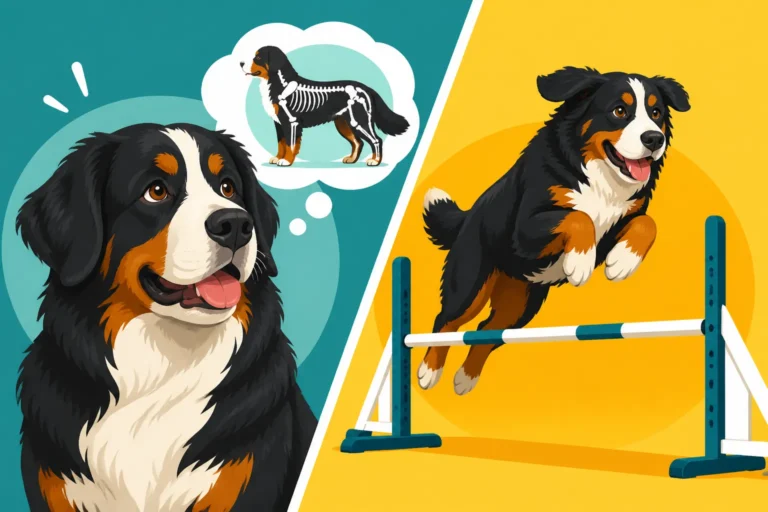
This is a critical factor, especially with a large breed like the Bernese Mountain Dog that is prone to certain orthopedic issues. If your Berner is experiencing pain when jumping, climbing, or even just shifting their weight, the car can become a source of agony rather than adventure. Common culprits include hip dysplasia, elbow dysplasia, or arthritis, which can make the act of stepping up or jumping into a vehicle incredibly painful. Joint Disease in a Hundred Pound Bernese Mountain Dog is a real concern for our beloved giants. They may not cry out, as many dogs, especially stoic breeds like the Berner, are masters at hiding discomfort. Whether a Bernese Mountain Dog Hides Discomfort is a question every owner should ponder.
If your Berner's reluctance to get into the car is a new behavior, or has gradually worsened over time, a trip to the vet is absolutely in order. Even subtle signs like a slight limp after a walk, less enthusiasm for stairs, or stiffness after resting could indicate underlying pain that makes car entry daunting. A thorough examination can rule out or address these physical issues, making the training process far more comfortable and fair for your dog. Remember, sometimes what looks like stubbornness is actually a plea for help.
Lack of Confidence or Training
Sometimes, the issue isn't outright fear or pain, but simply that your Berner hasn't been properly taught how to load into a car, or they lack the confidence to do so independently. Perhaps they were always lifted as a puppy, or they’ve just never been given clear, positive instructions. Bernese Mountain Dogs thrive on routine and clear communication, and if the process of getting into the car feels ambiguous or challenging, they might simply opt out. They might not understand the spatial requirements, the slippery surfaces, or the sudden elevation change.
A confident dog, even a large one, is usually a more compliant dog. If your Bernese Mountain Dog is generally a little unsure in new situations, or if they haven't had extensive positive reinforcement training, this could be a contributing factor. Building their overall confidence through consistent training in other areas can translate to better car manners. Just like us, dogs can feel overwhelmed by tasks they don't feel equipped to handle, and for a big Berner, squeezing into a car can feel like a monumental task.
The Sheer Logistics of a Large Dog
Let's be honest, getting a hundred-pound dog into a vehicle, especially one that sits high, is no small feat even when they're willing! The physical challenge for both you and your Bernese Mountain Dog cannot be underestimated. Their size means they require more space, a wider door opening, and often, a lower entry point. Small SUVs or cars with high ground clearance can present a legitimate obstacle.
Consider the interior of your vehicle as well. Is there enough room for them to turn around and settle comfortably? Are the surfaces inside slippery, making them feel insecure when trying to get in or out? The awkwardness of the maneuver, combined with potential insecurity about footing, can contribute to their resistance. The Car a Bernese Mountain Dog Owner Ends Up Buying often comes down to accommodating their size and making entry easier. What might seem like a simple hop for a smaller dog is a significant climb for a Bernese Mountain Dog, and they need to feel stable and supported throughout the process.
Building Positive Associations with the Car
Once you understand why your Berner might be reluctant, the next step is to systematically change their perception of the car from something scary or uncomfortable into something positive and rewarding. This isn't a quick fix, but a process of patient, consistent conditioning.
Starting Small: Car as a "Happy Place"
The key here is to remove the pressure and introduce the car in a completely neutral, or even positive, context. Start by simply going out to the car with your Bernese Mountain Dog, not with the intention of going anywhere, but just to hang out near it. Open the doors, toss a few high-value treats inside, and let them sniff around. Don’t try to get them in. The goal is for them to see the car as a place where good things happen, without any demands being placed on them.
You can feed them meals near the car, play a favorite game of tug near the open door, or simply sit with them next to the vehicle, offering praise and affection. The more relaxed, happy, and non-pressured experiences they have in the car's vicinity, the more those positive feelings will start to replace any negative associations. Think of it like a picnic near the car – no obligations, just good vibes. Many general online dog training resources, like BAXTER & Bella, emphasize starting small and building positive associations, which is perfectly applicable here.
Gradual Introductions and Rewards
Once your Bernese Mountain Dog is comfortable being around the car, you can begin the slow process of encouraging them to interact with it. Start by encouraging them to place just one paw on the threshold, rewarding immediately with an enthusiastic "yes!" and a tasty treat. Don't push for more than they're willing to offer. The next step might be two paws, then getting their front half in, and eventually, all four paws. This is where What a Bernese Mountain Dog Will Actually Work For comes into play; find those truly high-value rewards they adore, whether it's cheese, cooked chicken, or a favorite toy.
Each tiny step forward should be met with effusive praise and a reward. If they show any signs of stress – yawning, licking lips, looking away, or stiffening – back off and make the task easier. You're aiming for success at every stage. Keep these sessions short and sweet, no more than five minutes, ending on a positive note. Training Sessions Short Enough for a Bernese Mountain Dog are crucial to prevent them from becoming overwhelmed. You want them to leave each session feeling like a winner.
Desensitization to the Car's Movement
Getting into the car is one thing; staying calm while it's moving is another. Once your Berner is comfortable getting in and out, begin desensitizing them to the car's engine and movement. Start with the car off, offering treats while they are inside. Then, turn the engine on for a few seconds, offering more treats, and then turn it off. Gradually increase the duration of the engine being on.
Next, you can try short, very gentle drives. Pull out of the driveway, drive a few feet, and then park, rewarding them lavishly. Slowly increase the distance and duration, always ensuring the destination is somewhere positive – a park, a friend's house, or just a short loop around the block. Avoid making the car a precursor only to dreaded vet visits; mix in fun outings. This helps them understand that car rides aren't always a negative experience. It's about slowly increasing their tolerance to the stimuli associated with car travel, so they can relax and enjoy the ride.
Practical Strategies for Getting Your Berner Into the Vehicle
Even with positive associations, the sheer size of a Bernese Mountain Dog means you often need some practical aids and techniques to make car loading a smooth process.
The Role of Ramps and Steps
For a large breed like the Bernese Mountain Dog, especially one prone to joint issues, a ramp or sturdy set of dog steps can be a game-changer. These tools eliminate the need for jumping or awkwardly climbing, reducing strain on their joints and minimizing the risk of injury. A good ramp provides a gentle incline, making the entry and exit process much more comfortable and less intimidating.
When choosing a ramp, look for one that is long enough to provide a gradual slope, wide enough for your Berner to feel secure, and has a non-slip surface. Many pet supply retailers, including online giant Amazon, offer a wide selection of durable dog ramps specifically designed for large breeds. Make sure the ramp can support your Bernese Mountain Dog's full weight, and practice using it at home first, away from the car, so they can get comfortable walking on it. Introduce the ramp with plenty of treats and praise, guiding them gently up and down until they see it as a normal extension of their path.
| Feature | Dog Ramp | Dog Steps |
|---|---|---|
| Best For | Large/heavy dogs, seniors, dogs with joint issues | Smaller to medium dogs, short legs, confident climbers |
| Slope/Height | Gradual incline, less strenuous | Multiple steps, can be steeper ascent |
| Space in Car | Can be long and requires significant storage | More compact, easier to store |
| Stability | Generally very stable if designed for large breeds | Can be less stable if not securely placed or weighted |
| Joint Impact | Minimal impact, smooth walking surface | More impact due to repetitive stepping action |
| Learning Curve | Requires training, but often preferred by larger dogs once mastered | Can be challenging for some dogs to navigate heights and spacing |
Luring Techniques and High-Value Treats
Once you're ready to guide your Bernese Mountain Dog into the car (or onto the ramp), luring with high-value treats is an incredibly effective method. Hold a treat directly in front of their nose, moving it slowly and steadily toward the target location – whether it's onto the ramp, into the car door, or into their designated spot inside. The idea is to use the treat to guide their body movement, step by step.
Use a clear, encouraging verbal cue like "car" or "load up" as you lure. The moment they take a step in the right direction, reward instantly. If they hesitate, don't pull or push. Instead, make the lure more enticing or the step smaller. Sometimes, breaking the action down into even tinier components – just putting a paw on the ramp, then another, then stepping onto the first part of the ramp – makes it less overwhelming. Consistency is key here; always use the same verbal cue and reward system, so your Berner understands exactly what you're asking of them. This is an extension of What a Bernese Mountain Dog Will Actually Work For.
Harnessing Gentle Guidance and Support
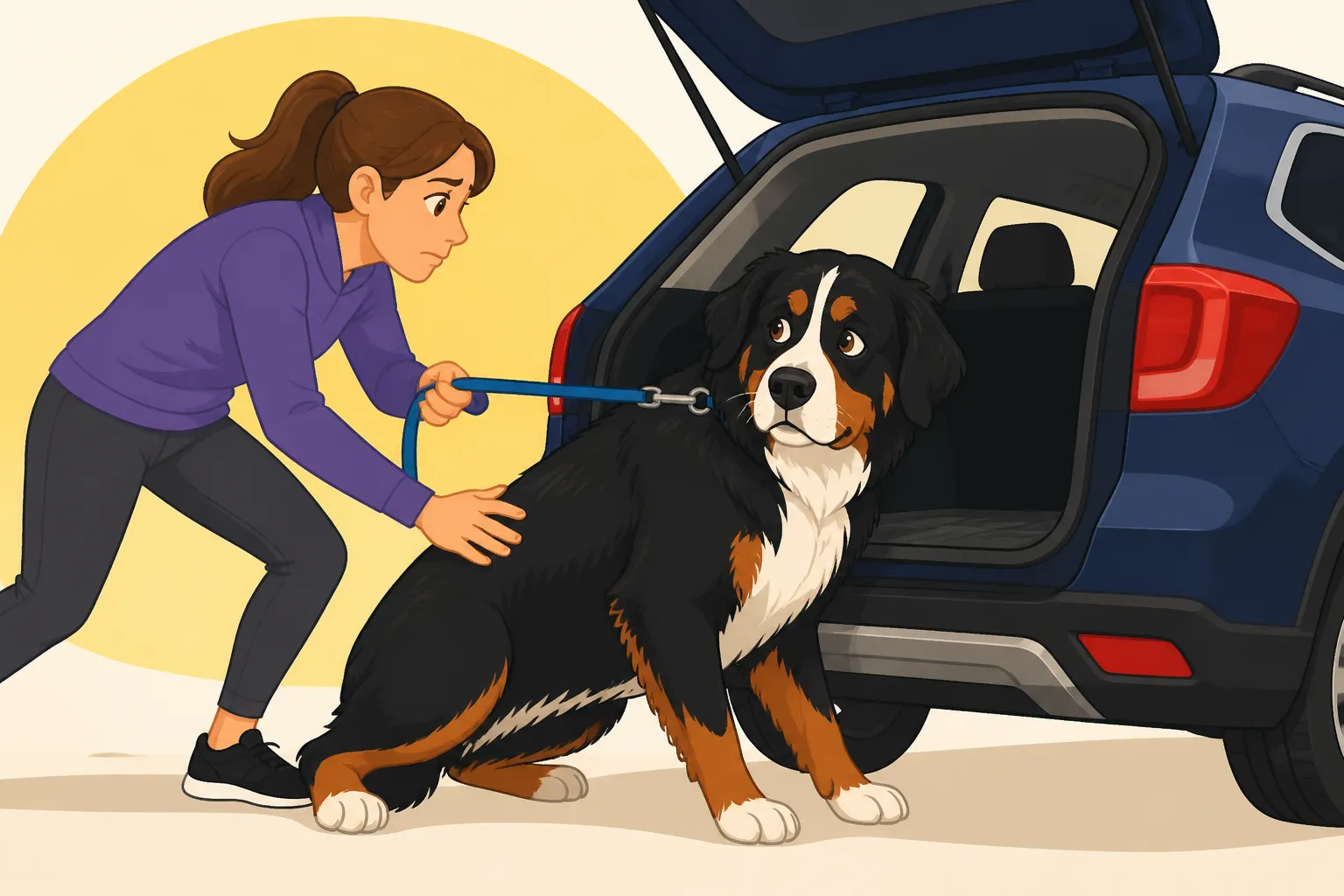
For those moments when your Bernese Mountain Dog still needs a little extra encouragement, gentle physical guidance can be helpful, but it must be done with extreme care to avoid fear or injury. Using a well-fitting, sturdy harness can provide a point of contact that allows you to provide support without causing discomfort or stress to their neck. Never pull on their collar. With a harness, you can gently guide them forward or offer a slight lift to their hindquarters as they step in.
If you must physically help, one person can gently support their chest while another lifts from their hindquarters, ensuring they feel secure and balanced. However, this should only be a temporary measure, not a long-term solution, as repeatedly lifting a hundred-pound dog is strenuous and not ideal for their joints or yours. The ultimate goal is for them to enter the vehicle confidently on their own. If your Berner is particularly strong or resistant, consider a training lead on their harness to gently guide them forward while luring with treats.
Essential Gear and Safety Considerations
Getting your Bernese Mountain Dog into the car is only half the battle; ensuring they are safe and comfortable during the ride is equally important.
Securing Your Bernese Mountain Dog
An unsecured Bernese Mountain Dog in a moving vehicle is a significant safety hazard for both the dog and human passengers. In the event of a sudden stop or accident, they can become a projectile, causing serious injury. There are several effective ways to secure your Berner:
- Crash-Tested Crates: A large, crash-tested dog crate provides the highest level of safety. Ensure it's large enough for your Bernese Mountain Dog to stand, turn around, and lie down comfortably. This also provides a familiar, safe den for them, which can reduce anxiety. Look for reputable brands that have undergone independent crash testing.
- Safety Harnesses and Seat Belts: These devices attach to your car's seat belt system, restraining your dog in the back seat. Again, look for crash-tested options that are designed for large breeds. A well-fitting harness will distribute any force across their chest, rather than their neck.
- Carriers or Cargo Barriers: For Bernese Mountain Dogs traveling in the cargo area of an SUV or wagon, a sturdy cargo barrier can prevent them from entering the passenger compartment, ensuring driver focus and preventing injuries in a collision.
Always choose the option that is most appropriate for your vehicle and your dog's temperament, prioritizing their safety above all else. Proper securing also prevents them from distracting the driver or attempting to jump out of an open window.
Preparing the Car for Comfort and Safety
Making the car itself a comfortable and inviting space can significantly reduce your Bernese Mountain Dog's reluctance.
- Non-Slip Surfaces: Place a non-slip mat, a large dog bed, or even a yoga mat on the car seat or cargo area floor where your Berner will sit or lie. This gives them better traction and makes them feel more secure, especially during turns or stops. Orthopedic beds sized for a Bernese Mountain Dog are excellent for their joints, even in the car.
- Temperature Control: Bernese Mountain Dogs have thick coats and can overheat quickly, especially in warmer weather or in a parked car. Ensure the vehicle is well-ventilated and cool. Use air conditioning, cracked windows (but not enough for them to jump out), and avoid leaving them unattended for even a short time in a hot car. Heat and the Bernese Mountain Dog's Black Coat is a serious consideration.
- Familiar Items: Bring a favorite blanket, toy, or even a piece of your clothing to provide familiar scents and comfort. This can help them relax and feel more at home in the car.
When to Seek Professional Help
If, despite consistent effort and positive reinforcement, your Bernese Mountain Dog's reluctance persists or intensifies, it might be time to call in the cavalry.
- Veterinarian Consultation: As discussed, pain or underlying medical conditions are often culprits. A vet can conduct a thorough physical exam, perhaps X-rays, to rule out any health issues making car travel painful. The Bernese Mountain Dog Health Panel is a good way to stay on top of potential issues. They can also discuss anti-anxiety medications or supplements if fear is extreme. Don't forget, in an emergency like bloat, being able to get your dog into the car quickly can literally save their life. The Half-Hour That Decides a Bloated Bernese Mountain Dog emphasizes the urgency.
- Certified Professional Dog Trainer or Behaviorist: For deeply ingrained fears or complex behavioral issues, a professional dog trainer or a certified veterinary behaviorist can provide tailored strategies and hands-on guidance. They can observe your Berner's specific reactions, identify triggers you might have missed, and develop a customized training plan. They can also help teach you advanced luring or handling techniques if needed. Sometimes an outside perspective is exactly what's required to break through a stubborn habit.
Remember, patience, understanding, and consistency are your greatest tools. Your Bernese Mountain Dog relies on you to be their advocate and guide, and with the right approach, even the most reluctant traveler can learn to love the ride.
Disclaimer
This article is for general informational purposes only and does not constitute professional advice. Laws, prices and regulations vary by location and change over time. Consult a qualified professional for guidance on your specific situation.