Bedding for an Arthritic Bernese Mountain Dog
When your beloved Bernese Mountain Dog starts to show the tell-tale signs of arthritis – maybe a little stiffness after a nap, hesitation climbing stairs, or a slower gait on walks – every decision you make about their comfort becomes critical. One area that often gets overlooked, but is absolutely paramount, is their bedding. A truly comfortable, supportive bed can make a world of difference for a big dog carrying joint pain, easing their aches, promoting better sleep, and making it easier for them to get up and down. This guide will walk you through everything you need to know about choosing, maintaining, and understanding the best bedding for an arthritic Bernese Mountain Dog, ensuring your gentle giant gets the restorative rest they deserve.
The Unique Challenges of an Arthritic Bernese Mountain Dog
Living with a Bernese Mountain Dog, especially one who is starting to feel the effects of age or underlying joint conditions, means understanding their specific needs. These magnificent dogs are prone to orthopedic issues, and their substantial size amplifies the impact of any joint discomfort.
Understanding Joint Pain in a Giant Breed
Bernese Mountain Dogs, with their impressive size and weight, are unfortunately predisposed to certain joint conditions that can lead to arthritis. Hip and elbow dysplasia are common culprits, where the joints don't form correctly, causing friction and inflammation over time. As they age, or sometimes even in their middle years, this can progress into osteoarthritis – a painful, degenerative condition where the protective cartilage within the joint wears down. Imagine carrying 80, 90, or even 100 pounds on aching joints; every movement can become a source of discomfort.
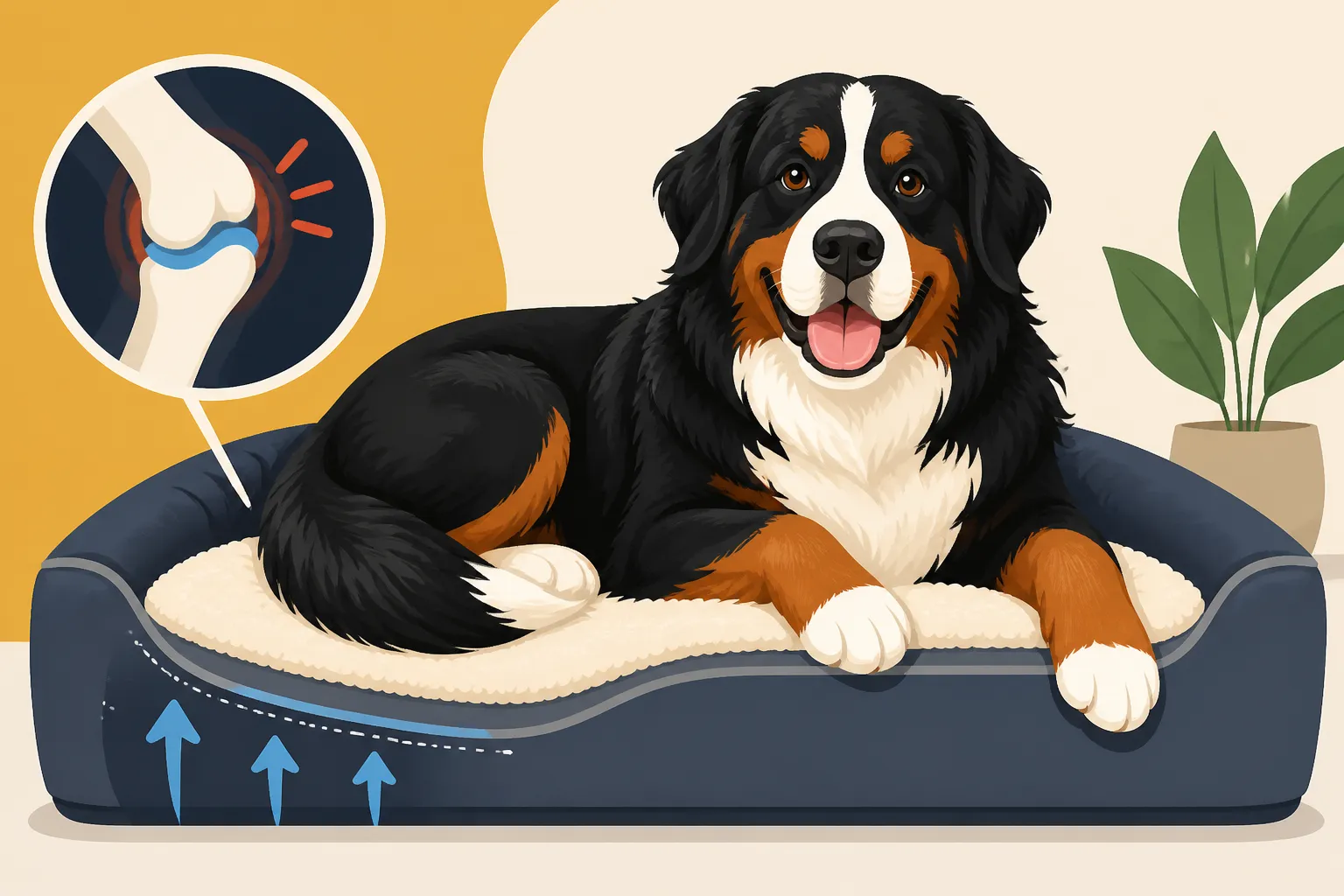
When your Berner lies down, their weight is distributed over their body, but certain pressure points – hips, elbows, shoulders – bear the brunt. If they're resting on a hard floor or an unsupportive bed, these pressure points receive no relief, potentially exacerbating inflammation and pain. A poor sleeping surface can lead to restless nights, difficulty settling, and even more stiffness upon waking. It's not just about comfort; it's about minimizing further wear and tear and allowing their bodies to truly rest and recover. When you see your Berner struggling to get up, it's a clear sign that their current sleeping arrangements might not be helping them. This is especially true as they get older; you might find yourself Caring for a Bernese Mountain Dog After Six and noticing these changes more acutely.
Why Regular Beds Just Don't Cut It
Many well-meaning owners provide their Berners with a soft, plush bed bought from a regular pet store. While these might look inviting, they often offer little to no real orthopedic support, especially for a dog of significant size and weight. A typical poly-fill or basic foam bed quickly compresses under a hundred-pound Bernese Mountain Dog, offering a soft initial landing but almost immediately flattening out to the floor beneath. This means their joints are still resting on a hard surface, despite the superficial cushioning.
Think about it from your perspective: would you want to sleep on a flimsy air mattress every night if you had back pain? Probably not. For a Bernese Mountain Dog with arthritis, a standard dog bed is akin to that. It creates painful pressure points on their hips, elbows, and shoulders. When they try to stand up, they have to struggle against the sinking softness, requiring more effort and putting additional strain on already compromised joints. This can lead to increased pain, reluctance to lie down, and a cycle of discomfort. We all want our Berners to be comfortable, but sometimes the "softest" option isn't actually the most supportive or beneficial.
Essential Features of the Best Bedding for Your Arthritic Berner
Choosing the right bed for an arthritic Bernese Mountain Dog isn't just about picking one that looks nice; it's about investing in their quality of life. There are specific features that transform a regular dog bed into a therapeutic haven.
Orthopedic Support and Material Choices
The absolute cornerstone of bedding for an arthritic Berner is true orthopedic support. This isn't just a buzzword; it refers to materials and construction designed to evenly distribute weight, alleviate pressure points, and support the spine and joints.
- Memory Foam: This is often the gold standard for orthopedic pet beds, and for good reason. High-quality memory foam conforms to your dog's body, cradling their joints and evenly distributing their weight. This minimizes pressure on sensitive areas like hips and elbows. Not all memory foam is created equal, however. You'll want to look for dense, high-grade memory foam that won't flatten out quickly. Some beds feature a multi-layered design, with a firmer base foam for support and a softer memory foam layer on top for comfort. This combination offers both stability and contouring. Brands available through retailers like Chewy often specify the density and layering of their orthopedic beds, which can be helpful.
- Other Foams: While memory foam is superior for contouring, some quality orthopedic beds use dense, supportive polyfoam or a combination of various foams. The key is density and firmness – it needs to be firm enough to prevent your Berner from sinking through to the floor, yet soft enough to provide cushioning. Avoid beds that feel squishy or rebound too quickly, as these often lack the sustained support needed.
When evaluating materials, consider the thickness of the orthopedic layer. For a Bernese Mountain Dog, a bed with at least 4-6 inches of solid, supportive foam is generally recommended. Anything less might not provide enough buffer against the floor, especially over time. You might want to explore reviews where owners of other large breeds, like Great Danes or Saint Bernards, share their experiences, as the weight distribution challenges are similar.
Size, Durability, and Accessibility
Beyond the internal support, the external design and construction of the bed are crucial for a giant breed managing arthritis.
- Size Matters: This sounds obvious, but you need a bed that is genuinely large enough for your Bernese Mountain Dog to stretch out completely in any position without hanging off the edges. This means lying on their side, curled up, or even fully extended on their back. Measure your dog from nose to tail while they're sleeping in their most elongated position, and then add a few inches for good measure. A bed that's too small forces them into awkward positions, which can exacerbate joint pain. Remember, a Berner isn't just long; they're wide!
- Durability is Non-Negotiable: A Bernese Mountain Dog is a large, heavy dog, and they can be tough on beds. The outer cover needs to be durable, rip-resistant, and able to withstand regular washing. Look for materials like heavy-duty canvas, microsuede, or tough denim. Some brands use covers designed to resist chewing, which can be a bonus if your Berner still has some puppy tendencies. Investing in a high-quality, durable bed from a reputable brand on Amazon or elsewhere will save you money in the long run compared to constantly replacing flimsy alternatives. You're looking for something that will last, much like selecting a Flea and Tick Cover for a Hundred Pound Bernese Mountain Dog needs to be robust.
- Accessibility for Aching Joints: This is paramount for an arthritic dog. The bed should be easy for them to get into and out of without having to jump or step over high bolsters. A low-profile design is often best. If the bed has bolsters (which many Berners love for head support!), ensure they are soft and easily compressible so your dog doesn't have to navigate a rigid barrier. Some beds feature a dip or cutout on one side to make entry even easier. Think about your Berner's current mobility; if The Bernese Mountain Dog Whose Back Legs Give Out is a concern, a bed that requires minimal lifting or stepping is essential.
Types of Orthopedic Beds and Their Benefits
With the essential features in mind, let's look at the different styles of orthopedic beds available and how they might best suit your arthritic Bernese Mountain Dog. Each type has its own set of advantages that can cater to different preferences and needs.
Memory Foam Mattresses
These beds are truly the unsung heroes for dogs with joint pain. Imagine sinking into a cloud that molds perfectly to your body, offering support everywhere you need it. That's essentially what a good memory foam mattress does for your Bernese Mountain Dog.
The primary benefit of memory foam is its ability to contour precisely to your dog's shape. This means that instead of pressure points being created at the hips, shoulders, and elbows, the weight is evenly distributed across the entire surface. This even distribution helps to reduce inflammation and pain in those sensitive areas, allowing muscles to relax and joints to rest without constant strain. For a hundred-pound Berner, this kind of holistic support is invaluable.
When looking at memory foam beds, consider:
- Density: Higher density foam generally means better support and durability. It will retain its shape longer and resist flattening.
- Thickness: For a giant breed, a bed that is at least 4-6 inches thick, or even more, is ideal to ensure ample cushioning between your dog and the floor.
- Layers: Many top-tier orthopedic beds combine a dense, supportive base foam with a softer layer of memory foam on top. This offers the best of both worlds: robust foundational support and conforming comfort.
One potential consideration for Bernese Mountain Dogs with their thick coats is heat retention. Memory foam can sometimes trap body heat. If your Berner tends to overheat, especially if you live in a warmer climate or their indoor environment isn't consistently cool, look for memory foam beds that incorporate cooling gels or have a breathable cover. However, for many Berners, the plush warmth can be quite comforting, especially in colder months. You might already be thinking about Keeping a Room Cool Enough for a Bernese Mountain Dog in summer, so this is just another aspect to consider.
Bolster Beds with Orthopedic Bases
Bolster beds combine the best of both worlds: the superior support of an orthopedic base with the added comfort and security of raised edges or "bolsters." Many dogs, including Bernese Mountain Dogs, love to rest their heads on a pillow or lean against something while they sleep. Bolsters provide this natural resting spot, supporting their neck and head and creating a sense of being nestled and secure.
For an arthritic Bernese Mountain Dog, the bolster needs to be considered carefully. While the primary sleeping surface absolutely must be orthopedic (memory foam or high-density supportive foam), the bolsters themselves should be soft enough to allow easy entry and exit without your dog having to step over a rigid barrier. Some designs have lower bolsters on one side or are open on one end for easier access.
Benefits of bolster beds:
- Head and Neck Support: The bolsters act like pillows, providing crucial support for your Berner's head and neck, which can be especially beneficial if they have any neck stiffness or prefer to sleep with their head elevated.
- Security and Den-like Feel: Many dogs feel more secure and content when they have a defined space with boundaries. The bolsters provide this, mimicking the feeling of a den.
- Versatility in Resting Positions: Your Berner can lean against the bolster, stretch out against it, or use it to prop themselves up.
When choosing a bolster bed, ensure the internal fill of the bolsters themselves is robust enough not to flatten completely, but still soft. And again, the base is the most important part for joint support. A brand focused on overall pet wellness like Ollie, while primarily known for food, often emphasizes products that contribute to a pet's holistic well-being, including comfortable resting options.
Raised/Elevated Beds (with a caveat for arthritis)
Raised or elevated beds typically feature a sturdy frame (metal or PVC) with a taut fabric or mesh sleeping surface stretched across it. These beds are often lauded for their excellent airflow, keeping dogs cool and off hot or damp surfaces. For a Bernese Mountain Dog in warmer climates, these can be a godsend for preventing overheating. You might even consider these beds if you live in a region where Heat Stroke in a Bernese Mountain Dog is a real concern.
However, for an arthritic Bernese Mountain Dog, raised beds come with a significant caveat: accessibility. While getting off a soft, sinking bed is hard, getting onto and off a raised surface can be equally challenging and potentially painful if your dog has limited mobility or struggles with lifting their legs.
If you are considering a raised bed for its cooling benefits, here's how to make it more arthritis-friendly:
- Low Height: Opt for the lowest possible raised bed design to minimize the step-up.
- Add an Orthopedic Topper: The taut fabric surface of a standard raised bed, while supportive in its firmness, doesn't offer the pressure relief that memory foam does. Purchase a custom-cut piece of memory foam or a high-quality orthopedic pad to place on top of the raised bed. This provides the crucial cushioning while still allowing airflow underneath.
- Placement: Ensure it's in a spot where your Berner can easily approach it from all sides.
Raised beds without significant additional padding are generally not recommended as the primary bed for an arthritic Bernese Mountain Dog due to the lack of contouring pressure relief. They work best as an auxiliary cooling bed or when paired with a substantial orthopedic topper.
| Bed Type | Key Benefits for Arthritic Berner | Considerations for Bernese Mountain Dog | Ease of Access for Arthritis | Cleaning & Durability |
|---|---|---|---|---|
| Memory Foam Mattress | Superior pressure relief, joint contouring, muscle relaxation | Can retain heat (look for cooling gels/breathable covers), ensure sufficient thickness (4-6+ inches) | Generally good, low profile | Removable, washable covers crucial. Durability varies by foam density. |
| Bolster Bed (Ortho Base) | Head/neck support, feeling of security, pressure relief from ortho base | Ensure bolsters are soft for easy entry/exit, base must be high-quality orthopedic | Good, if bolsters are soft/low on one side | Removable, washable covers essential. Bolsters can be trickier to wash. |
| Raised/Elevated Bed | Excellent airflow, off hot/damp floors, prevents calluses | Requires added orthopedic topper for pressure relief. Can be hard to step onto/off. | Can be challenging, choose low height. | Easy to wipe down, covers are often durable mesh. |
Maintaining Your Bernese Mountain Dog's Bed for Optimal Comfort and Hygiene
Once you’ve invested in the perfect orthopedic bed for your arthritic Bernese Mountain Dog, the work isn't quite over. Proper maintenance is key to ensuring its longevity, hygiene, and continued effectiveness in supporting your dog's health and comfort. A well-maintained bed contributes significantly to their overall well-being, especially as you consider Screening an Older Bernese Mountain Dog for various health issues.
Cleaning and Longevity
Let's be realistic: a Bernese Mountain Dog is a large creature, and they shed, drool, track in dirt, and sometimes have accidents. This means their bed is going to get dirty. Regularly cleaning the bed isn't just about aesthetics; it's vital for hygiene and can even help with canine allergies, both for your dog and for anyone in the household who might be sensitive to pet dander.
- Washable Covers are a Must: This is non-negotiable. Look for beds with easily removable, machine-washable covers. Heavy-duty zippers are a plus. You should aim to wash the cover weekly or bi-weekly, or more often if your Berner is particularly messy or has an accident. Follow the care instructions diligently to prevent shrinking or damage to the fabric. You'll likely be dealing with a lot of hair, so a good lint roller before washing can help keep your machine clear.
- Protect the Core: Many orthopedic beds come with a waterproof or water-resistant liner around the foam core. This is incredibly important, especially for older dogs who might be prone to incontinence. This liner protects the foam from moisture, odors, and bacteria, extending the life of the expensive orthopedic material. If your chosen bed doesn't have one, consider purchasing a separate waterproof cover designed for human mattresses and adapting it for the dog bed.
- Spot Cleaning: For minor spills or muddy paw prints, spot clean immediately with a pet-safe cleaner. This prevents stains and odors from setting in.
- Air Out the Foam: Periodically, remove the cover and let the foam core air out, perhaps outside on a dry, sunny day (but not in direct, scorching sun which could degrade the foam over many hours). This helps dissipate odors and ensures freshness.
- Rotate and Flip: If the bed is designed to be reversible or has a uniform surface, rotating or flipping it every few months can help distribute wear and tear, maintaining the foam's integrity.
An orthopedic bed is an investment, and proper cleaning and protection will ensure it continues to provide optimal support for years, delaying the need for costly replacements.
Placement and Environment
Where you place your Bernese Mountain Dog's bed is almost as important as the bed itself, especially for an arthritic dog. The goal is to create a comfortable, safe, and accessible resting spot.
- Avoid Drafts: Dogs with arthritis can be more sensitive to cold and dampness, which can exacerbate joint pain. Place their bed away from drafty windows, doors, or vents. A quiet, warm corner of a main living area often works best.
- Accessible Location: Your Berner should be able to get to and from their bed easily. Avoid placing it in a high-traffic area where they might be tripped over, or in a secluded spot that requires navigating stairs or slippery floors. They might need a special Harnesses That Lift a Bernese Mountain Dog to help them move around the house, but the bed should ideally be in a spot they can reach independently.
- Consider Temperature: Bernese Mountain Dogs have thick double coats, so overheating can be a concern. In warmer months, place the bed in the coolest part of the house, away from direct sunlight. In winter, a spot near a gentle heat source (but not too close to cause burns or discomfort) can be comforting. Some owners even use cooling mats on top of their orthopedic beds in summer or heated pads (designed for pets) in winter, if approved by their vet. The Temperature a Bernese Mountain Dog Stops Coping is important to remember.
- Multiple Beds: If your home has multiple levels or large living spaces, consider having more than one orthopedic bed. This allows your Berner to rest comfortably in different areas without having to navigate stairs or move a heavy bed around. This is a small luxury that can make a huge difference in their daily comfort.
- Firm Flooring: While the bed provides the primary support, ensure the area around the bed isn't excessively slippery. Hardwood floors can be tricky for dogs with compromised mobility. Placing a non-slip rug or runner beside the bed can provide better traction for when your Berner is getting up or lying down. This is particularly relevant when you're thinking about Runners and Rugs for a Bernese Mountain Dog That Slips.
By giving careful thought to both the physical bed and its environment, you're creating a sanctuary where your arthritic Bernese Mountain Dog can truly relax, recover, and enjoy their senior years with less discomfort.
Disclaimer
This article is for general informational purposes only and does not constitute professional advice. Laws, prices and regulations vary by location and change over time. Consult a qualified professional for guidance on your specific situation.