Chews That Suit a Bernese Mountain Dog’s Jaw
One of the biggest joys, and sometimes challenges, of sharing your life with a magnificent Bernese Mountain Dog is navigating their love for chewing. It's not just a puppy thing; adult Berners have incredibly powerful jaws and a natural instinct to chew that needs to be properly channeled. If you don't offer appropriate outlets, you might find your furniture, shoes, or even doorframes becoming the target of their enthusiastic gnawing. This guide is all about helping you understand your Berner's chewing habits and, more importantly, finding safe, satisfying, and suitable chews that can stand up to their impressive bite, keeping both your dog happy and your home intact.
Understanding Your Bernese Mountain Dog's Chewing Needs
It's easy to dismiss chewing as just a destructive habit, but for dogs, it's a fundamental part of their natural behavior. For a Bernese Mountain Dog, with their sturdy build and strong jaws, chewing serves multiple vital purposes. Understanding these can help you choose the right tools to satisfy their needs safely.
The Power of Their Jaws
Let's be honest, a Bernese Mountain Dog's jaw is not for the faint of heart. These are big, powerful dogs, bred for work that often involved pulling carts and interacting with livestock. Their bite strength reflects that heritage. Many a Berner owner has lamented the short lifespan of a "durable" toy that lasted all of five minutes against their beloved giant. It's a common frustration, isn't it? You spend good money on something advertised as indestructible, only to find a pile of shredded rubber or plastic an hour later. This isn't your Berner being "bad"; it's simply a testament to their incredible strength and their innate drive to chew.
This powerful jaw means that choosing chews isn't just about entertainment; it's about safety. Flimsy toys or chews not designed for strong chewers can quickly break apart, leading to choking hazards or pieces being ingested that could cause internal damage. We're talking about a hundred-pound dog here; what might be a minor inconvenience for a smaller breed could be a serious emergency for a Berner. So, when we talk about suitability, the first and foremost consideration is whether a chew can genuinely stand up to that magnificent Berner jaw without disintegrating too quickly into dangerous fragments.
Chewing for Dental Health
Beyond sheer entertainment and managing that powerful jaw, chewing is an incredibly important aspect of maintaining your Bernese Mountain Dog's oral hygiene. Just like us, dogs can accumulate plaque and tartar on their teeth, which can lead to gum disease, bad breath, and even more serious systemic health issues if left unchecked. Brushing a large dog's teeth can be a monumental task, and while it's certainly recommended, quality dental chews can play a significant supplementary role.
The abrasive action of chewing on an appropriately textured chew helps to scrape away plaque from the surface of the teeth, especially the molars. Think of it as a natural toothbrush for your dog. Of course, not all chews are created equal in this regard. Some are specifically designed with ridges, nubs, or unique textures to maximize this cleaning effect, while others are more about durability and satisfaction. Incorporating chews with proven dental benefits into your Berner's routine can make a real difference in keeping their pearly whites healthy and their breath a little fresher. Regular veterinary check-ups, including dental exams, are still crucial, but the right chew can certainly help you bridge the gap between professional cleanings. You might also want to read more about Gum Disease in an Older Bernese Mountain Dog.
Mental Stimulation and Boredom Busting
Imagine being a big, intelligent dog with boundless energy and a desire to engage with the world, stuck inside with nothing to do. That's a recipe for trouble, isn't it? Chewing is a fantastic natural outlet for mental stimulation and boredom relief for Bernese Mountain Dogs. When they're focused on a challenging chew, their brains are engaged, and they're expending mental energy. This can be particularly important for puppies and young adults, who are still learning to navigate their world and manage their energy.
Without appropriate outlets for this natural instinct, your Berner might turn to less desirable chewing targets – think chair legs, remote controls, or those expensive designer shoes. Providing a variety of engaging chews can actually save your household items and reduce anxiety-related destructive behaviors. It's about giving them a job, even if that job is simply "chew this toy for an hour." This can be especially helpful when you need them to settle down, perhaps after a stimulating walk or when you have guests over. It's a healthy coping mechanism that redirects their energy into something productive and satisfying for them.
Types of Chews: What Works and What Doesn't
Navigating the overwhelming aisle of dog chews can feel like a labyrinth. There are so many options, and what works for a Chihuahua definitely won't cut it for a Bernese Mountain Dog. We need to focus on chews that can withstand their power and offer real benefits without posing unnecessary risks.
Durable Rubber and Nylon Chews
When you have a Bernese Mountain Dog, "durable" becomes your favorite word when shopping for chews. Tough rubber and nylon chews are often the first line of defense against those powerful jaws. Brands like KONG are practically household names for a reason; their classic rubber toys, especially the extreme black line, are designed to take a beating. These aren't just for chewing; they can be stuffed with treats, peanut butter, or even their kibble (you can find plenty of options on Chewy or Amazon), turning them into a longer-lasting, mentally stimulating challenge.
Nylon chews, often associated with brands like Nylabone, are another popular choice. These come in various shapes, sizes, and textures, many specifically designed for "power chewers." The idea behind nylon chews is that they are too hard to be easily consumed but provide a satisfying surface for grinding and gnawing. As your Berner chews, small, rice-sized pieces might come off. The key here is that these pieces are generally designed to pass through the digestive system without issue, unlike larger, sharper fragments from less suitable materials. However, always supervise, as some Berners can be aggressive enough to break off larger chunks of even these tough toys. The lifespan of a nylon chew can vary wildly depending on your individual dog's chewing style.
The benefits of these types of chews are clear: they're typically long-lasting, provide excellent mental engagement, and many offer some level of dental abrasion. The downsides can include their upfront cost (though they often pay for themselves in durability) and the fact that some dogs might lose interest if there's no inherent taste or novelty. Introducing new shapes or textures, or stuffing rubber chews with different fillings, can help keep things exciting for your discerning Berner.
Edible Dental Chews and Treat Dispensers
For immediate gratification and focused dental benefits, edible dental chews are a staple for many Bernese Mountain Dog owners. These aren't meant to last for hours like a rubber chew, but they serve a crucial role in daily dental care and can be a fantastic, high-value reward. Products like Greenies or Whimzees are formulated to be digestible and often contain ingredients aimed at reducing plaque and freshening breath. They come in various sizes, so always make sure you're buying the "large" or "giant" size appropriate for your Berner's substantial mouth to prevent choking.
Treat-dispensing toys, which can be made of durable rubber or plastic, also fall into this category, though the "chew" part is often the treat itself. These toys force your Berner to work for their reward, providing mental engagement and slowing down their eating. For a dog that tends to inhale their food, a slow feeder or a treat-dispensing toy can be a lifesaver. You can find a vast selection on Chewy or Amazon, from simple puzzle balls to more complex designs. You can even use your Berner's regular kibble with some of these, which helps control their calorie intake while still providing enrichment. Just remember, edible chews contribute to your dog's daily caloric intake, so adjust their meal portions accordingly to avoid unintended weight gain. Taking Ten Pounds Off a Bernese Mountain Dog is no easy feat!
Natural Chews: Antlers, Hooves, and Bully Sticks
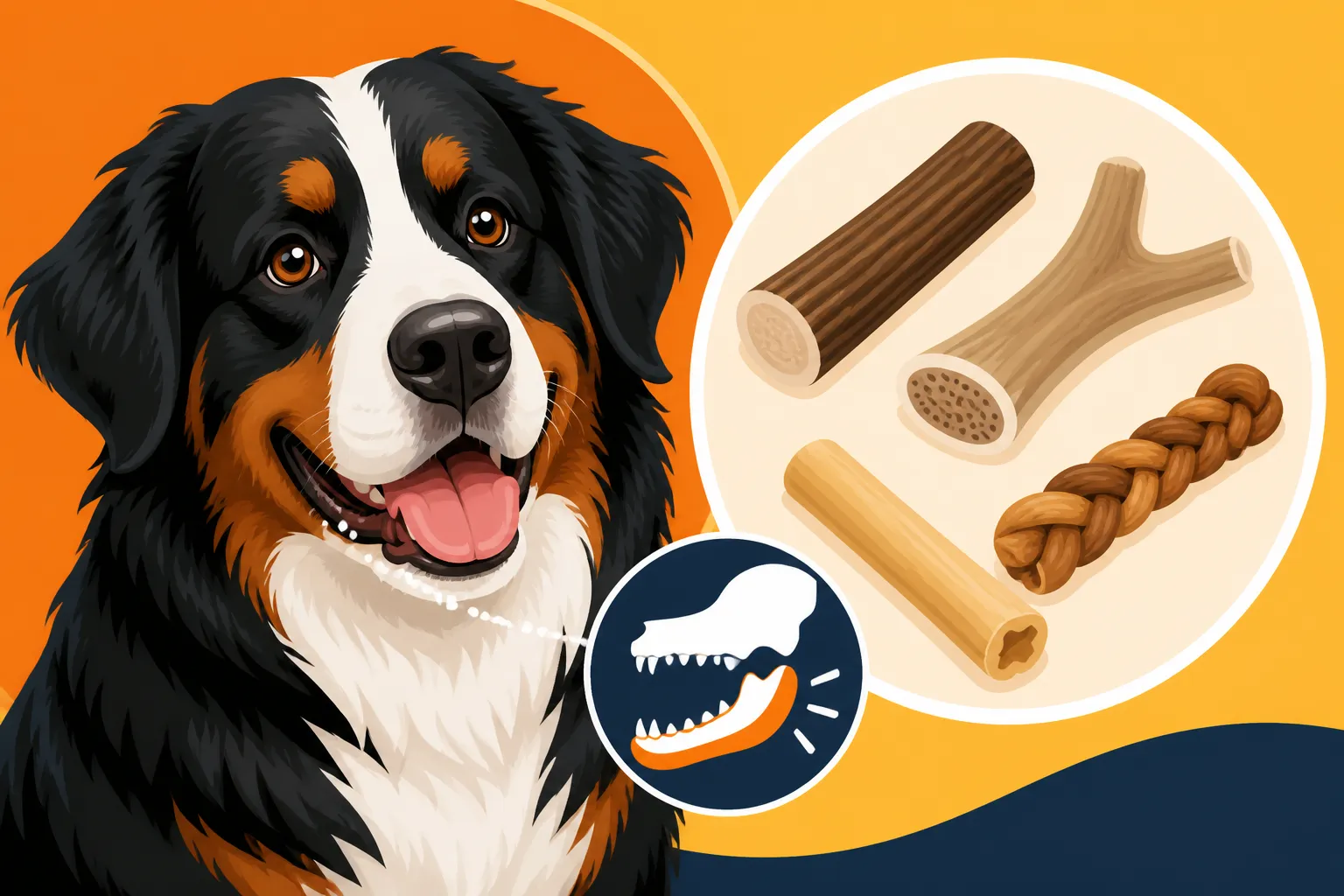
"Natural" chews cover a broad spectrum, and it's here that careful selection and supervision become paramount for a Bernese Mountain Dog. Antlers, particularly elk or deer antlers, have gained popularity for their impressive durability and natural appeal. They are shed naturally by animals, so they are a renewable resource. Antlers are very hard and can last for weeks or even months for some power chewers, offering excellent dental benefits by scraping away tartar. However, their extreme hardness also presents a risk: they can be too hard for some dogs, potentially leading to broken teeth. Always choose "split" antlers for less aggressive chewers or those with weaker teeth, as they expose the marrow, making them more appealing and slightly softer to start.
Hooves, on the other hand, are often seen as a short-term, high-value chew. They smell appealing to dogs and are relatively hard, but they tend to break down more quickly than antlers. The main concern with hooves is splintering. As they get chewed, pieces can break off, which could be sharp or lead to choking. They also tend to be quite messy and smelly, so they might be best enjoyed outdoors.
Bully sticks (or pizzle sticks) are another natural option, highly palatable and generally digestible. They are excellent for satisfying a Berner's chewing urge and are usually safer than rawhide. However, for a powerful chewer like a Bernese Mountain Dog, a standard bully stick might only last a matter of minutes. Larger, thicker, braided bully sticks are available and can extend the chewing time considerably. Regardless of size, always supervise your Berner with bully sticks, especially as they get shorter, to prevent them from trying to swallow a piece too large. These are often readily available from pet supply retailers, and you can even explore options for subscription boxes that deliver natural chews from places like Ollie, ensuring a steady supply of quality products.
Raw Bones: A Word of Caution
Ah, raw bones. This is a topic that often sparks debate among dog owners and veterinarians. On one hand, raw, recreational bones (like beef femurs or knuckle bones) are incredibly satisfying for a Bernese Mountain Dog. They provide exceptional dental cleaning and a deeply primal chewing experience. The act of tearing and grinding away at a bone can keep a Berner occupied and content for a significant amount of time.
However, the risks associated with raw bones are substantial and cannot be ignored, especially with a strong-jawed dog like a Berner.
- Splintering: While raw bones are less likely to splinter than cooked bones, they still can, especially if your dog chews aggressively. Sharp fragments can cause internal injuries or obstructions.
- Broken Teeth: The extreme hardness of some raw bones can lead to slab fractures or other painful tooth damage. Repairing a broken tooth on a Bernese Mountain Dog can involve significant vet bills and procedures like Dental Cleaning Under Anesthetic for a Bernese Mountain Dog.
- Bacterial Contamination: Raw bones can harbor bacteria like Salmonella, posing risks to both your dog and your household.
- Choking Hazard: As bones are chewed down, they can become small enough to be swallowed whole, leading to choking or blockages.
- Excessive Wear: Over-chewing on very hard bones can lead to premature wearing down of teeth.
For these reasons, many veterinarians advise against feeding raw bones. If you do choose to offer them, absolute constant supervision is non-negotiable. Never give cooked bones, which are brittle and guaranteed to splinter. Discuss it with your vet first, choose appropriately sized bones that are too large to swallow, and discard them once they're chewed down to a dangerous size. This isn't a decision to take lightly, and it's essential to weigh the benefits against the very real risks for your specific Bernese Mountain Dog.
Factors to Consider When Choosing Chews for Your Berner
Choosing the perfect chew for your Bernese Mountain Dog isn't a one-size-fits-all endeavor. It requires thoughtful consideration of several key factors to ensure safety, satisfaction, and long-term health.
Size, Durability, and Safety First
This cannot be stressed enough: for a Bernese Mountain Dog, size matters immensely. Any chew you offer must be too large for them to swallow whole. A rule of thumb is that if the chew can fit entirely inside their mouth, it's too small and poses a choking hazard. This is particularly true as the chew gets worn down. What started as a perfectly safe size might become a hazard after a few intense chewing sessions.
Durability is another non-negotiable. You're looking for chews that are specifically marketed for "power chewers" or "giant breeds." Don't be fooled by pretty packaging; look for materials known for their strength, like dense rubber, quality nylon, or certain types of natural bone products (with the caveats mentioned above). Always inspect chews regularly for signs of excessive wear, cracks, or pieces breaking off. If a chew starts to show significant damage or splinter, it's time to replace it. A good-quality chew might cost more upfront, but it's an investment in your Berner's safety and your peace of mind. Remember, the goal is to provide a satisfying chewing experience, not to have them ingest the chew in one sitting.
Age and Chewing Style
A Bernese Mountain Dog puppy has different chewing needs and capabilities than an adult or senior Berner. Puppies are driven by teething and exploration. They need softer, yet still durable, chews that won't damage their developing teeth but can withstand their sharp puppy teeth. Rubber teething rings or softer nylon chews designed for puppies are ideal. As they mature, their jaws strengthen, and they'll graduate to the heavy-duty power chews we've discussed. You might find that A Bernese Mountain Dog Puppy Biting in Play needs redirection to appropriate chews.
Then there's the individual chewing style. Some Berners are "gulpers" who try to swallow things quickly, requiring extra-large or virtually indestructible options. Others are more methodical "grinders" who might do well with hard nylon or antlers. Some might be "nibblers" who prefer softer, more pliable chews. Pay close attention to how your Bernese Mountain Dog interacts with different chews. Are they gentle? Do they try to break it apart immediately? Do they lose interest quickly? Understanding their personal chewing personality will help you tailor your choices. As your Berner ages, their teeth might become more sensitive or worn, making extremely hard chews inappropriate. You may need to transition to softer dental chews or puzzle toys with soft treats. This is part of Caring for a Bernese Mountain Dog After Six.
Rotational Chewing and Enrichment
Just like we enjoy variety in our meals, Bernese Mountain Dogs appreciate a rotation of chews. Offering the same single chew day in and day out can lead to boredom and disinterest. A rotational strategy involves having several suitable chews on hand and cycling through them. This keeps things fresh, maintains your Berner's interest, and provides different textures and challenges.
For example, you might offer a stuffed KONG in the morning, a sturdy nylon bone in the afternoon, and a dental chew before bed. This isn't just about entertainment; it's about holistic enrichment. Different types of chews engage different parts of their jaw and mind. Some require problem-solving (like a treat puzzle), while others are purely for satisfying that deep-seated urge to gnaw. This variety can prevent your Berner from becoming fixated on one chew to the point of potentially damaging their teeth or becoming overly possessive. It also ensures that if one chew is getting worn down, you have others ready to go, allowing you to properly inspect and replace items as needed without leaving your Berner without an outlet.
Common Mistakes to Avoid
Even with the best intentions, it's easy to make a few missteps when it comes to providing chews for your Bernese Mountain Dog. Being aware of these common pitfalls can help you maintain a safe and happy chewing environment for your beloved companion.
Ignoring Chew Wear and Tear
This is perhaps one of the most common and dangerous mistakes. You bought a fantastic, durable chew, and your Bernese Mountain Dog absolutely loves it. It's been with them for weeks, maybe even months. But are you really inspecting it regularly? Chews, no matter how tough, don't last forever, especially not with a Berner's powerful jaws.
A chew that has become significantly smaller than its original size, or one that has large cracks, splinters, or rough edges, is no longer safe. That once-safe chew can quickly become a choking hazard if it's small enough to be swallowed. Sharp edges can cut your dog's mouth or gums. It's a sad moment when you have to retire a beloved chew, but it's essential for your dog's safety. Make it a habit to check all chews weekly, or even daily if your Berner is a particularly aggressive chewer. If you're ever in doubt about its integrity, it's always better to replace it with a new one. Think of it as preventative maintenance for your Berner's well-being.
Overlooking Your Berner's Individual Preferences
While we can talk all day about what types of chews should work for a Bernese Mountain Dog, the truth is, every dog is an individual with their own unique tastes and preferences. What one Berner might absolutely adore, another might ignore after five minutes. You might buy an expensive, top-rated chew from Chewy, only for your Berner to sniff it once and walk away, preferring a simple rope toy (which, by the way, are often not recommended due to unraveling and ingestion risks!).
Don't get discouraged if a particular type of chew doesn't hit the mark. It's often a process of trial and error to discover what truly engages your Bernese Mountain Dog. Some might love the challenge of a puzzle toy filled with treats, others might prefer the firm resistance of a durable nylon bone, and still others might go wild for the taste of an edible dental chew. Experiment with different materials, textures, and dispensing methods. Observe which chews they return to consistently and which ones gather dust. Investing in a variety of smaller, less expensive chews to "test the waters" before committing to larger, pricier options can be a smart strategy to figure out your Berner's specific chewing personality.
Leaving Them Unsupervised with Risky Chews
Even the safest-sounding chew can become a risk without proper supervision, especially for a large, determined chewer like a Bernese Mountain Dog. This is particularly true for natural chews like antlers, hooves, or bully sticks, and absolutely critical for any type of raw bone. While many rubber or nylon chews are designed to be relatively safe for solo chewing, it's always best practice to keep an eye on your Berner, especially when introducing a new chew or if they are particularly enthusiastic.
Supervision allows you to intervene if a chew begins to splinter, if your dog is struggling to break off a piece, or if they attempt to swallow something too large. It means being present and attentive, not just in the same room scrolling on your phone. Think of it as co-chewing time, even if you're just quietly reading nearby. The goal is to catch any potential problems before they become emergencies. If you can't actively supervise, it's better to offer a completely safe, known-quantity chew (like a well-loved, intact KONG) or simply save the more challenging or potentially risky chews for times when you can be fully present. Your Bernese Mountain Dog relies on you to make these safety calls, so make them wisely.
Here’s a quick overview of common chew types and their key characteristics:
| Chew Type | Durability (Berner Jaw) | Dental Benefits | Supervision Needed | Typical Material/Example |
|---|---|---|---|---|
| Durable Rubber | High | Moderate | Low to Moderate | KONG Extreme, GoughNuts |
| Hard Nylon | High | Moderate to High | Moderate | Nylabone Dura Chew, Benebone |
| Edible Dental Chew | Low to Moderate | High | Low | Greenies, Whimzees |
| Treat Dispenser | Moderate to High | Low | Low | KONG Classic (stuffed), Busy Buddy |
| Antlers | High | High | Moderate to High | Deer or Elk Antlers (split or whole) |
| Bully Sticks | Low to Moderate | Low | Moderate to High | Large/Braided Bully Sticks |
| Hooves | Low | Low | High | Beef Hooves |
| Raw Bones | High | High | High (Vet consult!) | Beef Femur, Knuckle Bones (raw only) |
Conclusion
Finding the right chews for your Bernese Mountain Dog's powerful jaw is truly an art, and a critical part of being a responsible Berner parent. It's about more than just keeping them entertained; it’s about safeguarding their dental health, providing essential mental stimulation, and preventing destructive behaviors around your home. Remember to prioritize safety above all else: choose chews that are appropriately sized and durable enough for a giant breed, always inspect them regularly for wear and tear, and supervise your Berner, especially with new or potentially risky options. By understanding their natural chewing instincts and making informed choices, you can provide your Bernese Mountain Dog with a satisfying and safe outlet for their impressive chewing power, ensuring a happier and healthier life for your cherished companion.
Disclaimer
This article is for general informational purposes only and does not constitute professional advice. Laws, prices and regulations vary by location and change over time. Consult a qualified professional for guidance on your specific situation.