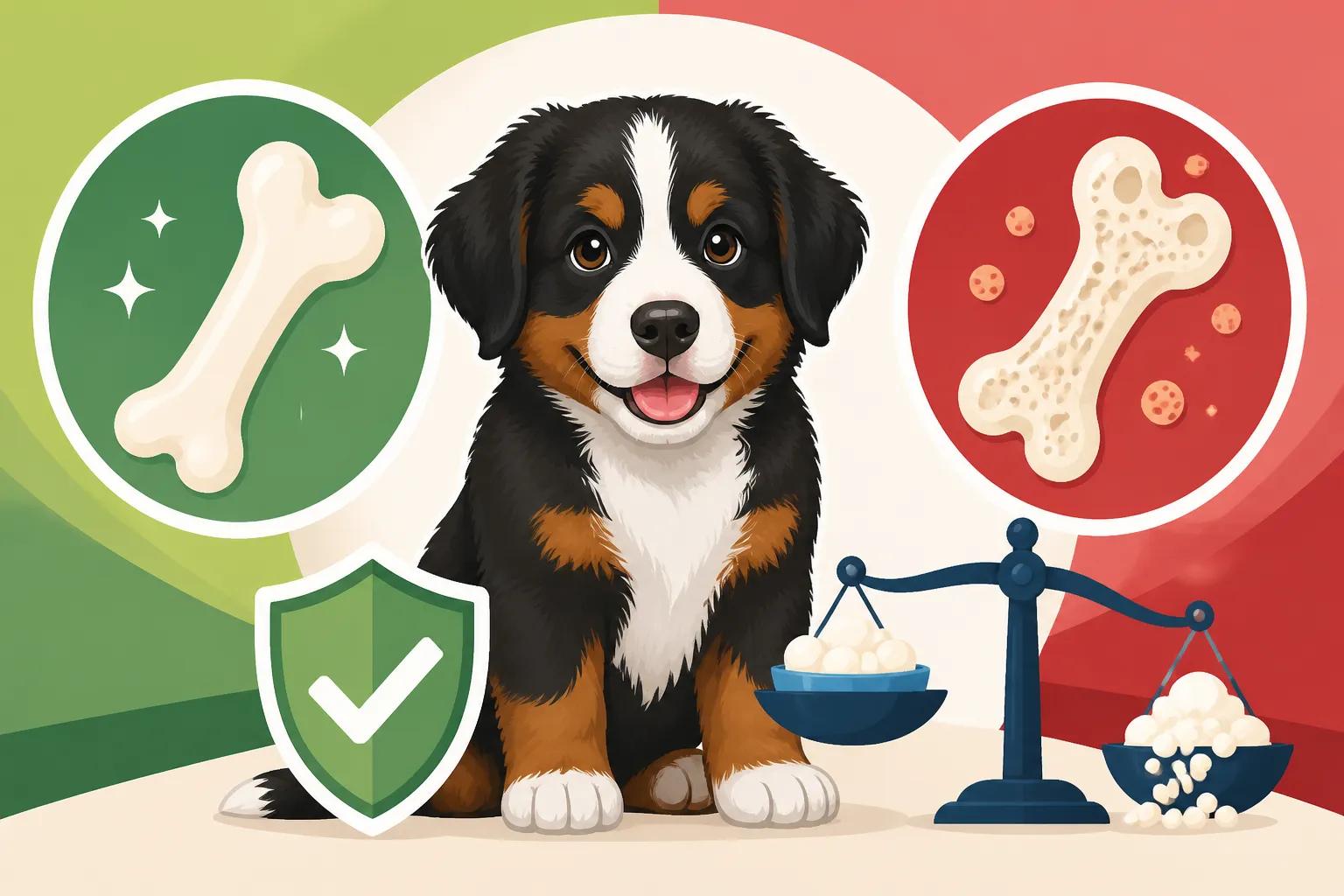
Why a Bernese Mountain Dog Puppy Needs Controlled Calcium
Bringing home a Bernese Mountain Dog puppy is an absolute joy, a whirlwind of fluffy paws and sweet, clumsy enthusiasm. But beneath that adorable exterior lies a complex metabolic system, especially when it comes to their rapid growth. One of the biggest worries for new Bernese owners, and rightly so, is ensuring their puppy grows up strong and healthy, avoiding the skeletal problems so common in giant breeds. This guide will walk you through the critical importance of controlled calcium intake for your Bernese puppy, explaining why too much of a good thing can lead to heartbreaking health issues down the line.
The Unique Growth Trajectory of a Bernese Mountain Dog Puppy
Bernese Mountain Dogs don't just grow; they explode in size. They go from being palm-sized puppies to towering gentle giants in a remarkably short amount of time. This incredibly fast growth rate is both a wonder to behold and a major responsibility for us as their caregivers. It's during this intense developmental period that their bones, joints, and cartilage are forming at an astonishing pace, making them particularly vulnerable to dietary imbalances.
From Tiny Fluffball to Giant in a Flash
Imagine a tiny Bernese puppy, barely fitting in your lap, quickly blossoming into a dog that weighs well over 80 pounds in less than a year. This isn't just a physical change; it's an intricate biological process where every cell is working overtime to build the framework of a massive animal. Unlike smaller breeds, which grow at a more moderate pace over a longer period, Berners compress a huge amount of growth into their first 12-18 months. This rapid expansion demands a precise nutritional approach, especially concerning minerals that are fundamental to bone structure. If you’re ever wondering What a Bernese Mountain Dog Weighs at Each Month, you'll see just how dramatic this scale is.
It’s easy to get caught up in wanting to "bulk up" your puppy or ensure they're getting "enough" of everything. I remember with my first Berner, Charlie, I was so worried he wasn't big enough that I considered adding all sorts of things to his food. Thankfully, my vet steered me straight. It’s a common, well-intentioned mistake to think that more food, or more of specific nutrients, will lead to a bigger, stronger dog. In reality, with giant breeds like the Bernese, the opposite can often be true, particularly when it comes to bone growth. We're aiming for controlled growth, not accelerated growth, to give their skeletal system the best chance to develop correctly and robustly.
The Delicate Balance of Rapid Bone Development
During this period of rapid growth, a Bernese puppy's bones are not simply getting longer; they're undergoing complex processes of mineralization, remodeling, and cartilage formation. Growth plates, the areas of cartilage at the end of long bones, are rapidly producing new bone tissue. The body needs a steady, appropriate supply of building blocks, not an overabundance. Think of it like building a house: you need quality materials and a careful architect, not just a huge pile of bricks dumped on the site. Too many bricks, or the wrong kind, can actually destabilize the structure.
This delicate balance is absolutely crucial for preventing developmental orthopedic diseases. When we talk about What Fast Growth Costs a Bernese Mountain Dog's Joints, we’re often talking about the long-term impact of imbalances during this formative period. The goal isn't just to make the puppy big, but to make sure those substantial bones and joints mature properly and are capable of supporting a hundred-pound adult dog for a lifetime of adventures. It’s a tightrope walk, and nutrition is the primary tool we have to keep them balanced.
Why Too Much Calcium Can Be a Big Problem
It seems counterintuitive, doesn't it? Calcium is essential for strong bones, so surely more calcium means stronger bones? Unfortunately, when it comes to rapidly growing giant breed puppies, this logic can lead to serious health issues. Their bodies are so finely tuned during this developmental sprint that even a slight excess can throw things off.
The Misconception of "More is Better" for Bones
This "more is better" mindset is a trap many well-meaning Bernese owners fall into. We hear calcium is good for bones, so we assume adding a calcium supplement, or choosing a food with excessively high calcium levels, will benefit our big puppy. However, a Bernese puppy's metabolism is designed to regulate calcium absorption, but only within certain parameters. When calcium intake is too high, these regulatory mechanisms can be overwhelmed, leading to the body absorbing more calcium than it needs or can properly utilize for controlled bone growth.
This isn't just about calcium alone; it's about the ratio with other minerals, especially phosphorus. Many standard adult dog foods, or even some puppy foods not specifically designed for large breeds, might have calcium levels that are simply too high for a fast-growing Bernese puppy. Adding supplements like bone meal, crushed eggshells, or even dairy products in large quantities can push a puppy's calcium intake into dangerous territory, despite your best intentions. It’s important to remember that these dogs are already predisposed to joint issues, and dietary mistakes early on can exacerbate those risks significantly. Whether a Heavy Bernese Mountain Dog Puppy Damages Itself often traces back to these early nutritional choices.
Understanding Calcium and Phosphorus Ratios
The relationship between calcium and phosphorus is critical for bone health, and it's expressed as a ratio. For a large breed puppy, the ideal calcium-to-phosphorus ratio generally falls between 1.1:1 and 1.5:1, with the calcium content itself staying within a specific, carefully controlled range (often around 1.0-1.5% on a dry matter basis, but this varies slightly by food and expert recommendation – always check with your vet or a reputable large breed specific diet). If calcium is too high relative to phosphorus, or vice-versa, it can interfere with proper bone mineralization.
Imagine a construction site where you have too much cement and not enough sand. The mixture won't set correctly, and the structure will be weak. Similarly, if a puppy's diet has an unbalanced calcium-to-phosphorus ratio, or simply too much absolute calcium, the body struggles to lay down bone tissue in an organized and healthy way. This isn't just a slight deviation; chronic imbalance can lead to malformed bones, soft spots, or areas of thickened, abnormal cartilage that predispose the puppy to severe orthopedic problems as they mature. This is why scrutinizing food labels is so important.
How Excess Calcium Disrupts Bone Formation
When a Bernese puppy consumes too much calcium, their body's intricate hormonal system, particularly the parathyroid hormone and calcitonin, can get thrown out of whack. Normally, these hormones work together to maintain stable calcium levels in the blood, drawing calcium from bone when needed and depositing it when there's an excess. However, in a rapidly growing puppy with chronic calcium overload, the regulatory signals can become blunted or overstimulated.
This disruption can lead to a condition where cartilage (the precursor to bone at growth plates) doesn't mature and convert to bone properly. Instead of smooth, strong bone, you can get areas of retained cartilage, lesions, or abnormally dense bone that isn't as resilient as it should be. This isn't just a theory; it's a well-documented physiological response in large and giant breed puppies fed inappropriate diets. The results can be crippling, leading to pain, lameness, and a significantly reduced quality of life, even requiring surgery down the line.
The Health Risks Associated with Uncontrolled Calcium Intake
The consequences of improper calcium intake during a Bernese puppy's critical growth phase are not trivial. They can lead to a range of developmental orthopedic diseases (DODs) that are painful, expensive to treat, and often shorten a dog's active life. These are not just "bad luck" conditions; they often have a strong nutritional component, making informed feeding choices paramount.
Osteochondritis Dissecans (OCD)
Osteochondritis Dissecans, or OCD, is a prime example of a condition exacerbated by excessive calcium and rapid growth. This is a painful joint disorder where the cartilage in a joint fails to develop properly, or separates from the underlying bone. Common sites include the shoulders, elbows, hocks, and knees. Imagine a smooth, rubbery surface in a joint suddenly having a rough patch or even a loose flap – it causes pain, inflammation, and lameness.
For a Bernese puppy, the combination of genetics, rapid weight gain, and an unbalanced diet (particularly with too much calcium) can set the stage for OCD. The abnormally rapid cartilage growth and subsequent failure of mineralization mean the cartilage is weaker and more prone to damage under the stress of a growing, active puppy. A puppy with OCD might show a subtle limp initially, which can worsen with activity. Early diagnosis and often surgical intervention are necessary, which means significant vet bills and a lengthy recovery period. Addressing Joint Disease in a Hundred Pound Bernese Mountain Dog starts with preventing these developmental issues in puppyhood.
Hypertrophic Osteodystrophy (HOD)
Hypertrophic Osteodystrophy, or HOD, is another serious developmental bone disease that can strike fast-growing large breed puppies, and dietary excesses, especially calcium, are often implicated. HOD causes inflammation and abnormal bone development in the growth plates of long bones, most commonly in the legs. It's often characterized by sudden onset lameness, fever, swollen and painful joints (especially around the wrist and ankle), and lethargy.
This condition is incredibly distressing to witness. A previously playful puppy might suddenly be reluctant to move, cry out in pain when touched, and even lose their appetite. While the exact cause is complex and can involve genetic predispositions, immune responses, and infections, nutritional factors, especially overfeeding and high calcium intake, are recognized as significant contributing factors. Management typically involves pain control, anti-inflammatory medications, and strict dietary management, but severe cases can be debilitating and, sadly, sometimes lead to euthanasia if the pain cannot be managed.
Other Joint and Skeletal Abnormalities
Beyond OCD and HOD, uncontrolled calcium intake can contribute to a broader spectrum of developmental orthopedic problems. This includes conditions like ununited anconeal process (UAP) or fragmented coronoid process (FCP), which fall under the umbrella of elbow dysplasia, a common concern in Bernese Mountain Dogs. These conditions involve irregularities in the growth and formation of the elbow joint, leading to chronic pain and arthritis.
The overall goal for a Bernese puppy is to foster strong, dense, well-formed bones and joints that can handle the immense weight and power of an adult Berner. Excess calcium works against this by interfering with the precise, sequential steps of bone development. It's not just about one specific disease; it's about setting the stage for a lifetime of healthy mobility or, conversely, a battle with chronic joint issues. When you consider The Bernese Mountain Dog Whose Back Legs Give Out later in life, sometimes the roots of those problems were laid during this critical puppy stage.
Choosing the Right Diet for Controlled Calcium Intake
So, how do you navigate the complex world of dog food to ensure your Bernese puppy is getting exactly what they need, without overdoing it on calcium? It primarily comes down to selecting the right formula and resisting the urge to supplement without professional guidance.
Decoding "Large Breed Puppy" Formulas
The term "large breed puppy formula" isn't just a marketing gimmick; it's a specific dietary classification designed to address the unique needs of dogs like the Bernese Mountain Dog. These foods are formulated with controlled levels of calcium and phosphorus, as well as a balanced energy density, to promote slow, steady growth. This slower growth rate allows bones and joints to mature more synchronously, reducing the risk of developmental orthopedic diseases.
When you're looking at food options, whether online at a retailer like Chewy or at your local pet store, always prioritize brands that explicitly state their food is for "large breed puppies" or "giant breed puppies." Avoid generic "all breed puppy" foods, as these often have higher calcium and calorie levels suitable for smaller, faster-maturing breeds, but detrimental to a Berner. High-quality large breed puppy foods will have been extensively researched and tested to meet these specific nutritional profiles. Don't just grab the biggest bag; read the details! If you're wondering Whether a Bernese Mountain Dog Puppy Needs Puppy Food, the answer is yes, but specifically a large breed puppy food.
Reading Nutrition Labels for Calcium Content
This is where you become a detective. Turn that bag of food over and look for the "Guaranteed Analysis" panel. You'll want to find the percentages for Calcium (Ca) and Phosphorus (P). As a general guideline for large breed puppy foods, look for a calcium level between 1.0% and 1.5% on a dry matter basis, and a calcium-to-phosphorus ratio between 1.1:1 and 1.5:1. Some sources might recommend even tighter ranges, so it's best to consult your vet.
"Dry matter basis" is important because the "as-fed" percentage listed on the bag doesn't account for moisture content. If a food has a high moisture content, the dry matter percentage will be higher. Many online resources offer calculators to convert "as-fed" percentages to "dry matter basis," or you can ask your veterinarian. For example, if a wet food lists 0.3% calcium, but is 80% moisture, the dry matter calcium is actually much higher. Being able to read and understand these labels is your best defense against inadvertently over-calciuming your Berner puppy.
The Dangers of Supplementing Without Guidance
This is perhaps the most critical point: do not add calcium supplements, vitamins, or minerals to a commercially prepared large breed puppy food unless specifically directed by your veterinarian. Reputable large breed puppy foods are already nutritionally complete and balanced. Adding extra calcium, like bone meal, crushed eggshells, or even giving your puppy large amounts of dairy, can quickly push their total intake over the safe limit.
I've known owners who, with the best intentions, added a daily calcium tablet or a spoonful of yogurt to their puppy's meal, thinking it would make them stronger. They were devastated to learn later that this contributed to their dog's elbow dysplasia. Supplements can be beneficial in specific cases of deficiency or certain medical conditions, but they should only ever be given under the direct supervision of a vet who can assess your puppy's individual needs and the complete dietary picture. Even specialized fresh dog food companies like Ollie, while offering balanced meals, emphasize specific formulations for puppies, highlighting the care needed in crafting appropriate nutrition. Adding something extra on top without understanding the full nutritional profile can be incredibly risky.
Practical Steps for Feeding Your Bernese Mountain Dog Puppy
Beyond choosing the right food, how you feed your Bernese puppy plays a huge role in their healthy development. It’s not just about what’s in the bowl, but how much, how often, and what else they might be getting.
Meal Planning and Monitoring Growth
Consistency and careful monitoring are key. Feed your Bernese puppy the recommended amount of their large breed puppy food, usually split into two or three meals per day. Avoid leaving food out all day, as this can encourage overeating and rapid weight gain, which is just as detrimental as too much calcium. How Often a Growing Bernese Mountain Dog Is Fed is typically 2-3 times a day to manage intake and avoid bloat risks later on.
Regularly check your puppy's body condition. You should be able to feel their ribs easily, but not see them prominently. They should have a visible waist when viewed from above. Weighing your puppy regularly can also help track their growth rate. If they're gaining weight too quickly, or if their body condition score indicates they are becoming overweight, consult your vet about adjusting their food intake. Remember, we want steady, moderate growth, not a chubby puppy. A lean puppy is a healthy puppy, especially one predisposed to Hips That Fail Under a Bernese Mountain Dog's Weight in later life.
Avoiding Table Scraps and Extra Treats
This can be a tough one, especially when those big, soulful Bernese eyes are fixed on your plate! However, table scraps, even seemingly innocuous ones, can throw off the carefully balanced nutrition of their commercial puppy food. Many human foods are high in fat, sugar, or sodium, and some common ingredients like onions, garlic, and chocolate are toxic. More importantly, certain human foods, like dairy products or some bones, can contribute to excess calcium, disrupting the delicate balance you're working so hard to maintain.
When it comes to treats, choose low-calorie, healthy options specifically designed for dogs. Even then, treats should make up no more than 10% of your puppy's daily caloric intake. Consider breaking larger treats into smaller pieces. Training treats, for example, are often tiny specifically for this reason. If you purchase treats from Amazon or other online retailers, always check the ingredients and nutritional analysis. It's so easy to accidentally overfeed or introduce too much of a specific nutrient if you're not careful.
Working with Your Veterinarian and Breeder
Your veterinarian and your puppy's breeder are invaluable resources in this journey. A reputable Bernese Mountain Dog breeder will have a wealth of knowledge about the breed's specific needs and often has recommendations for particular large breed puppy foods. They’ll also be able to discuss the health history of the puppy's parents and their lines, which can provide insight into potential genetic predispositions. For example, some breeders pay for The Bernese Mountain Dog Health Panel on their breeding dogs, which helps them make informed pairing decisions.
Your vet is your primary partner for medical advice. They can help you calculate appropriate feeding amounts, monitor your puppy's growth rate, and perform regular check-ups to assess skeletal development. Don't hesitate to ask them to review your chosen puppy food's nutritional label, especially the calcium and phosphorus levels. If you have any concerns about your puppy's gait, willingness to play, or general health, always seek veterinary attention promptly. They can guide you through everything from diet to appropriate exercise, like adhering to The Five Minute Rule and a Bernese Mountain Dog Puppy for safe play.
Table: Key Calcium Guidelines for Bernese Mountain Dog Puppies
Here's a quick reference guide to help you remember the critical numbers when it comes to your Bernese puppy's diet. Always consult your veterinarian for specific recommendations for your individual puppy.
| Nutritional Element | Ideal Range (Dry Matter Basis) | Why it Matters | What to Avoid |
|---|---|---|---|
| Calcium (Ca) | 1.0% – 1.5% | Essential for bone growth, but excess can cause developmental issues. | Foods >1.5% Ca, unprescribed Ca supplements, too much dairy. |
| Phosphorus (P) | 0.8% – 1.2% | Works with calcium for bone mineralization. | Unbalanced ratios with calcium. |
| Ca:P Ratio | 1.1:1 – 1.5:1 | Crucial balance for proper bone development and mineralization. | Ratios outside this range, especially high Ca. |
| Energy Density | Moderate (3,400-3,600 kcal/kg) | Prevents rapid weight gain and accelerated growth, which stresses joints. | High-calorie foods designed for active adult dogs or small puppies. |
| Protein | 24% – 28% | Supports muscle growth without over-stressing kidneys or promoting rapid growth. | Excessively high protein (>30%) in growing puppies. |
This table provides a general guideline. Remember, the best food will have a combination of these elements in harmony, designed specifically for large or giant breed puppies.
Conclusion
Caring for a Bernese Mountain Dog puppy is a truly rewarding experience, but it comes with unique responsibilities, especially concerning their diet. Understanding why a Bernese Mountain Dog puppy needs controlled calcium is not just academic; it's fundamental to preventing painful and debilitating orthopedic diseases. By choosing a high-quality large breed puppy food, diligently reading nutrition labels, resisting the urge to supplement without veterinary advice, and working closely with your vet and breeder, you can lay the strongest possible foundation for your beloved Berner's long and healthy life. Prioritizing slow, steady growth over rapid expansion is one of the kindest things you can do for your furry family member.
Disclaimer
This article is for general informational purposes only and does not constitute professional advice. Laws, prices and regulations vary by location and change over time. Consult a qualified professional for guidance on your specific situation.