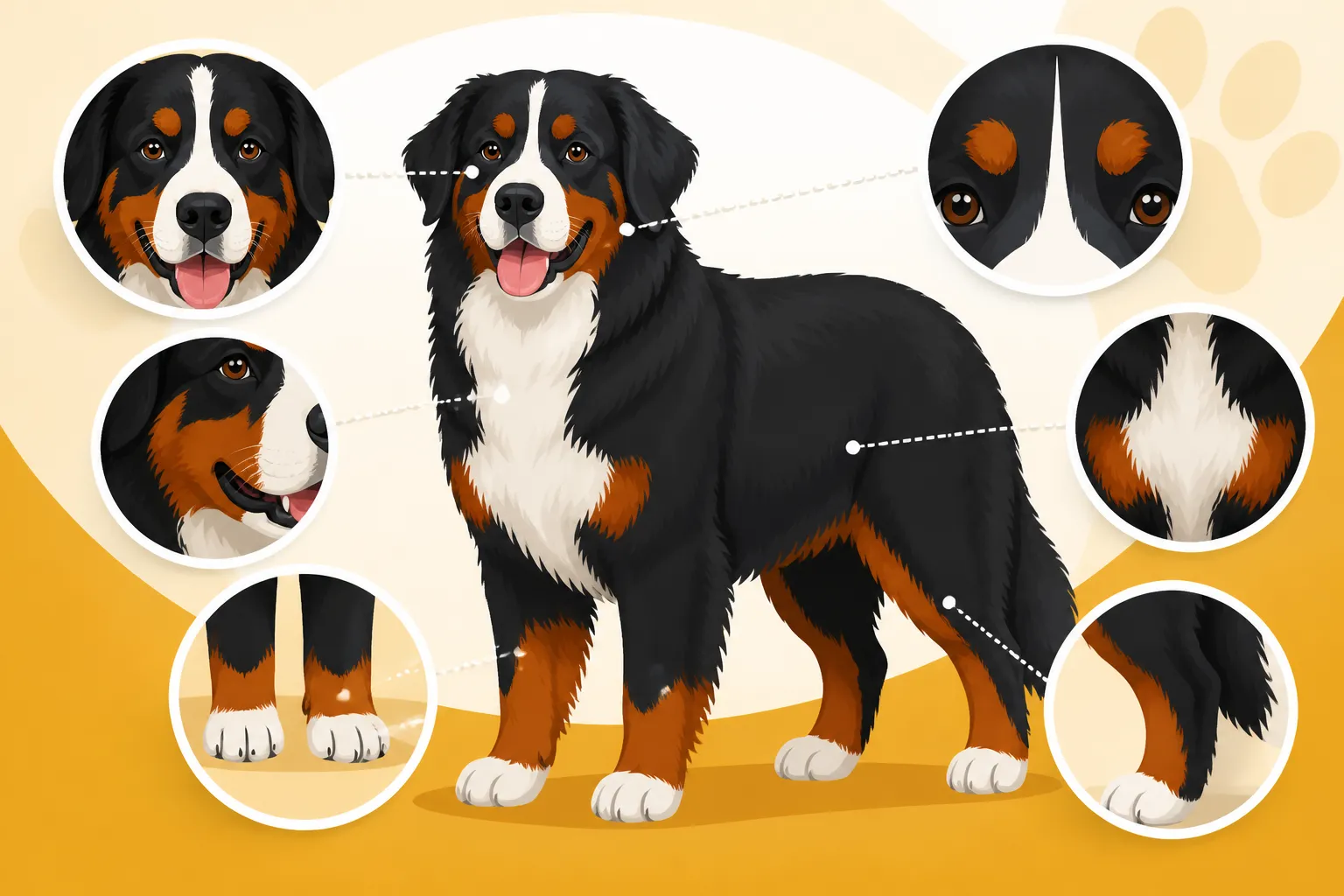
Where the Rust Markings Sit on a Bernese Mountain Dog
A Bernese Mountain Dog’s rust markings are the warm reddish-brown patches set against its black coat and white trim. They appear in several familiar places, but it can be easy to confuse them with the dog’s white markings or to wonder whether a slightly different patch is unusual. This guide maps the rust pattern, explains normal variation, and shows what markings can—and cannot—tell you.
The usual places to find rust markings
Bernese Mountain Dogs have a distinctive tricolor coat: black forms the main ground color, white creates recognizable trim, and rust adds warm accents. The rust markings are typically found above the eyes, on the cheeks, on each side of the chest, on all four legs, and beneath the tail. Seeing the pattern in these locations is often easier than trying to memorize a long description.
| Body area | Typical rust marking | What it may look like |
|---|---|---|
| Above the eyes | A patch over each eye | Small spots that can resemble eyebrows |
| Cheeks | Rust on both sides of the face | Patches below and behind the eyes |
| Chest | Rust on each side | Rust beside the white chest marking |
| Legs | Rust on all four legs | Patches or shading among the black and white |
| Beneath the tail | Rust under the tail | A patch that may be hard to see without lifting the tail gently |
The pattern gives many Berners their familiar expressive look, but individual coats are not stamped from an identical template. The size, edges, and intensity of rust patches may vary from dog to dog. For a wider overview of how black, white, and rust work together, see Bernese Mountain Dog Markings and What They Mean and Why a Bernese Mountain Dog Is Always Tricolor.
Rust above the eyes
The rust patches above the eyes are one of the easiest features to recognize. They can look like soft, warm-colored eyebrows against the black fur, giving a Berner’s face a particularly alert or thoughtful expression. In a puppy, the patches may be small or less striking than they appear after the coat develops.
The two patches do not need to look perfectly identical to be recognizable as part of the pattern. Their outlines can differ, and surrounding fur can make one appear more prominent than the other. A difference in patch size alone is not a reason to assume something is wrong with the dog.
These patches are easy to confuse with the white blaze that runs down the face. The blaze is white and generally sits between the eyes and down the muzzle; the rust patches are above the eyes and to either side. If you are looking at a face marking and unsure which color you are seeing, checking where it sits relative to the eyes is a useful first step. The Blaze on a Bernese Mountain Dog's Face looks more closely at that separate white feature.
Rust on the cheeks
Rust also appears on the cheeks, on both sides of the face. Depending on the dog’s coat and the angle you are viewing it from, the cheek patches may blend into the black fur or seem to extend toward the muzzle. Dense facial hair, shadows, and natural coat shading can make their boundaries less obvious in photographs.
When examining a Berner, look at the overall arrangement rather than expecting a sharply outlined patch on each cheek. A dog’s coat may be slightly wavy or fluffy around the face, and loose hairs can soften the edges of the color. A clear photo in natural daylight often makes it easier to distinguish rust from black fur than a picture taken indoors under yellow lighting.
Rust cheek markings are part of the coat pattern, not a sign of an expression or personality. A Berner who looks as though it is smiling, frowning, or raising an eyebrow is still simply showing its own combination of coat color, face shape, and expression. The pattern is one part of the breed’s familiar appearance, not a reliable way to judge the dog’s temperament.
Rust on the chest, legs, and beneath the tail
On the chest, rust is usually found on both sides of the white chest marking. Because the white chest marking can be broad and visually prominent, it may draw your eye first. The rust patches beside it are a separate part of the tricolor pattern. For more detail about the white area, see The Swiss Cross on a Bernese Mountain Dog's Chest.
Rust can also appear on all four legs. Depending on the dog’s markings and coat length, you might see it as distinct patches, as shading against black fur, or among the white markings on the feet. The long feathering on the legs can partially cover the color, especially when the coat is thick or damp. Rust beneath the tail may be less noticeable simply because it is not always visible during ordinary interactions.
You do not need to repeatedly handle your dog to inspect these areas. If you are checking the coat for grooming or health reasons, use a calm moment and gentle handling. A quick look while brushing or drying the coat is usually enough. For additional examples of rust placement, see Rust Markings on a Bernese Mountain Dog.
How rust differs from the white markings
The three coat colors can look especially busy where they meet, so it helps to think of them as separate parts of one pattern. Black is the main color, white creates markings such as the facial blaze and chest area, and rust forms accents in particular locations. A white patch is not a rust marking, even if the dog has rust nearby.
The boundary between colors may be softened by long fur, lighting, or a coat that is due for brushing. This is one reason a single photograph can be misleading: a shadow can make black fur look brown, while bright light can wash out a rust patch. Looking at the coat in person, or comparing several clear pictures, gives a more dependable impression.
Quick ways to tell the colors apart
Start by identifying the color itself, then consider its location. White is usually easiest to spot on the blaze, chest, feet, or tail tip. Rust tends to show as warm reddish-brown or tan accents around the eyes, cheeks, chest sides, legs, and beneath the tail. Black remains the dominant coat color across the body.
If a patch looks brown in a picture, consider whether it could be sunlight or a shadow on black hair. The coat’s sheen, the camera’s color settings, and indoor lighting can all alter how a marking appears. Check the same area in more than one lighting condition before deciding that a color has changed.
It can also help to separate coat color from coat condition. Dirt, dried saliva, moisture, or staining can discolor pale fur, but those changes do not alter the dog’s underlying markings. If a patch seems to have appeared suddenly, is accompanied by irritated skin, or changes in a way that concerns you, ask a veterinarian rather than trying to interpret it as a breed marking.
Why the pattern looks different from one dog to another
Bernese Mountain Dogs share a recognizable tricolor pattern, but their exact markings vary. Rust patches may differ in size, shade, and definition. White areas may also vary in shape and extent. That natural individuality is why two dogs can look unmistakably like the same breed while having faces and leg markings that are not identical. Whether Two Bernese Mountain Dogs Ever Match explores that variation further.
A puppy’s coat may also look different from the adult coat as it grows and changes. The pattern is not a promise that each patch will remain equally vivid or sharply edged throughout the dog’s life. Adult coat length and texture can change how visible the colors are, too: feathering may cover parts of the legs, while a fresh brush-out can make markings easier to see.
For that reason, avoid comparing one dog’s markings too rigidly with a single online photo. Breed standards describe an expected overall appearance, but a family pet’s individual coat can have its own details. If you are assessing a puppy from a breeder, ask to see clear photos of the puppy and its parents, and discuss any questions about the dog’s appearance directly with the breeder.
What rust markings can tell you
Rust markings help identify the familiar Bernese Mountain Dog coat pattern. They do not, by themselves, tell you whether a dog is healthy, well bred, purebred, friendly, or suited to a particular home. A coat pattern is one visible feature; health, behavior, and breed background require different kinds of information.
This distinction matters because owners can become worried when a dog’s markings do not match an idealized picture exactly. A patch that is a little larger, lighter, or less clearly defined does not automatically signal a health problem. Conversely, a dog with strikingly textbook markings still needs the same thoughtful care, veterinary attention, and training as any other Berner.
Coat pattern is not a health check
Rust placement is not a substitute for health screening. You cannot tell from the color or shape of a patch whether a dog’s hips, heart, eyes, or other parts of its health have been assessed. If you are choosing a puppy, ask the breeder about health testing and the health history of the family rather than relying on appearance alone. Which Tests a Bernese Mountain Dog Breeder Should Show offers related questions to consider.
For an existing dog, routine health care should be guided by your veterinarian, not by whether the coat seems to match a breed illustration. A sudden change in the skin or fur is also different from a lifelong color pattern. Redness, hair loss, itchiness, sores, or a newly discolored area may need veterinary attention, especially if your dog seems uncomfortable.
If you are comparing coat markings for breed identification, remember that a tricolor appearance alone cannot confirm ancestry. A dog’s history, reliable records, and professional guidance are more useful than trying to reach a conclusion from one patch of fur. Appearance can prompt a question, but it cannot answer every question about identity or health.
Breed-standard descriptions and everyday dogs
A breed standard describes the desired overall look for dogs being evaluated against that standard. It is useful for understanding the expected arrangement of markings, but it should not be treated as a checklist for judging the worth of a companion dog. Pet dogs can have subtle differences in markings and still be loved members of the family.
If you are interested in how a dog’s full appearance fits together, read The Bernese Mountain Dog Breed Standard. It helps put the coat pattern in context alongside structure and other features. For a closer look at how marking placement relates to the breed’s familiar appearance, The Four White Points a Bernese Mountain Dog Should Have discusses white details that are separate from rust.
When looking at an individual Berner, take in the whole dog rather than fixating on a single patch. Notice where the rust generally falls, but also remember that coat length, age, lighting, and natural variation affect what you see. A marking can be interesting without needing to be perfect.
Looking after a Berner’s coat while checking its markings
Regular grooming makes it easier to see the coat clearly and helps you notice changes in the skin. Brushing can lift loose hair and separate feathering, especially around the legs and chest where rust may be partly hidden. It also gives you a practical chance to check for tangles, burrs, dampness, or irritation without turning coat inspection into a stressful event.
A simple routine works well for many households: choose a calm time, brush in short sessions, and reward your dog for standing or lying comfortably. If the dog dislikes having its legs or tail handled, go gradually instead of trying to inspect every area at once. The goal is a relaxed coat check, not a wrestling match with a large, furry dog.
Brushing and noticing changes
Use a brush suited to a double coat and work gently through the longer hair. Pay attention to areas where fur rubs or tangles, such as behind the ears, under the legs, and around the feathering. If you use grooming supplies from a retailer such as Chewy, choose tools appropriate for your dog’s coat and follow the manufacturer’s directions; a product’s availability does not replace advice from a professional groomer or veterinarian.
As you brush, notice what is normal for your dog. You may see rust more clearly after removing loose hair, or discover that a patch is mostly concealed by longer fur. Keeping a few ordinary photos of your dog can help you compare the coat over time, but photos should not replace a veterinary exam if you see skin changes or discomfort.
Avoid using a strong shampoo or stain-removing product simply to make markings look brighter. Rust is part of the coat color, not something that needs to be cleaned into a particular shade. If pale fur is stained, ask a veterinarian or experienced groomer how to address it safely. Chewy may be a convenient place to browse basic grooming supplies, but check that any product is intended for dogs and suitable for your pet.
When grooming questions are not just about color
If your dog has mats close to the skin, persistent itching, unpleasant odor, sores, or a sudden patch of hair loss, treat that as a coat or skin concern rather than a marking question. A groomer can help with routine coat maintenance, while a veterinarian can assess medical symptoms. Do not cut close to the skin if you cannot see where the mat ends; long fur can hide the skin and make accidental cuts more likely.
For a cooperative dog, grooming can be a pleasant time to notice whether the coat looks and feels usual. If your Berner is anxious, sore, or unable to stand comfortably, adapt the routine and ask a professional for help. Some owners use Chewy to look for brushes, towels, and other everyday supplies, but a product cannot resolve an underlying skin problem.
The rust pattern is easiest to appreciate when the coat is clean, dry, and brushed—but your dog does not need to look show-ready to have a recognizable Bernese Mountain Dog coat. The useful thing is knowing the usual locations, understanding that markings vary, and recognizing when a new change is about the skin rather than the pattern.
Disclaimer
This article is for general informational purposes only and does not constitute professional advice. Laws, prices and regulations vary by location and change over time. Consult a qualified professional for guidance on your specific situation.