Whether a Leonberger Is Like a Bernese Mountain Dog
Choosing between a Leonberger and a Bernese Mountain Dog can be surprisingly difficult: both are big, affectionate, thick-coated dogs that look right at home beside a family. But their size, appearance, exercise needs, and health concerns are not interchangeable. This guide compares the breeds in practical terms, so you can picture what daily life with each might actually involve.
Leonberger and Bernese Mountain Dog at a glance
| Trait | Leonberger | Bernese Mountain Dog |
|---|---|---|
| Origin | Germany | Switzerland |
| Typical appearance | Large, lion-like dog with a long coat and noticeable mane, especially in males | Tricolor dog with a black coat, rust markings, and white markings |
| Size | Usually the larger and heavier of the two | A giant breed, but generally somewhat smaller than a Leonberger |
| Coat care | Regular brushing, with extra attention to the mane, feathering, and shedding | Frequent brushing, especially during seasonal coat changes |
| Common family impression | Often described as calm, sociable, and people-oriented | Often affectionate and gentle, sometimes reserved with unfamiliar people |
| Important planning points | Space, coat upkeep, training, and giant-breed health screening | Coat upkeep, joint care, heat management, and breed-related health screening |
They share a gentle giant look, but their outlines differ
At a glance, both breeds have the unmistakable presence of a large, long-coated family dog. Their heads are broad, their bodies are substantial, and their coats can leave plenty of hair around the house. If you see them from a distance, it is easy to understand why people group them together as gentle giants.
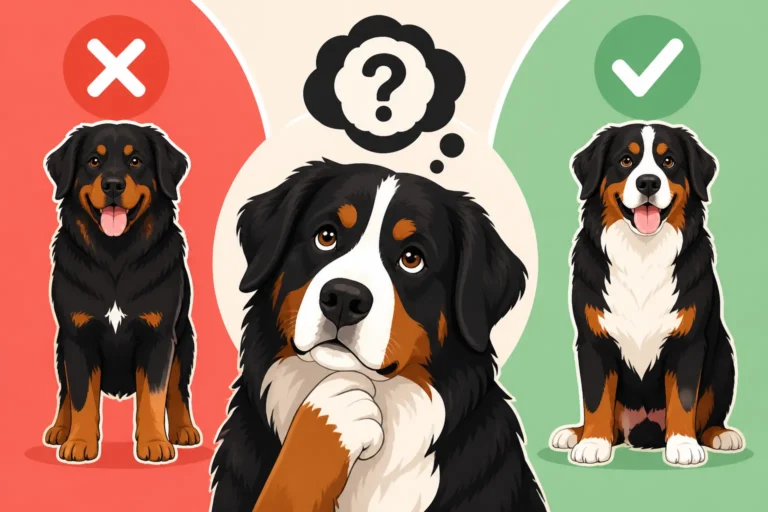
The Leonberger usually looks taller and more imposing, with a deep body and a lion-like mane around the neck and chest. Its coat can come in shades such as golden, reddish, or sandy, often with a dark mask. A male Leonberger’s mane can be particularly striking, though coat and appearance vary from dog to dog.
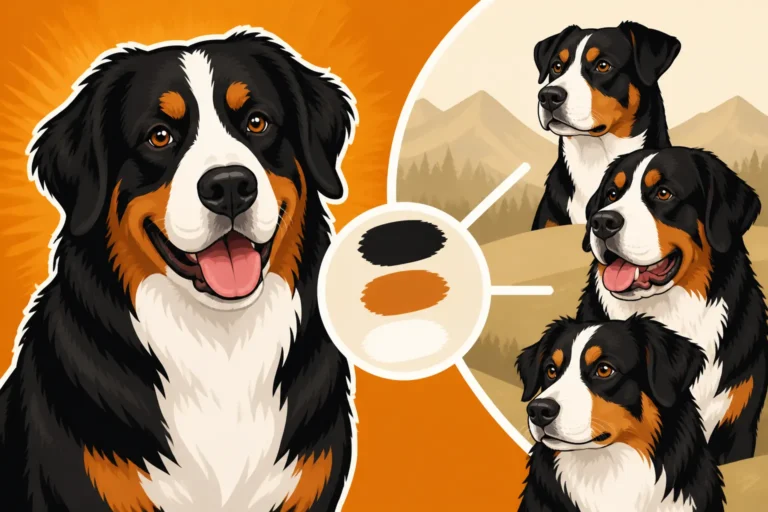
The Bernese Mountain Dog is easier to recognize by its classic black, white, and rust pattern. Its white chest marking, facial blaze, and rust points give it a distinctive look that does not resemble the Leonberger’s warmer, more solid coat colors. If you want a closer look at what those markings mean, Bernese Mountain Dog Markings and What They Mean explains the tricolor pattern in more detail.
Both are large, but the difference matters at home
A Leonberger can be noticeably larger than a Bernese Mountain Dog, and that difference is not just about the number on a scale. A bigger dog takes up more room in a car, needs a suitably large bed, and can be harder to help if it slips or becomes unwell. A Leonberger may also be more difficult to manage physically if leash manners are not taught early.
Bernese Mountain Dogs are giant dogs too. A full-grown Berner can crowd a small kitchen, stretch across a hallway, and turn a quick trip to the vet into a logistics exercise. Still, many owners find that the Leonberger’s additional height and mass can make everyday handling even more demanding. For a closer look at the Berner’s growth and proportions, see How Big a Bernese Mountain Dog Gets.
It helps to imagine ordinary moments rather than just comparing breed photos. Can the dog turn around comfortably in your vehicle? Is there space for a large bed that does not block a doorway? Could you guide the dog through a narrow vet-clinic entrance if it felt nervous? Those questions matter with either breed, and they deserve extra attention when considering the larger Leonberger.
Temperament and family life
Both can be affectionate, but individual personalities vary
Bernese Mountain Dogs are commonly described as affectionate and devoted to their families. Many enjoy staying close to their people and are happiest when included in daily routines. Some are cautious or reserved around strangers, particularly if they have not had calm, positive social experiences as puppies.
Leonbergers are also often known for their sociable, steady nature. They may be eager to be near family members and can be friendly with visitors, but no breed description guarantees an individual dog’s temperament. Early experiences, health, training, and the dog’s own personality all influence how it responds to children, unfamiliar adults, and other animals.
The difference is better thought of as a tendency than a promise. One Berner may greet new people warmly while another hangs back to observe. One Leonberger may be outgoing and playful while another is quieter. Ask breeders or rescue organizations about the particular dog’s behavior in everyday situations, rather than relying only on a general description of the breed.
Size makes supervision and training especially important
Neither dog is automatically safe around children just because people call the breed gentle. A friendly dog can still knock over a small child by turning quickly, leaning in for attention, or getting excited at the door. Children should be taught not to climb on, startle, hug tightly, or disturb a dog that is eating or resting. An adult needs to supervise interactions, even when the dog has lived with children for years.
Training matters because a large dog that pulls, jumps up, or blocks a doorway can be difficult to redirect. Start with comfortable handling, loose-leash walking, settling on a mat, and polite greetings. Keep lessons short and reward the behavior you want. A calm, consistent approach is usually a better fit than harsh corrections, which can make a sensitive dog wary or confused.
For a Bernese Mountain Dog, a prospective owner may want to consider the household routine as closely as the dog’s appearance. The Kind of Home a Bernese Mountain Dog Belongs In offers a useful way to think through companionship, space, and daily responsibilities. The same practical questions apply to a Leonberger: will the dog have company, exercise, training, and a comfortable place to rest?
Grooming, exercise, and everyday care
Both coats need regular attention
Neither breed is a low-shedding choice. Both have substantial coats that need ongoing brushing, and both may shed more heavily when their undercoats loosen. A Leonberger’s mane and long feathering can collect debris, form tangles, or hide dampness after rain. A Berner’s coat also needs thorough attention, particularly around areas where friction and loose hair can lead to knots.
A dependable routine is more manageable than waiting until the coat is full of tangles. Work through the coat in sections, checking behind the ears, under the legs, around the tail, and where the collar sits. After a wet walk, dry the coat well and check the skin for trapped moisture or irritation. If grooming at home is difficult because of the dog’s size, find a groomer who is comfortable working with giant breeds.
Before bringing home either dog, assemble the basic tools and a workable grooming space. Some owners use retailers such as Chewy to compare brushes, combs, nail-care supplies, and other routine items; the right tool depends on the dog’s coat and what you can handle comfortably. A few calm minutes of brushing several times a week can be easier on both dog and owner than a long, frustrating session after mats have formed. For more detailed Berner coat advice, see Grooming a Bernese Mountain Dog's Long Tricolor Coat.
Exercise should support a large frame, not exhaust it
Both breeds need regular activity, but they are not dogs to push into strenuous exercise simply because they are large. Walks, sniffing, gentle play, and training games can provide useful stimulation. Puppies and adolescents need particular care: their bodies are still developing, and long forced runs or repetitive high-impact activity are poor substitutes for gradual, age-appropriate movement.
A Leonberger may enjoy swimming or other suitable activities, and the breed’s history includes working roles. That does not mean every Leonberger wants or is physically suited to the same workload. A Bernese Mountain Dog may enjoy walks and outdoor time, but hot weather can be a serious concern for a heavily coated dog. Offer shade and water, avoid the hottest part of the day, and turn back if the dog shows signs of overheating or fatigue. Getting a Bernese Mountain Dog Through Summer covers the breed’s warm-weather needs in more detail.
The practical goal is a dog who stays fit without being overworked. A steady walk on a cool day may suit one dog, while another needs a shorter outing and more indoor enrichment. Watch the dog in front of you: stiffness, lagging, unusual panting, reluctance to move, or a change in gait are reasons to stop and seek veterinary guidance rather than assuming the dog is being stubborn.
Health, lifespan, and choosing the right breed
Their health concerns overlap, but they are not the same
Both breeds are large dogs, so joint health and the risks associated with a deep chest deserve discussion with a veterinarian and a responsible breeder. Hip and elbow problems can affect mobility, and both breeds may be at risk of bloat, a life-threatening emergency involving the stomach. Owners should know the warning signs and have a plan for reaching emergency veterinary care.
Bernese Mountain Dogs are especially known for concerns around cancer, alongside joint problems and other health issues. Their relatively short expected lifespan is a difficult reality for many owners to consider before getting attached to the breed. Why a Bernese Mountain Dog Lives Only Seven or Eight Years discusses why longevity is such a painful and important part of Berner ownership.
Leonbergers have their own health considerations, which can include orthopedic disease, bloat, and inherited conditions such as certain forms of polyneuropathy. The specific screening recommendations can differ between breeds and breeding programs. Ask what health evaluations have been completed, request documentation, and discuss the results with a veterinarian familiar with large breeds. Do not assume that a dog is healthy simply because it looks robust or comes from a well-known line.
Make the decision around daily life, not just appearance
A Leonberger may be a better fit for someone prepared for an especially large dog, a substantial coat, and the handling demands that come with its size. A Bernese Mountain Dog may appeal to someone drawn to its tricolor markings and close, affectionate family style, provided they are ready for shedding, heat precautions, and the breed’s health and lifespan realities.
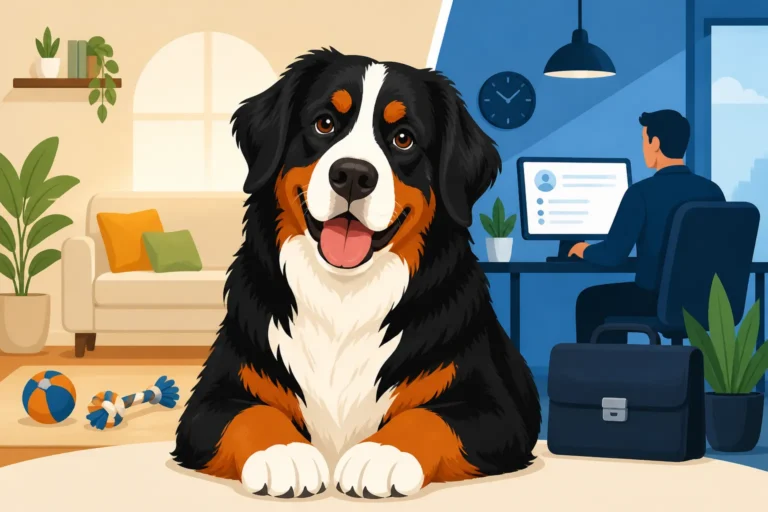
Before choosing either breed, write down what an ordinary week would look like. Include work hours, time alone, walks, grooming, training, veterinary visits, travel, and who can help if you are sick or away. Think about the dog as an adult, not only as a soft-coated puppy. The same questions help whether you are speaking with a breeder or considering an adult dog through rescue.
If you are deciding whether the Berner’s needs match your household, Whether a Bernese Mountain Dog Is Right for You is a useful companion topic. You might also compare the Berner with another giant breed in The Bernese Mountain Dog Against the Saint Bernard or The Bernese Mountain Dog Against the Newfoundland. A side-by-side comparison can clarify what you value, but it cannot replace meeting the individual dog and learning about its health and temperament.
When you talk with a breeder or rescue, ask how the dog behaves around visitors, other dogs, children, and routine handling. Ask about the parents’ health, the screening performed, and any known health concerns in the family. If you are shopping for practical supplies after deciding, Chewy can be one place to browse everyday grooming and feeding essentials, but confirm that any equipment is appropriately sized for the dog you are bringing home.
The Leonberger and Bernese Mountain Dog share a friendly giant-breed appeal, but they are not simply two versions of the same dog. The Leonberger is typically larger and has a different coat and breed history; the Berner is immediately recognizable by its tricolor pattern and brings particular health and heat-management considerations. The best choice is the one whose needs, size, and likely care routine fit your real household—not just the one whose puppy photo you cannot stop looking at.
Disclaimer
This article is for general informational purposes only and does not constitute professional advice. Laws, prices and regulations vary by location and change over time. Consult a qualified professional for guidance on your specific situation.