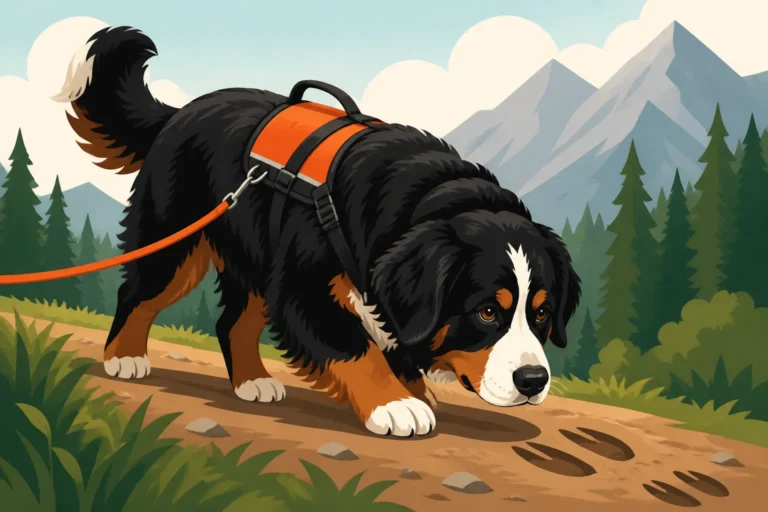
Why a Bernese Mountain Dog Puts Its Weight on You
There's nothing quite like the feeling of a hundred-pound Bernese Mountain Dog gently, or sometimes not so gently, nudging you or outright leaning their entire magnificent weight against your legs. It's a quirky, endearing, and sometimes startling trait that many Berner owners experience. If you've ever wondered why your gentle giant uses you as a personal leaning post, this guide is here to help you understand the deep-seated reasons behind this behavior and how to manage it gracefully.
The Historical Roots of the Bernese Lean
To truly understand why your Bernese Mountain Dog loves to lean, we need to take a little trip back in time to their origins in the Swiss Alps. These aren't just pretty faces; they were working dogs, developed for specific roles that ingrained certain behaviors deeply into their breed psyche.
Bred for Proximity and Contact
Berners were originally farm dogs, but not in the way many people might picture a lone sheepdog ranging across vast fields. Instead, they worked in much closer proximity to their human families. They were tasked with duties like droving cattle, guarding farmsteads, and famously, pulling carts laden with milk or cheese to market. This meant a constant, intimate relationship with people.
Imagine a farmer and his Berner moving livestock together in a confined space, or the dog patiently waiting beside its human while wares were sold. Physical closeness was a fundamental part of their daily life and bond. This history isn't just a fun fact; it shaped their innate desire for contact. They weren't bred to be independent, far-ranging guardians; they were partners. This continuous, close-quarters interaction fostered a natural inclination towards physical touch and presence, which manifests today as the beloved, albeit heavy, "Berner lean."
The Herding Instinct and "Fencing"
While not traditional herding dogs like a Border Collie, Bernese Mountain Dogs do possess a form of the herding instinct. In their role as drovers, they would move cattle or sheep from one pasture to another, often using their body to gently guide the animals. They weren't nipping at heels; rather, they'd use their presence and bulk to direct the herd.
This subtle, body-driven guidance can translate into what we affectionately call "fencing" or "corralling" their humans. When your Berner leans on you, sometimes it's their way of keeping you "in place" or guiding you where they want you to go, without being overtly pushy. It's a gentle, almost unconscious echo of their ancestral job. They might be trying to keep the family unit together, or perhaps just want you a little closer to their side. It's a reminder that even in our modern homes, the echoes of their working past still resonate strongly. What a Bernese Mountain Dog Did on a Swiss Farm gives you a deeper dive into their original duties.
Social and Emotional Motivations Behind the Lean
Beyond their historical tasks, the Bernese Mountain Dog is renowned for its loving and sensitive nature. Their leaning behavior is often a profound expression of their social and emotional landscape, a furry hug that speaks volumes.
Seeking Affection and Attention
Let's be honest, Berners are attention seekers, in the most charming way possible. They thrive on human companionship and positive interaction. When your Berner leans into you, a significant part of it is often a straightforward plea for affection and attention. It's their way of saying, "Hey, I'm here! Pet me, scratch me, acknowledge my amazing existence!"
They've learned that leaning usually elicits a positive response – a stroke, a kind word, or even just a reassuring hand on their back. It's a tried-and-true method for getting their needs met. For a dog that loves to be close to its people, the lean is an efficient and effective communication tool. It's a big, physical "pet me!" that’s hard to ignore, especially when you consider How Big a Bernese Mountain Dog Gets. It's a direct connection, a physical bond that reinforces their place in your heart and home.
Establishing Connection and Comfort
Bernese Mountain Dogs are true "velcro dogs" at heart, always wanting to be near their human companions. Leaning is a deeply ingrained behavior that helps them establish and maintain a strong connection with you. It’s their way of physically anchoring themselves to their favorite people, a declaration of belonging and trust.
Think of it as their version of a hug or a comforting embrace. When they lean, they’re not just seeking attention; they're also offering comfort and seeking it in return. It’s a reciprocal gesture that strengthens the bond between you. This physical contact can be incredibly reassuring for them, a tangible reminder that they are part of your pack and that you are their safe harbor. For many Berners, it's not just a casual gesture; it's a deep expression of their contentedness and connection. The Shadow a Bernese Mountain Dog Becomes Indoors explores this tendency for closeness further.
Building Security and Reassurance
In new environments, around strangers, or during moments of mild uncertainty, leaning can be a dog's way of seeking security and reassurance from their trusted human. Just as a child might hold a parent's hand when feeling nervous, a Bernese Mountain Dog leans into you for emotional support.
If you're at the vet's office, or a new park, or even just having guests over, your Berner might lean on you more frequently. This isn't necessarily a sign of fear, but rather a way to ground themselves and draw confidence from your presence. Your steady presence and calm demeanor can act as a buffer against anything they perceive as slightly unsettling. They feel safest when physically connected to you, knowing you're there to protect them and provide a sense of stability. It’s an endearing habit that highlights their sensitive and reliant nature.
Practical and Physical Aspects of the Bernese Lean
While the emotional and historical reasons are compelling, we also have to acknowledge the very practical, physical reality of a Bernese Mountain Dog's size and how that plays into their leaning tendencies.
Their Sheer Size and Weight
Let's not sugarcoat it: a Bernese Mountain Dog is a large, powerful dog, often weighing over 100 pounds. When a dog of this stature decides to lean, it's not a subtle nudge; it's a full-body experience! This sheer mass is a huge factor in why the lean feels so impactful and why it's a topic of discussion among owners. They might not even realize how much of their weight they're putting into it.
This can be particularly challenging for certain individuals. An elderly person or a young child could easily be knocked off balance or even over by an enthusiastic lean. It's not malicious; it's just physics. Recognizing this physical reality is key to understanding the behavior and implementing strategies to manage it for safety and comfort, both for the dog and the human. Consider Lifting a Hundred Pounds of Bernese Mountain Dog if you've ever had to help your Berner up.
Communicating Needs
Sometimes, the lean isn't just about affection or comfort; it can be a more direct form of communication. Berners are intelligent and observant, and they quickly learn what gets your attention. If leaning on you has previously resulted in you getting up to fill their food bowl, open the door for a potty break, or grab their favorite toy, they'll certainly try it again.
It's a subtle, non-verbal cue that can signal a variety of needs. Perhaps they need to go out, or they're hungry, or they want to initiate play. They've discovered that planting their weight against you is an effective way to break your concentration and get you to engage with them. Paying attention to the context of the lean – what usually happens before or after – can help you decipher what your Berner is trying to tell you.
Managing the Lean
While the Berner lean is often charming, there are times when it needs to be managed for practical reasons. A hundred-pound dog leaning against you while you're trying to cook or carry groceries isn't always ideal. The goal isn't to stop them from being affectionate, but to teach them when and how it's appropriate.
One effective strategy is to teach an alternative behavior, like "sit" or "place," when they start to lean. When they lean, gently redirect them to a sit or a mat, and reward them for staying there. Consistency is paramount. You can find excellent resources for positive reinforcement training on platforms like BAXTER & Bella, which offers comprehensive online dog training programs that focus on building good manners through gentle methods. For managing the physical space, especially with a large dog, you might explore various dog gates or indoor barriers available on Amazon to create designated "no-lean" zones when necessary, like in the kitchen.
When the Lean Becomes a Problem (and What to Do)
While the Bernese Mountain Dog's leaning can be adorable, it sometimes crosses the line into being a problem, particularly if it's constant, too forceful, or puts people at risk. Addressing it effectively requires patience and consistent training.
Overcoming the Overpowering Lean
If your Berner's lean is becoming overwhelming, or if they're knocking over smaller family members, it's time to teach them better boundaries. The key is redirection and positive reinforcement. Instead of pushing them away (which they might interpret as attention, even negative), ask for an incompatible behavior.
When your dog starts to lean, immediately ask for a "sit" or a "down." Once their rear is on the ground, or they are lying down, reward them with praise or a treat. The trick is to reward the desired behavior – sitting calmly beside you – not the lean itself. You're teaching them that polite presence gets positive attention, while leaning does not. It takes time, but with consistency, they will understand. This approach ensures you're still fostering that precious bond without sacrificing control. Learning Leash Manners on a Hundred Pound Bernese Mountain Dog can also translate to better body control indoors.
Consistency in Training and Boundaries
With any large breed, consistency is the bedrock of successful training. Bernese Mountain Dogs, while eager to please, are also intelligent and will test boundaries if they are not clear and consistent. Every member of the household needs to be on the same page regarding the leaning behavior.
If one person allows leaning and another discourages it, your Berner will get confused and the behavior will be harder to modify. Establish clear rules: do you only allow leaning when you're sitting on the couch? Do you want them to always offer a "sit" before getting attention? Decide as a family, then enforce those rules consistently. This means being ready to redirect or ask for an alternative behavior every single time the lean occurs in an unwanted context. Training a Bernese Mountain Dog Without Breaking It emphasizes the importance of gentle, consistent methods for this sensitive breed.
Here's a quick guide to managing the lean:
| Situation | Dog's Intent (Likely) | Your Reaction | Training Cue to Use | Recommended Tools/Tactics |
|---|---|---|---|---|
| Casual Lean (Sitting) | Affection, Connection | Gentle pets, praise | "Stay," "Settle" | Positive reinforcement, calm verbal praise |
| Leaning (Standing) | Attention, Seeking Comfort | Redirect, ask for "Sit" | "Sit," "Off" | Treats for desired behavior, no reward for leaning |
| Overpowering Lean | Excitement, Urgent Need | Step into them, ask "Sit" | "Sit," "Place," "Wait" | Barrier training (e.g., Amazon gates), leash management |
| Leaning on Guests | Greeting, Seeking Affection | Immediately redirect | "Place," "Go say hello" | Crate training, controlled introductions |
| Lean Before Door/Food | Communicating Need | Ask "Sit," wait for calm | "Sit," "Wait" | Consistent routine, reward calm waiting |
Recognizing Underlying Issues
While leaning is a typical Berner trait, it's always worth being observant for any changes in behavior. In very rare cases, an unusual increase in leaning, or leaning combined with other concerning symptoms, could hint at an underlying issue. For example, a dog that suddenly becomes much more clingy or seeks excessive physical contact might be feeling unwell, anxious, or experiencing pain.
If your Berner's leaning behavior changes dramatically, or if it's accompanied by other signs like lethargy, loss of appetite, limping, or excessive panting, it's always a good idea to consult your veterinarian. They can rule out any medical causes and offer advice on managing anxiety if that's the root. Typically, though, the Berner lean is a loving, characteristic quirk of this wonderful breed, a testament to their desire to be close to their favorite people. The Weekly Handling a Bernese Mountain Dog Should Accept highlights the importance of regular checks for any health concerns.
Ultimately, the Bernese Mountain Dog's lean is an integral part of their charm and personality. It’s a powerful expression of their affectionate nature and their desire for connection. By understanding its roots and implementing consistent, positive training, you can ensure that this endearing behavior remains a joy, not a challenge, in your life together.
Disclaimer
This article is for general informational purposes only and does not constitute professional advice. Laws, prices and regulations vary by location and change over time. Consult a qualified professional for guidance on your specific situation.