Teaching a Bernese Mountain Dog to Be Lifted
It's a common scenario for Bernese Mountain Dog owners: you adore your giant, fluffy companion, but the thought of needing to lift them, even for a moment, can feel overwhelming. Whether it's for a vet visit, navigating a tricky stairwell, or an unexpected emergency, getting a hundred-pound-plus dog off the ground safely for both of you is a skill that takes patience and the right approach. This guide will walk you through how to teach your Bernese Mountain Dog to accept and even cooperate with being lifted, ensuring their comfort and your peace of mind.
Why Lifting a Bernese Mountain Dog Can Be Such a Challenge
Let's be real, a Bernese Mountain Dog isn't exactly a teacup poodle. Their sheer size and their sensitive nature combine to make lifting them a task that needs careful consideration and planning. It's not just about brute strength; it's about building trust and understanding.
The Sheer Size and Weight Factor
Berners are magnificent, substantial dogs. A healthy adult male can easily weigh 90 to 120 pounds, and females aren't far behind. This isn't just a number on a scale; it's a lot of distributed weight, often with a mind of its own. Trying to hoist a reluctant Bernese can be a recipe for back strain for you and discomfort or even injury for them. Imagine trying to lift a heavy, squirming sack of potatoes – it’s awkward, unstable, and prone to accidents. Their deep chests and often dense coats can also make it difficult to get a secure grip, adding to the challenge. It’s not just about the weight, it's about the physics of a large, soft, somewhat floppy animal that can easily shift its weight if it's not on board with the plan.
Their Sensitive Nature and Potential Fear
Bernese Mountain Dogs are known for being gentle giants, but they are also incredibly sensitive. Unlike some breeds that might tolerate a rough-and-tumble approach, a Berner can easily become anxious or fearful if they feel unsupported, startled, or handled roughly. This isn't stubbornness; it's often a genuine response to feeling vulnerable. If your Berner associates being lifted with pain, fear, or an unpleasant experience, they'll naturally resist even more vehemently the next time. This can create a cycle of resistance that's hard to break, as their ingrained memory of that discomfort makes them brace for it again. Remember, even a small negative interaction can resonate deeply with a sensitive dog, making trust paramount. The Bernese Mountain Dog That Quits After One Correction is a perfect example of how sensitive these dogs can be.
When and Why You Might Need to Lift Them
While you hopefully won't be lifting your adult Berner daily, there are critical times when this skill becomes invaluable, if not life-saving. Think about the unexpected emergencies. If your Bernese suddenly becomes unwell, perhaps showing signs of The Half-Hour That Decides a Bloated Bernese Mountain Dog, or suffers an injury, you'll need to get them into a car to the vet clinic quickly.
Beyond emergencies, there are other practical scenarios. Perhaps you have stairs in your home that a young puppy shouldn't navigate due to their developing joints, or an older dog with Arthritis in a Bernese Mountain Dog by Six might need help ascending or descending. Grooming or bathing can also necessitate a partial lift or repositioning, especially if you have a deep tub. Some dogs even need a little boost getting into a car, especially if they are hesitant or have physical limitations. Having the ability to assist them safely and calmly prevents further stress or injury in these moments.
Laying the Groundwork: Building Trust and Positive Associations
The key to successfully lifting a Bernese Mountain Dog isn't just about technique; it's about building a foundation of trust and making the experience as positive as possible. This starts long before you ever try to lift all four paws off the ground.
Gentle Handling from Day One (for Puppies)
If you have a Bernese Mountain Dog puppy, start introducing gentle handling and brief, partial lifts from the very beginning. When they are small and manageable, pick them up frequently for cuddles, short transports, and examinations. Cradle them securely, supporting their chest and hindquarters. Pair every lift with a calm, reassuring voice and a high-value treat. For example, if you're picking them up to move them from one room to another, a tiny piece of cooked chicken or cheese delivered immediately upon setting them down in the new spot can build positive associations.
Make it a part of their routine. Touch their paws, gently lift their legs, stroke their belly – these are all precursors to comfortable lifting. The more accustomed they are to being handled and having their body manipulated in a positive way, the less likely they are to panic when it comes time for a full lift. Think of it as exposure therapy with lots of love and rewards. This early conditioning will pay dividends as they grow into powerful adults.
Desensitization and Counter-Conditioning
For an older Bernese who might be wary or even fearful of being lifted, you'll need to employ desensitization and counter-conditioning. This means gradually exposing them to the sensation of being lifted in tiny steps, while simultaneously pairing it with something wonderful, like their absolute favorite treat or a special toy.
Start incredibly small. Simply putting your hands in position, even if you don't lift an inch, should earn a treat. Then, apply a little pressure, as if you might lift, and immediately reward. Build up slowly:
- Place hands: Put one hand under their chest and the other under their hindquarters, but don't apply any lifting pressure. Reward immediately. Repeat many times.
- Apply slight pressure: Apply just enough pressure to make them feel your intent, but don't actually lift. Reward.
- Shift weight: Gently shift some of their weight into your hands, but keep their feet on the ground. Reward.
- Lift one side slightly: Lift just their front end a couple of inches, then set them down. Reward. Repeat with the rear.
- Small, brief lift: Finally, lift them just a few inches off the ground for a second, then immediately set them down and give a jackpot reward.
The key is to keep these sessions short, positive, and end before your dog shows any signs of stress. Training Sessions Short Enough for a Bernese Mountain Dog emphasizes the importance of brevity and success in training. If they resist at any point, go back a step. Never force the lift, as this will undo all your hard work.
Establishing a "Ready to Be Lifted" Cue
A verbal cue or a hand signal can be incredibly helpful in preparing your Bernese for what's about to happen, making the process less startling. Choose a word like "Up," "Lift," or "Hold." Practice this cue during your desensitization exercises.
Here’s how:
- As you place your hands into position for a gentle lift, say your chosen cue ("Up!").
- Perform the very brief, gentle lift (or partial lift).
- Immediately lower them and reward lavishly.
Your Bernese will quickly learn that "Up!" means hands are coming, a lift might happen, but it will be followed by something fantastic. This cue gives them a heads-up, reducing surprise and increasing cooperation. It’s like giving them a warning signal, allowing them to mentally prepare for the interaction, rather than being caught off guard. This small act of communication can significantly reduce anxiety for both of you.
Step-by-Step Guide to Teaching the Lift
Once you've built a foundation of trust and positive association, you can start working on the actual lifting techniques. Remember, patience is paramount, and always prioritize your Berner's comfort and your own safety.
Starting Small: Partial Lifts and Supports
Before attempting a full lift, master partial lifts. This helps your Bernese get used to the sensation of their weight being supported and shifted without the full disorienting feeling of being airborne.
- Front End Lift: Stand by your Berner's side. Place one arm securely under their chest, just behind their front legs. Your other arm can rest gently on their back or neck for stability and reassurance. Give your "Up" cue, then gently lift just their front paws a few inches off the ground for a second or two. Immediately lower them and reward heavily. This simulates getting onto a low platform or into a shallow bath.
- Rear End Lift: Move to your Berner's side, towards their hindquarters. Place one arm under their belly, just in front of their back legs. Use your other arm to support their rear, underneath their tail, ensuring their spine remains straight. Give your cue, then gently lift their back paws a few inches. Lower and reward. This is often useful for helping them into a vehicle or onto a grooming table.
These partial lifts help them understand the mechanics of being supported. They also allow you to gauge their comfort level and adjust your approach. Always keep the lifts brief and positive. If your Berner shows any signs of stress, lower them immediately and return to an easier step in the training process.
The Two-Person Lift Technique
For most adult Bernese Mountain Dogs, especially those who are ill, injured, or simply don't cooperate with a single person, a two-person lift is the safest and most effective method. This minimizes strain on both the dog and the lifters.
- Positioning: One person stands at the dog's front, facing their side. This person will support the chest. The second person stands at the dog's rear, also facing their side.
- Front Lifter's Role: The front person places one arm securely under the dog's chest, just behind the front legs. Their other arm wraps over the dog's shoulder/neck, providing a secure hold and often a head rest. It's crucial to support their upper body weight.
- Rear Lifter's Role: The rear person places one arm under the dog's abdomen, just in front of their hind legs. Their other arm cups the dog's hindquarters/upper thigh, providing sturdy support. It’s vital to keep their spine level.
- The Cue: Both lifters should agree on a verbal cue, such as "Ready? Up!" or "One, two, three, lift!" The front person usually takes the lead in giving the command.
- Lifting: On the agreed-upon cue, both individuals lift simultaneously and smoothly, keeping the dog's body as level as possible. Lift with your legs, not your back, bending at the knees.
- Transport: Move slowly and carefully to the destination.
- Lowering: Coordinate the lowering process, setting the dog down gently and simultaneously. Reward your Berner immediately with praise and treats.
Practice this with a healthy, willing Bernese first. The more you practice, the more seamless and less stressful it will be during an actual emergency. This technique is especially useful if you need to put a hundred pound Bernese Mountain Dog under for a veterinary procedure, as they will need to be safely moved after sedation.
Single-Person Lifts (When Appropriate and Safe)
Let's be honest, a full single-person lift of an adult Bernese Mountain Dog is usually only safe and feasible for smaller Berners or in very specific, controlled situations. It's critical to know your limits and prioritize your back and your dog's safety. For most full-grown males, it's often not advisable unless absolutely necessary and for very short distances.
-
For Puppies/Smaller Adults: For younger puppies or smaller adult females (perhaps 60-70 lbs), you might manage a single lift.
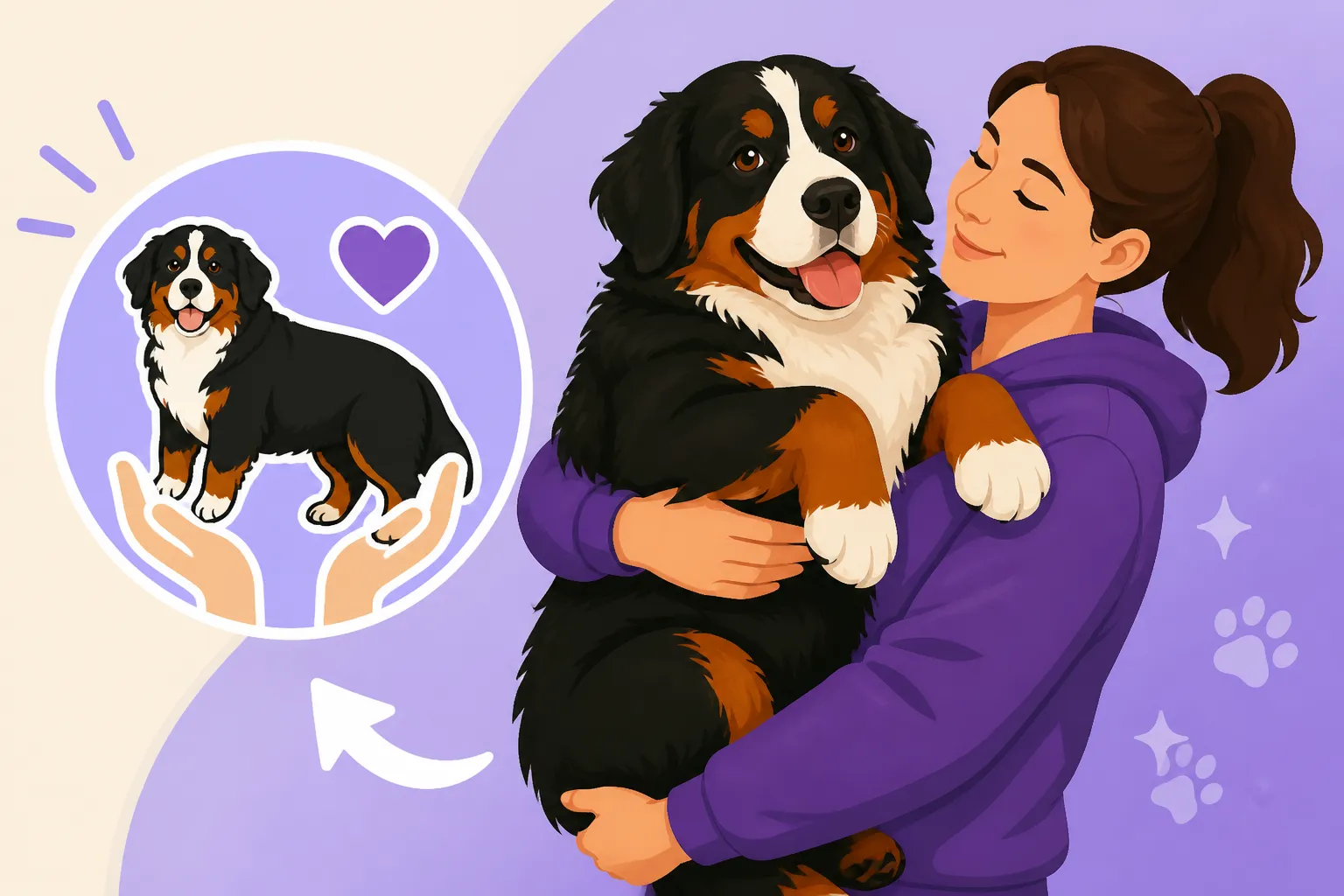
- Technique: Approach from the side. Place one arm under their chest, just behind the front legs. Slide your other arm under their hindquarters, making sure to support their full weight. Give your "Up" cue. Bend your knees, keep your back straight, and lift slowly, using your legs. Hold them close to your body for maximum stability.
- Caution: Even with smaller adults, this can be strenuous. Only attempt if you are physically capable and your dog is cooperative.
-
Using Assistance Tools: When a single-person lift is unavoidable for an injured or elderly Bernese, specialty harnesses can be a game-changer. These harnesses often feature handles over the back or loops under the belly, allowing you to get a better grip and distribute their weight more evenly.
- Commercial Lifting Harnesses: Brands like Amazon offer a wide range of lifting harnesses designed for large breeds. Look for sturdy construction, padded straps, and multiple handles. These can be indispensable for assisting an older dog with Living With a Bernese Mountain Dog Losing Its Back Legs or helping them into a car.
- Sling/Towel Method: In an emergency, a sturdy towel or a blanket folded into a sling can be used. Slide it under their belly, between their front and back legs. You can then use the ends of the towel as handles to lift and support their weight, especially useful for getting them into a car. While not as secure as a dedicated harness, it can offer critical assistance in a pinch. Consider investing in a proper lifting harness if you anticipate your dog will need frequent assistance. You can learn more about specific options in Harnesses That Lift a Bernese Mountain Dog.
| Lifting Scenario | Dog's Size/Condition | Recommended Technique | Key Considerations |
|---|---|---|---|
| Puppy/Small Adult (under 60 lbs) | Healthy, cooperative | Single-person cradle | Support chest and hindquarters, lift with legs. |
| Medium Adult (60-90 lbs) | Healthy, cooperative | Two-person lift; single-person for short distances | Use lifting harness for single person. Coordinate. |
| Large Adult (90+ lbs) | Healthy, cooperative | Two-person lift | Absolute best for safety and dog comfort. |
| Injured/Ill Dog | Any size | Two-person lift; lifting harness (single person) | Extreme care, keep spine level, move slowly. |
| Elderly Dog with Mobility Issues | Any size | Lifting harness; two-person lift; sling/towel | Gentle, provide full support, regular practice. |
Addressing Common Obstacles and Setbacks
Even with the best intentions and training, you might hit a snag. Bernese Mountain Dogs are individuals, and some will naturally be more accepting than others. Understanding common challenges can help you navigate them effectively.
The "Frozen" or Resistant Berner
Sometimes, despite all your gentle efforts, your Bernese might become rigid, stiffen their legs, or simply flop their weight in a way that makes lifting impossible. This "freezing" or dead-weight resistance is often a sign of fear, anxiety, or discomfort.
- Stop and Assess: The first step is to immediately stop trying to lift. Forcing the issue will only escalate their fear and make future attempts even harder.
- Identify the Cause: Is there a specific body part that seems sensitive? Are they reacting to your posture or tone of voice? Have you been too quick in your progression? Whether a Bernese Mountain Dog Hides Discomfort is crucial to consider here; they might be in pain.
- Go Back a Step (or Two): Return to an earlier, easier step in your desensitization process. Perhaps they're okay with just your hands in position, but not with pressure. Spend more time at that comfortable stage, showering them with rewards.
- Change the Environment: Sometimes a change of scenery can help. Practice in a quiet, familiar room where they feel safe.
- Increase Rewards: Are your treats high-value enough? For a difficult task, you need truly irresistible motivators – boiled chicken, cheese, or special training treats. Brands like BAXTER & Bella often emphasize positive reinforcement and offer resources that can guide you in choosing the right training aids and techniques to make these interactions more positive.
- Seek Professional Help: If the resistance is persistent or accompanied by growling, consult a professional positive reinforcement trainer or a veterinary behaviorist. They can help identify underlying fears or anxieties and develop a tailored plan.
Fear-Based Aggression or Nipping
It's rare for a Bernese Mountain Dog to show true aggression, but if they are deeply fearful or in pain, they might resort to growling, snapping, or even nipping as a warning signal. This is almost always a defensive reaction, not maliciousness.
- Immediate Halt: If your Berner growls or snaps, stop immediately. Do not push through it. This is their way of saying, "I'm terrified, please stop."
- Safety First: Your safety and the dog's emotional well-being are paramount. Do not continue trying to lift if you are getting these warning signs.
- Rule Out Pain: Any sudden aggression during handling, especially in an otherwise gentle dog, should prompt an immediate veterinary check-up. They might have an injury or an underlying painful condition that makes being touched or lifted intolerable. Consider if they recently had their Dental Cleaning Under Anesthetic for a Bernese Mountain Dog or another procedure that might cause residual soreness.
- Professional Intervention: This level of fear requires professional help. A certified professional dog trainer or veterinary behaviorist can assess the situation, determine the root cause, and implement a safe and effective behavior modification plan. Trying to address this on your own without expert guidance can be dangerous and worsen the problem.
Maintaining the Training as They Grow and Age
Lifting isn't a "one and done" training exercise. It's a skill that needs to be maintained throughout your Bernese Mountain Dog's life, adapting as they grow and, inevitably, age.
- Regular, Short Practice Sessions: Even when you don't need to lift them, practice brief, positive partial lifts or full two-person lifts a few times a month. Keep these sessions short and sweet, always ending with a reward. This keeps the skill fresh and reinforces the positive association.
- Adjusting for Growth: As your puppy grows into a large adult, your lifting technique will naturally change from a single-person cuddle to a coordinated two-person lift or a harness-assisted maneuver. Be mindful of their increasing weight and adjust accordingly. Don't push them to do something they did easily as a puppy if it's now too heavy or awkward.
- Consider Age-Related Changes: As Berners age, they are prone to joint issues like arthritis or conditions like Early Degenerative Myelopathy in a Bernese Mountain Dog. What was once a comfortable lift can become painful.
- Be Extra Gentle: Older dogs require an even gentler touch and more meticulous support. Always lift with their spine as straight as possible, avoiding twisting motions.
- Utilize Mobility Aids: This is where lifting harnesses truly shine. They can help you gently guide and support an older dog when getting up from a prone position, climbing stairs, or getting into a car. Investing in a good orthopedic bed and ensuring non-slip surfaces in your home can also help reduce the need for lifting in daily life. Helping an Old Bernese Mountain Dog Up Stairs is a crucial skill to develop.
- Consult Your Vet: Discuss any mobility changes with your veterinarian. They can recommend pain management strategies, supplements like those discussed in Joint Supplement Costs for a Bernese Mountain Dog, or physical therapy (like Hydrotherapy for an Arthritic Bernese Mountain Dog) that can make your dog more comfortable and potentially reduce the need for difficult lifts.
Remember, consistent, compassionate handling and training are key to ensuring your Bernese Mountain Dog feels safe and supported throughout their life, whether they're a tiny puppy or a distinguished senior.
Disclaimer
This article is for general informational purposes only and does not constitute professional advice. Laws, prices and regulations vary by location and change over time. Consult a qualified professional for guidance on your specific situation.