How Often a Growing Bernese Mountain Dog Is Fed
Bringing a Bernese Mountain Dog puppy into your home is an absolute joy, but it also comes with a lot of questions, especially around feeding. You’re watching this adorable fluffball grow at an astonishing rate, and naturally, you want to make sure you’re fueling that growth correctly. It’s easy to get overwhelmed trying to figure out the perfect feeding schedule to ensure strong bones and a healthy development without overdoing it. This guide is here to walk you through the journey of feeding your growing Bernese Mountain Dog, from those tiny puppy meals to the steady routine of adolescence and young adulthood.
The Critical Early Weeks: Puppy Feeding Frequency
Those first few months with your Bernese Mountain Dog puppy are a whirlwind of rapid growth and development. It’s a time when what and how often they eat lays the foundation for their entire skeletal structure and overall health. Getting this right means understanding their unique needs as a giant breed.
Weaning to 3 Months: Tiny Tummies and Frequent Meals
When your Bernese Mountain Dog puppy first comes home, likely between 8 and 12 weeks old, their digestive system is still quite immature. They have tiny tummies that can't hold a lot of food at once, but their bodies are undergoing an incredible growth spurt, demanding a consistent supply of nutrients. This is why frequent, smaller meals are absolutely crucial during this period.
Typically, puppies in this age range thrive on three to four meals per day. Imagine trying to eat your entire day’s calories in one or two sittings – it would be overwhelming, and your body wouldn’t absorb everything efficiently. It’s the same for your puppy. Spreading out their daily food intake ensures better digestion and a more stable blood sugar level, which supports their boundless energy and ongoing development. Skipping meals or offering too much at once can lead to digestive upset, like diarrhea or vomiting, and even impact their energy levels.
The consistency of their food is also important. Many breeders will send puppies home already transitioned to dry kibble, but sometimes it might still be slightly moistened with warm water to make it easier to chew and digest. Always check with your breeder about what they were feeding and try to stick to that, at least for the first week or two, to minimize stress. Remember, proper nutrition now is vital, particularly when considering factors like Why a Bernese Mountain Dog Puppy Needs Controlled Calcium to support their massive bone development.
3 to 6 Months: The Growth Spurt Begins
As your Bernese Mountain Dog puppy moves past the three-month mark and heads towards six months, you’ll notice they start to look less like a tiny bear cub and more like a miniature version of the majestic adult Berner. This phase is characterized by an intensified growth spurt. Their bones are lengthening, their muscles are developing, and their energy demands are high. However, their digestive system is also maturing, allowing them to handle slightly larger meal volumes.
During these months, many owners find success in transitioning from four meals a day down to three. This doesn't mean reducing their total daily intake; rather, you're distributing the same amount of food into fewer, larger meals. For example, if your puppy was eating 3 cups a day across four meals, they might now eat 1 cup per meal three times a day. It’s a subtle shift that matches their increasing stomach capacity and digestive efficiency. The key here is to maintain a steady, healthy growth rate, avoiding any kind of rapid weight gain that could put undue stress on their developing joints. This delicate balance is incredibly important, as you want to prevent issues related to What Fast Growth Costs a Bernese Mountain Dog's Joints.
Monitor your puppy’s energy levels, stool consistency, and overall demeanor closely during this transition. If they seem excessively hungry between meals, or if their stools become loose, it might be a sign that the portions need adjusting or that they aren't quite ready for fewer meals. Every Bernese Mountain Dog puppy grows at its own pace, so flexibility and observation are your best tools. Understanding How Fast a Bernese Mountain Dog Puppy Should Grow can give you a benchmark, but always prioritize your individual puppy's well-being.
Navigating Adolescence: 6 Months to Adulthood
The adolescent phase in a Bernese Mountain Dog is a fascinating, sometimes challenging, period where they're rapidly approaching their physical size but are still very much puppies mentally and hormonally. This stage typically spans from around six months up to two years, and their feeding schedule will continue to evolve.
6 to 12 Months: Settling into a Routine
From six months up to their first birthday, your Bernese Mountain Dog is truly starting to fill out. While their rapid vertical growth might slow a little compared to the earlier months, they’re still adding significant weight and muscle. Many owners find this is the ideal time to transition their Berner to two meals a day, morning and evening. This routine mimics an adult feeding schedule and is generally well-tolerated by their now more robust digestive systems.
Moving to two meals a day offers several benefits. It establishes a consistent routine that can aid in house training and general predictability for your dog. It also reduces the number of times you need to prepare food, which is a small but welcome convenience as your Berner's meal portions become quite substantial! However, it's paramount to ensure that the total daily food intake remains appropriate for their age, weight, and activity level. You'll need to divide their total daily ration into two larger portions rather than simply cutting out a meal. This is also the phase where you need to be particularly diligent about monitoring their body condition. It's so easy for a growing Bernese Mountain Dog to become overweight, which can exacerbate potential joint issues down the line. Regularly checking for The Body Condition a Bernese Mountain Dog Should Carry is crucial; you should be able to feel their ribs easily, but not see them.
Consistency around meal times is also a huge part of managing behavior. Bernese Mountain Dogs thrive on routine, and knowing when their meals are coming can help mitigate anxiety or excessive begging. If you're struggling to decide on a feeding program, many reputable large breed puppy foods will have feeding guidelines printed on their packaging, which you can use as a starting point. Brands available on platforms like Chewy or Amazon often provide detailed charts.
12 to 24 Months: Finishing the Grow-Up
Even after their first birthday, a Bernese Mountain Dog is still considered a "growing" dog in many respects. While much of their height has been achieved, they will continue to mature and fill out, adding muscle and achieving their full majestic breadth, often until they are around 18-24 months old. This period sees them fully transition into an adult feeding frequency, which for most Bernese Mountain Dogs, means two meals per day.
By now, your Berner's digestive system is fully mature, and two well-portioned meals are perfectly sufficient to meet their nutritional needs. This is also the time when you'll likely transition them from a large breed puppy formula to a large breed adult formula. Puppy foods are typically higher in calories and certain nutrients to support rapid growth, which can become detrimental once that initial growth spurt is complete. Adult formulas are designed to maintain a healthy weight and provide balanced nutrition without encouraging excessive growth or fat accumulation. It’s important to understand The Month a Bernese Mountain Dog Stops Growing Up to make this transition at the right time.
Beyond physical growth, this age also marks significant mental maturation. While Berners can remain playful and somewhat "puppy-like" in spirit for longer, their brains are developing, and they become more settled. This mental maturity, discussed further in The Age a Bernese Mountain Dog Grows Up Mentally, can also contribute to a more predictable and calm mealtime routine. Continue to monitor their weight closely, adjusting portion sizes based on their activity level. A very active Berner might need slightly more food than a couch potato, but always be mindful of not overfeeding.
Practical Considerations for Mealtime Success
Feeding your growing Bernese Mountain Dog isn’t just about what you feed or how much, but also how you manage the mealtime experience itself. These practical considerations can make a huge difference in their health, well-being, and even prevent some common giant breed issues.
The Importance of a Consistent Schedule
Dogs are creatures of habit, and Bernese Mountain Dogs are no exception – in fact, their serene and predictable nature often thrives on routine. Establishing a consistent feeding schedule from day one is one of the best things you can do for your growing Berner. Imagine the internal clock your dog develops: they know when to expect breakfast, lunch, and dinner. This predictability isn't just about managing hunger; it plays a significant role in their overall digestion, metabolism, and even house training.
When meals are served at roughly the same time each day, your dog's digestive system learns to anticipate food, allowing for more efficient nutrient absorption and predictable bowel movements. This consistency is a huge aid in potty training, as you'll know roughly when they'll need to go out after eating. A chaotic feeding schedule, on the other hand, can lead to digestive upset, anxiety around food, and can make house training much more difficult. Moreover, for a breed prone to bloat, which we'll discuss shortly, regular, spaced-out meals are a preventative measure. So, pick your times – maybe 7 AM, 1 PM, and 7 PM for a younger puppy, or 7 AM and 6 PM for an older adolescent – and stick to them as closely as possible.
Monitoring Weight and Body Condition
This cannot be stressed enough: consistently monitoring your Bernese Mountain Dog’s weight and body condition is paramount throughout their growth. Berners are naturally robust and can easily become overweight, especially during their growth phases if their food intake isn't carefully managed. Excess weight puts immense strain on their developing joints, contributing to conditions like hip and elbow dysplasia, which are already concerns for the breed. You might think a little extra puppy fat is cute, but for a Bernese, it can lead to serious long-term health issues.
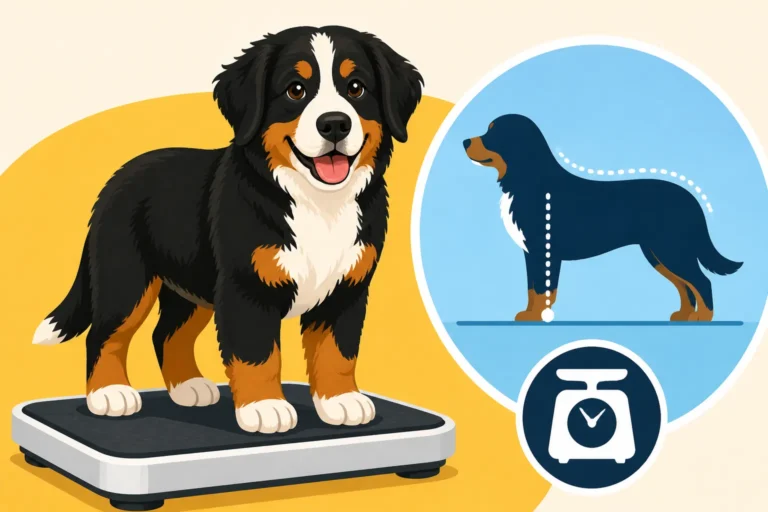
To assess your Berner's body condition, use both your eyes and your hands. From above, you should see a discernible waist, tapering in slightly after the ribs. From the side, their abdomen should tuck up slightly, not hang straight down. Critically, you should be able to feel their ribs easily when you run your hands along their side, without pressing hard, but you shouldn't be able to see them protruding. If you're unsure, ask your vet to demonstrate. This hands-on check is particularly important for Berners, whose thick coats can hide a multitude of sins – you might think they look fine visually, but their build underneath could be telling a different story. You can learn more about this by reading Finding a Bernese Mountain Dog's Ribs Under the Coat. If your Berner is gaining weight too quickly or appears to be getting a bit chunky, slightly reduce their portion sizes or increase their controlled exercise. Conversely, if they seem too thin, you might need to slightly increase their food. Always consult your vet if you have concerns, as they can help you determine The Daily Ration a Hundred Pound Berner Gets based on their individual needs.
Managing Mealtime for Bloat Prevention
Gastric Dilatation-Volvulus (GDV), more commonly known as bloat, is a life-threatening condition that deep-chested breeds like the Bernese Mountain Dog are unfortunately prone to. While the exact causes are complex and not fully understood, how and when a dog eats is believed to play a role. Feeding smaller, more frequent meals, especially for a growing puppy, is one of the key recommendations for bloat prevention.
Instead of one massive meal that can fill the stomach and potentially cause it to twist, breaking the daily ration into two or three smaller meals reduces the risk. It allows the stomach to digest food more calmly and efficiently. Another crucial tactic is to prevent rapid eating. Some Berners can inhale their food in mere seconds, which can lead to swallowing a lot of air along with their kibble. This air accumulation might contribute to bloat. Using a slow feeder bowl can be incredibly effective in mitigating this. These bowls have various ridges or obstacles that force your dog to eat around them, significantly slowing down their consumption. You can find excellent slow feeder options readily available on platforms like Amazon or Chewy. Additionally, it’s vital to restrict vigorous exercise for at least an hour before and, more importantly, after meals. A full stomach bouncing around during play or running is thought to increase the risk of bloat. This simple routine adjustment can be a lifesaver, alongside learning more about What Bloat Looks Like in a Bernese Mountain Dog.
| Age Range | Recommended Feeding Frequency | Key Considerations |
|---|---|---|
| 8 weeks to 3 months | 3-4 meals per day | Small stomach capacity, rapid growth, developing digestion |
| 3 months to 6 months | 3 meals per day | Intense growth spurt, increasing stomach capacity |
| 6 months to 12 months | 2-3 meals per day | Approaching full height, filling out, maturing digestion |
| 12 months to 24 months | 2 meals per day | Continued muscle development, transition to adult food |
Common Feeding Mistakes to Avoid
Even with the best intentions, it's easy to fall into common feeding traps, especially with a breed as endearing and food-motivated as the Bernese Mountain Dog. Being aware of these pitfalls can save you a lot of heartache and vet bills in the long run.
Free-Feeding: Why It's Not Ideal for Berners
The idea of free-feeding – leaving a bowl of kibble out all day for your dog to graze on whenever they please – might sound convenient and even generous. However, for a growing Bernese Mountain Dog, it's generally not recommended and can actually be quite detrimental to their health and well-being. This is particularly true for giant breeds susceptible to specific health issues.
Firstly, free-feeding makes it incredibly difficult to monitor your Berner's actual food intake. You won't know if they're eating too much, which leads to obesity, or too little, which could signal an underlying health issue. As we've discussed, maintaining a healthy body condition is critical for preventing joint problems in Berners. Secondly, free-feeding can increase the risk of bloat, as the dog might gorge themselves at unpredictable times. Thirdly, it can lead to pickiness or food guarding issues. If food is always available, it often loses its value as a reward, making training more challenging. Furthermore, stale kibble sitting out all day can attract pests, or become rancid, losing its nutritional value and potentially causing digestive upset. Establishing clear meal times creates a valuable resource that strengthens your bond and provides structure, and it allows you to better manage their growth, which can even influence their longevity. Research suggests that Whether a Lean Bernese Mountain Dog Lives Longer, and controlled feeding is key to achieving that.
Too Few or Too Large Meals
Another common mistake, especially as puppies get older, is attempting to feed them too few meals, or giving them excessively large portions in one go. While it might seem efficient to provide one large meal a day to an adolescent Bernese Mountain Dog, their physiology isn't designed for it. For giant breeds like Berners, this practice can put unnecessary strain on their digestive system and significantly elevate the risk of bloat.
A single large meal floods the stomach, causing it to stretch and making it more prone to twisting. It can also lead to nutrient absorption issues, as the body struggles to process such a large volume of food at once. This can manifest as digestive upset, or conversely, the feeling that your dog is constantly hungry because their system isn't optimized. Moreover, the long stretches between meals can lead to dips in blood sugar, potentially affecting their energy levels and mood. This is why the shift from puppy to adult feeding is a gradual reduction in frequency rather than immediately jumping to one meal. Even for an adult Bernese Mountain Dog, two meals a day is overwhelmingly the preferred and recommended approach by veterinarians and experienced owners. For young puppies, The Five Minute Rule and a Bernese Mountain Dog Puppy often applies to controlled, short bursts of activity, and the same careful approach should be considered for meal distribution.
Ignoring the Individual Dog
While guidelines are incredibly helpful and provide a solid starting point, it's crucial to remember that every Bernese Mountain Dog is an individual. What works perfectly for one Berner might not be ideal for another, even within the same litter. Factors like metabolism, activity level, stress, and even subtle individual health differences can all influence how much and how often your particular dog needs to eat.
For example, a Bernese Mountain Dog puppy who is naturally more energetic and active might require slightly more food than a more laid-back sibling. A dog undergoing a growth spurt might temporarily need an increase in their daily allowance. Conversely, if your Berner is prone to gaining weight, you might need to be more conservative with portions or even consider feeding slightly less than the recommended amount on the food bag, which often represents a broad average. This individualized approach is where your observation skills truly come into play. Pay close attention to your dog's energy levels, coat condition, stool quality, and most importantly, their body condition. Consult with your veterinarian regularly, especially during the growth phases, as they can provide tailored advice based on your dog's specific needs and health profile. This personalized attention ensures that your Bernese Mountain Dog receives the optimal nutrition for a healthy, happy life. Brands like Ollie, for instance, often pride themselves on offering customized meal plans that take an individual dog's weight, age, and activity into account, which can be a real benefit for a growing Berner.
Disclaimer
This article is for general informational purposes only and does not constitute professional advice. Laws, prices and regulations vary by location and change over time. Consult a qualified professional for guidance on your specific situation.