Whether a Heavy Bernese Mountain Dog Puppy Damages Itself
It's such a common worry for us Bernese Mountain Dog parents, isn't it? You look at your beautiful, fluffy puppy, growing at what seems like an astonishing rate, and a knot forms in your stomach: is all this rapid growth actually bad for them? You're right to be concerned, because while their impressive size is part of their charm, an unchecked growth trajectory can indeed put them at risk for serious long-term health issues. This guide is here to walk you through the nuances of healthy Bernese Mountain Dog puppy growth, what to watch out for, and how to safeguard your gentle giant's future.
The Delicate Dance of Bernese Mountain Dog Puppy Growth
When you bring home a Bernese Mountain Dog puppy, you're not just getting a dog; you're adopting a rapidly expanding, fluffy cloud of potential. These puppies are predisposed to grow incredibly fast, going from a tiny bundle to a substantial dog in a matter of months. This rapid growth period is crucial and, unfortunately, can be a double-edged sword. Their bones and joints are developing at an accelerated pace, and this makes them particularly vulnerable to issues if their growth isn't managed carefully.
Think about it like building a house. If you rush the construction, skimp on materials, or put too much weight on the foundation before it's properly set, you're asking for trouble down the line. A Bernese Mountain Dog puppy's skeletal system is much the same. During this formative time, the cartilage that cushions their joints and forms the growth plates in their long bones is still soft and susceptible to damage. Excess weight, or even just too much high-impact activity, can place undue stress on these delicate structures. This stress can lead to malformations, inflammation, and degenerative conditions that will impact them for their entire lives. It's not about keeping them small; it's about ensuring their growth is steady, proportional, and allows their bodies to mature solidly, much like a slow and steady construction project that prioritizes a strong foundation. You want a robust, well-built dog, not one rushed into being.
The Risks of Overfeeding and Rapid Weight Gain
One of the biggest culprits in unhealthy Bernese Mountain Dog puppy growth is overfeeding, which directly leads to rapid weight gain. It seems counterintuitive, right? You want your puppy to be robust and healthy, and often, that translates in our minds to a well-fed puppy. But for giant breeds like Berners, an abundance of calories, especially in puppyhood, can be genuinely detrimental.
When a Bernese Mountain Dog puppy consumes too many calories, their body grows faster than their skeletal system can properly develop and strengthen. This isn't just about gaining fat; it’s about the bones and joints not having enough time to mineralize and harden correctly to support the increased mass. This disproportionate growth is a significant risk factor for several orthopedic diseases, most notably hip and elbow dysplasia. Hip dysplasia, for example, is a condition where the hip joint doesn't form properly, leading to looseness and eventual painful arthritis. Elbow dysplasia is a similar issue affecting the elbow joint. While genetics play a huge role in these conditions, environmental factors like rapid growth can absolutely exacerbate them or even trigger their onset in a predisposed puppy. A heavier, faster-growing puppy puts more pressure on these still-forming joints, increasing the likelihood of damage and the severity of any existing genetic vulnerabilities.
Moreover, the type of food matters, not just the quantity. Puppy foods designed for small or medium breeds often have higher protein and calorie content, and critically, different calcium-to-phosphorus ratios than what a large or giant breed puppy needs. Excess calcium, in particular, can interfere with bone growth and remodeling, contributing to developmental orthopedic diseases. It's a fine line to walk, and it can feel overwhelming trying to get it just right when every bag of puppy food promises to be the best. That's why it's so important to seek out formulas specifically designed for "large breed puppies." These diets are formulated with carefully controlled calorie levels and balanced minerals to promote slower, more consistent growth, giving those crucial joints time to mature properly. Brands available on platforms like Chewy or Amazon often clearly label their large breed puppy formulas, making it easier to select the right one.
| Growth Indicator | Healthy, Controlled Growth | Rapid, Uncontrolled Growth |
|---|---|---|
| Weight Gain | Steady, predictable increase; visible waistline | Explodes in size; appears "chunky" or overly muscular |
| Energy Levels | Playful but with appropriate rest; sustained activity | Bursts of intense play followed by long crashes; reluctant to move |
| Joint Soundness | Moves freely, no lameness or stiffness (unless overexerted) | Occasional limping, reluctance to play, "bunny hopping" |
| Coat/Skin Condition | Healthy, shiny coat; no excessive shedding beyond normal | Dull coat, flaky skin, potential for hot spots |
| Developmental Rate | Reaches adult weight/height over 18-24 months | Appears "adult-sized" by 10-12 months, then fills out |
| Risk of Orthopedic Issues | Reduced | Increased likelihood and severity |
It really helps to chart your puppy's weight against breed-specific growth charts, often available through your breeder or veterinary resources. This isn't about hitting an arbitrary weight goal, but ensuring they are staying within healthy growth curves rather than shooting past them. You want your puppy to look lithe and athletic, not like a little butterball, even if they are undeniably cute in that phase.
Understanding the Role of Genetics and Environment
It's a common misconception that if a puppy has the "right" genes, they'll be immune to developmental issues. While excellent genetics are absolutely foundational for a Bernese Mountain Dog puppy's health, they are only one piece of the puzzle. The environment you provide – specifically, their diet and exercise – plays an equally critical role in how those genes express themselves. Even a puppy from impeccably health-tested parents can develop orthopedic problems if their growth isn't managed properly. This is where you, as a responsible owner, become their greatest advocate.
Think of genetics as a blueprint. A well-designed blueprint (good genetics) provides the best possible plan for a sturdy structure. However, if the builders (diet and exercise) rush the construction, use poor quality materials, or push the limits of the design, even the best blueprint won't prevent structural flaws. Conversely, a less-than-perfect blueprint might still result in a functional structure if the builders are meticulous and take their time. This is why breeders spend so much effort on The Bernese Mountain Dog Health Panel and getting OFA Clearances a Bernese Mountain Dog Should Have for their breeding stock. They're trying to give you the best possible blueprint, but you still need to build the house correctly.
For instance, a puppy genetically predisposed to hip dysplasia might never show severe symptoms if kept lean and allowed for slow, controlled growth. However, that same puppy, if overfed and allowed to gain weight too quickly, could develop debilitating hip issues. This is why we often refer to these conditions as "multifactorial" – they're influenced by many factors working in concert. It's why a breeder might share information from the What the Berner-Garde Database Records, showing generations of healthy hips, but still emphasize the importance of your role in the puppy's early life.
Practical Steps to Support Healthy Growth
So, what can you actually do to ensure your Bernese Mountain Dog puppy grows up strong and healthy? It boils down to a few key areas that are entirely within your control.
Choosing the Right Diet
This is paramount. As mentioned, a diet specifically formulated for large breed puppies is crucial. These foods are designed to be lower in calories and have a balanced calcium-to-phosphorus ratio to prevent overly rapid growth and subsequent skeletal problems. Talk to your veterinarian about recommended brands, but many high-quality options are available. When you're browsing for food, whether on Chewy, Amazon, or at a local pet store, always look for the "large breed puppy" designation. Brands like Royal Canin Giant Puppy or Pro Plan Large Breed Puppy are often cited as good starting points, but always check the specific nutritional content and discuss with your vet.
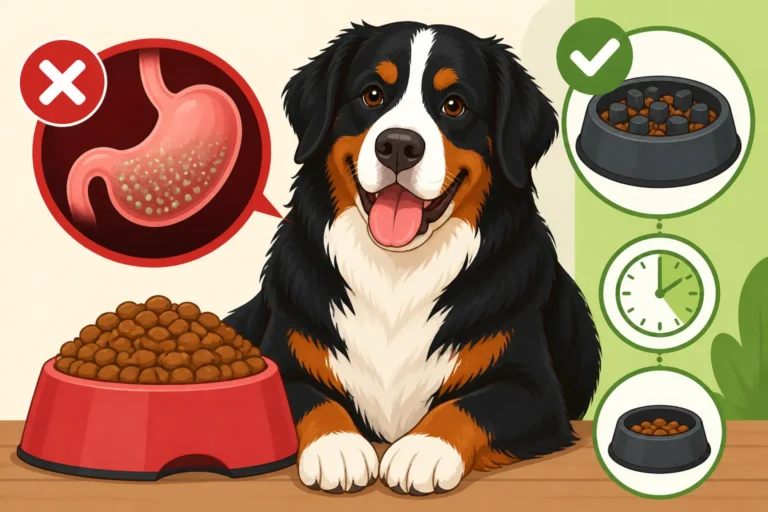
It's tempting to want to give your puppy "more" because they're so big and seem perpetually hungry, but resist the urge to free-feed or overfill their bowl. Follow the feeding guidelines on the bag, but remember these are just starting points. Adjust based on your puppy's individual condition – you should be able to feel their ribs easily without seeing them sharply. If you're considering fresh food options like Ollie, discuss the specific nutrient balance with your vet to ensure it meets the unique needs of a growing giant breed puppy.
You also need to understand Why a Bernese Mountain Dog Puppy Needs Controlled Calcium. Too much calcium, often found in supplements or human foods, can throw off their delicate bone development and exacerbate growth disorders. Stick to their balanced kibble and avoid adding extra vitamins or minerals unless specifically instructed by your vet.
Managing Exercise and Activity Levels
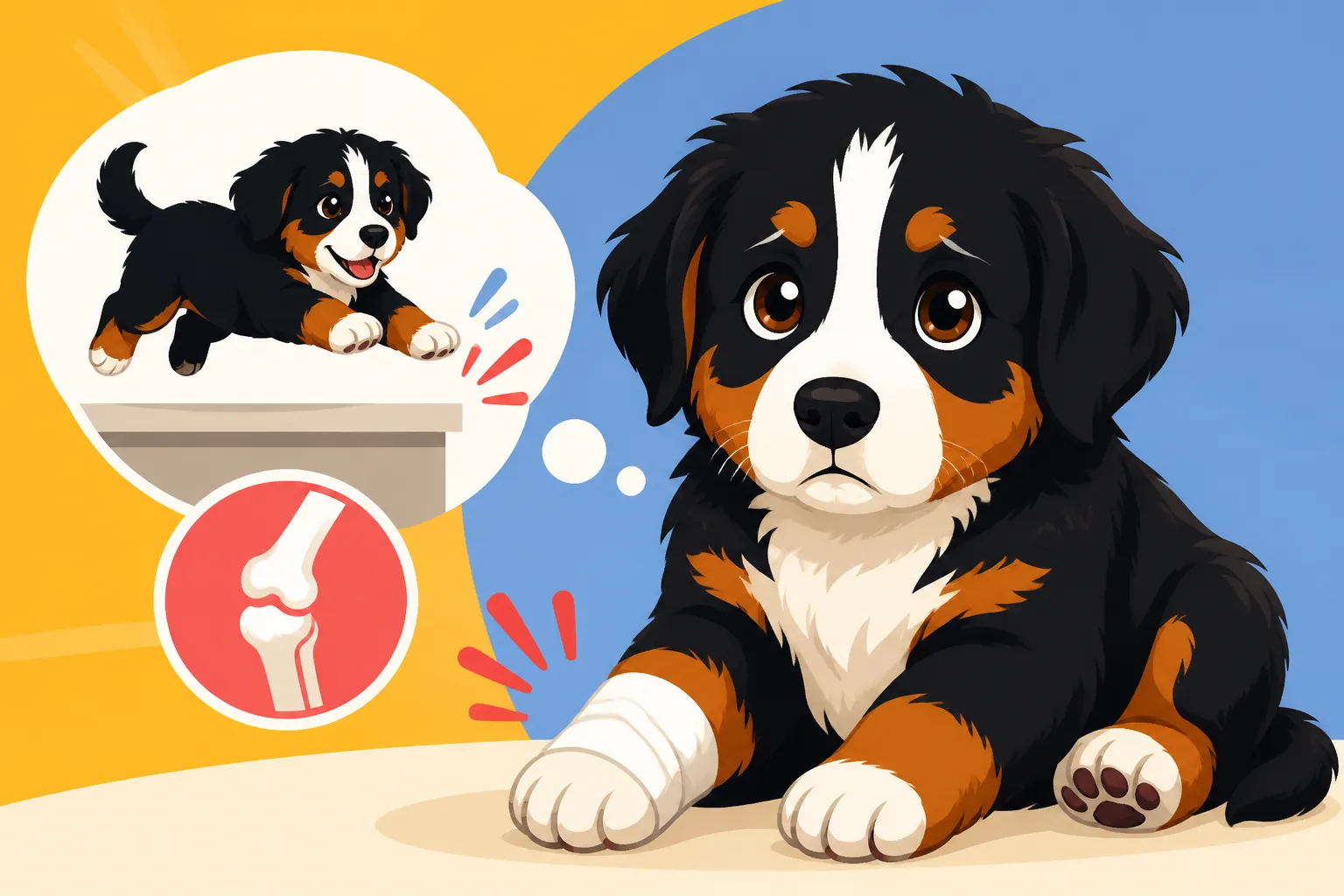
This is another area where "more is not better" for a Bernese puppy. While they need regular exercise for physical and mental development, it must be carefully controlled, especially in their first 12-18 months. High-impact activities like jumping, long runs, or intense agility work can put enormous stress on their still-developing growth plates and joints. Imagine a child whose bones haven't fully fused yet being asked to run a marathon – it's just too much.
Instead, focus on short, frequent, low-impact exercise sessions. Think gentle walks on soft surfaces like grass, supervised play in the yard, or short training sessions. The "five-minute rule" is a great guideline: roughly five minutes of structured exercise per month of age, twice a day. So, a four-month-old puppy would get about 20 minutes of walking, twice a day. The Five Minute Rule and a Bernese Mountain Dog Puppy is a concept worth understanding thoroughly. Avoid strenuous activities, especially on Hard Surfaces and a Growing Bernese Mountain Dog, as these can transmit jarring impacts directly to delicate joints. Let your puppy decide when to rest during playtime. If they lie down or seem tired, respect that. You're building an athlete, not pushing them to burnout.
Regular Veterinary Check-ups and Monitoring
Consistent veterinary care is essential to monitor your puppy's growth and overall health. Your vet can assess their body condition score, track their weight against ideal growth curves, and provide guidance on diet and exercise specific to your puppy's needs. They can also perform physical examinations to check for any early signs of lameness or joint discomfort. Don't hesitate to voice your concerns about your puppy's growth rate. Open communication with your vet is your best tool.
Early detection of issues can make a significant difference in management and outcome. If you notice any limping, stiffness, reluctance to play, or an unusual gait, get it checked out immediately. These could be subtle signs that their rapid growth is indeed causing problems. Even if it turns out to be nothing serious, peace of mind is invaluable, and catching a potential issue early can prevent it from escalating.
By being diligent about diet, controlling exercise, and maintaining regular vet check-ups, you're doing everything in your power to ensure your Bernese Mountain Dog puppy grows into a strong, healthy adult, minimizing the chances of their impressive size causing them pain later in life.
Disclaimer
This article is for general informational purposes only and does not constitute professional advice. Laws, prices and regulations vary by location and change over time. Consult a qualified professional for guidance on your specific situation.