Whether a Bernese Mountain Dog Wears Its Nails Down
Many Bernese Mountain Dog owners wonder if their big, beautiful companions, with all their walking and romping, naturally keep their nails at a healthy length. It’s a common thought, especially when you see them thundering across the yard! Unfortunately, for most Berners living in our modern world, natural wear simply isn't enough, and this guide will dive into why that is and how you can proactively maintain your Berner's paw health.
The Reality of Bernese Mountain Dog Nail Wear
It’s easy to assume that a large, active dog like a Bernese Mountain Dog, with their imposing size and love for the outdoors, would have no problem wearing down their nails naturally. After all, they’re designed for rugged terrain, right? The truth is, while a wild canine might manage its nails through constant activity on varied, abrasive surfaces, our beloved Berners often live very different lives.
Why Natural Wear Isn't Enough for Most Berners
Think about your Berner's daily routine. Is it spent scaling mountains and trekking miles over rocky paths? Probably not for most of us! Instead, they might spend their days lounging on soft carpets, playing on grassy lawns, or strolling on paved sidewalks. These surfaces, while comfortable for their paws, don't offer the consistent abrasion needed to file down thick, strong nails.
Even if your Berner gets plenty of exercise, the type of surface makes a huge difference. A leisurely walk around the neighborhood on concrete is better than just grass, but it's often not enough to grind down the tough outer nail casing, especially the ever-growing quick underneath. The quick, which contains blood vessels and nerves, grows with the nail, making it incredibly challenging to trim back if left too long. Imagine trying to wear down your own fingernails by simply walking around; it just doesn't happen effectively. For our hundred-pound Bernese Mountain Dogs, their substantial weight doesn't magically solve this problem, contrary to popular belief. Their sheer mass, while great for pulling carts in their ancestral role, often just means their nails grow thicker and stronger, requiring even more attention.
The Impact of Environment and Lifestyle on Nail Health
Your Berner’s environment plays a massive role in whether their nails get any natural wear at all. A dog living on a farm with access to gravel driveways, dirt paths, and rough ground might see a bit more natural abrasion than a city dog whose life primarily consists of plush carpets and short bursts of pavement walks.
Consider the difference:
- City Living: Frequent walks on smooth sidewalks, asphalt, and often, manicured park lawns. These surfaces are relatively soft on the nails. While the pavement does offer some abrasive action, it's rarely sustained enough to keep up with growth, particularly for the back nails which often touch the ground less firmly.
- Suburban Living: A mix of grass, paved driveways, and perhaps some concrete paths. Again, the soft grass and often limited time on truly abrasive surfaces mean little natural wear.
- Rural Living: Potentially more exposure to varied terrain – gravel, dirt, rocky trails. This is where you might see the most natural wear, but even then, it's often not uniform across all nails or enough to keep them perfectly short.
Even when Berners are active, the specific mechanics of their gait can mean certain nails wear down less than others. Their front nails, for example, might get more contact with the ground, but their dewclaws (if present) almost never touch the ground and will grow unchecked without intervention. It’s a bit like trying to sand a piece of wood with a feather – some friction, but not nearly enough to get the job done right. This is why we, as owners, need to be proactive.
The Risks of Overgrown Bernese Mountain Dog Nails
Ignoring your Bernese Mountain Dog's nails isn't just a cosmetic issue; it's a significant health concern that can lead to pain, injury, and a cascade of other problems for your big friend. Their comfort and mobility are directly tied to the length of their nails, and when those nails get too long, it impacts everything.
Pain, Discomfort, and Altered Gait
Imagine walking around with shoes that are several sizes too small, forcing your toes to curl up uncomfortably. That's essentially what overgrown nails do to a Bernese Mountain Dog's paws. When nails grow too long, they push back into the nail bed, putting immense pressure on the delicate structures of the paw. This chronic pressure can be incredibly painful, making every step a discomfort.
The consequences go beyond simple pain. Long nails force the dog to alter their natural gait. Instead of walking squarely on their paw pads, they start shifting their weight backward, walking more on the back of their feet or even their hocks. This unnatural posture can lead to a host of orthopedic issues:
- Splayed Toes: The constant splaying of the toes to accommodate long nails weakens the ligaments and muscles in the foot.
- Joint Stress: This altered gait puts undue stress on all the joints, from the paws up through the wrists (carpals), elbows, shoulders, hips, and even the spine. For a breed already prone to Hips That Fail Under a Bernese Mountain Dog's Weight and Arthritis in a Bernese Mountain Dog by Six, this added strain is something we absolutely want to avoid. It's like adding extra mileage and wear-and-tear to an already heavily built vehicle.
- Reduced Mobility: A dog in constant pain from their feet isn't going to want to move as much, leading to decreased exercise, potential weight gain, and a general decline in their quality of life.
Increased Risk of Injury and Infection
Overgrown nails are also incredibly prone to injury. Think about how active Berners can be – running, playing, exploring. A long nail can easily get snagged on carpet, furniture, or rough terrain, leading to a painful tear or even ripping the nail completely off. A torn nail is not only excruciatingly painful but also creates an open wound that's ripe for bacterial infection, especially given how much time a dog spends sniffing and exploring ground-level environments.
Beyond acute injuries, long nails can curl under and grow into the paw pad, leading to agonizing ingrown nails. These can fester, become infected, and require veterinary intervention to treat. Additionally, dirty, overgrown nails can trap moisture and debris against the paw pad, creating a breeding ground for yeast and bacterial infections between the toes. Keeping their nails short is a fundamental part of overall paw hygiene and prevents these painful and potentially costly issues.
Practical Strategies for Bernese Mountain Dog Nail Care
Taking care of a Bernese Mountain Dog's nails is a routine but vital task that can feel a bit daunting due to their size and those famously thick black nails. But with the right approach and consistency, it becomes a manageable part of your Berner's health regimen.
Regular Trimming: The Cornerstone of Berner Nail Health
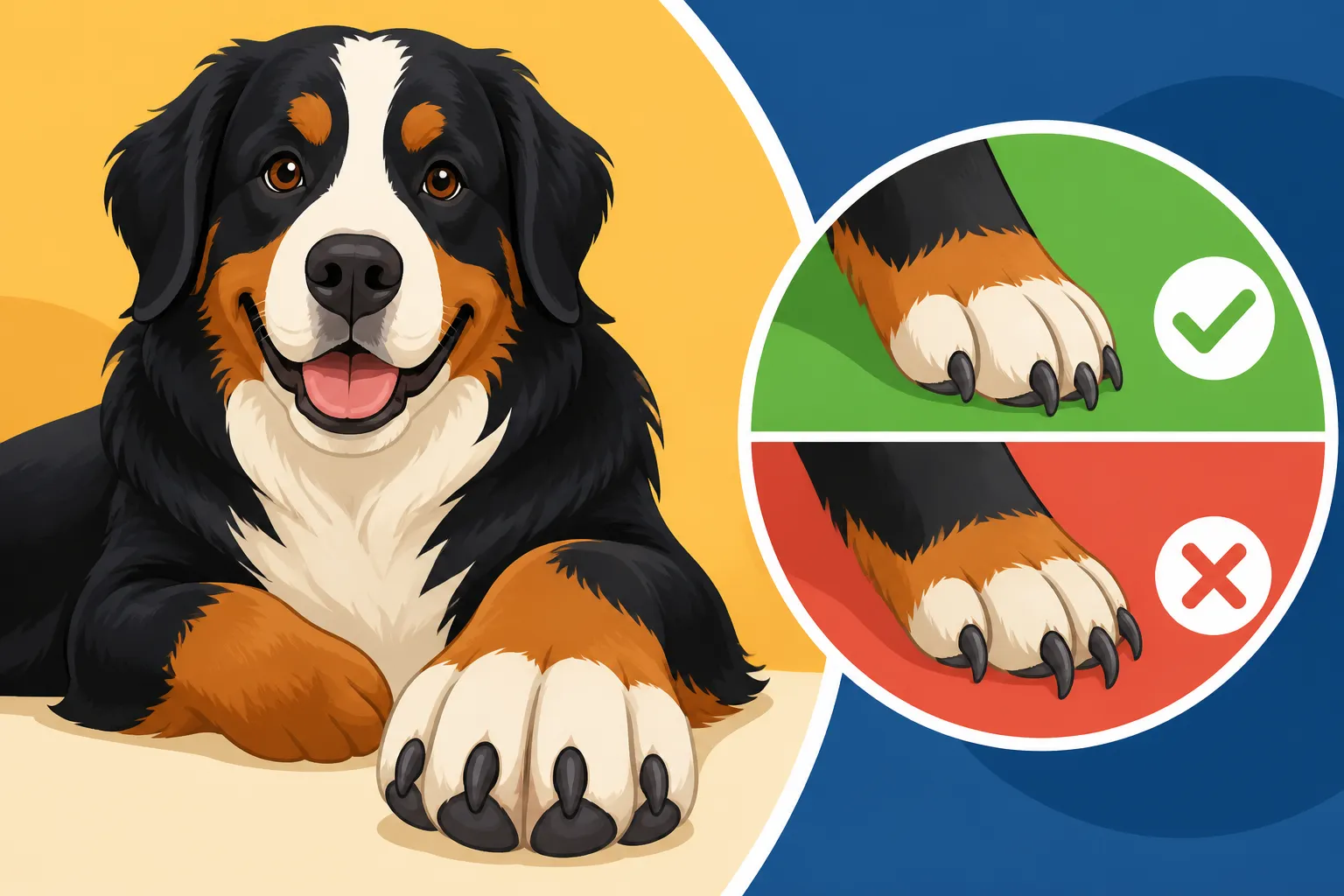
The most effective way to prevent overgrown nails is, without a doubt, regular trimming. For most Bernese Mountain Dogs, this means at least once a week, or every two weeks at the absolute minimum. You should aim to hear no clicking on hard floors when your Berner walks. If you do, it’s time for a trim.
There are two main tools for at-home nail care:
- Clippers: These come in guillotine style or scissor style. For large, strong Berner nails, many owners find scissor-style clippers, which resemble heavy-duty pliers, offer better leverage and control.
- Grinders: An electric nail grinder files the nail down slowly. This can be less stressful for some dogs, as it avoids the sudden 'snip' sensation of clippers, and allows you to take off tiny bits at a time, gradually receding the quick. This is especially helpful when dealing with Finding the Quick in a Bernese Mountain Dog's Black Nail, where the quick is notoriously hard to see.
Regardless of the tool you choose, positive reinforcement is key. Start when your Berner is a puppy, making nail time a positive experience with lots of treats and praise. Even with an adult dog, consistent, calm sessions with high-value rewards can turn a dreaded chore into a tolerable one. This ties into the broader concept of The Weekly Handling a Bernese Mountain Dog Should Accept, ensuring they're comfortable with being touched and groomed.
Complementary Methods for Encouraging Natural Wear
While trimming is paramount, you can certainly try to supplement it with activities that encourage a bit of natural wear, always with caution for your Berner's joints and paw pads.
- Pavement Walks: Regularly walking your Bernese Mountain Dog on paved surfaces like sidewalks or asphalt can help, but remember this comes with caveats. Pavement can get very hot, especially in warmer weather, leading to burns on their paw pads. Always check the ground temperature yourself before heading out. Also, prolonged or intense exercise on hard surfaces can be hard on their joints, which are already susceptible to issues. Short, frequent walks on pavement are usually better than one long, intense one. See Pavement Temperature and a Bernese Mountain Dog's Pads for more insights.
- Nail Boards/Scratch Pads: These are relatively new tools that some owners find helpful. It’s essentially a piece of wood or plastic covered in sandpaper or an abrasive surface. You train your dog to scratch at it, which files down the front nails. You can find various versions of these on online retailers like Amazon. It takes training and might not work for all dogs, and it generally doesn't address the back nails or dewclaws.
- Specific Activities: Some activities might offer minor nail wear. For example, playing fetch on a gravel path (again, with caution for heat and sharp edges) or doing structured training on a concrete pad. However, these should never replace regular trimming. Their primary benefit is often more about enrichment than significant nail maintenance.
Seeking Professional Help for Challenging Nails
There are times when tackling your Berner’s nails at home feels like an impossible task, and there's absolutely no shame in seeking professional help. Vets and professional groomers are equipped with experience and tools to handle even the most stubborn or overgrown nails.
- When to Visit the Vet: If your Berner's nails are severely overgrown, painful, or if you suspect an ingrown nail or infection, a vet visit is essential. They can safely trim the nails, address any underlying issues, and even sedate your dog for a fear-free experience if necessary. This is especially useful if your dog has developed a strong aversion to nail trims.
- Professional Groomers: Many groomers are adept at handling large breeds like Bernese Mountain Dogs and can perform regular nail trims, often at a quicker pace than you might manage at home. They have specialized tables and restraints, if needed, to keep your dog comfortable and safe. Understanding What a Bernese Mountain Dog Groom Costs can help you budget for this regular service. If your Berner is particularly strong or resistant, a groomer experienced with Grooming a Bernese Mountain Dog Too Big to Lift will be a lifesaver.
Products and Tools for At-Home Nail Maintenance
If you're committed to keeping your Berner's nails in top shape yourself, having the right tools makes all the difference. Investing in quality equipment can turn a frustrating experience into a manageable one.
Choosing the Right Clippers and Grinders
When it comes to Bernese Mountain Dogs, you need robust tools that can handle their thick, strong nails. Flimsy clippers will bend, splinter the nail, or simply not cut through cleanly, which is painful for your dog and frustrating for you.
- Scissor-Style Clippers: For most large breeds, these are often preferred over guillotine-style clippers. They give you more control and leverage, reducing the chance of slipping or crushing the nail. Brands like Resco or Millers Forge make durable options that can be found on pet supply sites like Chewy or Amazon.
- Pros: Strong, good leverage, quick trim.
- Cons: Can be intimidating, higher risk of cutting the quick if not careful.
- Electric Nail Grinders: These are excellent for gradually shortening the nail and smoothing rough edges. They are also fantastic for "quick-shy" dogs or if you're nervous about cutting too much. Many models have safety guards to prevent grinding too much off the paw itself. Look for grinders with strong motors designed for large breeds. Dremel is a popular choice, and many pet-specific grinders are available through retailers like Chewy.
- Pros: Less risk of quicking, smooth finish, can gradually recede the quick over time.
- Cons: Can be noisy (requires desensitization), takes longer, creates dust and heat.
Emergency Aid: Always have styptic powder or a styptic pencil on hand. Accidents happen, and if you accidentally nick the quick, this powder will quickly stop the bleeding. It’s a small, inexpensive investment that can prevent a lot of panic.
Training Aids and Comfort Items
Making nail trims a positive experience starts with a calm environment and high-value rewards.
- High-Value Treats: These are your best friend during nail trims. Think small, delicious, and easy-to-eat treats that your Berner absolutely adores. Many owners find dehydrated meat treats or soft training treats work wonders. Brands like Ollie offer fantastic, fresh options that can be broken into small, enticing pieces. Give a treat for every nail, or even just for tolerating the sight of the clippers.
- Non-Slip Mats: A large, non-slip mat or bath rug can provide your Bernese Mountain Dog with much-needed stability on hard floors during trimming. This helps them feel more secure and less anxious about slipping.
- Lick Mats/Distraction Devices: Some owners have great success by smearing peanut butter (xylitol-free!) or a pureed treat onto a lick mat and sticking it to a wall or floor. Your Berner will be happily distracted trying to get every last bit while you work on their paws.
Remember, patience is key. If your Berner is highly resistant, break down the process into tiny steps. Just touching a paw, then releasing, followed by a treat. Gradually work your way up to touching the clippers to the nail, and then eventually, making a small trim. This slow and steady approach often yields the best long-term results for both you and your gentle giant.
Comparison of Popular Nail Trimming Tools for Bernese Mountain Dogs
| Feature | Scissor-Style Clippers | Electric Nail Grinder (Dremel-style) |
|---|---|---|
| Ease of Use | Quick if dog is cooperative; requires precision. | Slower, but less risk of major error; good for beginners. |
| Speed | Very fast if dog allows. | Slower, takes more time per nail. |
| Risk of Quicking | Higher, especially with black nails. | Lower, as you remove small amounts gradually. |
| Nail Finish | Can leave sharp edges that need filing. | Smooth, rounded edge. |
| Noise Level | Silent clip (but can startle dog). | Vibrating, whirring noise (requires desensitization). |
| Best For | Experienced owners, cooperative dogs, quick touch-ups. | Nervous dogs, black nails, gradual quick recession. |
| Cost | Generally lower initial cost. | Higher initial cost, but long-lasting. |
| Maintenance | Keep blades sharp. | Clean bits, occasional bit replacement. |
Disclaimer
This article is for general informational purposes only and does not constitute professional advice. Laws, prices and regulations vary by location and change over time. Consult a qualified professional for guidance on your specific situation.