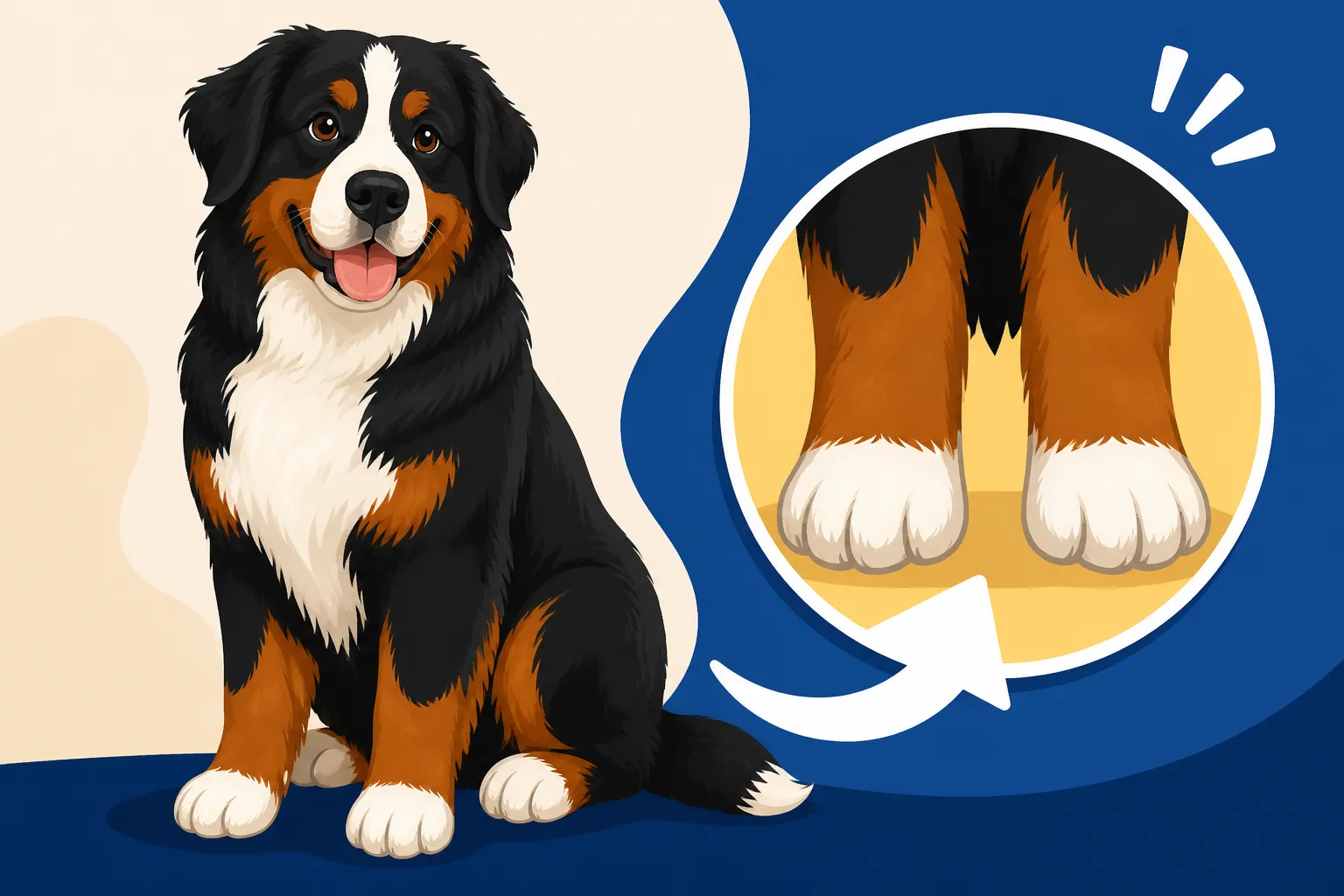
Whether a Bernese Mountain Dog Can Have White Feet
A Bernese Mountain Dog can absolutely have white feet. White paws are a familiar part of the breed’s tricolor appearance, but the amount of white varies from dog to dog. If you’re wondering whether your Berner’s white toes are normal, whether they meet the breed standard, or whether they signal a mix, this guide explains what to look for.
Are white feet normal on a Bernese Mountain Dog
White feet are a recognized Bernese Mountain Dog marking. They sit alongside the breed’s black coat, rust-colored markings, and white markings, creating the distinctive tricolor look many people recognize immediately.
What the breed standard says about white feet
In the American Kennel Club breed standard, white feet are desirable but not required. The standard also describes limits on where the white should extend: ideally, it does not continue above the pasterns, the sloping area between the lower leg and the foot.
That distinction matters most in the show ring. A dog whose white reaches higher up the leg might not match the preferred marking pattern as closely, but it is still a Bernese Mountain Dog. A coat marking is not the same thing as a fault in health, temperament, or ability to be a loving companion.
Breed standards can differ somewhat among kennel organizations and countries. If you’re considering showing a dog, check the standard used by the registry where you plan to compete. For a family pet, there’s no need to treat the standard like a checklist your dog has to pass.
White feet are only one part of the overall pattern. The white blaze on the face, the white chest marking, and the white tip of the tail are also familiar features. You can see how these markings fit together in Bernese Mountain Dog Markings and What They Mean and The Four White Points a Bernese Mountain Dog Should Have.
How much white can a Berner have on its feet
Some Berners have a little white on the toes or the front of the paws. Others have more noticeable white areas that look like socks. There is natural variation, and the coat may make the markings look different from one dog to another.
A long fringe of fur can partly cover the edge of a marking, while a freshly tidied foot can make the boundary seem sharper. Dirt, wet fur, and seasonal shedding can also change what you notice at a glance. When comparing dogs, look at the markings where the coat grows out from the skin rather than relying on a quick look at the tips of the fur.
There is no single amount of white on the feet that every pet Bernese Mountain Dog must have. If you’re curious about the broader range of accepted markings, How Much White a Bernese Mountain Dog May Have discusses how white can appear across the coat. The important point is that variation in white markings alone doesn’t tell you whether a dog is purebred, healthy, or well bred.
White paws do not make a dog less of a Berner
It’s easy to get caught up in appearance when you’re looking at puppy photos or comparing littermates. One puppy may have neatly marked white toes, while another has a wider patch or very little white on the feet. Those differences are not, by themselves, evidence that one puppy is more authentic than another.
A Bernese Mountain Dog is identified through a combination of traits, including its overall appearance, pedigree, and breeding records—not by one paw marking. Coat color and pattern can be useful clues, but they can’t confirm a dog’s ancestry on their own. For more on the breed’s characteristic colors, see Whether a Bernese Mountain Dog Can Be Any Other Color.
If you’re choosing a puppy, put more attention on health testing, sound temperament, and the breeder’s openness about the parents and family history. A strikingly symmetrical set of white paws may catch your eye, but it should not outweigh the information that helps you understand the dog you’ll be living with.
What white feet look like as a dog grows
A puppy’s markings are established early, but the way you see them can change. The coat grows, sheds, gets wet, picks up mud, and collects everyday grime. As a result, white feet may seem to change even when the underlying pattern has not.
Why puppy markings can look different later
A fluffy puppy coat can soften the edges of white patches. As the adult coat develops, longer fur and feathering around the feet may make the marking appear larger, smaller, or less sharply defined. The amount of coat covering the skin affects what’s visible, especially around the toes and hocks.
Lighting can play tricks, too. A photograph taken indoors may make white fur look cream-colored, while sunlight may make the contrast with the black coat seem stronger. Wet fur often clumps together and appears darker, so a walk through rain or snow can temporarily make white feet look less white.
If you’re comparing puppy photographs with your dog’s appearance now, compare the same part of the leg and account for coat length and condition. A change in how the fur looks is not necessarily a change in the dog’s markings. The broader pattern, including the white chest and facial blaze, is covered in The Swiss Cross on a Bernese Mountain Dog's Chest.
White fur can get stained or discolored
The feet work hard. They meet wet grass, dusty paths, mud, sidewalk residue, and whatever else your dog steps in during a walk. White fur can pick up visible stains, especially around the toes and feathering. This can make a naturally white foot look tan, gray, or rusty without changing the dog’s natural coat pattern.
Check that the paws are clean and dry before deciding that the color has changed. Brush out loose dirt, rinse muddy feet with clean water, and dry carefully between the toes. For routine grooming supplies, you can compare dog-safe paw wipes and coat-cleaning options at a local pet shop or on Chewy. Check ingredient labels and avoid using a product on irritated or broken skin unless your veterinarian says it’s suitable.
If the fur remains discolored despite gentle cleaning, or the skin underneath looks red, sore, swollen, or unusually smelly, ask your veterinarian for advice. Persistent staining can sometimes be related to licking or irritation rather than simply dirt. Chewy’s grooming listings may help you review available paw-cleaning products, but a product listing can’t diagnose what’s making a dog lick or develop sore skin.
White feet and the tail tip are separate markings
White feet are sometimes discussed alongside the white tip of the tail because both are easy-to-spot white areas. They are separate parts of the overall pattern, though. A Berner can have white feet with a narrow tail tip, or a prominent white tail tip with less white on the paws.
The tail tip is commonly described as one of the breed’s preferred white markings, but the exact look varies. Avoid assuming that every Bernese Mountain Dog will have markings that are identical in size or placement. The White Tip on a Bernese Mountain Dog's Tail looks more closely at that feature.
When white paws may need a closer look
A dog born with white feet and a dog whose paws appear to change color are two different situations. In most cases, white feet are simply a normal coat marking. A sudden change in the fur or skin deserves a little more attention, especially if it comes with discomfort.
Normal coat markings versus a new change
A stable patch of white fur that has been present since puppyhood is usually just part of your dog’s coloring. Likewise, dirty or damp fur can look temporarily different and often returns to its usual appearance after cleaning and drying.
A new change is different. Contact your veterinarian if a paw becomes swollen, painful, unusually warm, persistently discolored, or tender to touch. Also pay attention if your dog repeatedly licks or chews at one paw, starts limping, or seems reluctant to walk. Those signs are not explained by a white marking and may point to a paw, nail, or skin problem.
Try not to diagnose a problem based on coat color alone. The fur can hide small cuts, irritated skin, or debris between the toes. A gentle check of all four paws after walks can help you notice something unusual early, but stop if your dog is painful or distressed.
White fur is not the same as white paw pads
When people say “white feet,” they generally mean the fur covering the feet—not the color of the paw pads. A dog’s pads may be dark, mottled, or show some variation, and the hair around them can make it tricky to see the skin clearly.
Look at the hair and the pads separately. The coat marking describes the visible fur; it doesn’t tell you whether a paw pad is healthy. If a pad looks cracked, raw, blistered, or suddenly different, focus on the condition of the skin and your dog’s comfort, not on whether the fur is white.
Routine paw checks can be part of grooming, particularly for a dog with thick feathering. If you’re getting your dog used to having its feet handled, keep sessions brief and calm. Offer a reward for standing quietly, touch one paw at a time, and build up gradually rather than turning a simple check into a wrestling match. For broader guidance on the breed’s white markings, Whether Too Little White Faults a Bernese Mountain Dog is a useful related read.
When a breeder or vet is the right person to ask
If your question is about whether a puppy’s markings are acceptable for showing, ask a knowledgeable breeder or a judge familiar with the breed standard. They can consider the whole pattern, not just the paws. If your question is about a sudden color change or sore skin, a veterinarian is the better person to consult.
A responsible breeder should be comfortable explaining the parents’ markings and discussing how puppies in the litter differ. Still, be wary of anyone who promises that a particular amount of white guarantees a better dog. Markings are one visible feature; they are not a substitute for health screening, sound structure, and thoughtful breeding practices.
If you’re researching a breeder, Which Tests a Bernese Mountain Dog Breeder Should Show covers a more consequential part of puppy selection than whether the feet look especially tidy. And if your dog’s white paws are simply a point of curiosity, there’s no need to worry: white feet are a familiar, accepted feature of the Bernese Mountain Dog.
A quick guide to Bernese Mountain Dog white feet
| What you notice | What it usually means | What to do |
|---|---|---|
| White toes or feet present since puppyhood | A normal coat marking | Enjoy the variation; no action is needed |
| White fur appears to extend higher as the coat grows | Longer fur may change how the marking looks | Check the coat when it is clean, dry, and brushed |
| White paws look gray or tan after a walk | Dirt or staining may be sitting on the fur | Rinse gently and dry between the toes |
| One paw becomes sore, swollen, or persistently discolored | A paw or skin issue may be present | Contact your veterinarian |
| You’re unsure whether markings meet a show standard | Standards and judging depend on the registry and the whole pattern | Ask a breed-savvy mentor or check the relevant registry standard |
For everyday care, Chewy can be one place to compare grooming supplies, but choose products with your dog’s skin and coat in mind. If a paw is irritated, painful, or repeatedly licked, speak with your veterinarian before applying a cleanser or other topical product.
Disclaimer
This article is for general informational purposes only and does not constitute professional advice. Laws, prices and regulations vary by location and change over time. Consult a qualified professional for guidance on your specific situation.