The White Tip on a Bernese Mountain Dog’s Tail
A Bernese Mountain Dog’s white tail tip can look like a tiny finishing touch—or raise questions if you are comparing a puppy with the breed standard. The short answer is that a white tip is a desired marking, but its size and neatness vary. Here’s how to tell normal variation from a coat or skin concern, and what the marking means for show prospects and everyday care.
What a white tail tip means on a Bernese Mountain Dog
It is a desired marking, not a health feature
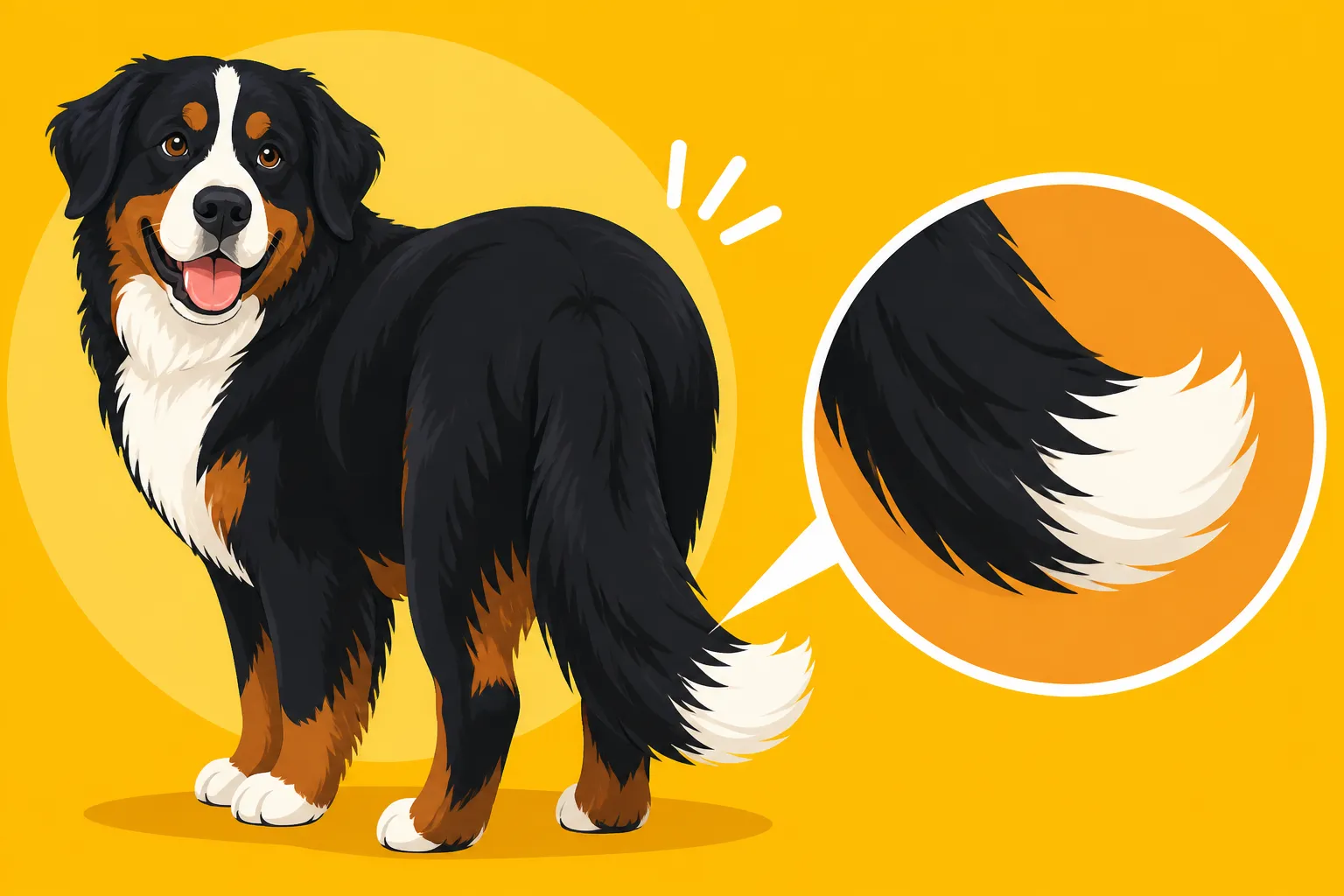
The Bernese Mountain Dog is a tricolor breed: its coat has a black base, rust-colored markings and white markings. White commonly appears as a blaze on the face, on the chest and feet, and at the end of the tail. The breed standard describes a white tail tip as desirable. That means it is a preferred feature, not a sign of better health, temperament or working ability.
The tail marking is one part of the breed’s traditional appearance. Bernese Mountain Dogs were developed in the Swiss canton of Bern, where they worked as farm dogs. Their striking tricolor pattern is now familiar around the world, but the white markings are not a complete checklist that every individual must display identically. For more on how the pattern is described, see Bernese Mountain Dog Markings and What They Mean and Why a Bernese Mountain Dog Is Always Tricolor.
A white tip can be broad and easy to see, or so small that it is most noticeable when the tail is lifted or the coat parts. Some dogs have a clear white terminal section; others have a few white hairs mixed into the black tail hair. These differences are usually just natural variation in the amount and distribution of white.
The tail marking is only one detail of the whole dog
A white tip does not tell you whether a Bernese Mountain Dog is well-bred, healthy or likely to excel in a particular activity. A dog’s overall structure, movement, coat, temperament and health matter far more than a single patch of color. The tail itself should be considered alongside the rest of the dog rather than judged in isolation.
This is worth remembering when looking at puppy listings or photographs. A seller may show a particularly crisp white tail tip because it is attractive, but that detail alone cannot substitute for appropriate health information or an honest account of the puppy’s background. If you are assessing a breeder, look at the whole picture, including the records and the adults behind the litter. Which Tests a Bernese Mountain Dog Breeder Should Show offers a broader checklist for those conversations.
| What you notice | What it usually means | What to do |
|---|---|---|
| A clean white patch at the very end of the tail | A normal breed marking that is considered desirable | Note it as part of the dog’s markings |
| A few white hairs mixed into a dark tail | Natural variation in coat pattern or appearance | Compare over time and check the skin is healthy |
| White hair appearing suddenly with irritated skin | A possible skin, grooming or injury issue rather than a simple marking | Contact your veterinarian if it persists or worsens |
| A larger white area extending beyond the tail tip | Variation in the distribution of white markings | Consider the relevant registry’s standard if showing |
How the white tip looks at different ages
Puppy markings can be easier to see in some coats
Bernese Mountain Dog puppies are already tricolor, but their coat is still developing. As they grow, their coat length, texture and fullness change. A puppy’s tail may look less bushy than an adult’s, so a white tip can appear especially sharp against the dark hair. Later, longer feathering may soften the boundary or make the patch seem smaller.
The underlying marking does not typically “move” along the tail like paint. What changes is the way the coat covers it: longer hair, shedding, grooming and the tail’s position can affect what you see. A photo taken from above might make the white tip seem prominent; in another picture, dark feathering may partly hide it.
If you are choosing a puppy, remember that photographs are only snapshots. Ask to see the puppy in ordinary light and, if possible, in more than one view. The white tip can be an appealing detail, but it should not distract from questions about health, socialization and the puppy’s overall condition.
Adult coat length and shedding can change its appearance
An adult Berner’s tail carries long, abundant hair. During seasonal shedding, the coat may look uneven or thinner, making the contrast between white and black appear more noticeable. When the coat is full, the white hairs can blend visually with the surrounding feathering, particularly if the tail is curled or held close to the body.
Regular brushing helps you see the coat clearly and prevents tangles, especially where the tail feathers meet the body. Use a gentle approach; pulling at a knot can irritate the skin and make grooming unpleasant. If you need a simple brush or dog-safe grooming wipes for muddy tail hair, you can compare options at a local pet shop or Chewy, checking that any product is intended for dogs and suitable for a long double coat. Chewy is one place owners may browse for basic grooming supplies, but the important part is choosing tools and products that suit your dog rather than the retailer.
For a broader coat-care routine, see Grooming a Bernese Mountain Dog's Long Tricolor Coat and The Feathering on a Bernese Mountain Dog's Legs. Those areas, like the tail, can collect burrs, mud and loose undercoat.
White tail tips and breed standards
What “desired” means in practice
When a standard calls a white tail tip desirable, it describes a preferred feature of the breed’s appearance. It does not mean that every Bernese Mountain Dog must have a perfectly white, sharply defined tip. Dogs can have different amounts and patterns of white while still being recognizably Bernese Mountain Dogs.
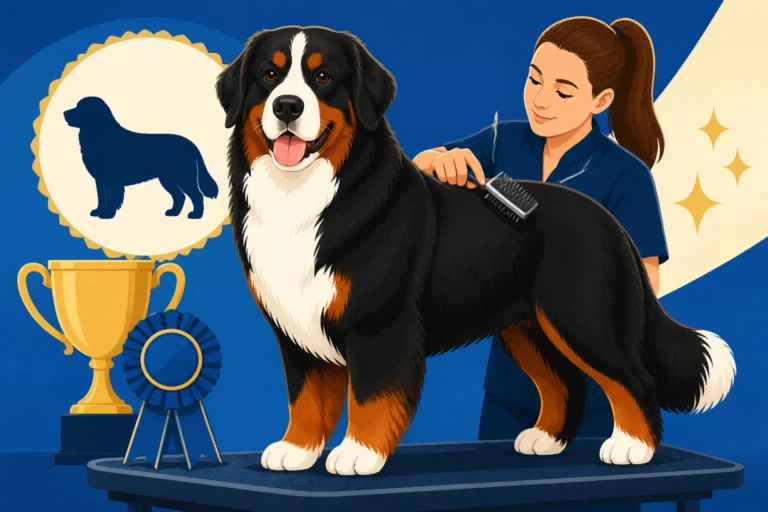
Breed standards are used by conformation judges to assess dogs against a written description of the breed. A judge considers the dog as a whole, including proportions, movement, coat and temperament, rather than awarding a placement because one marking is especially neat. In a show setting, the precise wording and interpretation can depend on the registry and the standard being used.
If showing matters to you, ask a knowledgeable breeder or the relevant breed club how the marking is interpreted under the registry where you plan to compete. A white tail tip may be attractive, but no single marking guarantees a show result. For more context on how markings are assessed, read The Bernese Mountain Dog Breed Standard and The White Tip on a Bernese Mountain Dog's Tail is best understood as one small detail within that larger description.
Markings do not replace health and temperament questions
A white tip cannot confirm that a puppy’s parents have appropriate health evaluations, nor can it predict the puppy’s adult behavior. It is easy to focus on visible details when a litter is adorable and every puppy is posing with a fluffy tail. Still, responsible selection means asking practical questions alongside admiring the coat.
Ask about the parent dogs’ health history, what screening has been completed, and how the breeder supports the puppies’ early development. Ask to see relevant records rather than relying only on a verbal assurance. You can also learn about the breed’s expected appearance through The Swiss Cross on a Bernese Mountain Dog's Chest and The Four White Points a Bernese Mountain Dog Should Have, while keeping in mind that those markings are only one part of evaluating a dog.
For a family choosing a companion rather than a show prospect, the tail tip rarely changes day-to-day life. A dog with a small white mark or a less distinct tip can be just as affectionate, capable and unmistakably Bernese as one with a crisp white finish.
When a white tail tip deserves a closer look
A lifelong marking is different from a new coat change
A stable white patch at the end of the tail is usually just a marking. A sudden change in the hair or skin is a different matter. If you notice new redness, scabs, thinning hair, persistent licking, swelling or discomfort, don’t assume it is part of the dog’s normal coloring. Skin irritation, parasites, infection, an injury or other issues can affect the coat and may need veterinary attention.
The distinction is often straightforward: a normal marking is present as part of the coat pattern, while a problem may come with visible skin changes or behavior such as chewing and repeated scratching. A stain from mud or food can also make pale hair look discolored; gently clean the area and see whether the coat returns to its usual appearance. Avoid using human hair dye, bleach or harsh household cleaners on a dog’s coat.
If you are unsure whether the change is cosmetic or medical, take a clear photo and contact your veterinarian for guidance. Photos taken in consistent lighting can help you explain whether the area is changing over time. Do not wait for grooming to fix an area that is painful, bleeding or rapidly worsening.
Keep the tail comfortable during grooming
The long hair at the tail can trap leaves, burrs, snow or dried mud. Check it after walks, especially after exploring brushy trails or wet grass. Work through loose debris with your fingers first, then use a suitable comb or brush gently from the ends toward the base. If a mat is tight against the skin, avoid cutting it out with scissors; it can be difficult to see where the skin ends and the hair begins.
For routine cleaning, use a product made for dogs and follow its directions. If you’re comparing grooming basics, Chewy can be one shopping option alongside local pet stores and groomers. Read labels carefully, especially for products used near sensitive skin. Chewy may also be convenient for restocking a comb or dog shampoo, but a product’s suitability matters more than where you buy it.
A professional groomer can help with difficult tangles or a dog that is uncomfortable being handled. Choose someone familiar with double-coated breeds and be clear that you want the natural coat maintained rather than shaved. The goal is a clean, comfortable tail—not a reshaped marking.
A white tail tip is a charming and familiar detail of the Bernese Mountain Dog’s tricolor coat. It is considered desirable in the breed standard, but natural variation is normal, and the marking alone says little about a dog’s health or quality. Keep the tail clean and gently groomed, and pay attention if a sudden skin or coat change appears.
Disclaimer
This article is for general informational purposes only and does not constitute professional advice. Laws, prices and regulations vary by location and change over time. Consult a qualified professional for guidance on your specific situation.