How Much White a Bernese Mountain Dog May Have
A Bernese Mountain Dog’s white blaze, chest marking, paws, and tail tip can vary in size, so it’s natural to wonder whether your dog has too much or too little white. The answer depends more on where the white appears and how it fits the breed’s traditional pattern than on a simple percentage. This guide explains the markings, what standards generally look for, and when a color difference is simply cosmetic.
Where white markings usually appear
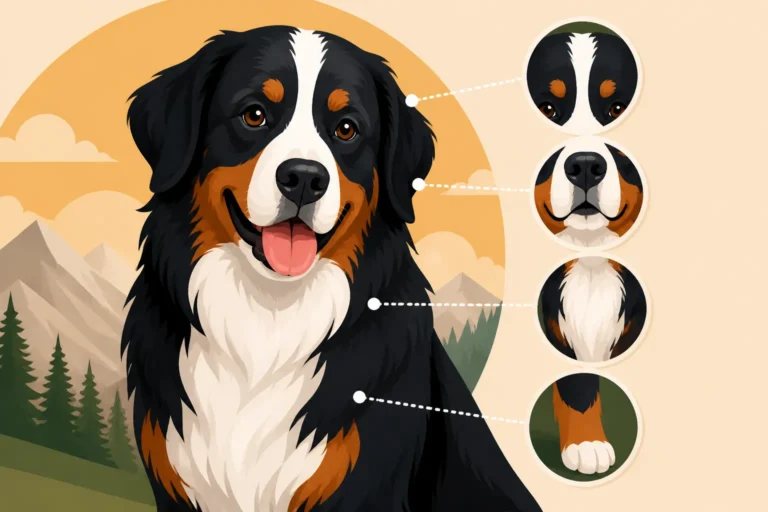
Bernese Mountain Dogs are tricolor: black is the main coat color, with rust and white markings. The white is typically concentrated in a few recognizable areas rather than spread evenly over the body. A dog may have a narrow facial blaze, a larger chest patch, white toes or paws, and a white tail tip.
There is no useful rule such as “white should cover exactly this much of the coat.” Two dogs can have noticeably different amounts of white and still show the familiar Bernese pattern. To understand how the white areas fit with the black and rust markings, see Bernese Mountain Dog Markings and What They Mean.
The blaze and markings on the face
The white blaze is the stripe or patch that runs up the center of the face, between the eyes and toward the forehead. It can be narrow or broader, and it may end at different points. A blaze that is tidy and centered often gives the face the classic look people recognize, but it does not need to be identical from one side to the other.
Many Berners also have white around the muzzle and lower face. The overall effect can change with age and coat length: longer facial hair may make the white seem broader, while a puppy’s shorter coat can make the same marking look smaller or sharper. That’s a visual change, not necessarily a change in the underlying pattern.
In show-ring descriptions, placement and shape matter more than measuring the blaze as a share of the dog’s coat. A very broad blaze or white that reaches farther across the head than a particular standard prefers may be considered a deviation from the desired pattern. That does not, by itself, mean the dog is unhealthy or less lovable. For details on the typical facial and body pattern, The Four White Points a Bernese Mountain Dog Should Have is a useful related topic.
The chest cross
The most noticeable white marking on many Bernese Mountain Dogs is on the chest. It may look like a cross or a broad white patch, with the shape varying from dog to dog. Some chest markings are crisp and well-defined; others have uneven edges or extend farther down the front of the body.
A wide chest marking can make a dog appear to have a lot of white, especially when the dog is sitting and the chest is facing you. But one large patch is not the same as white spread over the entire coat. When judging the pattern, look at the whole dog: face, chest, feet, legs, and tail together.
White on the chest is a familiar part of the breed’s traditional appearance. If the marking is unusually broad, wraps around the neck, or blends into extensive white on the legs, the pattern may differ from what a show standard describes. The marking remains a coat-color feature, though; appearance alone does not tell you whether a dog is healthy. The Swiss Cross on a Bernese Mountain Dog's Chest explores this distinctive feature in more detail.
White paws and the tail tip
Many Berners have white on their toes or paws, sometimes called “socks.” The amount can vary. One paw might have more white than another, or the white may stop at a different height on each leg. These small differences are common in individual markings.
The tail may also have a white tip. Some dogs have a clearly visible white tip, while on others it is small or hard to see beneath the long tail hair. As with the blaze and chest, the amount of white in this area is only one piece of the overall pattern.
If you’re comparing your dog with descriptions or photographs, bear in mind that posture and coat can be misleading. A dog standing in deep grass may appear to have less white on the feet; a fluffy tail spread out behind the dog may make the white tip look larger. For a closer look at this specific feature, read The White Tip on a Bernese Mountain Dog's Tail.
Is there a maximum amount of white?
People often look for a percentage because it sounds like a clear, simple answer. Breed standards generally don’t work that way. They describe the preferred pattern and identify certain markings or placements as desirable or less desirable; they don’t offer a universal percentage that separates “correct” from “too much.”
The details can also vary among kennel-club standards and countries. If you’re asking about show eligibility or how a particular dog might be assessed, check the standard used by the relevant organization and ask a knowledgeable breed judge or breeder to interpret it. A photo-based guess, especially one that shows only the dog’s front, can leave out important details.
Pattern matters more than a white-coat percentage
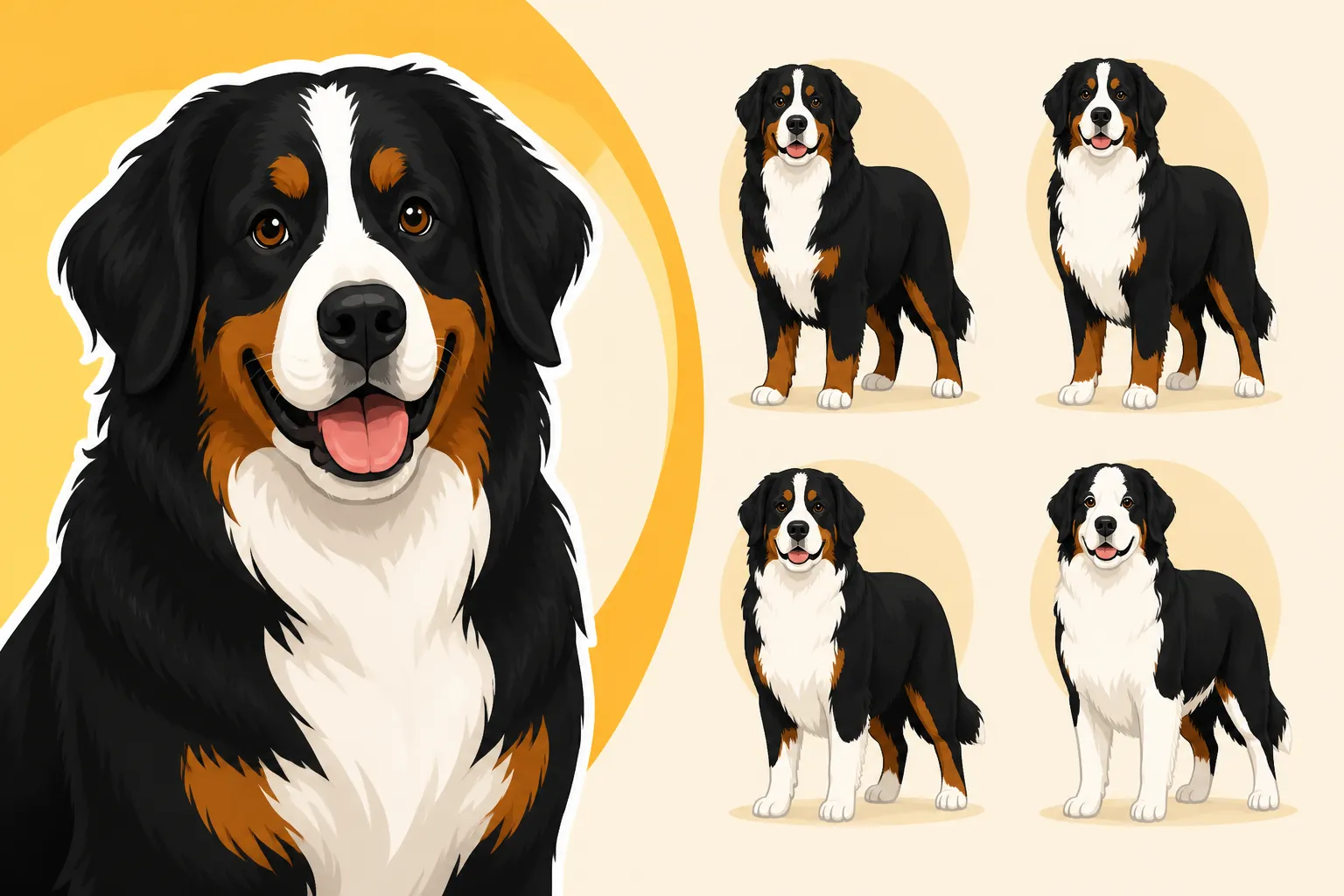
Imagine two dogs with similar total areas of white. One has a traditional facial blaze, chest patch, white paws, and a tail tip. The other has a much broader white area across the neck and upper legs. Even if the overall amount seems comparable, a breed standard may evaluate those patterns differently because the markings are in different places.
That’s why a single percentage can be misleading. It also encourages people to compare dogs as if one number could determine whether a coat is “right.” In practice, the distribution and shape of markings matter, along with the specific standard being used. Whether Too Little White Faults a Bernese Mountain Dog looks at the other side of this question: what it means when expected white areas are small or absent.
A standard describes an ideal for breeding or exhibition; it is not a health checklist. A dog with more or less white than the preferred show pattern can still be a healthy companion. If you’re choosing a puppy, consider temperament, the breeder’s practices, health information, and your fit with the dog—not color alone. For a broader overview of the breed’s appearance, see The Bernese Mountain Dog Breed Standard.
What breeders and judges may consider
A breeder selecting a puppy for a show home may pay close attention to the markings, because the puppy could eventually be evaluated against a written standard. A family choosing a companion may care much less about whether a blaze is perfectly centered or a foot has an uneven “sock.” Those are different priorities, and neither means the dog matters less.
Judges assess the dog as a whole, not just the amount of white. Breed type, movement, structure, coat, and temperament all matter in the context of the applicable standard. A striking marking can catch the eye, but it does not make up for every other consideration.
If you’re buying a puppy and markings matter to you, ask the breeder how they think the puppy’s pattern compares with the standard. A responsible breeder should be able to explain their view without promising that a young puppy will become a show winner. For practical questions to raise when visiting a litter, Visiting a Bernese Mountain Dog Litter Before Choosing may help you prepare.
When white markings are simply cosmetic
Ordinary white markings are part of the Bernese Mountain Dog’s appearance. They are not, on their own, a sign of illness, poor care, or a particular temperament. A dog with an unusually shaped blaze is still an individual dog, not a diagnosis.
It’s helpful to separate coat pattern from skin changes. A white patch that has been present since puppyhood and is covered in normal-looking coat is different from a newly bare, inflamed, itchy, or discolored area. If the skin beneath the coat looks sore, your dog is licking the spot repeatedly, or the change appears suddenly, ask your veterinarian rather than assuming it is just a marking.
Puppy markings and adult appearance
A puppy’s pattern is usually visible early, but its appearance can seem different as the dog grows. The body lengthens, the coat becomes fuller, and feathering develops around the legs, chest, and tail. A small white area may look more prominent against a thicker coat, while longer black hair can partly cover the edges of a marking.
Photographs can make that shift seem even bigger. Lighting, camera angle, wet fur, and the way a puppy is standing all affect how much white you see. If you want to track your puppy’s appearance, take occasional photos from similar angles in natural light instead of relying on one snapshot.
Markings are not a reliable way to predict a puppy’s adult size, health, or personality. If you’re curious about how the rest of the coat fits into the breed’s appearance, Why Only the Bernese Mountain Dog Has a Long Coat provides related background. And if your question is whether a dog can have a different base color altogether, see The Colors That Put a Bernese Mountain Dog Out.
Keeping white fur clean without overdoing it
White fur can show mud, food, and outdoor grime more easily than black fur. That can make a dog seem to have “more white” after a muddy walk, or make a chest marking look duller than it really is. A gentle brush and a damp cloth are often enough for small messes; bathe when needed with a dog-safe shampoo rather than scrubbing the same area repeatedly.
If you’re shopping for grooming basics, you may find suitable brushes or dog shampoos through a local pet shop or a retailer such as Chewy. Choose products made for dogs, follow the label, and ask your veterinarian before trying a medicated shampoo or a product intended to whiten fur. A cosmetic product is not a substitute for checking persistent staining, irritation, or an unusual odor.
Owners sometimes seek whitening products because a white chest or paw has picked up a yellowish tint. Before using one, check that it is intended for dogs and avoid getting product near the eyes or mouth. Chewy may be one place to browse ordinary grooming supplies, but product choice should be guided by your dog’s skin and coat needs, not by a promise to change the coat color. If the area is discolored because the skin itself looks irritated, contact your vet instead of trying to cover it up.
A practical way to assess your dog’s markings
When you look at your Bernese Mountain Dog, assess the pattern calmly and in good light. Note the blaze, chest, feet and tail separately, then consider how they appear together. This is more useful than trying to estimate the percentage of the whole coat that is white.
| Area to check | Common appearance | What variation can mean |
|---|---|---|
| Face | A white blaze, often with white around the muzzle | The blaze can be narrow, broad, short, or uneven |
| Chest | A white patch often described as a cross | Its width, shape, and edges vary between dogs |
| Feet and legs | White toes or paws are common | White may stop at different heights on different legs |
| Tail | A white tip may be present | The tip can be prominent, small, or difficult to see |
| Neck and upper legs | White may vary in extent | Some standards may prefer less extensive white in these areas |
Questions to ask about a puppy or adult dog
If you’re considering a puppy, ask the breeder what the markings look like now and whether the puppy is being considered for a show home, a companion home, or either. A clear answer helps you understand the breeder’s expectations. Be cautious if someone presents coat markings as proof that a puppy is healthier or better suited to family life.
For an adult dog, compare the markings with a standard only if you have a specific reason, such as showing or learning about breed type. If the dog is a beloved companion, there may be no practical benefit in worrying over whether one paw has more white than another. The markings are part of that individual dog’s appearance.
If a coat change is new rather than a lifelong marking, take a clear photo and note when you first noticed it. Share those details with your veterinarian if the skin is irritated, hair is falling out, or the area seems to be changing. The key distinction is simple: a stable coat pattern is usually an appearance question; a new skin or coat problem deserves a health-focused look.
What to remember about “too much” white
There is no single percentage that answers how much white a Bernese Mountain Dog may have. The traditional pattern includes white on the face, chest, feet, and sometimes the tail tip, with individual dogs differing in size and shape of those markings. For show questions, consult the standard that applies to the registry or event; for everyday ownership, a deviation from the ideal pattern is not a measure of a dog’s worth.
If you want to explore related appearance questions, Whether a Bernese Mountain Dog Can Be Any Other Color discusses coat color more broadly. And for the meaning of the breed’s familiar white features as a group, The Four White Points a Bernese Mountain Dog Should Have offers another useful place to continue.
Disclaimer
This article is for general informational purposes only and does not constitute professional advice. Laws, prices and regulations vary by location and change over time. Consult a qualified professional for guidance on your specific situation.