Whether Bernese Mountain Dog Markings Change With Age
A Bernese Mountain Dog’s coat can look surprisingly different between puppyhood and adulthood, which can make owners wonder whether the dog’s markings are actually changing. Usually, the underlying tricolor pattern stays much the same while coat length, texture, fading, and age-related graying alter its appearance. This guide explains what changes are normal, what may need attention, and how to tell the difference.
What stays the same as a Bernese Mountain Dog grows
The tricolor pattern is set early
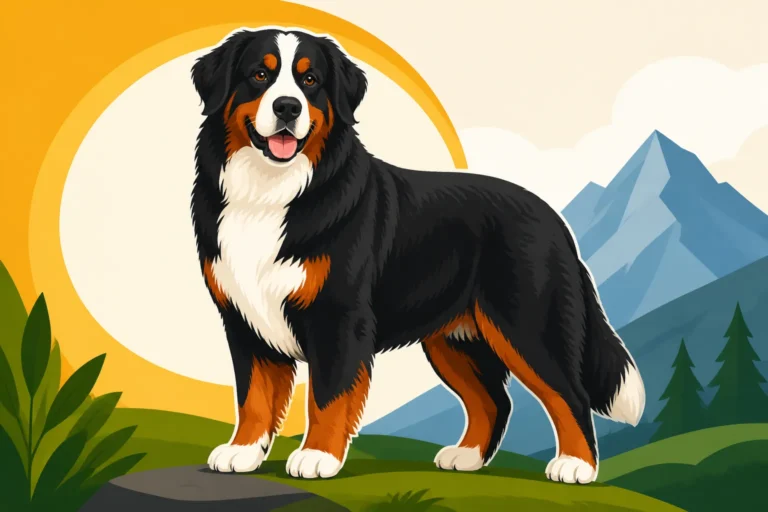
Bernese Mountain Dogs have a distinctive tricolor coat: a black base, rust-colored markings, and white areas. The familiar arrangement is present from puppyhood, even if it looks less crisp on a young dog’s short, soft coat. As the dog grows and its adult coat comes in, longer hair can make edges look softer or shift the apparent boundaries between colors.
The white blaze on the face, white chest, paws, and tail tip are part of the pattern, as are rust markings above the eyes, on the cheeks, and on the legs. These areas may look more or less noticeable in different lighting or when the coat lies differently, but the pattern itself is not generally rearranging as the dog ages. For a closer look at the typical layout, see Bernese Mountain Dog Markings and What They Mean and The Four White Points a Bernese Mountain Dog Should Have.
The markings of individual dogs are not identical. One Berner may have a broad white blaze, while another’s is narrow or slightly uneven. Rust patches can vary in size and shape, too. That normal variation is one reason a dog can look different from another Berner without either having an unusual coat. Whether Two Bernese Mountain Dogs Ever Match explores those individual differences.
Coat growth can change the way markings appear
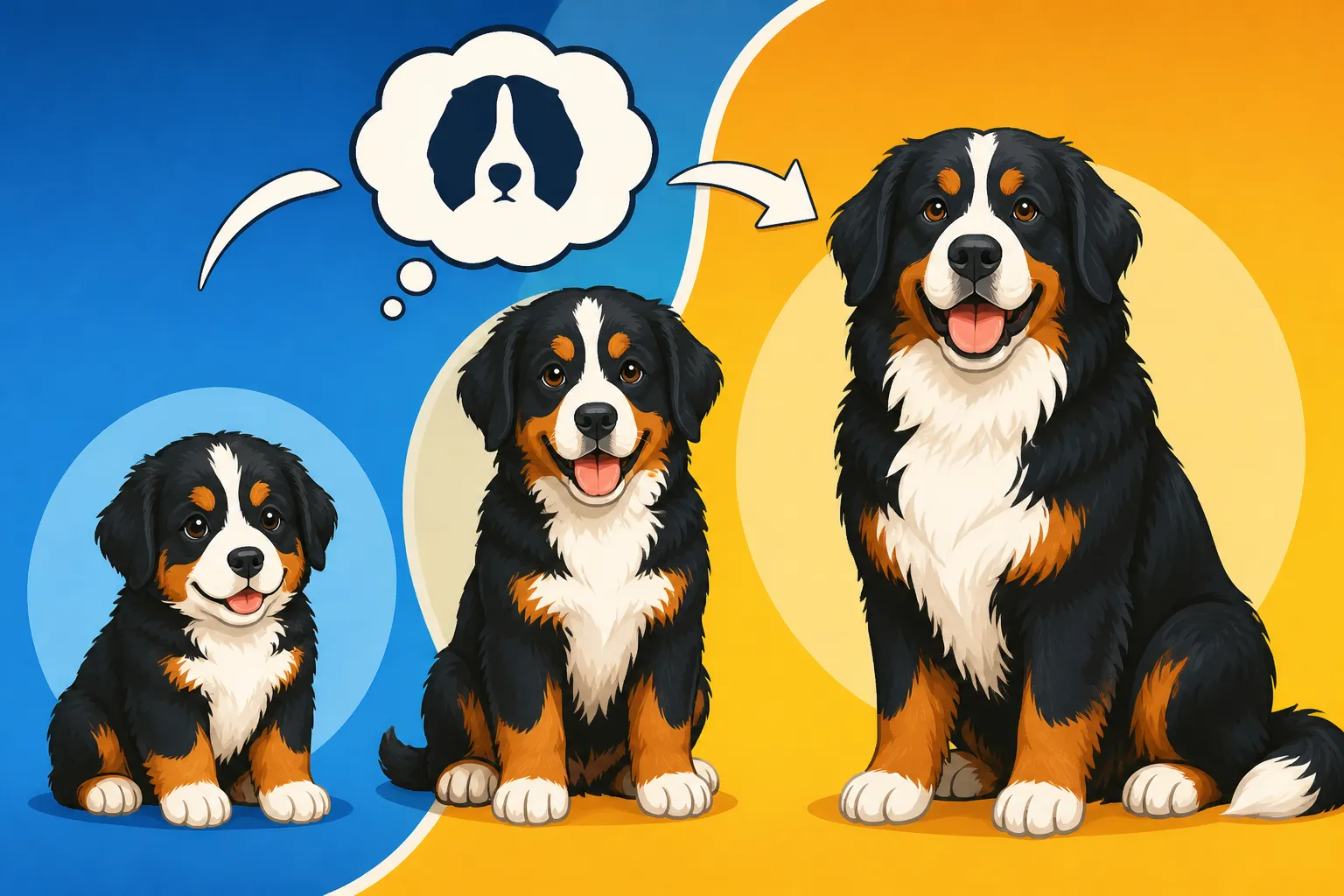
A puppy’s coat is shorter and often softer than the adult double coat. As the coat develops, longer guard hairs and a fuller undercoat can add depth and texture. Hair around the neck, chest, legs, and tail may become especially prominent, so the same patches of color can look larger, smaller, or less sharply outlined.
Growth also changes the proportions of a dog’s body. A puppy’s legs and muzzle may look small compared with its head, while an adult’s broader frame gives the markings a different visual context. If you compare puppy photos with adult photos, it can seem as though the white chest or rust leg markings have moved. In most cases, the dog has simply grown into its coat and shape.
This is why a single photo can be misleading. A wet coat, a fresh bath, strong sunlight, indoor lighting, or a different camera angle can all change how colors show up. Comparing photos taken in similar conditions is a better way to assess whether anything has genuinely changed. The Bernese Mountain Dog Coat Texture a Judge Feels describes the coat’s texture and why it can affect its appearance.
Why a Berner’s coat can look different with age
Adult coat, seasonal shedding, and grooming
The transition from puppy coat to adult coat can be gradual rather than happening all at once. During that period, some areas may look fuller while others still seem short or fluffy. Seasonal shedding can also make the coat look uneven for a while, particularly when loose undercoat is coming out. A dog may appear lighter or less plush until the coat settles again.
Grooming changes appearance without changing the underlying markings. Brushing can separate the hair and reveal more of the black, rust, and white beneath the surface. A coat packed with loose undercoat can look dull or bulky; after a thorough brush, the color pattern may seem clearer and the silhouette slimmer. Regular care helps owners notice skin changes, mats, and sore areas beneath the long hair. For practical coat-care guidance, see Grooming a Bernese Mountain Dog's Long Tricolor Coat.
If you are building a basic grooming kit, a suitable brush and comb can help manage loose hair and tangles. You can compare grooming tools at a local pet shop or on Chewy, but choose tools that suit your dog’s coat and comfort rather than assuming one tool works for every Berner. Take your time around sensitive spots such as behind the ears, under the legs, and around the tail.
Sun exposure and gradual fading
Black hair may appear reddish, brownish, or less vivid after repeated sun exposure. This is often most noticeable on areas that spend more time outdoors, such as the back or top of the tail. The degree of change varies from dog to dog, and the coat can look different depending on whether it is clean, dusty, dry, or freshly brushed. Whether a Bernese Mountain Dog's Black Coat Fades covers the ways black fur can lose some of its deep appearance.
Rust markings may also seem less saturated under bright light or when the surrounding black coat has faded. That does not necessarily mean the rust patches themselves have changed. A contrast effect can make one color look stronger or weaker as the neighboring coat changes.
A faded-looking coat by itself is not usually an emergency. Still, sudden or patchy color change deserves more attention than a gradual shift over time, especially if it comes with itching, redness, hair loss, scabs, or a change in the skin. If you’re unsure whether a product is safe for your dog, ask your veterinarian before using it. For routine washing, compare dog-safe shampoos at a local pet shop or on Chewy, and follow the product directions rather than using a human shampoo.
| What you notice | Common explanation | When to pay closer attention |
|---|---|---|
| Coat looks fuller or markings seem softer | Adult coat growth or longer feathering | If there is also unexplained hair loss or irritated skin |
| Black hair looks brownish on sun-exposed areas | Gradual fading or sun exposure | If the change is sudden, sharply localized, or accompanied by skin symptoms |
| Color looks different after brushing or bathing | Loose undercoat, dirt, moisture, or lighting | If the coat remains changed and the skin looks abnormal |
| White hairs appear around the muzzle | Possible age-related graying | If the change is abrupt or paired with other concerning symptoms |
| A patch changes color and loses hair | Possible skin or coat problem | Contact a veterinarian for an assessment |
Normal aging changes and changes worth checking
White hairs and an older-looking face
Some Berners develop gray or white hairs around the muzzle as they get older. This can make the face look noticeably different even though the dog’s original markings remain underneath. A few lighter hairs may be easy to miss when a dog is young and more obvious later, especially against dark facial fur.
Age-related graying is usually gradual. It may spread slowly around the muzzle or appear in small areas over time. It should not be confused with the blaze, which is the white marking running down the face, or with normal variation in the shape of that blaze. If you want to understand how the facial white marking is described, see The Blaze on a Bernese Mountain Dog's Face.
A change in the face can feel especially striking because owners know their dog’s expressions so well. Taking a photo now and then in similar lighting can help you see whether the change has been gradual. It can also be useful when you speak with your veterinarian about a new skin or coat concern.
When a coat change is not just a marking change
A newly appearing patch of bare skin, persistent redness, scaling, sores, or intense itching is different from a normal shift in how the tricolor pattern looks. The same is true if a dog suddenly develops a darkened or lightened patch that continues to spread, or if the skin seems painful. These signs can have several possible causes, so a veterinarian is the right person to assess them rather than guessing from coat color alone.
Pay attention to the skin as well as the hair. A thick coat can hide irritation, dampness, or a small sore, particularly around the ears, under the collar, in skin folds, and between the toes. When brushing, part the coat and look at the skin in good light. If you find a change, note when you first saw it, whether it is growing, and whether your dog is licking or scratching the area.
If the change appeared after clipping or shaving, the coat itself may be growing back unevenly or with a different texture. A shaved double coat can take time to regrow, and the returning hair may not look exactly like the surrounding coat right away. Avoid repeated clipping in an effort to “correct” the color without discussing the coat with a groomer or veterinarian. More detail is available in Whether a Shaved Bernese Mountain Dog Recovers Its Coat.
How to track your dog’s markings over time
Use consistent photos and simple notes
A quick photo record is often more useful than trying to remember what the coat looked like months ago. Take pictures of the face, chest, sides, legs, and tail in natural, even light. Try to use the same room or outdoor spot, and photograph the coat dry and brushed so the images are easier to compare.
You do not need a complicated tracking system. A note on your phone can record the date, the area that looks different, and anything else you noticed, such as shedding, a new grooming appointment, or more time outdoors. If the change is confined to one patch, take a closer photo from the same distance every few weeks. Avoid delaying veterinary care just to collect more pictures if the skin is sore, the patch is spreading quickly, or your dog seems uncomfortable.
Photos can also help you see the difference between a normal shift in coat appearance and a clear change in the skin or hair. A broad seasonal change across the coat is not the same as one irritated, thinning patch. If you have a concern, bring the photos to your appointment and explain when the change began.
Keep coat care gentle and routine
Regular brushing is a practical way to keep the coat comfortable and to notice changes early. Work through the coat in sections, reaching down toward the skin without scraping or pulling. If you encounter a tight mat, do not tug hard at it; painful pulling can distress your dog and irritate the skin beneath. A professional groomer can help with difficult mats or a coat your dog finds uncomfortable to handle.
Use bathing and grooming products made for dogs, and rinse thoroughly so residue does not remain in the coat. Chewy is one place owners may look when comparing dog-safe grooming supplies, but the key is to choose a product that fits your dog’s needs and to stop using it if irritation develops. For recurring skin problems, get veterinary advice rather than trying one new shampoo after another.
Above all, judge a Bernese Mountain Dog’s coat as a whole. The puppy coat gives way to an adult coat; seasonal shedding changes fullness; sunlight may soften dark color; and some older dogs develop gray hairs around the muzzle. Those changes can make the markings look different, but the basic tricolor pattern is generally stable. A sudden change involving the skin, persistent discomfort, or unexplained hair loss is a reason to seek professional guidance.
Disclaimer
This article is for general informational purposes only and does not constitute professional advice. Laws, prices and regulations vary by location and change over time. Consult a qualified professional for guidance on your specific situation.