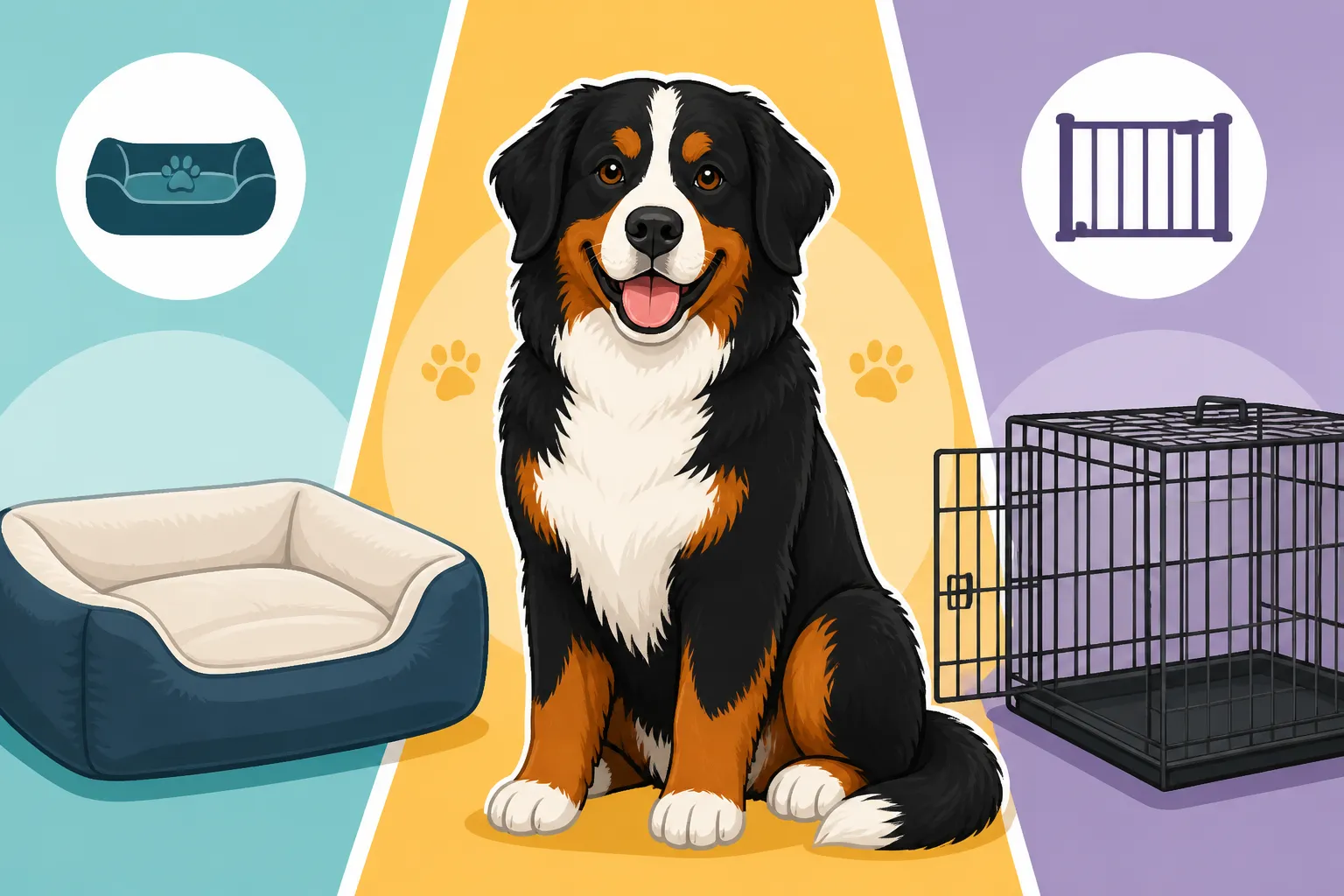
Beds, Crates and Gates Sized for a Bernese Mountain Dog
Bringing a magnificent Bernese Mountain Dog into your home is an incredible joy, but it also comes with some unique challenges, especially when it comes to finding everyday essentials that are truly sized for them. Many new Berner owners quickly discover that items labeled "large" or even "extra-large" for other breeds just don't cut it for a dog that can easily weigh over a hundred pounds and stands tall. This guide is here to walk you through the often-frustrating world of beds, crates, and gates, ensuring you find robust, appropriate, and comfortable solutions for your gentle giant.
The Unique Challenges of Sizing for a Bernese Mountain Dog
Let's be real, a Bernese Mountain Dog isn't just a big dog; they're a massive dog. Their sheer size, combined with their affectionate, sometimes clumsy nature, means that standard pet products often fall short, both literally and figuratively. You're not just looking for something that fits their current weight and height, but something that can stand up to their impressive stature and support their specific needs throughout their life.
Why "Large" Isn't Large Enough for a Berner
It’s a common mistake: you head to the pet store, see a bed labeled "large" or "extra-large," and think, "Perfect!" Then you get it home, your fluffy, gorgeous Berner tries to curl up on it, and half their body spills over the side. Or they try to stretch out, and their head is on the floor while their rear end barely makes it onto the cushion. This isn't just about aesthetics; it's about providing proper support. A bed that's too small forces them into unnatural sleeping positions, which can exacerbate existing joint issues or even contribute to new ones. For a breed already prone to issues like Joint Disease in a Hundred Pound Bernese Mountain Dog, you absolutely need a bed that allows them to stretch out fully in any position they choose. We're talking about beds that might be labeled "giant" or designed for breeds like Great Danes or Mastiffs, not just your average golden retriever.
The Importance of Support for a Giant Breed's Joints
Bernese Mountain Dogs carry a substantial amount of weight on their frames, and that weight puts considerable strain on their joints over time. This makes proper support not just a luxury, but a critical health consideration. Imagine carrying an extra 50 pounds around all day – that's what their joints contend with. Without adequate cushioning and support from their resting surfaces, hard floors can contribute to pressure sores, calluses, and increase the impact on their hips and elbows. As they age, and even as puppies during their rapid growth phases, providing a supportive surface is paramount. A good bed can literally add years of comfort to their life and help manage conditions like arthritis, which can appear even by Arthritis in a Bernese Mountain Dog by Six.
Choosing the Right Bed for Your Bernese Mountain Dog
Finding the perfect bed for your Bernese Mountain Dog is an investment in their health and comfort. It's not just about giving them a soft place to land, but a supportive foundation that helps protect their joints and allows for restful sleep. This is one area where skimping on quality almost always leads to discomfort down the road.
Orthopedic Support: A Non-Negotiable for Berners
When it comes to Berner beds, "orthopedic" isn't a buzzword; it's a necessity. These aren't just squishy pillows. True orthopedic beds, often made with high-density memory foam or supportive layers, are designed to evenly distribute your dog's weight, relieving pressure points and cushioning their joints. Think about your own mattress – would you sleep on a thin, lumpy pad night after night? Neither should your hundred-pound Berner. As your dog grows, the cumulative effect of improper support can be significant, especially given that Every Pound a Bernese Mountain Dog's Hips Carry impacts their long-term mobility. Look for beds specifically marketed for large or giant breeds, and pay attention to the thickness and density of the foam. A good orthopedic bed for a Bernese Mountain Dog should be thick enough that their weight doesn't compress the foam so much that they're still feeling the floor underneath. This is why investing in Orthopedic Beds Sized for a Bernese Mountain Dog is such a wise choice from the start.
Material and Durability: Standing Up to a Hundred-Pounder
Beyond the internal support, the outer materials and overall construction of the bed are vital. Berners are big, they shed, they can be a bit clumsy, and sometimes, especially as puppies, they might even have a little accident. You need a bed that can stand up to all of this. Look for:
- Durable Covers: Heavy-duty fabrics like canvas, denim, or even ripstop nylon can resist wear and tear much better than thin, decorative fabrics. Consider beds that offer a choice of robust covers.
- Waterproof Liners: This is a lifesaver. Accidents happen, senior dogs can become incontinent, and sometimes a Berner just comes in wet and muddy. A waterproof liner protects the expensive foam core from moisture, odors, and mildew, extending the life of the bed. Many higher-end orthopedic beds now include this as a standard feature, making cleanup a breeze.
- Reinforced Seams: A large, heavy dog will put stress on seams when they settle, shift, or even "dig" to make their spot. Double-stitched or reinforced seams are crucial for longevity.
Brands that focus on durable pet products, often found on sites like Chewy, understand the need for beds that can withstand significant use by large breeds.
Cleaning and Maintenance: Because Berners Get Messy
Let's face it: Bernese Mountain Dogs are beautiful, but they aren't always the tidiest. They shed, they can track in mud, and their drool can sometimes reach impressive distances. Your chosen bed needs to be easy to clean. This means:
- Removable, Washable Covers: This is non-negotiable. The cover should zip off easily and be machine washable. Check the care instructions – some covers need specific washing temperatures or air drying to maintain their integrity.
- Stain-Resistant Fabrics: While not completely immune, some fabrics are better at resisting stains than others. Darker colors can also help disguise minor marks between washes.
- Ease of Reassembly: After washing, you don't want a wrestling match trying to get the cover back onto a massive foam insert. Look for beds with well-designed zipper systems and generously sized covers.
A clean bed contributes to a healthier environment for your Berner and helps prevent skin issues, especially with their thick coats.
| Feature | Why It Matters for a Bernese Mountain Dog | Must-Have? |
|---|---|---|
| Size | Must allow full stretch; "XL" often too small. Aim for "Giant" or specific dimensions. | Yes |
| Orthopedic Foam | Supports heavy joints, prevents pressure points, crucial for hip/elbow health. | Yes |
| Durable Cover | Resists wear from a large, active dog and potential digging. | Yes |
| Waterproof Liner | Protects foam from accidents, drool, and moisture, extending bed life. | Highly Recommended |
| Removable Cover | Essential for easy cleaning of hair, dirt, and odors. | Yes |
| Anti-Skid Bottom | Prevents bed from sliding on hard floors as your Berner moves. | Recommended |
Crates: A Safe Haven, Not a Prison, for Your Bernese Mountain Dog
Crate training is an invaluable tool for any dog owner, and especially so for a large breed like the Bernese Mountain Dog. A properly sized crate isn't a punishment; it's a den, a safe retreat, a place where they can feel secure and relax. It’s also crucial for house-training and managing their environment, particularly with a mischievous puppy prone to destroying things.
Sizing the Crate for Comfort and Safety
The golden rule for crate sizing is that your dog should be able to stand up, turn around, and lie down comfortably with enough space to stretch out. For a Bernese Mountain Dog, this typically means a crate in the 48-inch to 54-inch range, sometimes even larger. Don't go by breed labels alone; measure your dog!
- Measure your Berner:
- Length: Measure from the tip of their nose to the base of their tail, then add 4-6 inches.
- Height: Measure from the top of their head (or ears if erect, though Berners' ears lie flat) to the floor when standing, then add 4-6 inches.
- Consider adjustable dividers: If you're crate training a puppy, a crate with a divider allows you to adjust the internal space as they grow. This is vital for house-training, as dogs won't soil their sleeping area if given just enough room. As they grow, you expand the space. Remember, tracking What a Bernese Mountain Dog Weighs at Each Month can help you anticipate their size needs.
A crate that is too small can be uncomfortable and distressing, while one that is too large for a puppy can defeat the purpose of house-training.
Types of Crates: Wire, Plastic, and Furniture-Style
Each type of crate has its pros and cons for a Bernese Mountain Dog:
- Wire Crates: These are the most common and often the most practical for Berners.
- Pros: Excellent ventilation, foldable for storage/travel (though a Berner's crate is huge even folded), and often come with dividers. They also allow your dog to see what's happening around them, which many Berners appreciate as they love to be near their family.
- Cons: Can be noisy if your dog rattles the bars, and some dogs might feel too exposed. You'll need heavy-duty gauge wire for a strong Berner, as thinner wire can bend or even break under their weight and force.
- Plastic Crates (Airline Crates): These are sturdy, offer a more den-like feel, and are good for travel.
- Pros: More secure, offer a sense of privacy, and are easier to transport (for car travel, not usually airline travel at Berner size due to restrictions).
- Cons: Less ventilation (can be a concern in warmer weather for a black-coated breed), and harder to clean thoroughly. Finding one large enough for a full-grown Berner can also be a challenge, as they need to meet specific airline requirements if intended for air travel, which might exclude them entirely due to size.
- Furniture-Style Crates: These are designed to blend into your home decor, often looking like end tables or credenzas.
- Pros: Aesthetically pleasing, double as furniture.
- Cons: Very expensive, can be difficult to find in truly Berner-appropriate sizes, and often less durable for an active dog than heavy-gauge wire. If your Berner decides to chew, they can damage expensive furniture.
Regardless of type, ensure the latches are secure and robust. A determined Berner can be surprisingly strong and clever.
Making the Crate a Positive Space
Crate training should always be a positive experience. Never use the crate as punishment. Fill it with comfy bedding (a thin mat or a folded blanket inside their large orthopedic bed for added cushioning), safe chew toys, and never leave your Berner for excessively long periods. Introduce it gradually, using treats and praise. Feed meals in the crate, and make it a comfortable, inviting place. This is where your puppy can retreat for a nap without getting into trouble, or where your adult dog can enjoy some quiet time. Consistent positive reinforcement means your dog will view their crate as their personal sanctuary, a place of safety and comfort. For tips on helping your Berner adjust, consider resources on Crate Training an Adult Bernese Mountain Dog.
Gates and Barriers: Defining Boundaries in a Berner Household
Managing a large, enthusiastic dog within your home often requires setting boundaries. Gates are essential for keeping your Bernese Mountain Dog out of certain rooms, away from hazards, or simply contained while you answer the door. However, a flimsy baby gate is no match for a motivated Berner!
Height and Sturdiness: What a Berner Can Clear or Push
Your Berner, even as a puppy, will grow into a substantial dog. A typical pressure-mounted baby gate designed for a toddler or a small dog will be laughed at (or more likely, bulldozed or easily jumped) by a Bernese Mountain Dog.
- Height is Key: Berners can stand quite tall, and many are agile enough to try to jump over anything less than 36-40 inches high. For true peace of mind, consider gates that are at least 40 inches tall, and preferably even taller, especially if your Berner is particularly athletic.
- Sturdiness is Paramount: This isn't just about preventing jumps; it's about preventing a Bernese Mountain Dog from leaning, pushing, or even just casually walking through a gate. They are heavy dogs (Lifting a Hundred Pounds of Bernese Mountain Dog is a workout!) and can exert significant force. Look for gates made of strong steel, solid wood, or durable composites. The mounting mechanism is just as important as the gate material itself. A flimsy pressure mount can quickly buckle under their weight.
If your Berner tends to jump up on people or furniture, a robust gate can help with training by controlling access and reinforcing good habits like Teaching a Bernese Mountain Dog to Wait at Doors.
Types of Gates: Pressure-Mounted vs. Hardware-Mounted
The choice between pressure-mounted and hardware-mounted gates depends heavily on where you intend to use them and how much force your Bernese Mountain Dog might apply.
- Pressure-Mounted Gates:
- Pros: Easy to install and move, no drilling required. Great for temporary use or in areas where a slight nudge won't compromise safety.
- Cons: Absolutely not secure enough for a determined Bernese Mountain Dog, especially in high-traffic areas or at the top of stairs. They can be pushed over, knocked down, or simply dislodged by a dog that leans on them. For a Berner, these are generally only suitable as very temporary visual barriers, not secure containment.
- Hardware-Mounted Gates:
- Pros: These gates screw directly into your wall or door frame, providing maximum security and stability. They are the only reliable option for areas where containment is crucial, like at the top or bottom of stairs, or to separate dogs when guests arrive. They can withstand significant pressure and weight.
- Cons: Requires drilling holes, which might not be ideal for renters or those who don't want permanent fixtures. Less flexible if you need to move them frequently.
For a Bernese Mountain Dog, hardware-mounted gates are almost always the superior choice for any situation where real containment is needed. Look for extra-wide gates for larger doorways or open-plan living areas.
Strategic Placement: Managing Your Home Environment
Think about your home's layout and where a Bernese Mountain Dog might need restricted access.
- Kitchen: Many Berner owners gate off the kitchen to prevent counter-surfing or access to tempting (and potentially dangerous) food items.
- Front Door/Entryway: A gate here can prevent your Berner from dashing out when the door opens, or from overwhelming visitors with their enthusiasm.
- Specific Rooms: If you have a room with delicate furniture, electronics, or a space that's not dog-proof, a gate is indispensable.
- Stairs: Crucial for safety, especially with puppies to protect their developing joints, and for senior Berners who may struggle with mobility as they develop The Bernese Mountain Dog Whose Back Legs Give Out. A hardware-mounted gate at the top and bottom of stairs is a must.
Thoughtful placement of gates allows your Bernese Mountain Dog to have freedom within safe zones while protecting them and your home from potential issues.
Considering the Long-Term: Adapting Equipment as Your Berner Ages
The lifespan of a Bernese Mountain Dog is notoriously shorter than many other breeds, often only seven or eight years. This means you need to be prepared for rapid changes from puppyhood to senior years. Their equipment needs will evolve significantly over that time.
Evolving Needs: From Puppy to Senior Berner
Your Bernese Mountain Dog will grow incredibly quickly from a small, fluffy puppy to a substantial adult. The growth is exhilarating but also demands careful consideration for their developing body.
- Puppyhood: While you might start with a smaller crate divider, a large, sturdy crate is a must from the beginning. Beds should offer good support for rapidly developing joints, even if they aren't yet showing signs of issues. Gates are essential for setting boundaries and keeping curious puppies out of trouble. Brands like Healthy Paws, for example, offer pet insurance plans that can cover future ailments, highlighting the importance of preventative measures and quality equipment from a young age.
- Adulthood: Your Berner will reach their full size and energy levels. Their beds will need to withstand daily use, and crates and gates will continue to provide boundaries. This is often the prime time for activities like carting or hiking, so their comfort and safety at home remain important.
- Senior Years: This is when quality equipment truly shines. An old Berner with Arthritis in a Bernese Mountain Dog by Six will rely heavily on a truly orthopedic bed. Ramps may become necessary for getting into cars or up onto favorite furniture. Non-slip runners on slick floors can prevent falls. Gates might be used more to protect them from falling down stairs or to keep them in a warm, comfortable space near their people. Their needs shift from containing exuberance to supporting comfort and preventing injury. Hydrotherapy for an Arthritic Bernese Mountain Dog or other physical therapies may also become necessary, making comfortable home rest crucial for recovery.
Investing in Quality: Durability Pays Off
It might seem like a lot to spend on dog accessories, but with a Bernese Mountain Dog, quality over quantity is always the wisest approach. Cheap beds flatten quickly, flimsy crates bend, and weak gates fail. Replacing these items frequently becomes more expensive in the long run, not to mention the potential for injury or discomfort for your dog.
- Longevity: High-quality items are built to last. A well-made orthopedic bed, even if it costs more upfront, will likely outlast several cheaper alternatives. Look for warranties or guarantees from manufacturers.
- Safety: Sturdy gates prevent escapes and injuries. A robust crate provides true security.
- Health: As we’ve discussed, proper support from beds and controlled movement via gates directly contributes to your Berner's joint health and overall well-being throughout their life.
Thinking of your Bernese Mountain Dog's entire lifespan, from boisterous puppy to dignified senior, allows you to make smart, long-term purchasing decisions that will benefit both your dog and your wallet. You can often find durable, large-breed specific items on popular pet retail sites like Chewy, which cater to a wide range of needs.
Maximizing Comfort: Small Changes, Big Impact
Beyond the big purchases, there are smaller ways to enhance your Bernese Mountain Dog's comfort and adapt their environment.
- Anti-Slip Mats and Rugs: For homes with hard floors (tile, hardwood, laminate), consider placing anti-slip rugs or runners, especially in high-traffic areas or where your Berner rests. This can help an older dog with weakened hind legs maintain traction and prevent slips, which can be devastating for their joints.
- Elevated Bowls: While not directly related to beds, crates, or gates, elevated food and water bowls can make eating and drinking more comfortable for tall Berners, potentially aiding digestion and reducing neck strain. Many pet parents also consider specific dietary needs, with services like Ollie offering tailored plans that can be delivered right to your door, ensuring your Berner gets optimal nutrition no matter their age.
- Ramps: As mentioned, a ramp for the car or even a low sofa can be a game-changer for senior Berners. It removes the need for them to jump, protecting their hips and back. Even though The Bernese Mountain Dog Whose Back Legs Give Out is often associated with conditions like degenerative myelopathy, protecting their joints from impacts is always beneficial.
- Climate Control: Remember that Bernese Mountain Dogs are built for cold climates. Ensure their resting areas are cool in summer, perhaps with a fan or a cooling mat, and away from drafts in winter.
These thoughtful additions, combined with appropriately sized core equipment, create a truly Berner-friendly home, supporting their happiness and health through every stage of their lives.
Disclaimer
This article is for general informational purposes only and does not constitute professional advice. Laws, prices and regulations vary by location and change over time. Consult a qualified professional for guidance on your specific situation.