What a Bernedoodle Puppy Costs Beside a Berner
Bringing a new puppy into your home is an incredibly exciting time, but for many prospective owners, the initial sticker price of a Bernese Mountain Dog versus a Bernedoodle puppy can cause real hesitation and confusion. It's a significant financial commitment right off the bat, and it's easy to get caught up in comparing just the upfront numbers without fully understanding what goes into those costs, or what other financial considerations you’ll face down the line. This guide will meticulously break down the typical cost structures for both Bernese Mountain Dog and Bernedoodle puppies, exploring the reasons behind the price tags and what to expect beyond that initial purchase.
The Initial Sticker Shock: Bernese Mountain Dog vs. Bernedoodle Puppy Prices
When you first start looking for a puppy, the range of prices can feel like a roller coaster. You might see a Bernese Mountain Dog puppy listed for one price and a Bernedoodle for another, and it’s tempting to just go with the cheaper option. However, these prices reflect a multitude of factors, and understanding them is key to making an informed, realistic decision for your family and your future companion. The initial purchase is just the first drop in a very large bucket, so let's unpack those starting figures.
Understanding Bernese Mountain Dog Puppy Pricing
Purebred Bernese Mountain Dog puppies from reputable breeders generally fall within a certain range. This price reflects a breeder's significant investment in their dogs. A responsible Bernese Mountain Dog breeder isn't just selling puppies; they're investing in the future health and temperament of the breed. This means they conduct extensive health screenings on both parent dogs, including hips, elbows, eyes, and heart clearances through organizations like the Orthopedic Foundation for Animals (OFA) and CERF. These screenings alone are costly. Beyond that, they pay for quality food, veterinary care for the mother and puppies, stud fees, genetic testing for common Bernese issues like von Willebrand Disease or Degenerative Myelopathy (you might want to check out articles like The SOD1 Test for a Bernese Mountain Dog for more on specific tests), and careful socialization for the puppies before they go to their new homes.
You'll often find that the price for a fully cleared Bernese Mountain Dog litter reflects these efforts. If you see a Bernese Mountain Dog advertised under fifteen hundred, it's a huge red flag that shortcuts may have been taken, potentially leading to far greater costs down the line due to inherited health issues. The breeder also spends time educating potential owners, providing support, and often taking back dogs if circumstances change. All these factors contribute to the ethical breeder's price. The variations you might see often depend on regional price differences, the breeder's reputation, whether the parents are show champions, and the overall demand. You can delve into What a Fully Cleared Bernese Mountain Dog Litter Sells For to get a more detailed picture.
Decoding Bernedoodle Puppy Pricing
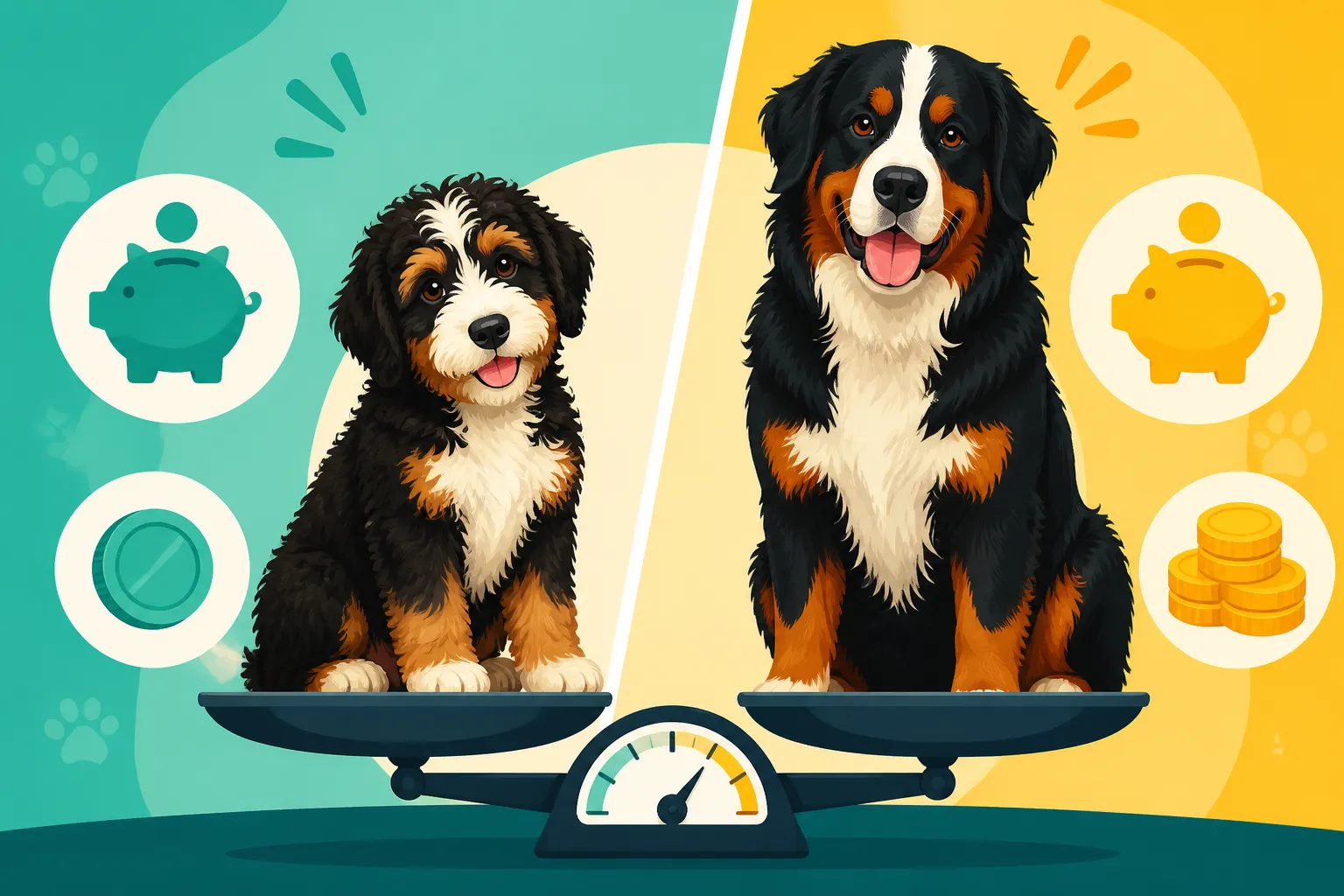
Bernedoodles, being a "designer" hybrid breed, often command a higher initial price than many purebreds, including Bernese Mountain Dogs. This might seem counterintuitive at first glance – why would a mix cost more than a purebred with a carefully documented lineage? The primary reason is often supply and demand. Bernedoodles have surged in popularity due to their charming personalities, intelligence, and the often-touted promise of being "hypoallergenic" or low-shedding (though it's worth noting that no dog is truly 100% hypoallergenic and shedding can vary greatly, as discussed in Whether a Bernedoodle Sheds Less Than a Bernese Mountain Dog).
Reputable Bernedoodle breeders will also conduct health testing on both parent breeds – the Bernese Mountain Dog and the Poodle. This includes screenings for hip and elbow dysplasia, eye conditions, and genetic tests relevant to each breed. This double layer of testing adds to the cost. Moreover, breeding a hybrid involves managing two different purebred lines, often requiring two separate breeding programs or sourcing from other reputable purebred breeders, which adds complexity and expense. There are different "generations" of Bernedoodles (F1, F1B, F2, etc.), and these can also influence price, with some generations believed to have more predictable traits like coat type, which often translates to higher demand and price.
Why the Price Difference Exists
The core of the price difference between a purebred Bernese Mountain Dog and a Bernedoodle often boils down to a few key elements: demand, perceived benefits, and the complexity of breeding.
- Demand & Trends: Bernedoodles are currently very much "in vogue," driving up their price. People are drawn to the idea of combining the Bernese's gentle nature with the Poodle's intelligence and lower-shedding coat.
- Hybrid Vigor (and Misconceptions): While some proponents claim "hybrid vigor" makes mixed breeds healthier, this isn't a guarantee, especially when dealing with two breeds prone to specific health issues. A Bernedoodle can still inherit conditions from either parent breed. However, the perception that they might be healthier or live longer (a topic explored in Whether a Bernedoodle Outlives a Bernese Mountain Dog) often contributes to their higher price point.
- Breeding Complexity: As mentioned, reputable Bernedoodle breeders must manage the health and genetic diversity of two distinct parent breeds, often requiring careful selection to ensure desired traits. This isn't always straightforward.
- The "Designer" Factor: The term "designer dog" itself has a marketing appeal that allows breeders to charge a premium, capitalizing on the blend of two beloved breeds.
Ultimately, both breeds, when sourced from responsible breeders, represent a significant upfront investment. It’s crucial to remember that a higher price tag doesn't automatically equate to a healthier or better-bred dog, especially if the breeder can't provide transparent health clearances for all parent dogs involved.
Beyond the Puppy Price Tag: Hidden Costs to Consider
The initial purchase price is just the tip of the iceberg when it comes to dog ownership. For large breeds like Bernese Mountain Dogs and Bernedoodles, the ongoing costs throughout their lives can be substantial and often surprise first-time owners. Failing to budget for these can lead to difficult situations down the road. It’s vital to look at the total cost of ownership, not just the upfront fee.
Health Testing and Inherited Conditions
This is where the true cost comparison between a Bernese Mountain Dog and a Bernedoodle can get complex and potentially eye-opening. Both breeds are prone to certain health conditions that can rack up significant veterinary bills.
Bernese Mountain Dogs, unfortunately, are known for a shorter lifespan than many other breeds, often due to a predisposition to certain cancers like histiocytic sarcoma. You'll find many resources discussing this, such as The Cancer That Kills Half of All Bernese Mountain Dogs. They are also prone to orthopedic issues like hip and elbow dysplasia. These conditions can mean costly surgeries, ongoing pain management, and specialized care as they age. A responsible breeder will have invested in What Health Testing a Bernese Mountain Dog Breeder Pays For to try and minimize these risks, but it's never a guarantee. If you adopt a dog from an untested background, the chances of facing these expensive issues increase dramatically, often hitting your wallet hard around age five, as detailed in The Untested Bernese Mountain Dog That Costs You at Five.
Bernedoodles, as a crossbreed, can inherit health problems from either the Bernese Mountain Dog or the Poodle side. Poodles can be prone to Addison's disease, bloat, epilepsy, and certain eye conditions. So, a Bernedoodle might still be susceptible to cancer and orthopedic issues from the Bernese side and other conditions from the Poodle side. While some believe the genetic diversity of a crossbreed lessens the risk, this is only true if both parent lines are extensively health-tested for all relevant breed-specific issues. Without proper health clearances on both parents, you might unknowingly be bringing home a puppy with a predisposition to a host of expensive problems.
Grooming Needs and Their Impact on Your Wallet
Here's another significant cost difference that often gets overlooked. Bernese Mountain Dogs have a beautiful, long, tricolor coat that sheds heavily, especially during seasonal changes. While they don't typically require professional grooming beyond regular brushing and occasional baths, managing their shed can be a daily task. You can learn more about this in Grooming a Bernese Mountain Dog's Long Tricolor Coat. Many owners choose to invest in a powerful force dryer and good quality brushes to manage the coat at home, saving on professional grooming costs. However, even at-home grooming requires time and the right tools.
Bernedoodles, on the other hand, inherit a mix of coat types. Some might have a straighter, more Bernese-like coat that sheds more, while others might have a wavy or curly Poodle-like coat that sheds less but requires professional grooming every 6-8 weeks to prevent matting. These professional grooming sessions, especially for a large dog, can be quite expensive. A matted coat often leads to a full shave, which is not only costly but can also damage the dog's skin and future coat growth. If you're hoping for a low-shedding Bernedoodle, be prepared for regular trips to the groomer, which will be a substantial recurring expense. Many owners find themselves spending a few hundred dollars a year, if not more, on keeping their Bernedoodle's coat in good condition.
Lifelong Care Expenses
Beyond health and grooming, there are the fundamental ongoing costs that every large dog owner faces. Food, for instance, is a significant expenditure. Both Bernese Mountain Dogs and Bernedoodles grow into large, active dogs that require high-quality large-breed dog food. A large bag of premium kibble simply doesn't last as long when you're feeding a hundred-pound dog. You'll go through multiple bags a month, and the costs add up quickly. Consider exploring Feeding a Bernese Mountain Dog Puppy to a Hundred Pounds for a deeper understanding of nutritional needs.
Then there are routine veterinary visits, vaccinations, flea and tick prevention, heartworm medication, and basic supplies like toys, beds (large enough for a giant breed!), leashes, and collars. Many owners also consider obedience classes, especially for large, strong puppies. For both breeds, these basic costs are elevated due to their size. Think about the durability needed for toys, or the size of a crate, and you’ll realize that "large breed" often translates to "large price tag." Companies like Chewy can be a great resource for bulk-buying food and supplies, but the sheer volume needed remains a constant expense.
The Investment in Longevity and Health
When choosing between a Bernese Mountain Dog and a Bernedoodle, it’s not just about the upfront cost, but the long-term investment in their well-being, which inevitably ties back to your wallet. Planning for potential health challenges and understanding how they impact your finances is a crucial part of responsible ownership.
Insurance Considerations for Both Breeds
Pet insurance is almost a necessity for large breeds, especially those prone to significant health issues. Both Bernese Mountain Dogs and Bernedoodles often have higher insurance premiums compared to smaller, generally healthier breeds. This is because insurers calculate risk based on breed-specific predispositions. Bernese Mountain Dogs, with their higher incidence of cancer and orthopedic problems, are often considered a higher risk, leading to more expensive policies. You might find yourself researching Insuring a Bernese Mountain Dog Against Cancer or delving into Why the Bernese Mountain Dog Is Expensive to Insure before you even bring your puppy home.
For Bernedoodles, the situation can be similar. While they might benefit from some hybrid vigor, they are still at risk for the conditions of both parent breeds. Insurers look at the potential for these combined health issues, and because they are large dogs, surgical and treatment costs are generally higher, which is reflected in the premiums. It’s highly advisable to secure pet insurance early in your dog's life, before any pre-existing conditions develop. Providers like Healthy Paws are popular options, but it's essential to compare plans carefully to understand what is covered, especially concerning breed-specific conditions and annual limits. Having a robust policy can make the difference between being able to afford life-saving treatment and facing an impossible financial decision.
Food and Nutrition Differences
While both breeds are large and require substantial amounts of food, there aren't typically drastic nutritional differences between a Bernese Mountain Dog and a Bernedoodle as adults, assuming they are both healthy. The key is finding a high-quality large-breed formula that supports their bone and joint health, particularly during their rapid growth phases as puppies. The choice between kibble, raw, or fresh food can significantly impact your monthly budget. Fresh food delivery services, like Ollie, have gained popularity, but they come at a premium compared to traditional kibble.
The real difference in food costs might come if one dog develops a specific health condition requiring a prescription diet. For example, a dog with severe allergies might need a limited ingredient diet, or one with kidney issues might need a low-protein formula. Since both breeds have their health predispositions, this is a possibility for either. It's more about the individual dog's health needs than a general breed difference once they reach adulthood. What remains constant is the sheer volume of food a large dog consumes over its lifetime.
Training and Socialization Investments
Training is an investment in your dog's future and your peace of mind. Both Bernese Mountain Dogs and Bernedoodles benefit immensely from early and consistent training and socialization. A well-socialized and well-trained large dog is a joy; an untrained one can be a handful, if not a danger, due to their sheer size and strength. Puppy classes, basic obedience, and even advanced training can be costly, but they are vital.
Bernese Mountain Dogs are generally eager to please and intelligent, though they can be sensitive and require gentle, positive reinforcement. Bernedoodles, inheriting Poodle intelligence, are often highly trainable, but also possess the Poodle's energy and sometimes a streak of stubbornness. Both benefit from ongoing mental stimulation. Investing in training not only helps with manners (like not pulling you over on a walk, which is important for a strong dog!) but also builds a strong bond between you and your companion. While this isn't a direct breed-specific cost difference, the necessity of this investment is universal for both. Ensuring your dog is comfortable in various situations and with different people and other animals is critical, especially for a dog that will grow to be such an imposing presence.
| Cost Factor | Bernese Mountain Dog (BMD) | Bernedoodle (BMD x Poodle) |
|---|---|---|
| Initial Puppy Price | Typically lower than Bernedoodle (from reputable breeder) | Often higher due to "designer breed" demand and breeding complexity |
| Breeder Health Testing | Hips, elbows, eyes, heart, genetic tests for BMD-specific issues (e.g., vWD, DM) | Hips, elbows, eyes, heart, genetic tests for both BMD and Poodle-specific issues |
| Grooming Frequency | Regular at-home brushing, occasional professional deshedding/trimming needed | Frequent professional grooming (every 6-8 weeks) for curly coats; less for straighter coats |
| Grooming Cost | Lower if done at home; moderate for occasional professional deshedding | Significantly higher due to frequent professional clipping and styling |
| Food Volume | High (large breed) | High (large breed) |
| Insurance Premiums | High (due to predisposition to cancer, orthopedic issues) | High (due to potential for issues from both parent breeds, and size) |
| Lifespan | Shorter on average (impacting total years of routine care) | Potentially longer than BMD, but highly variable (impacting total years of routine care) |
| Health Risks | Cancer, hip/elbow dysplasia, bloat, heart issues | Can inherit risks from both BMD and Poodle (e.g., Addison's, epilepsy, cancer, dysplasia) |
| Training Needs | Intelligent, sensitive; requires positive, consistent training | Highly intelligent, can be energetic/stubborn; benefits from consistent training |
The Ultimate Decision: More Than Just Dollars and Cents
Ultimately, choosing between a Bernese Mountain Dog and a Bernedoodle is about more than just their puppy price. It's about a commitment to a lifetime of care, love, and financial responsibility. Both breeds are wonderful companions, each with their unique traits and challenges. A Bernese Mountain Dog offers a purebred experience with a known temperament and coat type, but also a known propensity for certain serious health issues and a heartbreakingly short average lifespan. A Bernedoodle offers a blend of traits, potentially a longer lifespan, and a variety of coat types, but with the caveat that predicting these traits can be less certain, and their popularity often inflates their initial cost and ongoing grooming expenses.
Before you make a decision, research both breeds thoroughly, talk to owners, and most importantly, find truly reputable breeders who are transparent about health testing, their breeding practices, and the long-term health of their lines. Looking up information in databases like What the Berner-Garde Database Records can give you invaluable insight into the health history of Bernese Mountain Dogs. Be prepared for the ongoing costs associated with a large dog, including food, veterinary care, potential specialist treatments, and proper grooming. An emergency fund, or comprehensive pet insurance, is absolutely essential regardless of which breed you choose; you might want to look into How Much a Bernese Mountain Dog Emergency Fund Should Hold to prepare adequately. The love and companionship these magnificent dogs offer are priceless, but they come with a very real and substantial price tag attached.
Disclaimer
This article is for general informational purposes only and does not constitute professional advice. Laws, prices and regulations vary by location and change over time. Consult a qualified professional for guidance on your specific situation.