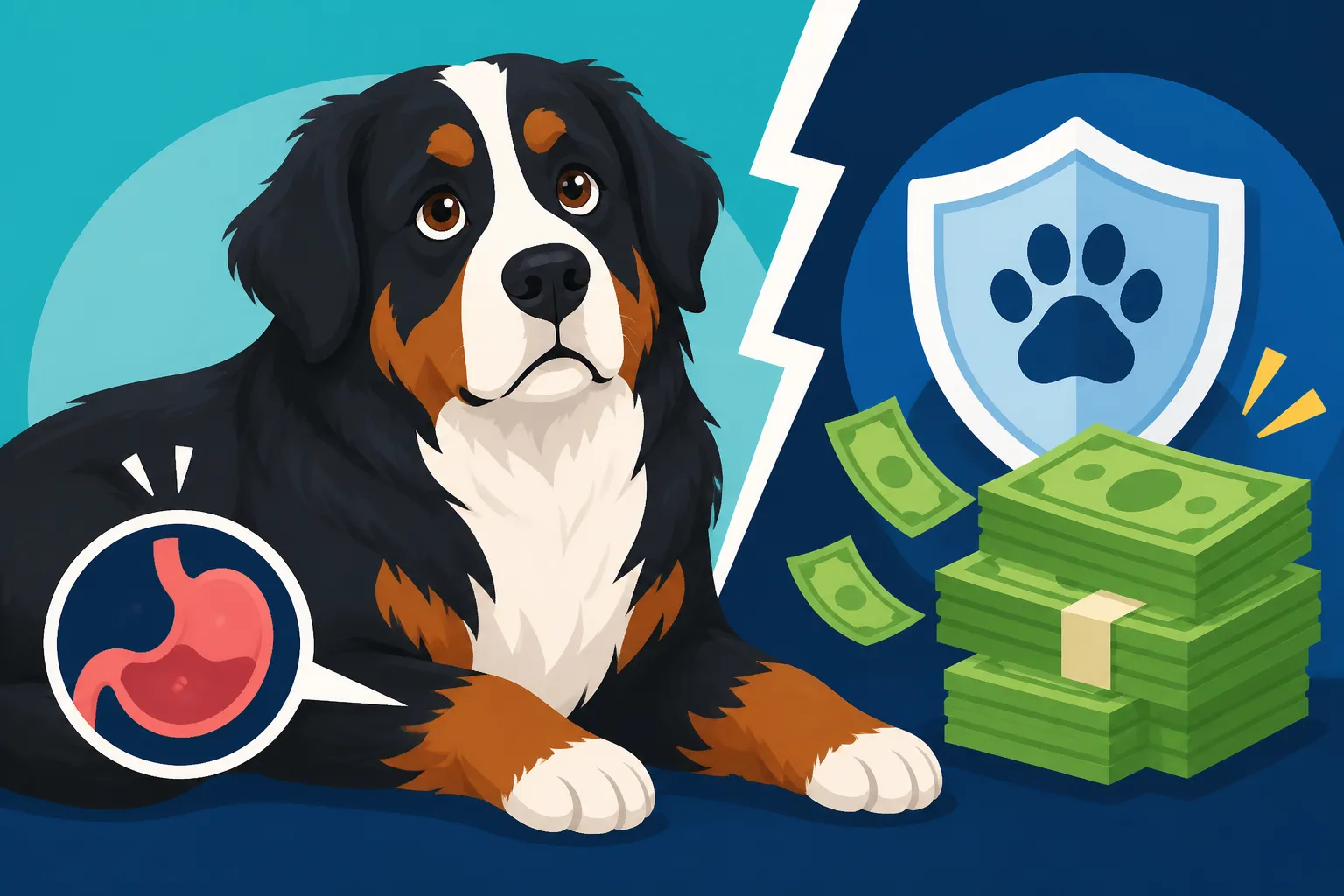
What a Bernese Mountain Dog Claim for Bloat Costs an Insurer
The sudden onset of bloat in a Bernese Mountain Dog is one of the most terrifying emergencies a dog owner can face. It strikes without warning, progressing from a seemingly minor upset to a life-threatening crisis in mere hours, often forcing a desperate dash to the emergency vet in the dead of night. For many, the financial implications are as overwhelming as the emotional distress. This guide aims to shed light on what a Bernese Mountain Dog claim for bloat typically costs an insurer, helping you understand the significant expenses involved and how pet insurance can provide a crucial safety net.
The Terrifying Reality of Bloat in Bernese Mountain Dogs
If you've ever owned a large, deep-chested dog like a Bernese Mountain Dog, the word "bloat" likely sends a shiver down your spine. It's not just an upset stomach; it's a critical condition that demands immediate veterinary intervention. Understanding what happens during this crisis is key to appreciating why the veterinary bills can skyrocket so quickly.
What Happens During a Bloat Emergency
Bloat, medically known as Gastric Dilatation-Volvulus (GDV), is a catastrophic event where your dog's stomach fills with gas, food, or fluid (dilation) and then twists upon itself (volvulus). Imagine a balloon inflating rapidly and then twisting at its neck – that's essentially what happens inside your beloved Berner. This twist cuts off blood supply to the stomach, traps gas and food, and prevents anything from entering or leaving.
The symptoms can be subtle at first: restlessness, pacing, an attempt to vomit that produces nothing but foamy saliva, or an anxious look. But they quickly escalate. Your dog's abdomen might visibly distend and feel tight, they may start drooling excessively, and their breathing can become labored. The pain is intense, and without swift action, shock and death can occur in just a few hours. This isn't a condition you can wait out; every minute counts. What Bloat Looks Like in a Bernese Mountain Dog gives a more detailed picture of these early warning signs.
The Race Against Time: Emergency Veterinary Care
When a Bernese Mountain Dog presents with bloat, it's an immediate, red-alert situation for any veterinary team. There's no time for deliberation; diagnostics and treatment must begin simultaneously. The initial goal is to stabilize your dog, alleviate the immediate danger, and confirm the diagnosis. This involves quickly assessing their vital signs, administering IV fluids to combat shock, providing pain relief, and often attempting to decompress the stomach through a tube passed down the esophagus or, if necessary, by puncturing the stomach wall with a needle to release gas.
Once stable enough, X-rays are crucial to confirm the stomach has twisted. This confirms GDV and guides the surgical plan. Because of the size of a Bernese Mountain Dog, managing them during such a critical state requires significant veterinary resources, including multiple technicians, specific equipment, and an experienced emergency veterinarian. The speed at which everything unfolds, coupled with the specialized care required, is why the costs begin to mount even before surgery is confirmed. You literally have minutes, not hours, which is why How Fast Bloat Kills a Bernese Mountain Dog is a must-read for any Berner owner.
Deconstructing the Costs: What an Insurer Sees in a Bloat Claim
For an insurer, a bloat claim for a Bernese Mountain Dog represents one of the highest potential payouts, often reaching into the many thousands. This isn't due to price gouging, but rather the sheer complexity and urgency of the medical procedures involved.
Initial Emergency Stabilization and Diagnostics
The moment your Berner arrives at the emergency veterinary clinic with suspected bloat, a whirlwind of activity begins, and each step carries a cost. The initial emergency exam is far more comprehensive than a routine check-up, often involving continuous monitoring of heart rate, blood pressure, and oxygen saturation. Veterinarians will quickly start intravenous fluids to treat or prevent shock, which is a major concern with GDV. Pain medication is administered promptly to alleviate suffering, as this condition is incredibly painful.
Diagnostic imaging is critical. X-rays are the gold standard for confirming GDV and are performed urgently. Blood work is also typically run to assess organ function and severity of shock. All of these procedures require specialized equipment, trained staff working after-hours, and often come with emergency surcharges. The combination of these urgent diagnostics and stabilization efforts can run into a significant sum before any surgical intervention has even begun. This is why Overnight Emergency Care for a Bernese Mountain Dog can be so financially draining without insurance.
The Core of the Expense: Emergency Surgery (Gastropexy)
If GDV is confirmed, surgery is the only definitive treatment. This is where the bulk of the cost lies, and it's a complex, delicate procedure, especially for a large breed like a Bernese Mountain Dog. The surgical team will carefully untwist the stomach, assess any damage to the stomach wall or spleen, and, if viable, perform a gastropexy. A gastropexy is a procedure where the stomach is permanently tacked to the abdominal wall, significantly reducing the chance of future volvulus (twisting), although it doesn't prevent dilation.
The surgery itself involves several components:
- Anesthesia: Large dogs require precise anesthetic management, and the anesthesia period can be prolonged given the complexity of the surgery. Anesthesia monitoring, including specialized equipment and personnel, is a major cost.
- Surgeon's Fees: An experienced veterinary surgeon is essential for this intricate procedure. Their expertise, training, and the inherent risks of emergency surgery are reflected in their fees.
- Surgical Supplies: This includes everything from sterile drapes and instruments to sutures and specialized staplers if parts of the stomach are damaged and need to be removed.
- Operating Room Use: The cost of maintaining a sterile operating environment with all necessary equipment is considerable.
Considering the urgency, the size of the patient, and the life-saving nature of the intervention, these surgical costs are substantial. What Bloat Surgery Costs on a Bernese Mountain Dog can be truly eye-opening. For many Bernese Mountain Dog owners, having a policy from an insurer like Healthy Paws can make the difference between approving this critical surgery and making an unthinkable decision based on financial constraints.
Post-Operative Care and Recovery
The journey doesn't end when the surgeon closes the incision. Post-operative care is just as critical and contributes significantly to the overall cost. Your Bernese Mountain Dog will require several days of hospitalization for intensive monitoring. This includes round-the-clock observation for complications such as irregular heartbeats (arrhythmias), further stomach issues, or infection. They'll continue to receive IV fluids, antibiotics to prevent infection, and strong pain medications to manage discomfort.
Specialized feeding protocols will be initiated, starting with small, frequent meals to gradually reintroduce food to a healing digestive system. The veterinary team will be constantly monitoring for any signs of relapse or complications. Follow-up appointments are also necessary to check on incision healing and overall recovery. Each day of hospitalization, each medication dose, and every check-up adds to the final bill that an insurer will evaluate.
Understanding Your Pet Insurance and Bloat Coverage
Navigating the world of pet insurance can feel a bit like reading hieroglyphics, but when a bloat emergency strikes, understanding your policy becomes paramount. The structure of your coverage directly impacts your out-of-pocket costs versus what the insurer covers.
Deductibles, Co-pays, and Annual Limits
When an insurer receives a claim for a bloat emergency, they'll apply the terms of your policy. Here's how the common components typically work:
- Deductible: This is the amount you, the policyholder, must pay first before your insurance company starts to pay. For instance, if you have a $500 deductible and the total bill is $8,000, you pay the first $500. This is typically an annual deductible, meaning once met, it doesn't need to be paid again for subsequent claims in the same policy year. Choosing a Deductible Against Bernese Mountain Dog Oncology Bills offers a good perspective on balancing this cost with potential claims.
- Reimbursement Percentage (Co-pay): After your deductible is met, your insurer will reimburse a percentage of the remaining bill. Common reimbursement percentages are 70%, 80%, or 90%. So, if your bill was $8,000, and you had a $500 deductible and 80% reimbursement, the insurer would pay 80% of $7,500 ($6,000), leaving you responsible for the $500 deductible plus the remaining 20% ($1,500).
- Annual Limits: Many policies have an annual limit on how much the insurer will pay out in a given policy year. This could be a fixed dollar amount (e.g., $10,000 or $20,000) or, in some comprehensive plans, an unlimited amount. For an emergency like bloat, which can easily reach the higher end of veterinary costs, having a sufficiently high or unlimited annual limit is incredibly important to ensure full coverage of eligible expenses.
Pre-existing Conditions and Waiting Periods
These two aspects of pet insurance policies are crucial to understand before an emergency arises:
- Pre-existing Conditions: Generally, pet insurance will not cover conditions that were present or showed symptoms before your policy started or during your waiting period. Bloat, being an acute and sudden emergency, is typically not considered a pre-existing condition unless your Bernese Mountain Dog had previous, documented episodes or related symptoms that were treated or noted by a vet prior to enrollment. This is why it's so important to secure insurance coverage early in your dog's life.
- Waiting Periods: All pet insurance policies have waiting periods – a specific amount of time after you purchase the policy before certain conditions become eligible for coverage. These usually include an accident waiting period (often short, like a few days) and an illness waiting period (which can be longer, typically 14 days or more). For a serious illness like bloat, the illness waiting period must have passed for the claim to be considered. It's vital to check these terms before your Bernese Mountain Dog is ever picked up from the breeder, as discussed in Whether to Insure a Bernese Mountain Dog Before Pickup. Companies like Chewy's pet insurance offerings often clearly outline their waiting periods, so always review the policy details carefully.
Proactive Measures and Their Financial Impact
While pet insurance helps manage the financial burden of an emergency, proactive steps can potentially prevent one altogether. One such measure is a prophylactic gastropexy.
A preventive gastropexy is the surgical tacking of the stomach to the abdominal wall before bloat occurs. This procedure is often performed at the same time as a spay or neuter, or as a standalone procedure. While it won't prevent the stomach from filling with gas (dilation), it dramatically reduces the chance of the stomach twisting (volvulus), which is the most dangerous aspect of GDV.
The cost of a preventive gastropexy is significantly lower than emergency bloat surgery, as it's a planned procedure done during regular business hours and on a healthy, stable dog. Some pet insurance policies may offer coverage for this preventive surgery, often under a wellness plan add-on or with specific conditions. While it’s an upfront cost, it's an investment in peace of mind and potentially saves a huge emergency bill later. Knowing Adding a Gastropexy to a Bernese Mountain Dog's Spay can be a great option for younger dogs, and exploring Whether a Preventive Gastropexy Saves a Bernese Mountain Dog Money highlights the long-term financial benefits.
Managing Bernese Mountain Dog Health Beyond Insurance
While pet insurance is an invaluable tool for managing the high costs of emergencies like bloat, responsible Bernese Mountain Dog ownership extends to daily care and preventative measures that can reduce risks and keep your gentle giant healthy.
Nutrition and Feeding Practices to Mitigate Risk
Diet and how you feed your Bernese Mountain Dog play a crucial role in managing bloat risk. While no feeding strategy can guarantee prevention, certain practices are widely recommended:
- Multiple Small Meals: Instead of one large meal, feed your Berner two or three smaller meals throughout the day. This reduces the amount of food and gas in the stomach at any one time.
- Slow Feeders: Many Bernese Mountain Dogs are enthusiastic eaters. Using a slow feeder bowl can prevent them from gulping down their food too quickly, which can lead to excessive air ingestion and rapid stomach expansion.
- Avoid Exercise Around Mealtimes: A common recommendation is to avoid strenuous exercise for at least an hour before and after meals. This allows the stomach to digest food without being jostled or overactive. The Hour After a Bernese Mountain Dog's Meal is a critical period to manage.
- Quality Food: While not directly linked to bloat prevention, feeding a high-quality, balanced diet is essential for overall health. Brands like Ollie, which offers fresh, customized meal plans, focus on ingredients that support canine health. Discussing specific dietary needs with your vet, especially for large breeds, is always a good idea. For more on proper feeding, see Feeding an Adult Bernese Mountain Dog Safely.
- Water Access: Ensure your dog always has access to fresh water, but avoid allowing them to gulp large quantities immediately after eating or heavy exercise.
Regular Vet Check-ups and Early Detection
Routine veterinary care isn't just about vaccinations; it's about preventative health and early detection. Regular check-ups, ideally twice a year for a Bernese Mountain Dog, allow your veterinarian to monitor your dog's overall health, track any subtle changes, and discuss breed-specific risks like bloat. Seeing the Vet Twice a Year With a Berner is especially important given their shorter lifespan and propensity for certain health issues.
During these visits, you can talk about your dog's eating habits, activity levels, and any observations you've made. Your vet can provide tailored advice on diet, exercise, and preventative measures. Establishing a strong relationship with your vet means they're familiar with your dog's baseline health, making it easier to spot when something isn't quite right.
Financial Preparedness for Unexpected Emergencies
Even with the best pet insurance, there will always be deductibles, co-pays, and potentially services not covered. That's why financial preparedness is a critical component of responsible pet ownership, especially for a breed with known health predispositions like the Bernese Mountain Dog.
- Emergency Fund: Alongside your pet insurance, maintaining a dedicated emergency fund specifically for your dog's health can be a lifesaver. This fund can cover your deductible, co-pays, or any unexpected costs not covered by your policy. Having a few thousand dollars set aside provides an additional layer of security, giving you peace of mind that you can always provide the best care without financial strain. How Much a Bernese Mountain Dog Emergency Fund Should Hold is a great resource for planning this.
- Credit Options: Familiarize yourself with veterinary financing options, such as special credit cards designed for health expenses. These can provide a line of credit for immediate needs, often with deferred interest plans, allowing you to pay off large bills over time if needed.
Here's a quick comparison of the financial "shape" of bloat management:
| Aspect | Description | Typical Cost Shape (for owner with insurance, after deductible) |
|---|---|---|
| Emergency Bloat (GDV) | ||
| Initial Stabilization | Emergency exam, IV fluids, pain medication, shock treatment, initial diagnostics (blood work, X-rays). | Moderate to High |
| Emergency Surgery | Anesthesia, surgical team fees, operating room, gastropexy (stomach tacking), potential stomach/spleen repair. | Very High |
| Post-Operative Hospitalization | Multiple days of intensive care, monitoring, medications (antibiotics, pain), IV fluids, specialized feeding. | High |
| Preventive Gastropexy | ||
| Planned Surgery | Anesthesia, surgical team fees, operating room, prophylactic gastropexy, typically done during spay/neuter or as standalone. No emergency surcharges. | Moderate |
| Post-Operative Recovery | Shorter hospitalization (often same-day or one night), routine post-op pain meds and monitoring. | Low to Moderate |
Ultimately, understanding the costs associated with a bloat emergency in a Bernese Mountain Dog, and how pet insurance responds to such a claim, empowers you to make informed decisions for your dog's health and your financial well-being. Proactive care, vigilance, and a robust insurance plan provide the best defense against this devastating condition.
Disclaimer
This article is for general informational purposes only and does not constitute professional advice. Laws, prices and regulations vary by location and change over time. Consult a qualified professional for guidance on your specific situation.