Training a Bernese Mountain Dog Without Breaking It
Bringing a Bernese Mountain Dog into your home is an incredible joy, but many new owners quickly discover that these gentle giants, despite their formidable size, are surprisingly sensitive souls. The traditional, heavy-handed training methods that might work for some breeds can actually "break" a Berner's spirit, leading to a shut-down, anxious, or even resistant dog. This comprehensive guide is here to walk you through the nuances of training your Bernese Mountain Dog with kindness, consistency, and an understanding of their unique temperament, ensuring you build a lifelong bond based on trust and mutual respect.
Understanding the Berner Temperament: The Foundation of Training
Before you even think about teaching your Bernese Mountain Dog "sit" or "stay," it's absolutely crucial to understand the very heart of their personality. These aren't your typical push-through-it kind of dogs; they are incredibly intelligent, deeply loyal, but also possess a remarkable sensitivity that makes them prone to wilting under pressure. Ignoring this fundamental aspect of their nature is a suresure way to create training roadblocks and potentially damage your relationship. They thrive on clear communication and positive reinforcement, not stern reprimands or physical corrections.
The "Soft" Nature of a Bernese Mountain Dog
Many people are surprised by just how "soft" a Bernese Mountain Dog can be. Despite their imposing stature and strength, they are often described as having a gentle and tender disposition. This means they are highly susceptible to harsh words, loud tones, or any form of physical correction. A sharp "no!" or a sudden leash correction can send a sensitive Berner spiraling into confusion or fear, making them reluctant to engage in future training sessions.
It's not about being weak; it's about being incredibly perceptive. They pick up on subtle cues, your mood, and the energy you bring to the training environment. If they perceive frustration or anger from you, they are much more likely to withdraw or become anxious, rather than learn. This is why patience becomes your superpower when training a Bernese Mountain Dog.
Think of it this way: your Berner is like a delicate flower. You can't yank at its stem to make it grow faster; you have to nurture it, provide the right conditions, and give it time. Similarly, a Bernese Mountain Dog needs a calm, supportive, and understanding trainer to truly blossom and show their full potential. They want to please you, but fear will always override that desire. This delicate balance means every interaction is a chance to build or erode their confidence.
Berners and Independence: A Gentle Will
While loyal, Bernese Mountain Dogs aren't always eager-to-please automatons. They possess a quiet independence, a subtle will of their own that can sometimes be mistaken for stubbornness. This isn't usually an outright defiance, but more of a thoughtful pause, a moment where they consider if your request is truly worth their effort at that particular moment. They might know the command perfectly, but still take a moment to weigh their options.
This gentle will means that nagging or repeating commands incessantly will often backfire. If you say "sit" five times, you're essentially teaching them that the command doesn't need to be obeyed on the first try. Instead, learn to give a clear command once, and then, if they hesitate, use gentle guidance (like luring with a treat) to help them complete the action, rewarding them immediately. This reinforces that the first command is the one that counts.
Understanding this independent streak also means recognizing that rote obedience isn't always their forte, especially if the motivation isn't compelling. They're not looking to dominate you; they're simply not always as frantic to comply as some other breeds. Their intelligence means they learn quickly, but their thoughtful nature means you need to make your requests clear, fair, and consistently rewarding. Building up that motivation is key.
The Long Puppyhood: Patience is Key
Another often-overlooked aspect of Bernese Mountain Dog development is their extended puppyhood. While many large breeds mature slowly, Berners truly embody the idea that they "stay puppies until three." This means you're dealing with an enormous dog that still possesses the mental maturity of a much younger animal. Their brains are still developing, their impulse control isn't fully formed, and they're still exploring the world with all the boundless curiosity (and clumsiness) of a growing pup.
This extended adolescence requires immense patience and consistent boundaries. What might be acceptable from a smaller puppy can become a huge problem when that "puppy" weighs over a hundred pounds. Think of a 100-pound teenager who still has toddler tendencies. You wouldn't expect perfect adult behavior, but you also need to guide them firmly and gently through their learning phases. Why a Bernese Mountain Dog Stays a Puppy Until Three delves deeper into this developmental timeline.
During this time, their attention span can be shorter, their energy can be boundless in bursts, and they might regress on training they seemed to have mastered. Don't get discouraged! This is completely normal. Keep training sessions short, fun, and frequent, focusing on reinforcing good habits rather than punishing mistakes. This marathon, not a sprint, approach will serve both you and your Bernese Mountain Dog well.
Positive Reinforcement: Why It's Crucial for Bernese Mountain Dogs
When it comes to training a Bernese Mountain Dog, positive reinforcement isn't just a suggestion; it's a non-negotiable cornerstone of successful and humane training. Given their sensitive nature, any technique that relies on fear, intimidation, or physical discomfort will not only be ineffective but will actively harm your relationship with your dog. Positive reinforcement builds enthusiasm, trust, and a genuine desire to cooperate, turning training into a fun and engaging activity for both of you.
Rewards That Motivate a Bernese Mountain Dog
Understanding what truly motivates your individual Bernese Mountain Dog is the secret sauce to effective positive reinforcement. While many dogs are food-motivated, the type of food, and the timing of its delivery, can make all the difference. High-value treats are often the most potent tool in your arsenal. This isn't just dry kibble; we're talking about small pieces of cooked chicken, cheese, hot dogs, or even specially formulated soft training treats. These items grab their attention and make them eager to work.
Beyond food, many Berners are also motivated by praise, gentle petting (in the right spots), or even a favorite toy. The key is to experiment and discover what your dog values most in different situations. For example, a quick game of tug might be a fantastic reward for a recall in a low-distraction environment, while high-value food is indispensable for proofing commands in a busy park. Always deliver the reward immediately after the desired behavior – within 1-3 seconds – so your dog clearly understands what they are being rewarded for. What a Bernese Mountain Dog Will Actually Work For provides even more insight into finding your Berner's motivators.
Remember, the goal is to create a positive association with the desired behavior. If your dog performs a "sit," and you immediately give them a delicious treat and enthusiastic praise, they'll be more likely to offer that "sit" again in the future. This creates a positive feedback loop where learning is intrinsically rewarding, rather than something they feel compelled to do to avoid discomfort.
Avoiding Harsh Corrections with a Sensitive Breed
As we've discussed, Bernese Mountain Dogs are particularly sensitive, and this sensitivity makes them especially vulnerable to harsh corrections. A sharp tug on the leash, a loud reprimand, or any form of punishment can easily overwhelm them, leading to fear, anxiety, and a complete shutdown. When a Berner "shuts down," they might refuse to respond, cower, or try to escape the situation, none of which promotes learning. This isn't stubbornness; it's often a sign that they are scared or confused.
Instead of correcting a "wrong" behavior, focus on redirecting or setting your dog up for success. For instance, if your Berner is jumping up, don't knee them or yell. Instead, turn your back, cross your arms, and wait until all four paws are on the floor. The moment they are, immediately reward them. You're teaching them what to do rather than punishing what not to do. This approach is far more effective and preserves your dog's trust and confidence. The Bernese Mountain Dog That Quits After One Correction explains the impact of corrections on this particular breed.
Harsh methods can also inadvertently create negative associations. If every time your dog sees another dog on a walk, they get a leash correction, they might start to associate other dogs with discomfort or pain, leading to reactivity. By focusing on positive reinforcement, you ensure that new experiences are positive, and your dog builds confidence rather than fear in a variety of situations.
Building Trust and a Strong Bond
The beauty of positive reinforcement extends far beyond simply teaching commands; it is the most effective way to build a deep and unbreakable bond with your Bernese Mountain Dog. When your dog sees you as the source of all good things—tasty treats, fun games, and gentle praise—they learn to trust you implicitly. This trust is the foundation of a happy, well-adjusted dog and a harmonious household.
Imagine your dog looking to you for guidance and reassurance, rather than fearfully trying to anticipate your next move to avoid punishment. This is the relationship that positive reinforcement fosters. It encourages your Berner to offer behaviors, to try new things, and to see you as a benevolent leader who will always have their best interests at heart. This partnership makes life together infinitely more enjoyable and fulfilling for both of you.
This bond is especially critical when dealing with potential health issues or stressful situations later in life. A dog that trusts you implicitly will be more cooperative during vet visits, grooming sessions, or when needing medication. Investing in positive, trust-building training from day one will pay dividends throughout your Bernese Mountain Dog's entire life.
Early Socialization and Exposure: Building a Confident Berner
Early socialization is arguably one of the most critical aspects of raising a well-adjusted Bernese Mountain Dog, even more so because of their naturally reserved tendencies. These large, sometimes aloof dogs need extensive, positive exposure to the world around them during their crucial developmental windows. Without it, a Berner can easily become fearful, reactive, or overly wary of new people, places, and experiences, which can be challenging to manage in a dog of their size.
Introducing Your Bernese Mountain Dog Puppy to the World
The period from 8 to 16 weeks is often referred to as the "critical socialization window" for puppies. During this time, every positive experience contributes to shaping their perception of the world. For your Bernese Mountain Dog puppy, this means safe, controlled exposure to a wide variety of sights, sounds, textures, people, and other friendly, vaccinated dogs. Think of it as building a positive memory bank for them.
This doesn't mean overwhelming your puppy. Instead, aim for short, positive interactions. For example, let them sit in your lap on a park bench and observe children playing from a distance, rewarding them for calm behavior. Introduce them to different surfaces, from carpet to concrete to grass. Let them hear different noises, like traffic, sirens, or vacuums, always pairing these experiences with treats and praise to create positive associations. The goal is exposure without force, always ensuring your puppy feels safe and secure. Socializing a Reserved Bernese Mountain Dog Puppy offers detailed strategies for this crucial stage.
Remember that quality trumps quantity. A few really good, positive exposures are far better than many overwhelming or frightening ones. Always allow your puppy to approach new things at their own pace, never push them into an interaction they seem hesitant about. Your role is to be their advocate and protector, making sure the world is a fun and safe place to explore.
Structured Puppy Classes: Beyond Playtime
While individual exposure is vital, structured puppy classes offer an unparalleled opportunity for controlled socialization and foundational training. Look for classes that prioritize positive reinforcement and focus on safe, supervised play with other puppies. A good instructor will also guide you on how to handle real-world scenarios and start building basic obedience commands in a distracting environment.
These classes aren't just for learning "sit" and "stay" (though those are important!). They are invaluable for teaching bite inhibition, appropriate play manners with other dogs, and building confidence around strangers and new environments. For a large breed like the Bernese Mountain Dog, learning to navigate a busy room politely and interact appropriately with other dogs is fundamental to their future well-being and your peace of mind.
Furthermore, puppy classes provide a fantastic opportunity for you, the owner, to learn crucial handling skills and how to read your dog's body language. You'll gain confidence in your training abilities and learn from experienced professionals. Many classes also include short "field trips" or outdoor sessions, giving your Berner safe exposure to new settings with the support of a trainer.
Continued Socialization Through Adolescence
Socialization isn't a one-and-done event that ends when your puppy is 16 weeks old. It's an ongoing process, especially for a breed like the Bernese Mountain Dog with its extended adolescence. As they grow into their formidable size, maintaining positive exposure to new situations is crucial to prevent them from becoming fearful or reactive as adults.
Continue to take your Bernese Mountain Dog on outings to different places—pet-friendly stores, parks, hiking trails, or even just sitting outside a coffee shop. Arrange playdates with calm, well-mannered adult dogs. Invite friends over, always supervising interactions and ensuring that your Berner has a safe space to retreat if they feel overwhelmed. The goal is to normalize a wide range of experiences, ensuring your dog remains confident and adaptable throughout their life.
If you notice any signs of fear or anxiety, such as tail tucking, lip licking, yawning, or retreating, take a step back. Don't force the issue. Instead, create distance, give your dog space, and try again later with a less intense version of the exposure, pairing it with high-value treats. The aim is to build positive memories, not just exposure for exposure's sake.
Leash Training a Large Breed: Managing a Hundred Pounds Gracefully
Leash training is perhaps one of the most practical and critical skills you'll teach your Bernese Mountain Dog. A hundred-pound dog that pulls on the leash isn't just annoying; it's a safety hazard for both you and your dog, potentially causing injury or allowing them to escape. Starting early and being consistent are paramount to teaching your gentle giant to walk politely by your side.
Starting Early with Loose-Leash Walking
The moment your Bernese Mountain Dog puppy comes home, begin introducing the collar and leash in short, positive sessions. Let them wear a lightweight collar for a few minutes, distracting them with treats and praise. Once they're comfortable, attach a light leash and let them drag it around indoors under supervision. The goal is to make these items a normal, non-threatening part of their life.
Once they accept the leash, begin practicing loose-leash walking indoors. Hold a treat near your knee, enticing them to walk beside you. Take a few steps, reward, and repeat. If they pull, simply stop moving. Wait for the leash to slacken, then immediately reward and continue walking. This "stop-and-go" method teaches them that pulling gets them nowhere, while a loose leash means forward progress and rewards.
Consistency is key. Every time the leash is on, you are training. If you sometimes let them pull, you're confusing them. Make a commitment to consistent loose-leash training, even if it means shorter walks initially. This early investment will pay off tenfold when you have a fully grown Bernese Mountain Dog walking like a dream.
Equipment Choices: Harnesses and Collars
Choosing the right equipment for a growing Bernese Mountain Dog is crucial for both comfort and effective training. While a flat collar is fine for identification, it's generally not recommended for managing a strong pulling dog, as it can put undue pressure on their neck and throat.
For teaching loose-leash walking, a front-clip harness or a head halter can be incredibly effective. A front-clip harness, like those offered by Amazon, redirects your dog's pulling power to their side, making it much harder for them to drag you forward. When they pull, they're gently turned to face you. A head halter, while sometimes taking getting used to, offers excellent control by guiding their head, and where the head goes, the body often follows.
Avoid retractable leashes, especially with a Bernese Mountain Dog. They teach your dog that pulling is necessary to get distance, and they offer little control over a large, strong dog, leading to potential injuries or escape risks. A standard 6-foot leash made of durable nylon or leather is ideal. Regularly check that harnesses and collars fit properly, especially as your Berner puppy grows rapidly.
Teaching a Bernese Mountain Dog to Walk Beside You
The ultimate goal of leash training is to teach your Bernese Mountain Dog to walk politely on a loose leash, ideally by your side. This isn't just about stopping pulling; it's about developing a harmonious rhythm together. The "Lure and Reward" technique, combined with the "Stop-and-Go" method, works wonderfully for Berners. Start in a quiet area with minimal distractions.
Hold a high-value treat in your hand, near your dog's nose, at your side. Take a step forward, keeping the treat as a lure. The moment your dog takes a step with you and the leash remains loose, mark the behavior (with a verbal marker like "yes!" or a clicker) and immediately reward. Gradually increase the number of steps before rewarding. If they forge ahead or pull, stop. Wait for them to return to your side, or for the leash to slacken, then reward and continue. A Bernese Mountain Dog That Pulls Its Owner Over shows why this early training is so vital.
Practice regularly, but keep sessions short and positive, especially with a puppy. Gradually introduce more distractions as your dog masters the skill in quieter environments. Remember, consistency is your best friend. Every walk is a training opportunity, and with patience, your Bernese Mountain Dog will learn to be a wonderful walking companion.
Essential Obedience Commands: Beyond Sit and Stay
While "sit" and "stay" are foundational, a well-rounded Bernese Mountain Dog needs a repertoire of essential obedience commands that go beyond the basics. These commands are not just tricks; they are vital safety cues that can protect your dog in various situations and make daily life together much smoother. For a large, powerful breed, reliable responses to these commands are non-negotiable.
The Importance of Recall for a Bernese Mountain Dog
A rock-solid "come" or recall is perhaps the most critical command you can teach your Bernese Mountain Dog. Given their size and strength, an unreliable recall in an off-leash situation (where permitted and safe) can quickly become dangerous. Whether it's to prevent them from approaching an unfriendly dog, chasing wildlife, or simply getting too far away, a reliable recall could literally save their life.
Start teaching recall in a quiet, enclosed area, like your backyard. Make it a fun, high-energy game. Get excited, call your dog's name followed by "come!" or "here!" and when they come charging towards you, reward them with the best treat they can imagine (cubed chicken, cheese, etc.) and enthusiastic praise. Never use recall for punishment or for tasks they dislike, like bath time or nail trims, as this will poison the command. You want them to associate "come" with pure joy and amazing rewards.
Gradually increase distractions and distance as your Berner's recall becomes more reliable. Practice in different locations, with other people, and eventually, around other dogs, always making sure you have a long line or a secure area for safety. The goal is to build an unbreakable positive association with returning to you, no matter what tempting distractions are present.
Teaching "Leave It" and "Drop It" for Safety
"Leave It" and "Drop It" are indispensable commands for any dog, but especially for a large breed like the Bernese Mountain Dog who might investigate tempting (and potentially dangerous) items with their mouth. Whether it's discarded food on the sidewalk, a child's toy, or something truly toxic, these commands give you crucial control over what goes into their mouth and what stays out.
Teach "Leave It" by placing a low-value treat on the floor and covering it with your hand. Say "Leave It." The moment your dog looks away from the covered treat, even for a second, mark the behavior ("yes!") and reward them with a different, higher-value treat from your other hand. Gradually progress to leaving the treat uncovered, then dropping it, always rewarding for them not touching the tempting item.
"Drop It" is taught similarly. Give your dog a toy they like. Then, hold a high-value treat near their nose. As they open their mouth to investigate the treat, they'll drop the toy. The moment the toy hits the ground, say "Drop It," mark the behavior, and give them the treat. Once they eat the treat, you can then give them back their toy. This teaches them that dropping something valuable leads to something even better, rather than a loss.
Developing a Solid "Stay" and "Place"
"Stay" and "Place" are commands that foster impulse control and provide a sense of calm and order in your home. A reliable "stay" means your Bernese Mountain Dog will hold a position (sit, down, or stand) until released, which is incredibly useful for managing greetings, preventing door dashing, or waiting patiently. "Place" teaches your dog to go to a designated spot (like a bed or mat) and remain there, offering a fantastic way to manage their presence during mealtimes or when guests are over.
Start "Stay" in a low-distraction environment. Ask your dog to sit, then say "Stay." Take one step back, then immediately step forward and reward if they held the position. Gradually increase the distance and duration, always rewarding generously for success. If they break the "stay," calmly return them to their original position and restart the exercise from an easier step. Never punish them for breaking it; simply show them the correct way.
For "Place," lure your Bernese Mountain Dog onto their designated bed or mat with a treat. As soon as all four paws are on it, mark and reward, saying "Place." Repeat this until they eagerly go to their place. Then, begin adding duration, similar to "stay." Eventually, you can use "Place" to send them to their spot from across the room, providing a calm anchor for them when things get busy. Teaching a Bernese Mountain Dog to Settle will complement this training beautifully.
House Training and Crate Training: Setting Your Berner Up for Success
House training and crate training are foundational elements for integrating any puppy into a home, and for a Bernese Mountain Dog, they are essential for managing their large size and ensuring a clean, harmonious living environment. A properly house-trained and crate-trained Berner will have a clearer understanding of boundaries and routines, reducing stress for everyone involved.
Consistent Schedule for a Bernese Mountain Dog Puppy
Consistency is the absolute key to successful house training, especially with a Bernese Mountain Dog puppy. Puppies have small bladders and bowels, and they need frequent opportunities to relieve themselves in the appropriate spot. Establish a strict schedule for potty breaks and stick to it religiously. This means taking your puppy out first thing in the morning, every 30-60 minutes during active periods, after waking from a nap, after playing, after eating or drinking, and right before bed.
Always take your puppy to the same designated potty spot outside. Use a consistent phrase like "go potty" or "do your business" while they are eliminating. The moment they finish, praise them enthusiastically and give a high-value treat. This positive reinforcement creates a strong association between going in the right spot and receiving a reward. Never punish accidents indoors; simply clean them up thoroughly with an enzymatic cleaner to remove odors that might attract your puppy back to the same spot.
As your Bernese Mountain Dog puppy grows, they will gain more bladder control, and you can gradually extend the time between potty breaks. However, always err on the side of caution. A consistent schedule prevents accidents and builds good habits from the start, making the transition to full house-training much smoother.
Making the Crate a Safe Haven
For a Bernese Mountain Dog, a crate is not just a training tool; it becomes their personal den, a safe haven where they can feel secure and relax. Given their large size, having a designated, comfortable space is invaluable for managing alone time, preventing destructive chewing, and aiding in house training. However, it's crucial to introduce the crate positively, making it an inviting place rather than a punishment.
Start by making the crate comfortable with soft bedding, a chew toy, and leaving the door open. Toss treats inside to encourage your puppy to enter on their own. Feed meals inside the crate with the door open, then gradually close the door for short periods while they're eating, slowly increasing the duration. Never force your Bernese Mountain Dog into the crate or use it for punishment. The goal is for them to associate the crate with good things and relaxation.
Once your Bernese Mountain Dog is comfortable in their crate, it becomes an invaluable tool for house training (dogs are naturally reluctant to soil their sleeping area), managing unsupervised time, and providing a safe space when guests are over or when you need a quiet moment. Look for sturdy, large crates that can accommodate their adult size, allowing them to stand, turn around, and lie down comfortably. Crates and Gates for a Bernese Mountain Dog provides more detail on sizing.
Managing Accidents and Regression
Even with the best intentions and the most consistent schedule, accidents (and occasional regression) can happen, especially with a growing Bernese Mountain Dog. When an accident occurs indoors, it's vital to remain calm and avoid punishment. Punishment after the fact only teaches your dog to fear you or to hide their elimination, making future house training more difficult.
If you catch your puppy in the act, calmly interrupt them with a clap or a gentle "oops," and immediately carry or lead them outside to their designated potty spot. If they finish outside, reward them generously. If you find an accident after the fact, simply clean it up without fanfare. The key is to recognize that accidents are usually a sign that either the schedule needs tightening, the puppy had too much unsupervised freedom, or they simply weren't able to hold it.
Regression can also occur during adolescence, as physical and mental changes can sometimes disrupt previously learned behaviors. If your older puppy or young adult Berner starts having accidents, revisit the strict puppy potty schedule for a few days, limit unsupervised freedom, and ensure all previous training is reinforced. Patience and consistency will help you navigate these temporary setbacks and get your Bernese Mountain Dog back on track.
Addressing Common Behavioral Challenges: Gentle Solutions for Gentle Giants
Even the most well-behaved Bernese Mountain Dogs can develop certain common behavioral challenges. Their large size means that what might be a minor annoyance in a smaller dog can become a significant issue with a Berner. Addressing these challenges with gentle, consistent, and positive methods is key to maintaining harmony in your home and ensuring your dog's good manners.
Jumping Up: Redirecting Enthusiasm
A Bernese Mountain Dog jumping up on people, whether family or guests, can be truly overwhelming and potentially dangerous given their size and enthusiasm. This behavior usually stems from an excited greeting attempt, not aggression, but it still needs to be managed consistently. The key is to teach your Berner an alternative, acceptable greeting behavior.
The most effective strategy is to completely ignore the jumping behavior. Turn your back, cross your arms, and avoid eye contact. Do not speak to them, push them away, or give any attention, as even negative attention can be reinforcing. The moment all four paws are on the floor, immediately turn around, offer calm praise, and reward them (a calm pet, a treat). This teaches them that calm greetings get attention, while jumping gets ignored. Stopping a Bernese Mountain Dog Jumping Up will help you implement this.
For especially enthusiastic jumpers, you can also teach them to "sit" for greetings. As a person approaches, ask your Berner to sit. If they sit, the person can then calmly greet and reward them. If they jump, the person immediately turns away. Consistency from everyone interacting with your dog is crucial for success. You can even use a tether or baby gate to manage greetings, giving you time to practice the desired behavior without the dog having the opportunity to jump.
Chewing and Mouthing: Appropriate Outlets
Puppies, including Bernese Mountain Dog puppies, naturally explore the world with their mouths, and chewing is a vital part of their development. However, an undirected chewing habit can lead to destroyed furniture, shoes, or worse, ingestion of dangerous items. The goal isn't to stop chewing, but to redirect it to appropriate outlets.
Ensure your Bernese Mountain Dog has a variety of safe, durable chew toys appropriate for their size and chewing strength. Rotate these toys to keep them interesting. When you see your puppy chewing on something inappropriate, calmly redirect them to an approved chew toy. If they engage with the toy, praise them enthusiastically. Bitter apple spray or similar deterrents can be applied to off-limits items to make them less appealing.
Mouthing, where puppies use their mouths on human skin during play, is also common. To manage this, when your Bernese Mountain Dog puppy mouths you too hard, give a sharp "ouch!" or "yip!" and immediately remove your hand (or yourself) from the interaction. This teaches them that play stops when teeth touch skin. Once they calm down, you can re-engage in gentle play. Consistency with this method will teach them bite inhibition. A Bernese Mountain Dog Puppy Biting in Play goes into more detail.
Separation Anxiety: Easing the Loneliness
Bernese Mountain Dogs are known for their strong attachment to their families, and while this makes them wonderful companions, it can sometimes manifest as separation anxiety if not managed proactively. Symptoms can range from barking, howling, and destructive chewing when left alone, to inappropriate urination or defecation, or even frantic attempts to escape.
To prevent or mitigate separation anxiety, start crate training early and make the crate a positive space. Practice leaving your Bernese Mountain Dog alone for very short periods, gradually increasing the duration. Start with just stepping out of sight for a minute, then two, then five, always returning calmly (not excitedly) and only after they have settled. Give them a safe, engaging chew toy or puzzle feeder (like a Kong stuffed with peanut butter) to distract them during your absence.
Avoid making a big fuss when you leave or return. Your calm demeanor helps teach your Berner that your departures are not a big deal. If severe separation anxiety develops, it's crucial to consult with a professional dog trainer or veterinary behaviorist. They can help devise a desensitization and counter-conditioning plan, which might include specific training exercises, environmental management, and, in some cases, medication to help your dog cope. The Bernese Mountain Dog That Cannot Bear Being Left explains why this is a particular challenge for the breed.
Advanced Training and Activities: Engaging Your Berner's Mind and Body
Once your Bernese Mountain Dog has mastered basic obedience and good manners, you have a wonderful opportunity to delve into more advanced training and activities. These aren't just for fun; they provide essential mental stimulation and physical exercise, which are crucial for a happy, well-balanced Berner. Tapping into their natural instincts and intelligence can deepen your bond and provide a fulfilling outlet for their energy.
Draft Work: Tapping into Their Heritage
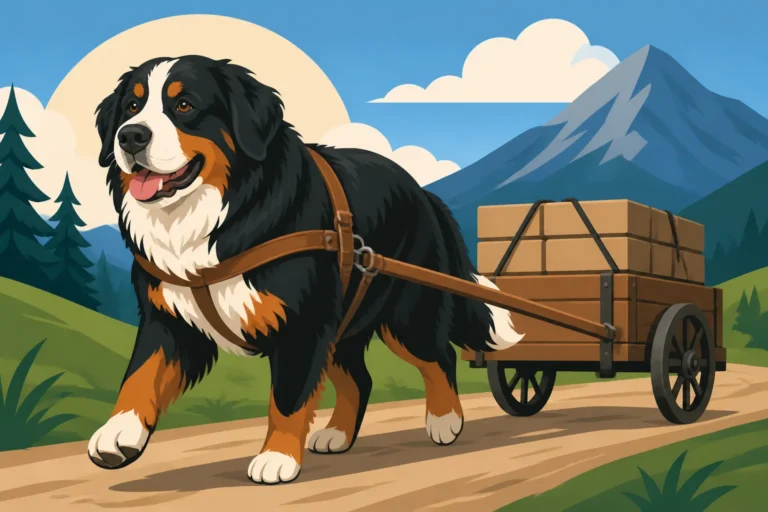
Draft work, or carting, is an activity that truly resonates with the Bernese Mountain Dog's historical purpose. Originating from Switzerland, these dogs were bred to pull carts laden with milk, cheese, or other goods to market. Engaging your Berner in draft work is a fantastic way to honor their heritage, provide purposeful exercise, and challenge them both physically and mentally.
Introducing your Bernese Mountain Dog to draft work should be a slow, positive process. Start with familiarizing them with a harness designed for pulling, then gradually introduce light shafts, and finally, a small, empty cart. Use positive reinforcement every step of the way, rewarding calm acceptance and willingness to move forward. The emphasis should always be on safety and enjoyment, never forcing them. What Drafting Meant for a Swiss Bernese Mountain Dog provides historical context and further inspiration.
Many regional Bernese Mountain Dog clubs offer draft training classes and events, which are excellent resources for learning proper techniques and meeting like-minded enthusiasts. Even if you never compete, simply teaching your Bernese Mountain Dog to pull a cart in your yard or on local trails can be an incredibly rewarding experience for both of you, tapping into their innate desire to work alongside their human companions.
Therapy Dog Potential: Berners as Comfort Givers
Given their gentle disposition, calm demeanor, and affectionate nature, many Bernese Mountain Dogs make exceptional therapy dogs. Their imposing yet soft presence can be incredibly comforting to people in hospitals, nursing homes, schools, or crisis situations. If your Berner has a stable temperament, enjoys meeting new people, and is well-behaved, pursuing therapy dog certification can be a profoundly rewarding path.
Becoming a certified therapy dog requires a strong foundation in obedience, excellent manners around strangers, and a calm, unflappable temperament. Your Bernese Mountain Dog will need to be comfortable with various sights, sounds, and interactions, including unexpected noises, people in wheelchairs, and unfamiliar smells. They must demonstrate impeccable leash manners and be able to settle calmly in new environments. Whether a Bernese Mountain Dog Makes a Therapy Dog explores this path further.
Training for therapy work often involves specialized classes that simulate typical therapy environments, helping both you and your Bernese Mountain Dog prepare for the unique demands of the role. The joy and comfort your Berner can bring to others through therapy work is immeasurable, transforming their inherent gentleness into a powerful force for good in the community.
Canine Sports and Brain Games
Beyond draft work and therapy, there's a whole world of canine sports and brain games that can engage your Bernese Mountain Dog. While their robust build might not make them agility champions, many Berners enjoy activities like obedience trials, rally obedience, trick training, or even nose work. These activities provide mental stimulation, physical exercise, and reinforce your bond through teamwork.
Nose work, for example, is fantastic for Berners. It taps into their natural scenting abilities and is less physically demanding, making it suitable for all ages and fitness levels. Teaching your dog new tricks can also be incredibly fun and helps keep their mind sharp. Simple puzzle toys, like those found on Amazon, or snuffle mats can also provide daily mental enrichment by making them work for their food or treats.
Even if formal competition isn't your goal, simply engaging your Bernese Mountain Dog in regular brain games and new learning experiences will keep them happy and mentally fulfilled. A bored Berner can quickly become a destructive Berner. Providing appropriate outlets for their intelligence and energy is a vital part of their overall well-being. Consider online training programs, such as those offered by BAXTER & Bella, which can guide you through various stages of training and introduce you to new activities from the comfort of your home.
| Training Approach | Best for Bernese Mountain Dogs | Why It Works for Berners | Potential Drawbacks |
|---|---|---|---|
| Positive Reinforcement | Absolutely Essential | Builds trust, confidence, enthusiasm; respects their sensitive nature. | Requires patience, high-value rewards, and consistency. |
| Lure & Reward | Highly Effective | Gentle, clear communication; shows desired behavior rather than forcing. | Can become reliant on lures if not phased out. |
| Clicker Training | Very Effective | Precise communication, marks exact moment of correct behavior. | Requires learning timing, not all owners comfortable with clicker. |
| Aversion/Punishment | Strongly Discouraged | Leads to fear, shutdown, anxiety, aggression; damages trust. | Creates negative associations, can break a Berner's spirit. |
| Alpha/Dominance | Ineffective & Harmful | Based on debunked theories; creates adversarial relationship. | Damages bond, increases fear and potential reactivity. |
| Force-Based Methods | Not Recommended | Can physically injure, emotionally traumatize, or cause fear. | High risk of harming sensitive Berners both physically and mentally. |
Disclaimer
This article is for general informational purposes only and does not constitute professional advice. Laws, prices and regulations vary by location and change over time. Consult a qualified professional for guidance on your specific situation.