Whether Stairs Damage a Bernese Mountain Dog Puppy
Bringing home a fluffy Bernese Mountain Dog puppy is an absolute dream, but quickly, a common worry starts to creep in: how do we protect these rapidly growing bundles of joy from accidental harm, especially to their developing joints? One of the most frequently asked questions, and a significant source of anxiety for new Berner parents, revolves around stairs. Many owners find themselves lifting their rapidly expanding puppies, wondering if every trip up or down a flight of stairs could be doing irreversible damage to their precious companions. This guide will meticulously break down the concerns surrounding stairs and Bernese Mountain Dog puppies, offering practical advice and peace of mind.
The Rapid and Vulnerable Growth of a Bernese Mountain Dog Puppy
Bernese Mountain Dogs are magnificent, large-breed dogs, and their growth rate is nothing short of astounding. They transform from small, cuddly puppies into impressive, hundred-pound adults in a surprisingly short amount of time. While this rapid development is a wonder to behold, it also makes them particularly susceptible to certain health challenges, especially concerning their skeletal system. Their bones, joints, and ligaments are not designed to handle excessive stress during these formative months.
Understanding Growth Plates and Joint Development
Imagine a building under construction; you wouldn't want to put immense pressure on its foundations before they've fully set, right? It's much the same for a Bernese Mountain Dog puppy's skeletal system. Until around 12-18 months of age, their bones have soft areas called growth plates (epiphyseal plates) located near the ends of long bones. These plates are responsible for bone lengthening. They are incredibly vulnerable to injury because they are softer and weaker than the surrounding ligaments and tendons. A forceful impact, twist, or repetitive strain can easily damage these growth plates, potentially leading to abnormal bone growth, pain, and lifelong lameness.
Beyond the growth plates, the developing joints themselves, such as the hips and elbows, are still forming their intricate structures. Conditions like hip and elbow dysplasia, unfortunately, are prevalent in the breed. While genetics play a significant role in these conditions, environmental factors during puppyhood, including excessive or inappropriate exercise, can heavily influence their severity and manifestation. This is why paying close attention to how your puppy moves and the stress placed on their joints is so critical. Early intervention and careful management can make a world of difference. To get a broader understanding of breed health, you might want to look into topics like The Bernese Mountain Dog Health Panel to understand what breeders and vets screen for.
The Impact of Early Physical Stress on Large Breeds
For breeds like the Bernese Mountain Dog, which carry significant weight, every pound your puppy gains adds stress to their developing joints. This is a primary reason why breeders and veterinarians stress controlled growth and limited high-impact activities during puppyhood. If you're wondering What a Bernese Mountain Dog Weighs at Each Month, you'll see just how quickly they bulk up. Excessive running, jumping, or repetitive actions like navigating stairs too early can put undue pressure on these vulnerable areas.
The concept isn't just about preventing a single catastrophic injury, but rather minimizing cumulative micro-traumas that can contribute to degenerative joint disease later in life. Imagine countless tiny stresses building up over time. This is particularly true for their rear legs and spine, which bear the brunt of the impact when descending stairs. The long-term health implications, including conditions like Joint Disease in a Hundred Pound Bernese Mountain Dog, make early caution paramount.
The Specific Risks Stairs Pose to Young Bernese Mountain Dogs
When we talk about stairs and Bernese puppies, it’s not just about a fear of them falling down. While that’s certainly a concern, the more insidious threat lies in the repetitive strain and impact on their developing bodies. A single staircase can represent a gauntlet of potential stress points for an immature skeletal system.
Repetitive Strain and Impact on Developing Joints
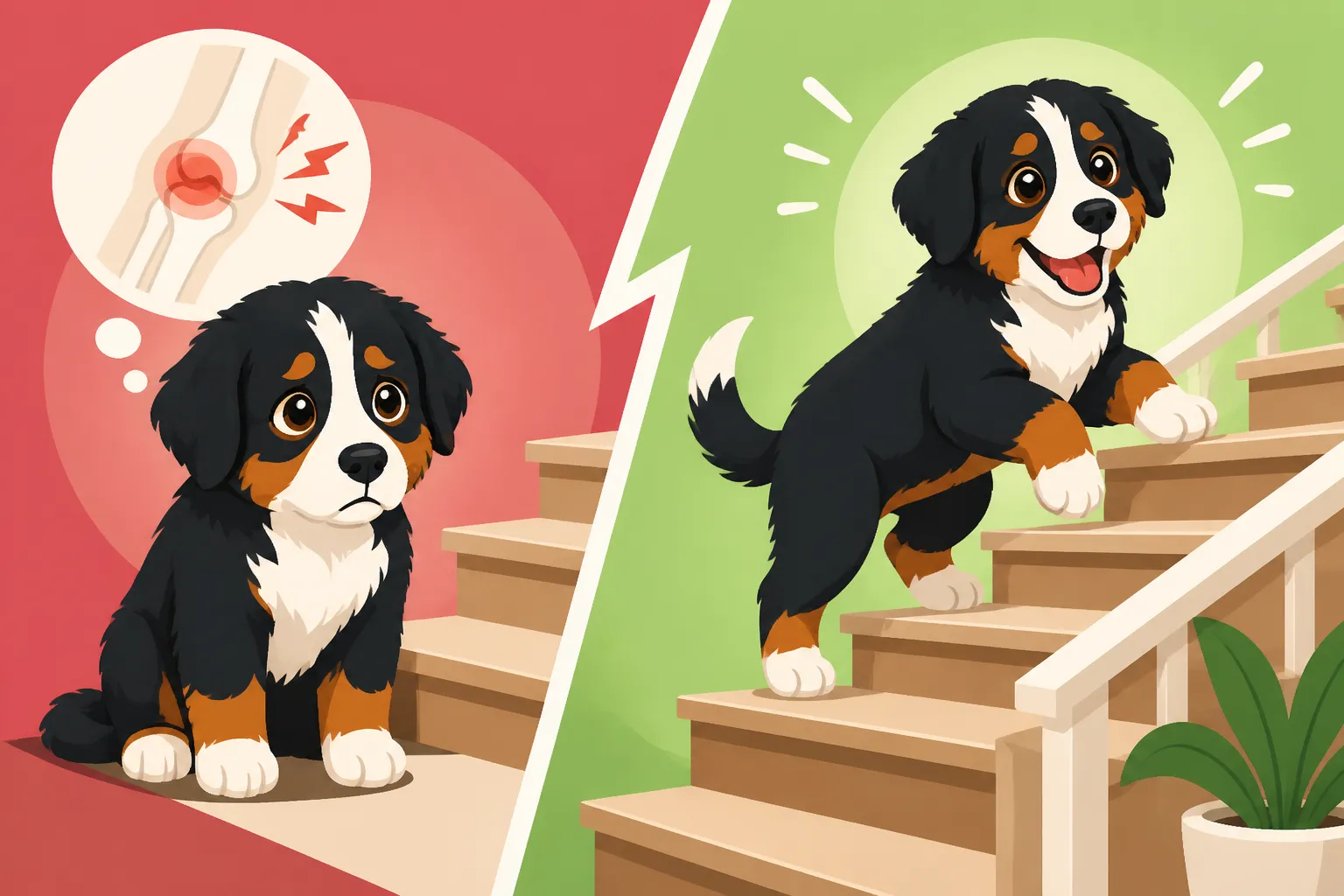
Think about the mechanics of going up and down stairs. Going up requires significant effort, pushing off with the hindquarters and pulling with the front. This puts considerable strain on the hips, knees, and hocks. Descending stairs is often even more taxing. It involves a controlled fall, with the front legs absorbing the impact of each step and the shoulders, elbows, and carpal joints bearing the brunt. The spine also experiences torsion and compression.
For a large breed puppy like a Bernese Mountain Dog, whose bones are lengthening rapidly and whose growth plates are still open, this repeated impact can be detrimental. It's not just the sharp jolt of landing but the twisting motion that occurs as they navigate each step. This kind of strain can lead to inflammation, micro-fractures, and improper development of joint capsules, increasing the risk of conditions such as osteochondritis dissecans (OCD) in the shoulders and elbows, and exacerbating hip dysplasia.
Consider also the risk of What Fast Growth Costs a Bernese Mountain Dog's Joints. Rapid growth combined with high-impact activities is a recipe for potential long-term orthopedic issues. It’s why veterinarians often recommend keeping exercise relatively controlled for Bernese puppies.
The Danger of Accidental Slips and Falls
Beyond the chronic stress, there's the very real and immediate danger of acute injury from a fall. Bernese Mountain Dog puppies, for all their charming clumsiness, are still learning to coordinate their rapidly growing bodies. Their paws can be too big for their legs, their balance isn't fully developed, and they can easily misjudge a step. Smooth, polished stairs can be particularly treacherous.
A slip or fall down a flight of stairs can result in sprains, fractures, concussions, or even more severe injuries. A puppy might try to compensate for a slip, twisting its body unnaturally and potentially injuring a growth plate or tearing a ligament. Even if the puppy seems to shake it off initially, the trauma could lead to long-term pain or mobility issues. This is why preventing unsupervised access to stairs is a non-negotiable part of responsible Bernese puppy ownership. Many owners consider pet insurance for their Berners, and having a plan like those offered by Healthy Paws can provide immense relief should an accident like a fall occur.
Practical Strategies for Managing Stairs in a Bernese Puppy's Life
So, what's a loving Bernese owner to do when stairs are part of their home environment? The key is proactive management, common sense, and patience. Your goal is to minimize risk during their critical development phase and gradually introduce challenges as they mature.
Safe Navigation and Alternative Solutions
For the first few months, the safest approach is simple: carry your Bernese Mountain Dog puppy up and down stairs. Yes, they get heavy quickly, but this manual effort is a small price to pay for their long-term joint health. This is especially true for the first few months, up to around 4-5 months of age. If carrying becomes too difficult as they grow, and you have multiple flights, consider confining your puppy to one level of the house using baby gates. This might seem inconvenient, but it drastically reduces the opportunity for stair-related injuries.
If stairs are unavoidable or if your puppy needs access to a different level, a ramp can be an excellent alternative, especially for smaller sets of stairs or to get into a car. Look for ramps with good traction and a gentle incline. For single steps or getting onto furniture, a small, sturdy dog step could also work, but ensure it's wide and stable enough for a large breed puppy. Remember, the general rule of thumb for exercise is How Little a Bernese Mountain Dog Puppy Should Do to protect their developing bodies.
When your Berner is older and has better body control (typically after 6 months and certainly after 12-18 months when growth plates are closing), you can begin controlled training on stairs. Start with just a few steps, praising and rewarding them for each cautious descent and ascent. Always supervise, use a leash, and move slowly. The goal is to build confidence and muscle memory for safe navigation, not to rush them.
When Can a Bernese Puppy Safely Use Stairs?
There's no single magic age when a Bernese puppy suddenly becomes immune to stair-related risks. It's a spectrum, and it depends on the individual puppy's development, their coordination, and the type of stairs. However, general guidelines exist:
- Under 3-4 months: Absolutely no stairs unsupervised. Carry them whenever possible. Their bodies are far too delicate.
- 4-6 months: Continue to carry them if you can. If you absolutely cannot, limit stair use to once or twice a day, always supervised, and encourage slow, deliberate movements. Use baby gates to block access the rest of the time.
- 6-12 months: Growth plates are still open, but their coordination is improving. Controlled, supervised stair use can begin, still keeping it minimal. Avoid letting them race up or down. At this stage, you're looking for signs of discomfort or reluctance. This is also a good time to review your pet insurance coverage from providers like Healthy Paws, just in case any underlying joint issues begin to surface.
- 12-18 months and beyond: Most growth plates will have closed, and their skeletal structure is much stronger. They can typically navigate stairs safely, though continued vigilance for any signs of lameness or discomfort is always wise, especially considering Hips That Fail Under a Bernese Mountain Dog's Weight.
Always consult your veterinarian for personalized advice, especially if your puppy has any predispositions to joint issues or exhibits unusual gait or pain. They can help you determine The Age a Bernese Mountain Dog Should Be X-Rayed if there are concerns.
Supporting Joint Health Through Early Years
Beyond stair management, a holistic approach to joint health during puppyhood is essential for a Bernese Mountain Dog.
- Nutrition: Feed a high-quality, large-breed puppy food formulated for slow growth. This helps prevent them from growing too quickly, which can put immense stress on developing bones and joints. Avoid overfeeding, as excess weight is a major contributor to orthopedic problems.
- Controlled Exercise: While adequate exercise is important for mental and physical development, it must be controlled. Short, frequent walks on soft surfaces (like grass) are far better than long, strenuous hikes or rough-and-tumble play with older, larger dogs that might put them at risk. Focus on leash training and socialization. You can learn more about appropriate activity levels in The Five Minute Rule and a Bernese Mountain Dog Puppy.
- Orthopedic Beds: Provide a supportive, orthopedic bed to cushion their joints when resting. This is not just for older dogs; it's beneficial for growing puppies too.
- Veterinary Check-ups: Regular vet visits are crucial to monitor their growth and development. Your vet can assess their gait, palpate their joints, and offer guidance on appropriate activity levels and nutrition. Discuss any concerns you have about their movement or growth. Proactive care helps catch potential issues early. This can include discussions around Starting a Bernese Mountain Dog on Joint Medication Young if warranted by a vet.
- Pet Insurance: Given the breed's predispositions to orthopedic conditions and other health challenges, investing in pet insurance early can be a lifesaver. Companies like Healthy Paws offer comprehensive plans that can help manage the often substantial costs associated with diagnostics, treatments, and surgeries for joint issues or accidental injuries. It's truly a safety net for those unexpected high veterinary bills.
Long-Term Considerations and Proactive Care for Your Bernese
The care you provide during your Bernese Mountain Dog's puppyhood lays the foundation for their long-term health and mobility. While the intense worry about stairs might lessen as they mature, the commitment to proactive joint care never truly ends with this breed.
Preventing Issues as Your Berner Matures
Even after their growth plates have closed, and they’re technically "adults," Bernese Mountain Dogs still benefit from mindful care regarding their joints. Their large size means they'll always carry a significant load, making them prone to conditions like arthritis and other degenerative joint diseases as they age.
Maintaining a healthy weight is paramount. An overweight Berner places undue stress on every single joint, accelerating wear and tear. Regular, moderate exercise that focuses on strength and flexibility (like swimming or leash walks on varied terrain) rather than high-impact activities is ideal. Be wary of intense, repetitive jumping, quick turns, or long-distance running, especially on hard surfaces, which can contribute to problems like The Knee a Bernese Mountain Dog Tears at Four.
Consider the environment your adult Berner lives in. Are there slippery floors? Placing runners or area rugs can provide much-needed traction, reducing the risk of slips and falls that can twist joints. Orthopedic beds remain essential for older dogs to support their joints and promote comfortable rest. It’s also wise to continue being mindful of stair usage, especially if your Berner ever develops signs of discomfort or lameness.
The Role of Preventative Measures and Veterinary Guidance
Throughout your Bernese Mountain Dog's life, your veterinarian is your most valuable partner in proactive health management. Regular check-ups, even if your dog seems perfectly healthy, allow your vet to monitor their weight, assess their mobility, and discuss any subtle changes you might not notice.
Discuss preventive measures like joint supplements (chondroitin, glucosamine, MSM, omega fatty acids) with your vet. While not a cure-all, they can sometimes support joint health as a prophylactic measure or for dogs with early signs of arthritis. Remember, though, that supplements should never replace veterinary medical advice or treatment.
Staying informed about breed-specific health concerns, such as The Bernese Mountain Dog Whose Back Legs Give Out (Degenerative Myelopathy), and knowing the early signs of lameness or discomfort can empower you to seek veterinary attention promptly. Early diagnosis and intervention often lead to better outcomes for many orthopedic and health conditions.
Finally, having pet insurance like Healthy Paws throughout your Bernese Mountain Dog's life offers crucial financial security. It means you won't have to make difficult decisions based on cost when your beloved companion needs advanced diagnostics or treatments for joint disease, cancer, or other common Berner ailments. This peace of mind allows you to focus on getting your dog the best possible care.
Stair Safety Guidelines for Bernese Mountain Dog Puppies
| Age of Puppy | Recommended Action | Rationale |
|---|---|---|
| 0-3 Months | Carry puppy up and down all stairs. Install baby gates. | Growth plates are extremely soft; high risk of injury from impact or falls. |
| 3-6 Months | Carry when possible. If too heavy, carry down and guide up slowly on leash. Gates remain essential. | Growth plates still open; moderate risk. Building early coordination. |
| 6-12 Months | Supervised, slow use of stairs on leash. Avoid running. Gates for unsupervised access. | Growth plates beginning to close; improving coordination but still vulnerable. |
| 12-18+ Months | Free access usually fine, monitor for signs of discomfort. | Growth plates largely closed; skeletal system more robust. Continue weight management. |
Disclaimer: This article is intended for informational purposes only and does not constitute professional veterinary advice. Always consult with a qualified veterinarian for any health concerns or before making any decisions about your Bernese Mountain Dog's care and training.