The SOD1 Test for a Bernese Mountain Dog
The SOD1 genetic test helps Bernese Mountain Dog owners detect degenerative myelopathy before hind leg paralysis begins.
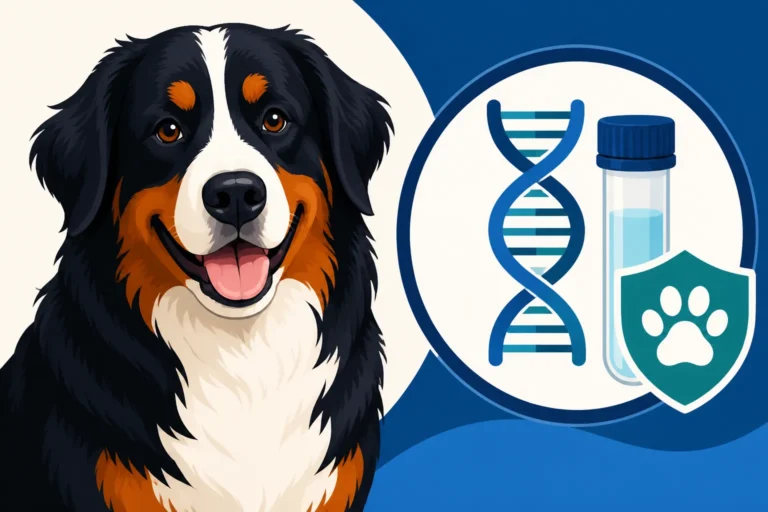
The SOD1 genetic test helps Bernese Mountain Dog owners detect degenerative myelopathy before hind leg paralysis begins.

Fast eating and stomach twisting in Bernese Mountain Dogs, explaining how gas and fluid accumulation leads to bloat and shock.
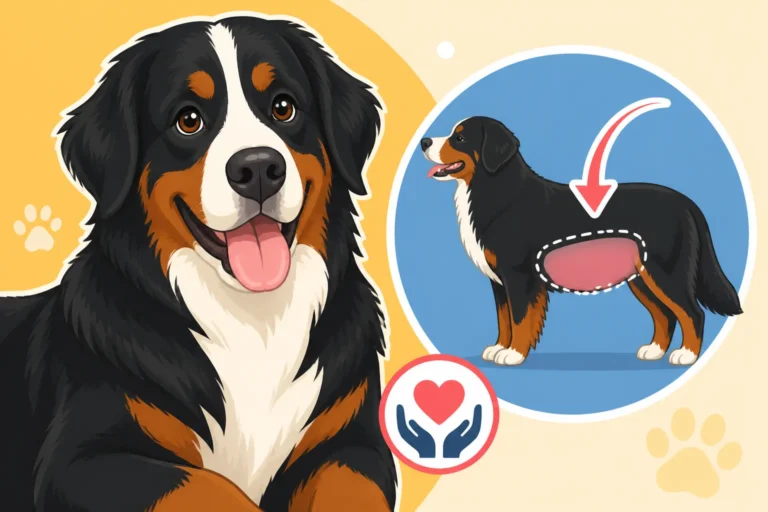
Surgical stomach tacking prevents fatal twisting in Bernese Mountain Dogs by securing the organ directly to the abdominal wall.

Gastric dilatation-volvulus causes rapid distress in Bernese Mountain Dogs because deep chests and loose stomach ligaments increase twist risks.

OFA health clearances for Bernese Mountain Dog breeding stock explain how to reduce inherited diseases and joint problems.

Early arthritis in six-year-old Bernese Mountain Dogs explains joint vulnerabilities, dysplasia, and subtle physical pain signs.
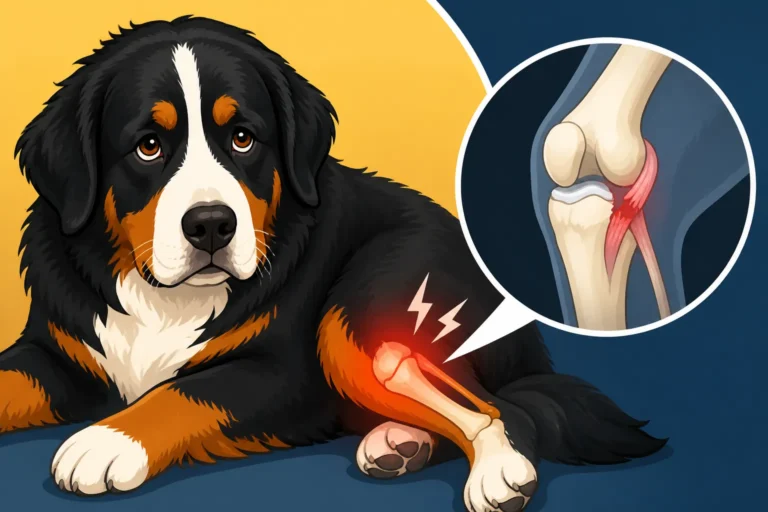
Cranial cruciate ligament tears in Bernese Mountain Dogs cause knee instability, severe pain, and sudden lameness at four years old.
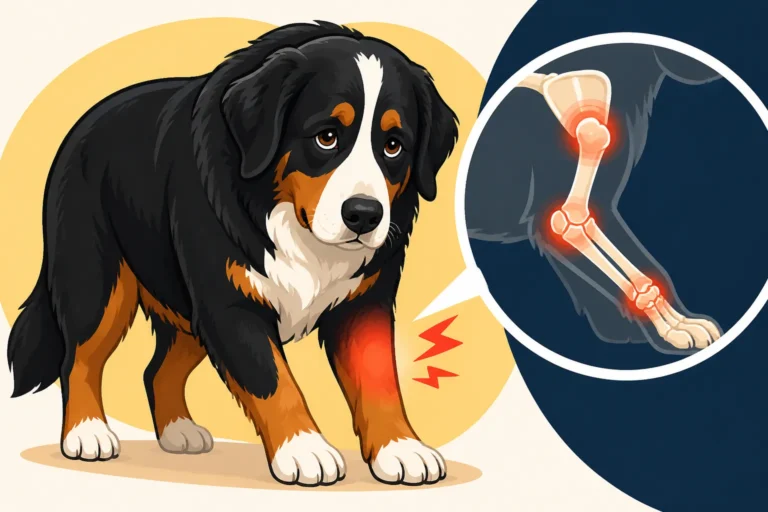
Front-end lameness in Bernese Mountain Dogs stems from orthopedic challenges, rapid growth, and elbow dysplasia causing joint pain.
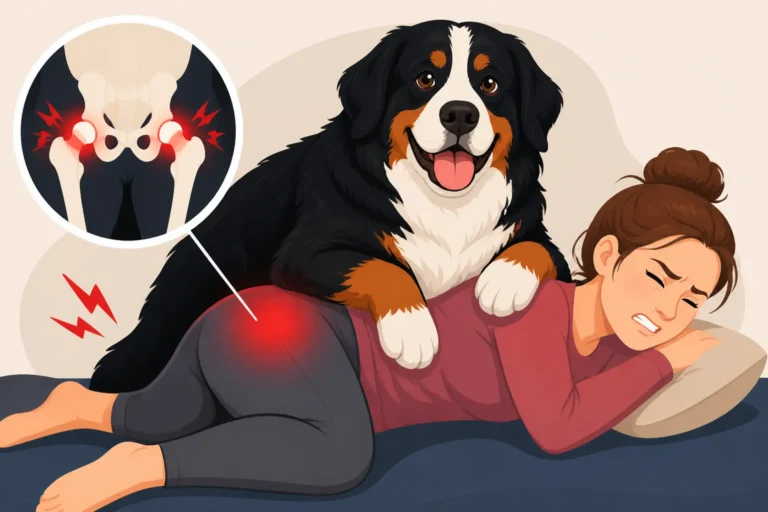
Hip dysplasia in Bernese Mountain Dogs causes joint laxity, pain, and degeneration when the femoral head and socket fail to form correctly.

Older Bernese Mountain Dog health screenings and preventative measures protect senior dogs from rapid age related diseases.