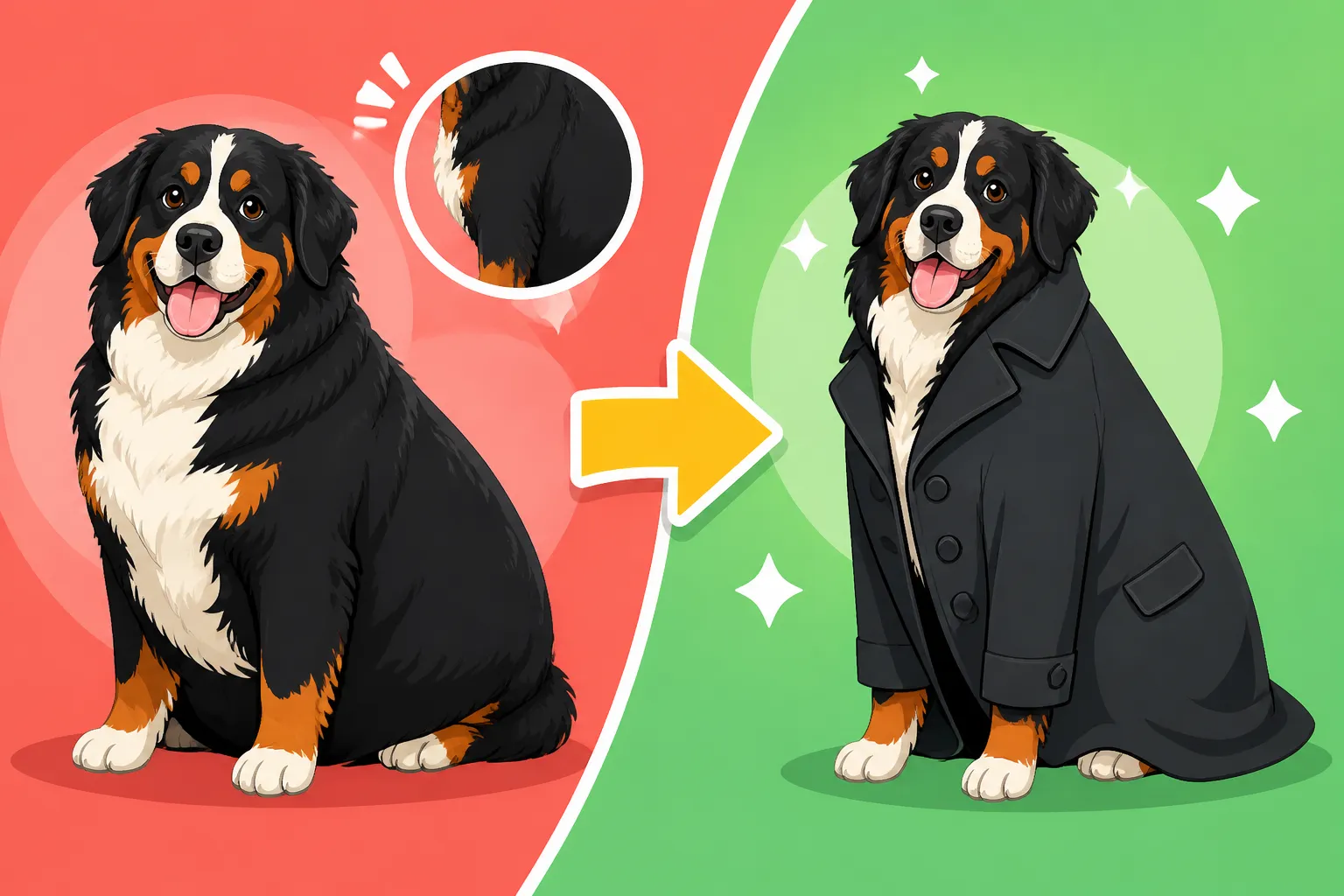
Whether a Long Coat Hides a Fat Bernese Mountain Dog
It’s a common frustration for Bernese Mountain Dog owners: you look at your fluffy companion, all majestic and grand, and wonder if that glorious coat is hiding a little more than just muscle. Their thick, luxurious fur can make it incredibly difficult to accurately gauge their body condition, leaving you second-guessing whether your beloved Berner is at a healthy weight or if you're inadvertently loving them a bit too much with treats. This guide is here to help you cut through the fluff, literally, and truly understand how to assess your Bernese Mountain Dog’s body condition, and what steps you can take to ensure they maintain optimal health throughout their lives.
The Bernese Mountain Dog's Deceptive Coat
Let's face it, one of the most endearing qualities of a Bernese Mountain Dog is that magnificent, flowing coat. It's beautiful to look at, wonderful to bury your hands in, and provides excellent insulation against chilly weather. But this very feature can become a significant hurdle when you're trying to figure out if your dog is carrying a few extra pounds. That plush fur creates a visual trick, making even a perfectly lean Berner appear quite substantial.
Why the Double Coat Makes Assessment Tricky
The Bernese Mountain Dog boasts a dense double coat, consisting of a long, slightly wavy outer coat and a thick, woolly undercoat. This combination is designed to protect them from the harsh elements of their native Swiss Alps. While fantastic for winter hikes, it’s a real challenge for weight assessment. The undercoat, especially, adds a lot of volume and softness that can conceal the subtle contours of a dog's physique. You might be looking at what appears to be a well-rounded dog, but beneath that exterior, their body condition could be entirely different.
Imagine trying to feel the ribs of a dog wearing a very thick, plush winter coat – it's almost impossible without getting your hands right in there. The same principle applies here. When your Berner is standing, their fur might puff out, making their sides look full even if their rib cage is actually easily palpable underneath. This natural insulation also means that visual cues that work for shorter-coated breeds, like a clearly defined waist or abdominal tuck, are far less apparent, or even completely obscured, in a Bernese Mountain Dog. Many owners find themselves unknowingly overfeeding because their dog "looks" thin when they're actually at a good weight, or they "look" healthy when they're actually carrying excess weight.
The Illusion of "Fluff"
It’s easy to fall prey to the "fluff factor." A Bernese Mountain Dog, even one at a perfect weight, will rarely look sleek or slender. Their breed standard calls for a sturdy, substantial build, and their coat only enhances this perception. When you see your Berner prancing around, their coat flowing, they look robust and powerful. This can lead owners to believe that a little extra padding is just part of their inherent majesty or "big boned" nature. However, confusing natural bulk with actual fat is a mistake that can lead to significant health problems down the line.
We often interpret that soft, yielding feeling when we pet them as healthy flesh, when in reality, it could be a layer of fat. The hair itself has weight and volume, especially when it's clean and well-fluffed after a good grooming session. This illusion means that relying solely on what your eyes tell you about your Bernese Mountain Dog’s weight is a risky game. It demands a more hands-on approach and a conscious effort to differentiate between the luxurious volume of their coat and the underlying structure of their body. For instance, you might think your Berner is fine because they don't look "skinny," but what you're really seeing is the outline created by their fur, not their actual physique. This challenge is why we often suggest pet parents consider The Running Costs of a Hundred Pound Bernese Mountain Dog early on, as managing their weight, and the associated health issues, can be a major factor in overall expenses.
Accurate Body Condition Assessment for Berners
Since visual inspection alone can be deceiving, the key to accurately assessing your Bernese Mountain Dog’s body condition lies in using your hands. This tactile method helps you feel past the voluminous coat to the underlying bone structure and muscle, giving you a much clearer picture of their fat reserves. It's a skill worth developing, and with a little practice, it becomes second nature.
Hands-On Examination: The Rib and Spine Test
The most reliable way to assess your Berner’s weight is through a gentle, systematic touch. You're looking for subtle changes in their body contour that are hidden by the fur.
First, let's talk about the ribs. Run your hands along your dog's sides, specifically over their rib cage. You should be able to feel their ribs individually, much like feeling the knuckles on your hand, but without having to press hard. If you have to really dig to feel them, your Berner is likely carrying too much weight. Conversely, if the ribs are easily visible or feel sharp and distinct without any pressure, they might be underweight, though this is less common in Berners. There should be a thin layer of fat covering the ribs, making them palpable but not protruding.
Next, move your hands to their spine. Run your fingers down their back, feeling for the bony prominences of the vertebrae. Similar to the ribs, you should be able to feel the individual bumps of the spine without them being sharply defined or completely obscured by fat. If their spine feels like a smooth, unbroken ridge, it’s a sign of excess weight. Finally, feel for their hip bones. Again, these should be palpable with a slight fat covering, not sticking out or completely buried. This hands-on method allows you to literally feel the difference between the fluff and the actual body composition. For a deep dive into monitoring your Berner's health, including what a veterinarian looks for, check out The Bernese Mountain Dog Health Panel.
Visual Cues Despite the Coat
While the Bernese Mountain Dog's coat does make visual assessment challenging, there are still some subtle cues you can look for, especially once you've gained confidence with the hands-on method. You’re looking for hints of definition, rather than the sharp lines you’d see on a sighthound.
When viewing your Berner from above, try to identify a subtle "waist" where their body tapers in slightly after the rib cage and before the hips. In a thick-coated dog, this might not be a dramatic hourglass shape, but there should be some indication of a narrowing. If your dog looks like a straight, solid block from ribs to tail base, that's a red flag for being overweight.
From the side, look for an abdominal tuck. This means the abdomen should rise slightly from the bottom of the rib cage to the groin, rather than hanging low or being perfectly straight across. Again, with a Berner's deep chest and voluminous coat, this tuck will be much less pronounced than in other breeds, but it should still be present. A dog that looks flat or convex in the abdominal area when viewed from the side is likely overweight. It truly takes an educated eye to spot these subtle differences, but combining these visual checks with your hands-on assessment will give you the most accurate picture of your Bernese Mountain Dog's overall body condition. If you're comparing your Berner to What a Bernese Mountain Dog Weighs at Each Month, remember that weight alone doesn't tell the full story; body condition is equally, if not more, important.
The Body Condition Score Chart
To give owners a more standardized way to assess their dog's weight, veterinarians often use a Body Condition Score (BCS) chart, typically on a scale of 1 to 9 (with 1 being emaciated and 9 being severely obese, and 4-5 being ideal). While these charts often feature illustrations of short-haired dogs, the principles can still be applied to a Bernese Mountain Dog with a bit of interpretation and a heavy reliance on the tactile assessment we just discussed.
The BCS helps translate what you see and feel into a numerical score. An ideal score (4-5) means:
- Ribs: Easily palpable without excess fat cover.
- Waist: Visible from above (even if subtle through the coat).
- Abdominal tuck: Evident from the side.
- Spine/Hip bones: Palpable with a slight covering.
Here's a simplified breakdown of how you might interpret BCS for your Bernese Mountain Dog, remembering to always feel first:
| Score | Description | How it Feels/Looks (Focusing on Berner) |
|---|---|---|
| 1-3 | Underweight/Thin | Ribs, spine, hip bones easily visible/prominent with no fat cover. Obvious waist and abdominal tuck. Muscle loss may be evident. |
| 4-5 | Ideal Weight | Ribs easily felt with minimal fat. Subtle waist and abdominal tuck. Spine and hip bones palpable with slight fat covering. |
| 6-7 | Overweight | Ribs difficult to feel without firm pressure. Waist barely discernible or absent. Abdominal tuck minimal. Fat deposits over lumbar area. |
| 8-9 | Obese/Severely Obese | Ribs very difficult to feel. No waist, broad back. Abdomen distended or sagging. Heavy fat deposits over back, tail base, and neck. |
This chart serves as a guide, but your hands are truly your best tool. Regularly performing the hands-on check, ideally once a month, will allow you to quickly identify any changes in your Berner's condition. Don't be afraid to ask your vet to demonstrate proper BCS assessment at your next check-up; they can provide invaluable real-time feedback on your specific dog. Getting an accurate BCS is crucial, as Whether a Lean Bernese Mountain Dog Lives Longer suggests a direct correlation between optimal weight and longevity.
The Risks of Extra Weight for a Bernese Mountain Dog
Carrying extra weight, even what might seem like "just a few pounds," can have a profound and detrimental impact on a Bernese Mountain Dog's health and overall quality of life. These magnificent dogs are already predisposed to certain health challenges, and obesity can exacerbate these issues significantly, leading to a shorter lifespan and reduced comfort. It's a serious concern that every Berner owner needs to take to heart.
Joint Strain and Mobility Issues
Bernese Mountain Dogs are large, heavy-boned dogs, and their joints already bear a substantial load. They are unfortunately prone to orthopedic problems like hip and elbow dysplasia, as well as arthritis. When you add extra weight into the mix, it's like asking your Berner to constantly carry a heavy backpack. This additional strain puts immense pressure on their joints, accelerating the degeneration of cartilage, worsening existing conditions, and often leading to earlier onset and more severe pain.
Think about it: every step they take, every time they stand up, lie down, or climb stairs, their joints are working harder to support that excess bulk. This can lead to increased inflammation, chronic pain, and a significant reduction in their mobility. A dog that is overweight might become reluctant to play, go for walks, or even struggle with simple movements, stealing away their joy and natural vigor. We've seen so many cases where Joint Disease in a Hundred Pound Bernese Mountain Dog becomes far more debilitating because of just ten or fifteen extra pounds. It's heartbreaking to watch a once-active Berner become stiff and uncomfortable in their prime, all because of preventable weight gain.
Increased Health Concerns
Beyond joint problems, obesity in Bernese Mountain Dogs contributes to a host of other serious health issues, significantly impacting their overall well-being and potentially shortening their already precious lives. This isn't just about appearance; it's about fundamental biological processes being stressed by excess fat.
One major concern is the impact on their cardiovascular system. Extra weight means their heart has to work harder to pump blood throughout a larger body mass, increasing the risk of heart disease. Obesity can also predispose Berners to diabetes, as their bodies become less efficient at processing sugars. Respiration can be affected too; a heavier dog may struggle more in warmer weather or during exercise, as the extra fat places strain on their lungs and makes them less efficient at cooling themselves. This is particularly important for a breed like the Berner, which is already sensitive to heat due to their thick coat. The Temperature a Bernese Mountain Dog Stops Coping is lower when they are carrying extra weight.
Furthermore, there's evidence to suggest a link between obesity and certain types of cancer. While Bernese Mountain Dogs already have a heartbreakingly high incidence of cancer, particularly histiocytic sarcoma, maintaining a healthy weight is one crucial way to support their overall health and potentially mitigate some risks. The sad truth is that a Bernese Mountain Dog's Why a Bernese Mountain Dog Lives Only Seven or Eight Years average lifespan is often further reduced when they are carrying extra weight. Every pound matters when it comes to their long-term health.
Practical Strategies for Weight Management
Once you’ve accurately assessed your Bernese Mountain Dog and determined they need to shed a few pounds, or if you simply want to maintain their ideal weight, it’s time to implement a proactive weight management plan. This isn't about drastic, sudden changes, but rather a consistent, balanced approach that addresses both diet and exercise. Remember, consistency is key, and every small, positive change adds up over time.
Tailoring Diet to Activity Level
The cornerstone of weight management is, without a doubt, controlling what and how much your Bernese Mountain Dog eats. It's easy to fall into the trap of pouring "a scoop" of food without truly measuring, or giving in to those soulful Berner eyes begging for just one more treat.
First, invest in a reliable measuring cup. Don't eyeball it. Consult your veterinarian for a target weight and daily caloric intake recommendation, as this will be specific to your dog's age, activity level, and current weight. Most quality dog food bags provide feeding guidelines, but these are often generalized and can sometimes be on the higher side. Your vet’s guidance, alongside accurate measurement, is paramount.
Consider the type of food as well. A high-quality, protein-rich food that isn't excessively dense in calories is ideal. There are many excellent large-breed formulas on the market that are formulated to support joint health and provide balanced nutrition. Some owners find success with fresh food delivery services like Ollie, which offer pre-portioned meals based on your dog's specific needs, making portion control much simpler. If you're using kibble, look for options with healthy ingredients. Breaking up their daily food allowance into two or three smaller meals can also help manage hunger and prevent them from feeling too full or too empty. It's a journey, and learning Feeding an Adult Bernese Mountain Dog Safely is a big part of it.
Exercise: Quality Over Quantity
While diet is crucial, exercise plays a vital supporting role in weight management and overall health. For a Bernese Mountain Dog, it’s not about high-impact, strenuous workouts, especially if they are already overweight or prone to joint issues. Instead, focus on consistent, moderate activity that supports muscle mass and burns calories without putting undue strain on their large frames.
Daily walks are essential. Aim for at least 30-60 minutes of leash walking, broken into two sessions if possible. Focus on varied terrain when appropriate – soft grass, dirt trails – to build muscle without excessive impact. Avoid hard pavement for long durations, especially in hot weather. Swimming can be an excellent, low-impact exercise for Berners, as it works their muscles without stressing their joints. Just be sure they are comfortable and safe in the water. Remember, short, frequent play sessions in the yard can also contribute to their activity levels. Think about games that encourage movement without hard stops and starts.
As they lose weight and their fitness improves, you can gradually increase the duration and intensity of their activities. Always pay close attention to your Berner's comfort level, especially if they have existing joint issues. Never push them to the point of exhaustion or pain. This gentle, consistent approach ensures they stay active and healthy throughout their weight loss journey and beyond. For Berners, in particular, activities like Backpacking With a Bernese Mountain Dog or draft work with a Bernese Mountain Dog can provide excellent physical and mental stimulation once they are at a healthy weight and properly conditioned.
Healthy Treats and Supplements
Treats are often a hidden culprit in canine weight gain. Those small, seemingly innocent morsels can quickly add up in calories, especially for a large breed like the Bernese Mountain Dog. This doesn't mean you have to eliminate treats entirely; it means being smart about your choices and portions.
Opt for low-calorie, healthy treats. Small pieces of raw carrot, cucumber, green beans, or apple (without seeds) make fantastic, guilt-free rewards. Many commercial training treats are also very low in calories – just be sure to read the labels carefully. If you use regular kibble as treats for training, remember to subtract those calories from their daily meal allowance. Brands available on Chewy or Amazon offer a wide array of healthier, low-calorie treat options specifically designed for weight management, often with natural ingredients.
Joint supplements can also be a valuable addition, especially for a breed prone to orthopedic issues or during a weight loss journey when joints are under stress. Ingredients like glucosamine, chondroitin, and MSM can help support cartilage health and reduce inflammation. Discuss appropriate supplements with your vet. While supplements aren't a magic bullet for weight loss, they can certainly support joint health as your Berner sheds those extra pounds and becomes more active. Many owners incorporate Joint Supplements in a Bernese Mountain Dog's Bowl as a routine part of their care.
Regular Vet Check-ups
Regular veterinary check-ups are absolutely vital for successful weight management in your Bernese Mountain Dog. Your vet is your most important partner in this journey. They can accurately assess your dog’s body condition, rule out any underlying medical conditions that might contribute to weight gain (like hypothyroidism), and help you develop a personalized weight loss plan.
During these visits, your vet can provide specific recommendations for diet changes, exercise routines, and even prescribe weight-loss foods if necessary. They can also monitor your Berner’s progress, make adjustments to the plan, and provide encouragement and guidance. It’s also an opportunity to discuss any signs of discomfort or changes in mobility that might arise as your dog becomes more active. Don't hesitate to schedule follow-up appointments specifically for weight checks, often these can be done by a vet tech and are less expensive than a full exam. This ongoing professional support ensures that your Bernese Mountain Dog loses weight safely and effectively, paving the way for a healthier, more comfortable, and potentially longer life. They can also help with strategies for Taking Ten Pounds Off a Bernese Mountain Dog in a safe and sustainable manner.
Disclaimer
This article is for general informational purposes only and does not constitute professional advice. Laws, prices and regulations vary by location and change over time. Consult a qualified professional for guidance on your specific situation.