Water Around a Bernese Mountain Dog’s Mealtimes
One of the biggest worries for any Bernese Mountain Dog owner, especially those new to the breed, often revolves around mealtime – and it's not just about what they eat, but how they drink. You’re likely concerned about gulping, messy floors, and the ever-present shadow of bloat, wondering if there’s a perfect way to manage your big buddy’s water intake around meals to keep them healthy and happy. This guide is here to help you navigate the nuances of hydration for your gentle giant.
The Importance of Hydration for Your Bernese Mountain Dog
Hydration isn't just about quenching thirst; it's a foundational pillar of your Bernese Mountain Dog's overall health and well-being. These magnificent dogs have substantial bodies to maintain, and water plays a critical role in almost every bodily function.
Why Berners Need Consistent Water Intake
Just like us, water is absolutely essential for your Bernese Mountain Dog. It helps with digestion, ensuring that the food they eat is properly broken down and nutrients are absorbed. Think about how much kibble a hundred-pound Berner can put away – that all needs a good amount of liquid to move through their system smoothly! Beyond digestion, water is crucial for maintaining proper blood circulation, which delivers oxygen and vital nutrients to all their organs and muscles. It also helps regulate their body temperature, which is especially important for a double-coated breed like the Berner, particularly during warmer months.
For a large breed like the Bernese Mountain Dog, consistent water intake is even more vital. Their sheer size means their joints carry a significant load, and proper hydration contributes to healthy cartilage and joint fluid, which can be a small but mighty factor in managing joint health over their lifetime. It supports kidney function, helping to flush out toxins and maintain electrolyte balance. Every wag of their tail, every happy romp in the yard, every cuddly lean against your leg requires their body to be functioning optimally, and water is at the heart of that. Without enough water, even a perfectly healthy Berner can quickly become sluggish and unwell.
Recognizing Dehydration Signs
It's easy to assume your Berner is drinking enough, especially if their bowl is regularly refilled. However, paying close attention to their habits and physical signs is key to catching potential dehydration early. One of the first things you might notice is a change in their energy levels. A dehydrated Berner might seem unusually lethargic, less interested in play, or generally more tired than usual. Their gums can offer a quick visual cue: healthy gums are moist and pink. If they appear dry or sticky, it’s a red flag. You can also gently press on their gums; if the color doesn't return quickly (within a second or two), it could indicate dehydration.
Another classic test is checking skin elasticity. Gently pinch a fold of skin on their neck or shoulder and release it. In a well-hydrated dog, the skin should snap back almost immediately. If it takes longer to return to its normal position, it suggests a lack of fluids. Sunken eyes are another sign to watch for, as are changes in urination patterns – less frequent or darker urine. Given that Bernese Mountain Dogs are often stoic and don't always outwardly express discomfort until things are quite advanced, it’s really important to be proactive and observant. Regularly checking these indicators, especially if you notice a decrease in their water consumption, can make a huge difference in their well-being.
Water During and Immediately After Meals: The Bloat Concern
This is where a lot of Bernese Mountain Dog owners get anxious, and rightly so. The fear of bloat, or Gastric Dilatation-Volvulus (GDV), is a very real and terrifying prospect for owners of deep-chested breeds. Managing water around mealtimes is a key part of preventative care.
The Link Between Water, Food, and Bloat Risk
It’s completely understandable why so many Bernese Mountain Dog owners obsess over their dog's eating and drinking habits around mealtime. The risk of Bloat in a Deep-Chested Bernese Mountain Dog looms large in our minds, and we know that diet and hydration play a role. While the exact causes of bloat are complex and not fully understood, many vets and experienced Berner owners agree that rapid, excessive ingestion of both food and water can increase the risk.
Imagine your Berner quickly gobbling down a large meal. Their stomach is now full of dry kibble. If they then proceed to drink a massive amount of water in a short period, that kibble expands, and the stomach distends significantly. This sudden expansion, coupled with gas production from digestion and potentially air swallowed during rapid eating and drinking, can create an unstable environment within the abdomen. In some cases, this distended stomach can twist on itself, cutting off blood supply and leading to a life-threatening emergency. It's a terrifying scenario, and anything we can do to minimize the risk is worth considering. This is why you'll often hear advice about controlling both food and water intake at these critical times.
Strategies to Minimize Risk Around Meals
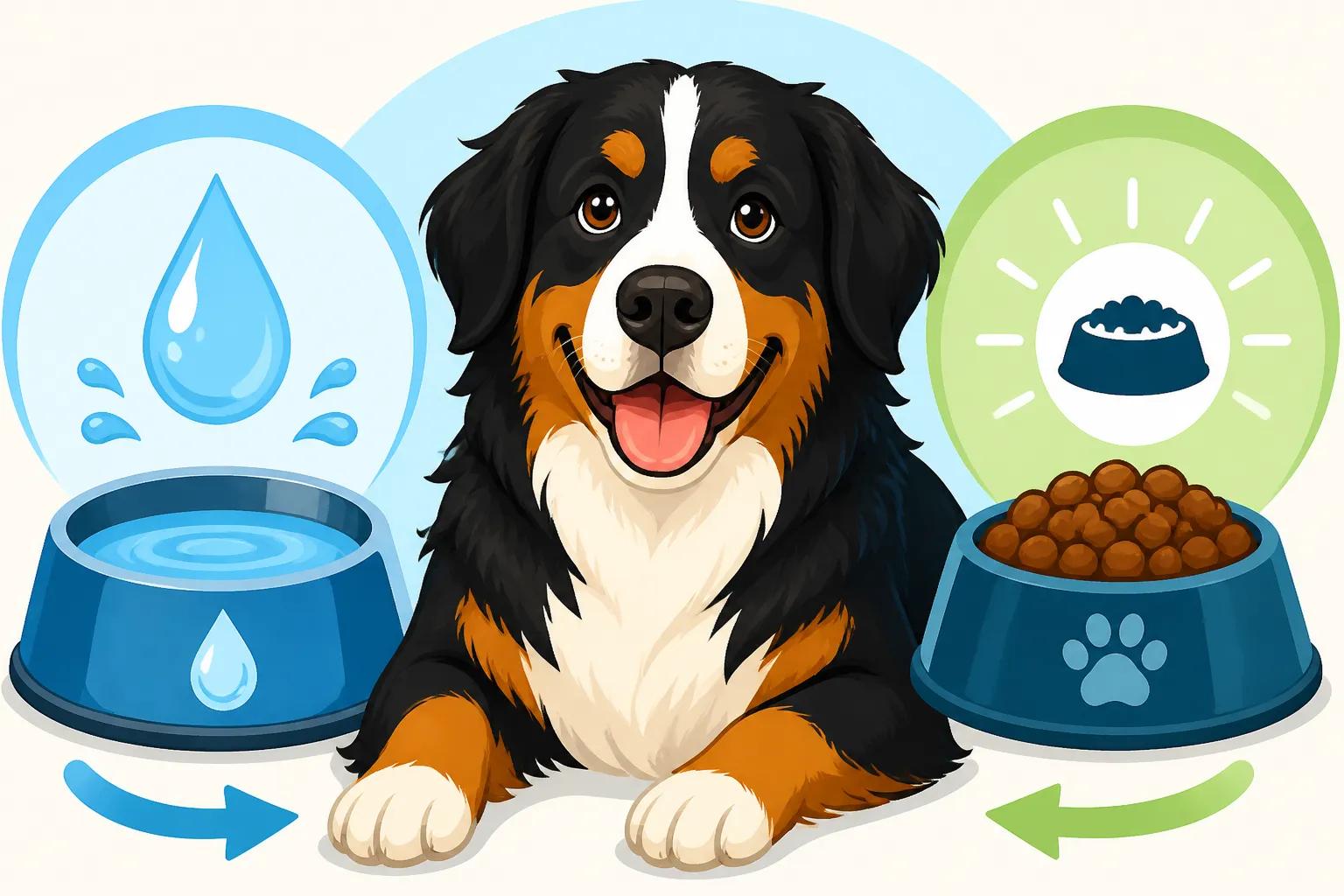
So, what can we do to help our Berners stay hydrated without increasing their bloat risk? It's all about mindful management. Instead of allowing your Berner to gulp down an entire bowl of water immediately after finishing a meal, try offering smaller, controlled amounts of water with their food. You can even moisten their kibble with warm water a few minutes before serving, allowing it to expand a bit before consumption. This also adds hydration to their meal, making it less likely they'll feel the urge to chug water right away.
Many owners find success with implementing a "waiting period" both before and after meals. This usually means holding off on large volumes of water for about 30 minutes to an hour before and after feeding. This gives their stomach a chance to start processing the food without being immediately overwhelmed by a huge influx of liquid. For those enthusiastic eaters, using a slow-feeder bowl for their food is a fantastic idea, and you can even find slow-water bowls designed to prevent rapid guzzling. These bowls have internal structures that make it harder for your Berner to take huge mouthfuls of water at once, encouraging them to drink more slowly and deliberately. You can find a variety of these at pet supply stores or online through retailers like Chewy or Amazon.
Consider a hypothetical scenario: your Berner just came in from a vigorous play session in the yard, panting and ready for their dinner. They're likely very thirsty. Instead of letting them drain their water bowl, offer a small amount first, perhaps a cup or two. Then, wait 15-20 minutes before feeding them, and another 30-60 minutes after their meal before offering free access to a full bowl. This helps to separate the intense hydration from the intense eating. This mindful approach aims to reduce the risk factors associated with Whether a Fast-Eating Bernese Mountain Dog Bloats More. If you've been concerned about The Half-Hour That Decides a Bloated Bernese Mountain Dog, these preventative steps around mealtimes are exactly the kind of practical actions you can take.
Optimal Hydration Practices Beyond Mealtimes
While managing water intake around meals is crucial, ensuring your Bernese Mountain Dog stays well-hydrated throughout the entire day is equally important. Think of it as a continuous, low-level flow rather than intermittent floods.
All-Day Access to Fresh Water
This might sound obvious, but it bears repeating: your Bernese Mountain Dog needs constant, unrestricted access to fresh, clean water throughout the day. This isn't just a suggestion; it’s a non-negotiable aspect of their care. This means having water bowls available in multiple locations in your home, especially if your Berner spends time in different rooms or has areas they prefer to lounge in. Don't forget an outdoor water source if they spend time in the yard. Large, sturdy ceramic or stainless steel bowls are ideal, as they’re harder to tip over and easier to clean than plastic.
The "fresh, clean" part is paramount. Water should be changed at least daily, if not more often, especially in warm weather or if your Berner is a messy drinker who tends to drop food particles into the bowl. Bowls should be thoroughly washed with soap and water every couple of days to prevent the buildup of slime, bacteria, and algae. Some owners opt for filtered water or automatic water fountains, which can encourage drinking by circulating the water and keeping it cool. These can be particularly appealing to some dogs and add a touch of convenience, though regular cleaning is still essential. Always remember that standing, stagnant water can be a breeding ground for bacteria, so consistency in refreshing their supply is key.
Encouraging Water Intake
Sometimes, despite having constant access, a Berner might not drink as much as we'd like. There are several ways to gently encourage them to drink more throughout the day. One popular method is to add extra water to their food. This can be as simple as pouring a cup of warm water over their kibble a few minutes before serving, allowing it to soak in and make the meal more palatable and hydrating. Some owners even mix in a bit of low-sodium broth to entice picky drinkers. Brands like Ollie, known for fresh, human-grade food, often contain a higher moisture content than dry kibble, which naturally contributes to overall hydration.
Ice cubes can also be a fun way to get a few extra sips into your Berner, especially on a warm day. Just be mindful not to give too many at once, as consuming too much very cold water too quickly can sometimes cause stomach upset in sensitive dogs. For walks, hikes, or trips to the dog park, always carry a portable water bottle and a collapsible bowl. Many great options are available from Chewy or Amazon that make it easy to offer water on the go. Dehydration can happen quickly, especially when your Berner is active or when the temperature rises. Keeping them hydrated on outings is just as important as at home, helping to prevent issues like Cooling a Collapsed Bernese Mountain Dog in the Field due to overheating. Remember, Summer Routines for a Bernese Mountain Dog should always include robust hydration plans.
Common Misconceptions and Troubleshooting
It’s easy to get caught up in well-meaning but sometimes misinformed advice, especially when it comes to something as critical as hydration. Let’s clear up some common misconceptions and discuss when it's time to call in the professionals.
Dispelling Myths About Water Restrictions
One of the biggest misconceptions circulating among dog owners, particularly those with large, deep-chested breeds, is that you should severely restrict your dog's water intake around meals to prevent bloat. While it’s absolutely wise to manage water intake – preventing rapid, excessive gulping immediately before or after a large meal – completely depriving your Bernese Mountain Dog of water is not only unnecessary but can be dangerous.
The goal isn't deprivation; it's balance and moderation. A few sips of water with their meal, or a small drink shortly after, are generally fine and necessary for proper digestion. The problem arises with gulping large volumes quickly, which can introduce air and rapidly distend the stomach when combined with dry food. So, instead of thinking "no water," think "controlled, sensible water." If your Bernese Mountain Dog has free access to water throughout the day and takes small drinks as needed, they are less likely to be ravenously thirsty at mealtime anyway. It's about establishing a consistent routine that ensures they are always comfortably hydrated without creating high-risk scenarios around their main meals. This approach supports Feeding an Adult Bernese Mountain Dog Safely without undue stress.
When to Consult Your Vet
While we can do a lot as owners to promote healthy hydration, there are times when changes in your Bernese Mountain Dog’s drinking habits signal something more serious that requires veterinary attention. If you notice a sudden, dramatic increase in your Berner’s thirst (polydipsia), where they are constantly draining their water bowl and still seem thirsty, it’s a symptom that warrants an immediate vet visit. This can be an indicator of several underlying health issues, such as diabetes, kidney disease, or Cushing's disease. For instance, Kidney Disease in a Bernese Mountain Dog often presents with increased thirst and urination.
Conversely, if your Bernese Mountain Dog suddenly refuses to drink water, or their intake drops significantly without an obvious reason (like a change in weather or activity), this is also a cause for concern. It could indicate illness, pain, or even an infection. Of course, any signs of discomfort related to bloat – such as a distended abdomen, unproductive retching, restlessness, or pain – demand emergency veterinary care. Time is critical in those situations. Regular check-ups, including Bloodwork a Bernese Mountain Dog Should Have Yearly, can often catch subtle changes in organ function that might affect thirst levels before they become obvious. When in doubt, always err on the side of caution and consult your veterinarian. They can perform diagnostic tests to rule out any medical conditions and provide tailored advice for your beloved Berner.
Water Intake Guidelines Around Bernese Mountain Dog Mealtimes
Here’s a quick overview of best practices for managing water around your Berner’s mealtimes:
| Time Frame | Recommended Water Strategy | Rationale |
|---|---|---|
| Pre-Meal (15-30 mins) | Offer a small drink (1-2 cups) if very thirsty, then remove. | Addresses immediate thirst without over-filling stomach before food. |
| During Meal | Offer access to a bowl with a moderate amount of water. Moisten kibble. | Facilitates digestion; reduces rapid gulping after eating. |
| Post-Meal (30-60 mins) | Restrict free access; provide small sips if needed. | Minimizes stomach distension and gas from rapid water intake after dry food. |
| Between Meals | Unlimited access to fresh, clean water. | Ensures continuous hydration throughout the day. |
| During Exercise | Offer frequent, small water breaks. Carry portable water. | Replenishes fluids lost through panting and activity. |
This table serves as a general guide. Always observe your individual Bernese Mountain Dog's needs and consult with your veterinarian for personalized recommendations. Remember that a growing Berner, whose What a Bernese Mountain Dog Weighs at Each Month can change rapidly, may have different hydration needs than a fully grown adult whose How Much an Adult Bernese Mountain Dog Eats is more stable.
Disclaimer
This article is for general informational purposes only and does not constitute professional advice. Laws, prices and regulations vary by location and change over time. Consult a qualified professional for guidance on your specific situation.